
ECS SRIA 2027
3.6 Digital Society
On this page
- 3.6.1 SCOPE
- 3.6.2 APPLICATION TRENDS AND SOCIETAL BENEFITS
- 3.6.2.1 External requirements
- 3.6.2.2 Societal benefits
- 3.6.3 MAJOR CHALLENGES
- 3.6.3.1 Major Challenge 1: Facilitate individual self-fulfilment
- 3.6.3.2 Major Challenge 2: Facilitate empowerment and resilience
- 3.6.3.3 Major Challenge 3: Facilitate inclusion and collective safety
- 3.6.3.4 Major Challenge 4: Facilitate supportive infrastructure and a sustainable environment
- 3.6.4 KEY ENABLING METHODOLOGIES
- 3.6.5 TIMELINE
3.6.1 SCOPE
Supporting the digital transformation throughout society
This chapter describes the digital innovations essential to an inclusive, healthy society, contributing to European challenges in sustainability, health, well-being, mobility, security and energy, and consequently to European economic prosperity.
Europe needs digital solutions that support both the individual and society as a whole, driven by technologies such as Artificial Intelligence (AI), robotics, 6G, extended reality (XR: virtual, augmented and mixed reality) and brain–computer interfaces (BCIs). Generative AI has reshaped how society interacts with technology, with agentic AI now emerging as a further transformative force, shaping how people interact with technology, each other, society and the environment. Digital innovations should facilitate individual self-fulfilment, empowerment and resilience, collective “inclusion” and safety, and a supportive infrastructure and environment. However, these technologies, especially AI, also bring risks: lack of transparency, bias and discrimination, privacy concerns, ethical dilemmas, security risks, unwanted dependence, job displacement, and misinformation and manipulation, to name the most important ones.1
These transformations also raise ethical considerations: digital innovations must address societal concerns sustainably, guaranteeing participation and reducing inequality. A human-centred approach is therefore key to the EU's approach to technological development, reflecting European social and ethical values, (social) inclusiveness, and the creation of sustainable, high-quality jobs through social innovation.
In summary, our four Major Challenges are: facilitating individual self-fulfilment, empowerment and resilience, inclusion and collective safety, and supportive infrastructures and sustainable environments.
3.6.2 APPLICATION TRENDS AND SOCIETAL BENEFITS
3.6.2.1 External requirements
To guarantee economic and societal growth, digital inclusion and transformation require tools and infrastructures in the application-domain roadmaps described in other chapters. Digital technology permeates every aspect of society and is an important instrument of change.
People's expectations of technology's future impact are broadly positive but involve specific concerns around employment, income, safety, equality and trust. The impact of science and technological innovation on prosperity, individual well-being, sustainability, fairness and trust keeps growing, underlining the importance of investing in our digital strategy today.
The spectacular advent of AI illustrates this (see figure 3.6.1): the AI market has seen significant growth, offering numerous opportunities for new players. AI, a technology capable of tasks requiring human intelligence, is revolutionising sectors such as healthcare, finance, transportation and customer service, largely driven by rising demand for automation and efficiency as businesses streamline operations, cut costs and boost productivity. Advances in machine learning and the abundance of big data further fuel this growth, letting systems improve over time and extract valuable insights for decision-making. The same trends appear in application domains such as content creation (television, mobile platforms, social media), where increasingly digitised and distributed workflows rely on advanced electronic components and systems for scalable, efficient operation across heterogeneous infrastructures.
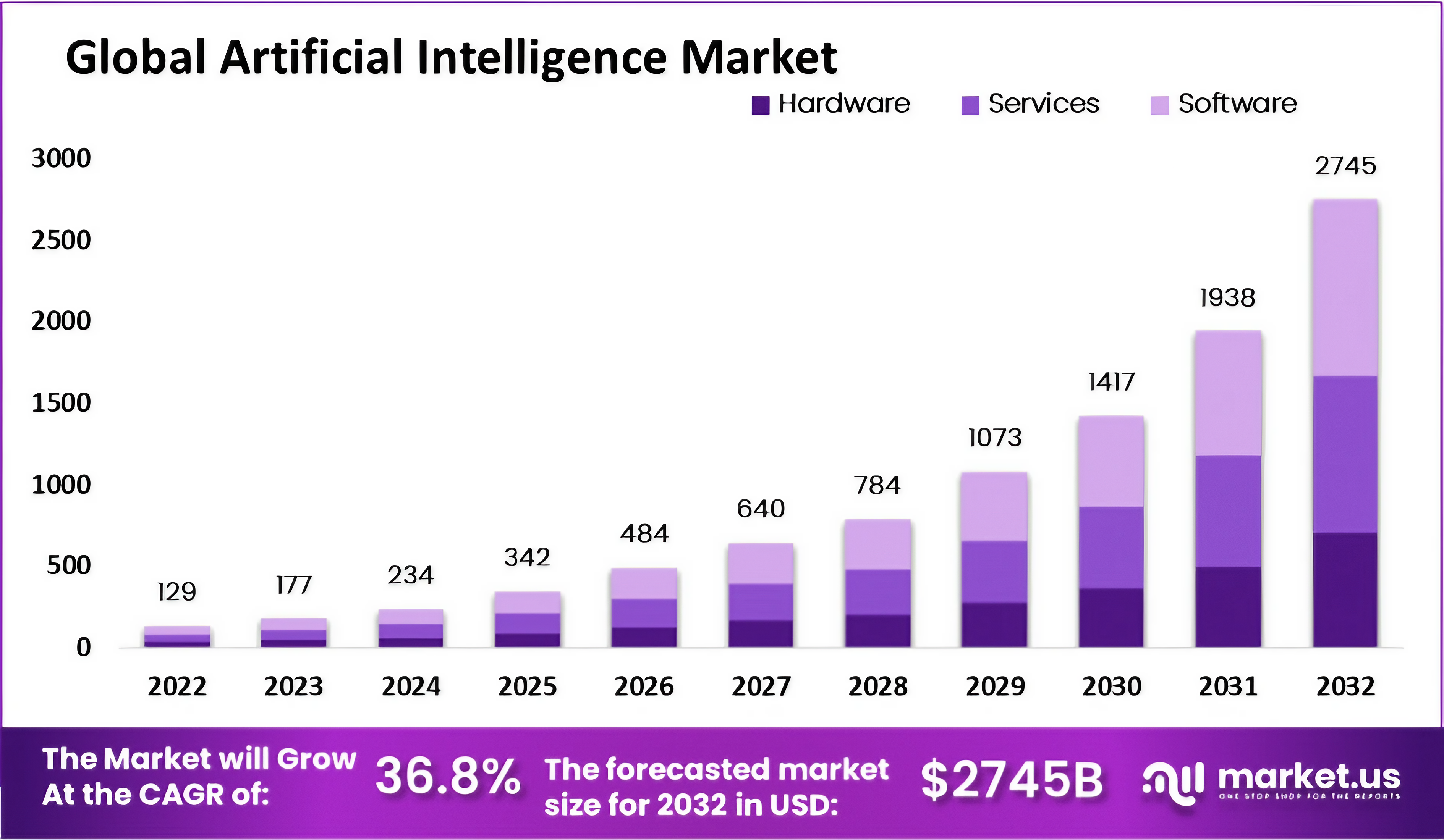
Figure 3.6.1 Growth of global AI market (source https://market.us/report/artificial-intelligence-market/)
To guarantee European sovereignty for European digital societal goals, safety, equality and trust are key requirements. For electronic components and systems (ECS), this means: ubiquitous connectivity (“everywhere and always on”) and online services and social media (“always online”) drive people to rely on intelligent applications; and public and private infrastructures will increasingly be connected, observed and controlled via digital infrastructures (“continuous monitoring”).
Two further drivers for European society and economy, from a human-centred AI perspective, are lifelong learning and training, and being able to work anywhere. The trend towards working from home whenever possible (triggered by the Covid pandemic) has continued, letting people combine work and private life better. In both rural areas and cities, it should be easy to work from home or remotely in distributed groups, facilitated by living labs and learning factories at personal and collective levels.
3.6.2.2 Societal benefits
European society as a whole will benefit from a major (AI-based) evolution in intelligent systems, on both the individual and collective levels:
The benefit of digital inclusion for all individuals includes employability through lifelong learning and training, and personal well-being. The key ambition is to maximise citizens' individual development.
How? By ensuring personal resilience, lifelong learning and employability. Human-centred solutions will optimise services for each individual's needs and capabilities, in healthcare, lifestyle, coaching, training, and working from home or remotely in a "distributed" workforce, boosting productivity, improving work/life balance, fostering mental health, and reducing commuter pollution.
The overall individual benefit is "well-being". Prosperity encompasses job security, material living standards, and the right to quality education, accessible anytime, anywhere. At the individual level, well-being means health for every age, plus adequate housing, safety, protected privacy, reliable and ubiquitous digital infrastructure, social connectedness and social cohesion. Our key objective is to empower and protect the individual.
How? By ensuring acceptable, trustworthy AI technologies that increase inclusion and prevent exclusion, protecting citizens against identity theft, providing a protective environment against new virus infections, and enabling healthier lifestyles through lifestyle monitoring and coaching.
The benefits of digital inclusion: a society resilient against setbacks, and societal acceptance of novel technologies, achieve the key ambition of safeguarding collective society and well-being for all.
How? By promoting societal and digital inclusion, providing societal access for all, and ensuring collective resilience against setbacks. The elderly will be supported to continue participating in society, reducing loneliness, improving well-being and health, and reassuring them that their experience remains valued.
At the environmental level, the benefits are a physically and digitally sustainable environment, intelligent infrastructure management, stability and resilience against threats, and agreed fallback solutions in times of crisis. The main aim is a supportive infrastructure and environment.
How? By providing reliable, resilient infrastructures, protecting society against destabilising forces, establishing a sustainable environment, and securing controlled climate change. Monitoring and intelligent control of infrastructures will also support sustainability through optimal use of natural resources, pollution reduction and crisis management.
“Sustainability” in a wide sense implies both environmental and economic sustainability and equal opportunities for all, related to fairness and trust in our societies. AI-based systems must take European-style human values into account by design (to which the EU AI Act contributes), continuing the human-centred approach. “FAIRness” (findability, accessibility, interoperability and re-use) will also help shape future applications.
3.6.3 MAJOR CHALLENGES
Enabling and ensuring a digital society involves various aspects to be supported by trustworthy ECS products and services. To structure these aspects, we distinguish between the individual or collective context and the internal or external scope. This leads to the matrix shown in 3.6.2 below.
Each of these four areas relates to one of the following Major Challenges:
Major Challenge 1: Facilitate individual self-fulfilment.
Major Challenge 2: Facilitate empowerment and resilience.
Major Challenge 3: Facilitate inclusion and collective safety.
Major Challenge 4: Facilitate supportive infrastructures and sustainable environments.
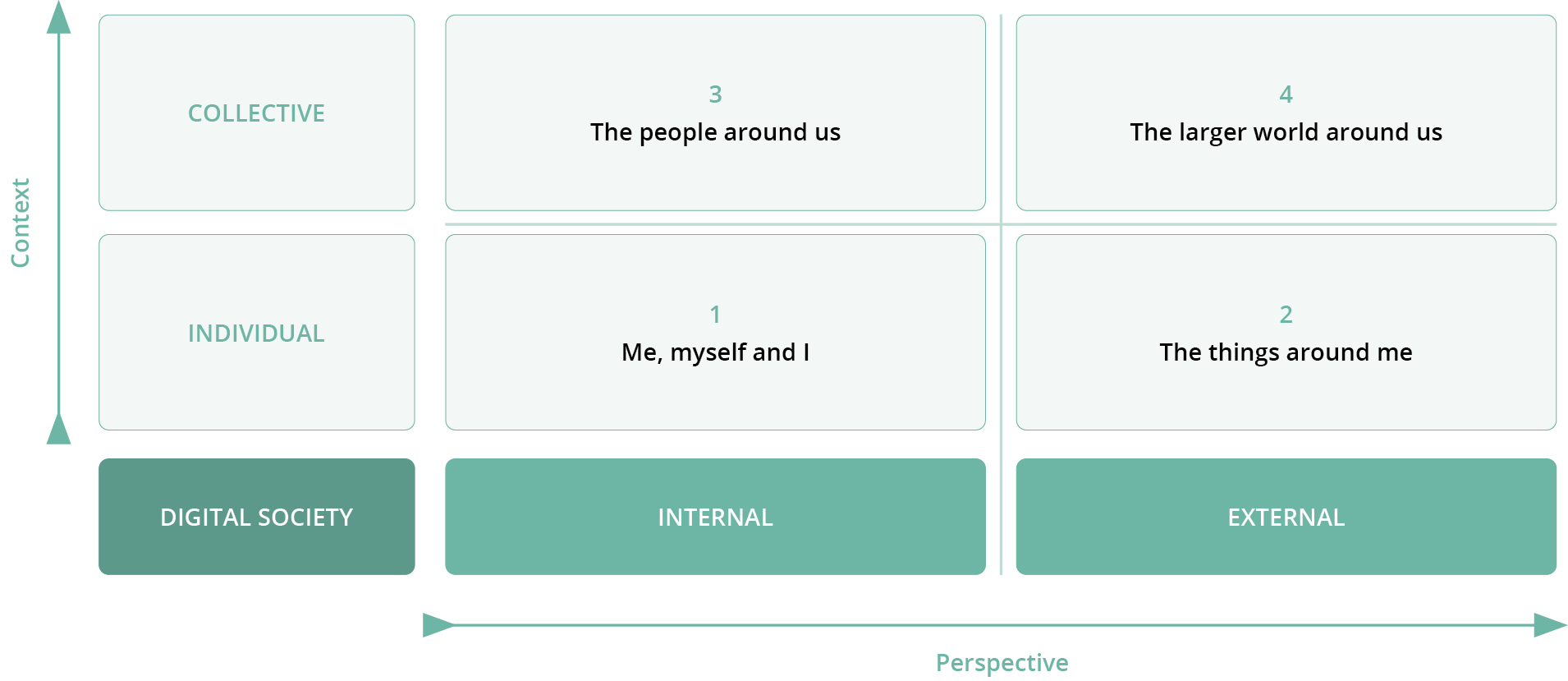
Figure 3.6.2 - Structuring the Major Challenges in scope and context
3.6.3.1 Major Challenge 1: Facilitate individual self-fulfilment
3.6.3.1.1 Status, vision and expected outcome
Ambition: to maximise the individual development of citizens.
Provide empowerment to citizens and ensure personal resilience.
Enable lifelong learning and development for both children and adults
(serious gaming, including AI-based AR/VR).Give citizens more freedom to do their work wherever they want/need.
Stimulate employability (e.g. through gamification, tools and means for supporting efficient remote work).2
Improved human–machine interaction solutions for perception, reasoning, and autonomy, with interaction being adaptive to the user’s abilities.
To maximise citizens' empowerment and self-fulfilment, Europe must strive for lifelong learning, employability and freedom to work wherever one resides, alongside optimal well-being in an independent, pluralistic media landscape. These enable lifelong empowerment by keeping citizens informed and facilitating the flow of educational content: media education develops skills that help end violence and discrimination (e.g. sexism, racism), builds civic knowledge, and facilitates discussion of current issues, increasingly through on-demand, interactive and AR/VR formats backed by trustworthy 5G/6G connectivity.
The 30-year career is a thing of the past: education continues throughout working life as skills must adapt to a fast-changing world. Supporting lifelong learning requires technologies that encourage collaboration, autonomy and responsibility, and that implement learning initiatives. Cloud computing, mobile devices and web technologies are now deeply embedded in working practice, though their full pedagogical potential remains underexplored3.
To give citizens freedom to work wherever they want, Europe must ensure trustworthy, high-bandwidth, secure connections (wired and wireless) at all possible work locations, reinforced by easy, secure access to cloud applications and AI-based automation that analyses data, guides decision-making and minimises repetitive work.
Smart automation and AI can raise productivity and GDP growth while also improving well-being, health, longevity and leisure time. Beyond income, individual well-being and life satisfaction depend on social life, leisure, health, relationships, job and housing4 – factors that innovative technologies in the digital society can, and will, influence.
Gamified tools already offer free, open language learning and massive open online courses (MOOCs) to the public. AI tools based on large and small language models from a growing range of providers likewise support individual development, access to knowledge, skills development and critical thinking, though no tool can replace the richness of human interaction, creativity and experience in personal development.
3.6.3.1.2 Key focus areas
High-priority research, development and innovation (R&D&I) areas:
Digital inclusion: tools, infrastructure, training and connectivity.
Online education and examination: VR/AR training and support.
Improved human–machine interaction (HCI) solutions.
Support devices: wearables, robots, cobots, etc.
Nudging and serious gaming: for personal development and healthier lifestyles.
The trusted element: how to ensure that nothing more is done (behind the scenes)
Smart systems can support personal well-being through body-awareness coaching, adaptive comfort control of the home and workplace (temperature, lighting, air quality), and immersive VR/AR experiences. At work, selective automation and AR-assisted tasks increase engagement and job satisfaction, while enabling audiences and workers to experience immediacy, individualisation and immersion without needing to be physically present, reshaping consumption patterns and opening new business opportunities.
Furthermore, we have to mitigate the risks of AI and other functionality that is based on massive data storage in the cloud. This can be done in different ways, such as:
Introduce fake news detection by analysing AI-generated content on social media
Develop technologies to prove the source of content creation, for instance by showing that a video was created with an actual camera. If part of the processing is done externally and/or in the cloud, add traceability of what was done where.
Add watermarking to created content to prove that it is not artificial.
Secure control of systems used for content creation, for instance by preventing production equipment from being taken over by external aggressors at major events such as Olympic Games, Eurovision song festival, European and World championships, etc.
3.6.3.1.3 Microelectronics and integrated photonics for XR applications
Currently, commercial head-mounted display solutions rely upon high-end microdisplays deploying various technologies such as organic light-emitting diodes (OLEDs), micro-LEDs, lasers, and LEDs with liquid crystal on silicon (LCoS), or microelectromechanical systems (MEMS). Nonetheless, these microdisplays will still need to undergo further improvements regarding size, power consumption (<300 mW; full display system), device efficiency, resolution (8K and beyond, pixel densities > 10kppi), high dynamic range (HDR), colour gamut, contrast, and refresh rate. Besides utilising classical visualisation modes, plenoptic modes such as light field, multifocal and holography are gaining ground, holding the promise for truly immersive experiences and potentially improving vergence-accommodation behaviour for head-mounted devices (HMDs) and autostereoscopic displays. Both the classical approach and the plenoptic solutions require not only a significant evolution regarding the capabilities and features of the opto-nanoelectronic display devices, such as multi-ridge lasers and associated waveguide combiners, light-field (micro)displays, multifocal light engines, spatial light modulators (SLMs) based on LCOS, and MEMS, but also state-of-the-art drivers and optical systems and architectures.
These complex optical systems must support the required field of view (FoV), be lightweight and safe for the user, and provide excellent colour uniformity and high brightness efficiency. Furthermore, they must satisfy the use case requirements for both professional use and mass adoption, i.e., be scalable to large volumes (cost-effective). The optical system will determine the image quality and, therefore, the end-user experience and market adoption of XR devices.
Within this optical system, the design and fabrication of waveguide optics, holographic elements, diffractive optics, reflective light guides, freeform optics, and meta-surfaces with optimal optical properties and behaviour are crucial. They will be crucial in achieving the required form factors and user experience for the envisioned display devices. Furthermore, photonic integrated circuits and light-shaping optics based on liquid crystal devices, enabling the miniaturisation of, e.g., waveguides, couplers, and lasers, combined with more macroscale components such as lenses, will also be essential to reach these goals.
Other key parts of XR solutions include a variety of integrated sensors that create an immersive and interactive experience. Vital-sign sensors additionally contribute to personal health monitoring and wellness.
Eye tracking can serve as hands-free communication between the user and the system; it allows for adaptive image colour correction and rendering at the gaze point; and can provide gaze-point prediction and user sensing functionality. However, it faces challenges relating to accuracy in diverse lighting conditions and with different eye physiologies. The precision in detecting subtle eye movements or distinguishing between intentional gaze and casual looking remains a limitation.
Other sensors such as ambient light sensors, spectral sensors or depth sensors must cope with the high dynamic range of ambient light (1 lux … 100 klux).
Intelligent LED/laser drivers control their respective emitting devices but are also a crucial part of the optical eye-tracking system to monitor correct operation of the LEDs/lasers. They constantly monitor illumination time and power, thereby ensuring that the light output does not exceed safe limits even under single-fault conditions.
In general, integrating these systems seamlessly into mixed-reality devices without increasing bulk or reducing comfort is challenging. In addition, differences in spectral behaviour between modern light sources, display technologies, and image capture systems are becoming increasingly relevant in content creation and viewing workflows. New LED-based lighting systems often exhibit narrow and structured spectral power distributions, while display technologies such as LCD and OLED produce colour through different emission and filtering mechanisms. At the same time, image capture in live content production typically combines cameras based on single-sensor (Bayer) architectures with cameras using three sensors behind a colour-splitting prism, each having different spectral sensitivities. As these technologies are frequently combined, e.g. LED lighting in scenes together with mixed camera systems and LCD/OLED displays in capture and viewing chains, mismatches in spectral response can lead to visible colour inconsistencies and reduced fidelity across devices.
In line with the increasing digitalisation and distribution of application domains (see 3.6.2.1), ensuring consistent visual quality across such heterogeneous imaging systems is becoming a key challenge. This requires advanced colour processing and matching solutions capable of operating across different sensor architectures and under varying spectral conditions, contributing to a consistent and high-quality user experience across platforms, including XR environments.
Required R&D&I developments within ECS
Taking the above into account, specific R&D developments are necessary within ECS technology, as shown in Figure 3.6.3
Specific R&D developments necessary |
ECS technologies |
|||||||
|---|---|---|---|---|---|---|---|---|
Major challenge 1: “Facilitate individual self-fulfilment” |
Process techn, equipm, materials & manufact. |
Components, modules and system integration |
Embedded SW & Beyond |
System of Systems |
Edge Comp. & emb. AI |
Connectivity |
Architecture & Design |
QRSC |
1.1 |
1.2 |
1.3 |
1.4 |
2.1 |
2.2 |
2.3 |
2.4 |
|
o Reliable, dependable and secure SW and HW |
x |
x |
X |
x |
x |
x |
x |
X |
Mature human systems interaction methods |
X |
X |
X |
|||||
Trustworthy AI/Machine Learning algorithms |
x |
X |
X |
|||||
Energy-efficient HW and SW solutions |
X |
x |
X |
X |
||||
Seamlessly operating SW (e.g. for IoT devices, wearables) |
X |
X |
X |
X |
||||
Ubiquitous, reliable, and energy-efficient connectivity |
X |
X |
X |
X |
X |
X |
||
Spectrally consistent imaging across heterogeneous capture, lighting and display systems |
X |
X |
X |
X |
X |
|||
3.6.3.2 Major Challenge 2: Facilitate empowerment and resilience
3.6.3.2.1 Status, vision and expected outcome
Ambition: empower and protect the individual citizen.
Increase inclusion and prevent exclusion.
Protect citizens against cyber-fraud (scams) and identity theft; provide privacy.
Enable safe smart homes with ubiquitous connectivity.
Ensure acceptable AI technologies.
Diversity and inclusion are increasingly recognised as crucial for workplace equality and economic development, with global indicators showing a direct link between gender equality and workforce participation. Technology, when properly governed, is a critical lever to close these gaps, e.g. data analytics that expose pay disparities, mitigating recruitment bias, and cloud infrastructure that scales microfinance for underserved populations5. It can also equalise access to essential services (biometrics and cloud technology expanding microfinance to women and underserved populations), help enforce inclusive legal rights, policies and social norms, and support diversity through e-voting for vulnerable and marginalised groups, despite cybersecurity challenges. It can further improve physical security and autonomy for minority groups, e.g. connected smart bracelets that allow women to signal an assault and call for help.
Reliance on technology brings benefits but also new risks. The speed of the current digital and AI transition creates systemic risks that legacy frameworks cannot manage, demanding a fundamental recalibration of civic identity, digital rights and safety. Because unlocking AI's potential relies on automated data processing beyond human verification capacity, building public trust requires urgent, technically enforceable solutions for algorithmic explainability, accountability and intersectional ethics6.
The pandemic years demonstrated the necessity of a connected smart home and adequate home office, though high-bandwidth connectivity remains unevenly distributed across Europe.
Machine learning is essential for a resilient future. AI succeeds best when focused on four areas: augmented intelligence (improving human productivity), intelligent automation (integrating humans and machines rather than just replacing humans), assessed intelligence (making models robust through rigorous, continuous evaluation), and adaptive intelligence (building systems that adapt to change via causal inference).
These developments are increasingly reflected in content creation, where AI and distributed system architectures contribute to empowerment and resilience: AI and deep learning enable automation of complex workflows, improve situational awareness in distributed environments, and reduce dependency on on-site personnel, while a shift to cloud-based, virtualised infrastructures enables scalable, flexible operation across locations, underlining the need for ECS technologies supporting real-time distributed processing, reliable connectivity and robust orchestration under strict latency and reliability constraints.
3.6.3.2.2 Key focus areas
High-priority R&D&I areas:
Reliable and ubiquitous digital infrastructures
Access control/intrusion detection/surveillance
Provide a protective environment and tools against virus infections
Protect individual citizens against cyber-fraud (scams), identity theft and AI-generated voice/deepfake fraud
Consumer cybersecurity tooling: security and privacy software for connected devices, privacy-preserving threat detection at scale, and European cybersecurity vendors as strategic enablers of a trustworthy digital society
Off-grid living and emergency survival
AI-enabled automation and situational awareness
Distributed and virtualised (video) processing architectures
Depth-aware sensing and perception
Secure, high-bandwidth connectivity must reach every worker regardless of location, backed by resilient cloud services for latency-sensitive tasks such as remote robotic surgery, industrial robot control, security-camera operation and live-production feeds.
Assistive technologies create equal opportunities: speech-generating devices, exoskeletons and semi-autonomous vehicles for people with sensory impairments, geolocation-linked safety tools, communication aids for paralysed patients, VR for people with physical disabilities, and smart glasses supporting people with autism.
Technology itself is neutral, but its misuse, disinformation, cyber-attacks and consumer fraud are growing risks as IoT, robotics, automation and AI scale up. Consumer cybersecurity must therefore be treated as a core R&I priority: security and privacy tooling for connected devices, privacy-preserving threat detection at scale, and strong European vendors are essential to keep the human layer of Europe's digital infrastructure trustworthy and under European jurisdiction.
AI-based automation and monitoring reduce repetitive tasks and strengthen situational awareness in distributed, mission-critical settings. Edge-cloud architectures with real-time orchestration support scalable, resilient operation across dispersed systems, while advanced sensing (e.g. phase-detection autofocus, real-time depth estimation) enriches the data available to these AI-driven systems, improving robustness and adaptability.
Required R&D&I developments within ECS
To facilitate empowerment and resilience, specific R&D developments are necessary within ECS technology, as shown in Figure 3.6.4.
Specific R&D developments necessary |
ECS technologies |
|||||||
|---|---|---|---|---|---|---|---|---|
Major challenge 2: “Facilitate empowerment and resilience” |
Process techn, equipm, materials & manufact. |
Components, modules and system integration |
Embedded SW & Beyond |
System of Systems |
Edge Comp. & emb. AI |
Connectivity |
Architecture & Design |
QRSC |
1.1 |
1.2 |
1.3 |
1.4 |
2.1 |
2.2 |
2.3 |
2.4 |
|
o Reliable, dependable and secure SW and HW |
X |
X |
X |
X |
X |
|||
Trustworthy AI/Machine Learning algorithms |
X |
X |
||||||
Advanced cyber-security and privacy methods and tools |
x |
x |
X |
X |
X |
|||
Ensuring safety and resilience based on ECS technologies |
X |
X |
X |
X |
X |
X |
X |
|
Energy-efficient and dependable HW and SW solutions (e.g. for IoT devices, wearables) |
X |
X |
X |
X |
X |
X |
||
Seamlessly operating SW (e.g. for IoT devices, wearables) |
X |
X |
X |
X |
||||
Ubiquitous, reliable, and energy-efficient connectivity and localisation |
X |
X |
X |
X |
X |
X |
||
Secure broadband connectivity based on 5G systems and beyond |
X |
X |
X |
X |
X |
|||
Distributed (production) systems |
X |
x |
X |
X |
X |
X |
X |
|
AI-enabled automation and situational awareness in distributed and mission-critical environments |
X |
X |
X |
X |
X |
X |
||
Distributed and virtualised real-time processing and orchestration across edge-cloud infrastructures |
X |
X |
X |
X |
X |
X |
||
3.6.3.3 Major Challenge 3: Facilitate inclusion and collective safety
3.6.3.3.1 Status, vision and expected outcome
Ambition: safeguard collective society and well-being for all.
Societal and digital inclusion.
Provide societal access for all.
Ensure collective resilience against setbacks.
ECS as a means of providing affordable solutions.
European welfare models vary but share a history of robust social protection and inclusive growth, now under stress: governments cut social welfare (longer working times, later retirement, less public funding) while parts of society resist, fuelling demonstrations and a shift to the political right. Ageing, global competition, migration, climate change, digital technology/automation/AI, and shifting geopolitics are combining to raise inequality and divergence within Europe.
Inequality at work can emerge from automation substituting for labour, and from corporate diffusion dynamics that disadvantage non-adopting firms. To avoid reduced employment and secure real wage growth, automation using AI, robotics and other technologies must deliver significant productivity gains; workers with low levels of education and skills in repetitive, non-digital roles will otherwise be the first to face wage pressure.
Collective growth and well-being depend not only on workplace equality but also on individual development supported by collective interaction. Active social relationships improve health, longevity and key biomarkers; isolation subtly harms mental health by reducing attention, learning, memory and decision-making. Direct contact – family, friends, team sports, shared events – remains irreplaceable by technology, but the Covid pandemic forced a rethink of how technology can increase and improve social interactions between individuals and groups, raising the question of how technology can support and secure healthy digital social interaction, including during future setbacks.
Trustworthiness of the underlying Electronic Components and Systems is a non-negotiable boundary condition for all digital society solutions deployed in Europe.
Collective safety can also be enhanced by solutions addressing specific communities – families, friends, neighbourhoods, regions and clubs – either through warning/alerting functions (contamination, local fire, air pollution, violence) or supporting functions such as alerts or instructions combined with collective devices (e.g. automated external defibrillators, diagnostics, measurement).
3.6.3.3.2 Key focus areas
High-priority R&D&I areas:
Digital inclusion: tools, infrastructure, training and connectivity.
Collective safety: secure access control, surveillance, pandemic control, prevention of misinformation without limiting freedom of expression.
Safe environment for living, working and transport: buildings and bridges resilient against earthquakes through continuous monitoring (e.g. fibre-based stress sensors).
Emergency/crisis response solutions and services.
Dynamics of society: systemic change.
Affordable trustworthy ECS tools, miniaturisation and energy management of ECS-enabled services for society
Ensuring EU-wide digital inclusion means guaranteeing access to remote education, training and assessment in both cities and rural areas, using simple, low-barrier human-machine interfaces that avoid a digital split between citizens. Priority research directions include AI-driven personalised learning journeys, curriculum adaptation, admin-reducing nudging tools, dyslexia-friendly tablet learning, real-time support wearables and eye-tracking, together with AR/VR for remote and under-served communities. The EU highlights that science, technology, social sciences, humanities and the creative sector must work together to make these solutions genuinely human-oriented and inclusive.
Scaling AI for video-based inclusion applications still faces practical hurdles: the volume of data needed for accurate models, the cost of manual labelling (partly addressed by reinforcement learning, GANs, transfer and one-shot learning), the need for continuous model refreshes in consumer applications, and the risk of selection bias skewing results.
Collective safety requires further research on secure access control, intrusion detection and (video) surveillance. Access-control-as-a-service, combining biometrics with building automation and occupancy data, supports both routine security and emergency evacuation. Heightened security concerns are driving demand for thermal and multi-sensor screening at entrances, while AI-based video/audio analysis, including face, object and event recognition, and drone-based aerial surveillance over 5G/6G, can multiply the effectiveness of human security operators.
Better video quality (spectral range, colour gamut, dynamic range) improves both AI performance and the viewing experience. Explainable AI, watermarking and processing metadata are needed to trace and counter deepfakes and other AI-generated misinformation, alongside stronger security of the cloud-connected equipment used to create and process content.
Required R&D&I developments within ECS
To facilitate inclusion and collective safety, specific R&D developments within ECS technology are necessary, as shown in Figure 3.6.5.
Specific R&D developments necessary |
ECS technologies |
|||||||
|---|---|---|---|---|---|---|---|---|
Major challenge 3: “Facilitate inclusion and collective safety” |
Process techn, equipm, materials & manufact. |
Components, modules and system integration |
Embedded SW & Beyond |
System of Systems |
Edge Comp. & emb. AI |
Connectivity |
Architecture & Design |
QRSC |
1.1 |
1.2 |
1.3 |
1.4 |
2.1 |
2.2 |
2.3 |
2.4 |
|
o ECS technologies for AR/VR and high-quality video/videoconferencing |
X |
X |
X |
X |
X |
X |
||
Tools, methods, SW and HW technologies for extensive and ubiquitous use of AI/Machine Learning |
X |
X |
X |
X |
X |
|||
Advanced cyber-security and privacy methods and tools |
X |
X |
X |
|||||
Intelligent connected IoT devices using new sensors for safety and resilience of EU societies |
X |
X |
X |
X |
X |
X |
X |
X |
Ubiquitous, reliable, and energy-efficient connectivity and localisation |
X |
X |
X |
X |
X |
X |
||
Secure broadband connectivity based on 5G systems and beyond |
X |
X |
X |
X |
X |
|||
3.6.3.4 Major Challenge 4: Facilitate supportive infrastructure and a sustainable environment
3.6.3.4.1 Status, vision and expected outcome
Ambition: contribute to a supportive infrastructure and environment for society.
Provide trustworthy, reliable, and resilient infrastructure.
Establish a sustainable and secure environment.
Provide means for controlled climate change.
To fully benefit from digitisation, Europe must enable a supportive infrastructure and environment, requiring companies to ready their technology, people and culture for digital transformation. This means a reliable, resilient digital infrastructure with ubiquitous, continuous connectivity; protecting society against destabilising forces, including harmful internet use such as election manipulation, deepfakes/cheapfakes, identity theft and phishing (covered under Major Challenge 3); and establishing a secure, sustainable environment, including controlled climate change (per the Green Deal) through means available to citizens. Monitoring and intelligent control of infrastructures, resources and recycling, especially in urban environments, will further support sustainability.
The vision is to introduce new digital products and services that contribute to a sustainable lifestyle in all areas of human life, including cradle-to-cradle and circular economy aspects. We are addressing the following aspects:
Comprehensive assessment of resource usage to identify the largest areas of energy and materials consumption and CO2 production. In addition to air quality monitoring systems, these solutions need to address lighting, heating and computing with reduced use of energy and other resources. In addition, solar panels and batteries, home-grown vegetables and city farming systems are key.
Providing smart systems based on IoT and unmanned/robotic platforms that provide secure environments and support digital business life using the minimum amount of resources (energy, water, paper, travelling, etc.), ensuring a highly efficient, productive, and sustainable working environment.
Smart water management to protect resources. Intelligent management of energy in public spaces such as football stadiums and railway stations, including smart street lighting. Promoting green areas in cities and enabling citizens to provide their own sustainable solutions. Reduction of (food) waste in supermarkets and restaurants, as well as resource recycling.
Development of new digital solutions that can be used by citizens themselves or that can stimulate societal attitudes and activities towards sustainability and addressing climate change, e.g. car sharing, use of public transportation, bikes, and e-scooters.
Europe's approach to digitalisation focuses on preserving the democratic system and values such as trust and cooperation, with ethical requirements including fairness, accuracy, confidentiality, transparency, accountability, explainability, trustworthiness and absence of bias. This includes AI capability maturity programmes that coach companies using AI in their designs on best ethical practice, making products more resilient, accessible, reliable and trustworthy, ready for the new European digital society, in compliance with the EU AI Act, whose provisions apply progressively through 2026 and beyond.
3.6.3.4.2 Key focus areas
High-priority R&D&I areas:
Physical infrastructure management/physical resilience and security.
Intelligent infrastructure management (intelligent buildings, city-owned infrastructure, synergies with industry, etc.).
Digital solutions and infrastructure for resource management, digital resilience, sustainability, e-government and citizen support.
Resource and environment monitoring (air, water, etc.) and feedback to enable more effective management.
New digital tools using IoT, unmanned vehicles/robots and AI/ML-enhanced algorithms need to be deployed into existing infrastructure, backed by adequate investment, standards and compliance with the EU Cyber Resilience Act. For buildings, this means smart lighting, air-quality control, IoT-based utility monitoring and predictive maintenance (e.g. sensors on radiators, boilers and pumps) to cut costs and carbon footprint, with digital twins increasingly used to simulate, monitor and optimise buildings and city infrastructure in real time.
With up to 90% of the global population expected to live in cities by 2050, digital solutions for sustainable urban development are needed at every scale, from small municipalities to megacities. To avoid vendor lock-in and protect data sovereignty from dominant non-EU platforms, Europe needs widely available open-source and sovereign-cloud solutions (e.g. FIWARE, Gaia-X-aligned platforms, the Eclipse Arrowhead Framework), which can also draw on Europe's industrial heritage given the frequent overlap between industry sites and city areas.
Technology's contribution to environmental sustainability spans retail (IoT-enabled reduction of food waste through temperature and expiry management, support for new products such as plant- or insect-based food) and manufacturing (smart energy and wastewater management, carbon capture, biofuel generation).
ECS also plays a structural role in financial markets and insurance: low-power asset-tracking and telematics enable usage-based insurance and automated payments, while secure hardware wallets and NFC support cryptocurrency and digital-product-passport use cases. Trading and market-data infrastructures depend on traceable, high-precision timing and deterministic, low-latency networking (oscillators, hardware timestamping, SmartNICs, FPGA-enabled switches, optical interconnects), creating demand for European capability in programmable logic, domain-specific accelerators and secure hardware/software co-design.
Required R&D&I developments within ECS
The development of supportive infrastructure and a sustainable environment within the EU requires the following specific R&D developments within ECS technology:
Specific R&D developments necessary |
ECS technologies |
|||||||
|---|---|---|---|---|---|---|---|---|
Major challenge 4: “Facilitate supportive infrastructure |
Process techn, equipm, materials & manufact. |
Components, modules and system integration |
Embedded SW & Beyond |
System of Systems |
Edge Comp. & emb. AI |
Connectivity |
Architecture & Design |
QRSC |
1.1 |
1.2 |
1.3 |
1.4 |
2.1 |
2.2 |
2.3 |
2.4 |
|
o Open systems and platforms for managing complex cross-connected physical infrastructure and associated processes |
X |
X |
X |
X |
||||
Energy-efficiency oriented HW technologies and embedded SW |
X |
X |
X |
X |
X |
|||
Advanced cyber-security and privacy methods and tools |
X |
X |
X |
|||||
Intelligent connected IoT devices using new sensors for safety and resilience of EU societies |
X |
X |
X |
X |
X |
X |
X |
X |
Ubiquitous, reliable, and energy-efficient connectivity and localisation |
X |
X |
X |
X |
X |
X |
||
Secure broadband low latency connectivity based on 5G systems and beyond |
X |
X |
X |
X |
X |
X |
||
Distributed (production) systems |
X |
X |
X |
X |
X |
X |
||
3.6.4 KEY ENABLING METHODOLOGIES
Key Enabling Methodologies7 bridge the opportunities of Key Enabling Technologies in ECS with the four Major Challenges for the Digital Society: they are the 'instruments' that direct and structure collaborative ways of working, giving direction and delivering impact through useful applications and meaningful interventions.
KEMs integrate the technological opportunities of ECS with knowledge from design, social sciences and the humanities about the Digital Society.
KEM categories cover Vision & Imagination, Participation & Co-creation, Behaviour & Empowerment, Value Creation & Upscaling, and Institutional & System Change, helping answer questions such as: how can technological tools, infrastructure and training empower citizens towards digital inclusion? How can we anticipate setbacks and build collective resilience? How can relevant societal stakeholders be included in ECS R&D&I?
3.6.5 TIMELINE
The following table illustrates the roadmaps for Digital Society.
MAJOR CHALLENGE |
TOPIC |
SHORT TERM (2027–2031) |
MEDIUM TERM (2032–2036) |
LONG TERM (2037 and beyond) |
|---|---|---|---|---|
Major Challenge 1: facilitate individual self- fulfilment |
Topic 1.1: improved human– machine interaction solutions |
Accessible multimodal HMI demonstrated with measured usability, workload, privacy and effective user control. |
Adaptive HMI qualified across user groups, with transparent personalisation and safe intervention. |
Lifecycle-adaptive interfaces qualified under changing abilities and contexts with sustained accessibility evidence. |
Topic 1.2: online education and examination |
AI-assisted online teaching and assessment demonstrated with pedagogical validation, accessibility, provenance and teacher oversight. |
Interoperable learning/assessment services qualified across institutions with measured learning outcomes and robust integrity controls. |
Lifelong learning ecosystems qualified across institutions and changing curricula with portable evidence and maintained learner agency. |
|
Topic 1.3: VR/AR training and support |
XR training and remote support demonstrated with task-performance, accessibility and visual-fidelity validation. |
Interoperable XR training qualified across devices with validated transfer to real tasks and calibrated sensing/display chains. |
Adaptive multisensory training qualified over repeated field use with maintained skill transfer and user-safety evidence. |
|
Topic 1.4: support devices (wearables, robots, cobots, etc) |
Assistive wearables and collaborative robots demonstrated in real tasks with safe interaction and measured user benefit. |
Context-aware assistive devices qualified across care, work and daily-living settings with reliable handover and privacy controls. |
Coordinated assistive ecosystems qualified for long-term personalisation, maintenance and safe adaptation to changing user needs. |
|
Topic 1.5: nudging, gamification (for development or health reasons) |
Nudging and gamification prototypes validated for education or health with informed participation and measured benefits. |
Personalised interventions qualified in longitudinal studies with safeguards against manipulation and unequal outcomes. |
Adaptive intervention services qualified across changing populations with sustained benefit, user choice and independent evaluation. |
|
Major Challenge 2: facilitate empowerment and resilience |
Topic 2.1: access control/ intrusion detection/ surveillance |
Privacy-preserving multimodal intrusion detection demonstrated with measured false alarms, adversarial robustness and human review. |
Multi-site access and intrusion systems qualified with interoperable identity, bounded data retention and tested degraded operation. |
Federated protection services qualified across operators with accountable data sharing and lifecycle threat adaptation. |
Topic 2.2: reliable and ubiquitous digital infrastructures |
Resilient 5G/edge services demonstrated with application-specific latency, availability and secure local fallback; first 6G capabilities assessed in pilots. |
Interoperable edge/cloud services qualified for selected critical applications with bounded latency and recovery under network disruption. |
Cross-operator digital infrastructure qualified under evolving traffic, threats and failures with measured service guarantees and resource limits. |
|
Topic 2.3: social media/serious gaming/AR/VR |
Adaptive serious games and immersive media demonstrated with user controls, content provenance and protected media workflows. |
Multimodal learning/media services qualified across platforms with validated personalisation and interoperable provenance verification. |
Adaptive immersive services qualified through longitudinal learning and well-being evidence, preserving provenance, privacy and user agency. |
|
Major Challenge 3: facilitate inclusion and collective safety |
Topic 3.1: digital inclusion: tools, infrastructure, training, connectivity |
Inclusive digital services demonstrated across sensory, cognitive and connectivity needs with representative user trials and accessible alternatives. |
Interoperable hybrid participation systems qualified across devices and institutions with measured inclusion and usable support. |
Immersive collective participation qualified across changing abilities and contexts with sustained accessibility and equitable access evidence. |
Topic 3.2: resilient society against setbacks |
Multi-agency crisis tools demonstrated with interoperable communications, localisation confidence and disruption-tolerant operation. |
Coordinated crisis-response services qualified across agencies through representative exercises, privacy controls and human command. |
Federated crisis services qualified for cascading cross-border disruptions with independently tested recovery and information provenance. |
|
Topic 3.3: societal acceptance of novel technologies |
User-participation and oversight methods demonstrated in deployed pilots with measurable acceptance, workload and calibrated trust. |
Human-centred AI adoption methods qualified across communities with longitudinal evidence of agency, accessibility and contestability. |
Lifecycle participation frameworks qualified across changing technologies and populations with independently evaluated social outcomes. |
|
Major Challenge 4: facilitate supportive infrastructure and environment |
Topic 4.1: physical infrastructure management/ physical resilience |
AI-assisted IoT and robot inspection demonstrated on operating assets with measured defect coverage, safe access and maintenance integration. |
Multi-asset inspection services qualified with uncertainty-aware diagnosis and verified links to maintenance decisions. |
Coordinated autonomous inspection qualified across asset classes with human authority, verified fault coverage and lifecycle evidence. |
Topic 4.2: intelligent infrastructure management |
Local digital twins and resource-control systems demonstrated using interoperable operational data and measured water, heat or lighting benefits. |
Cross-domain infrastructure orchestration qualified with validated models, operator authority and safe resource trade-offs. |
Federated infrastructure management qualified across operators with evidence of lifecycle resource savings and recovery under cascading failures. |
|
Topic 4.3: digital infrastructure management/digital resilience and cybersecurity |
Secure-by-design infrastructure management demonstrated with authenticated updates, monitored dependencies and exercised incident recovery. |
AI-assisted defence qualified across interoperable infrastructure systems against defined threats with privacy controls and operator review. |
Federated cyber-resilience services qualified under evolving threats with bounded autonomous response and independently tested recovery. |
|
Topic 4.4: surveillance, homeland security and emergency response systems |
Multi-agency situational-awareness prototypes demonstrated with interoperable mission-critical voice/data/video, localisation confidence and accountable sensing. |
Operational emergency-support platforms qualified across agencies and unmanned systems with tested degraded communications and human command. |
Cross-border emergency-support ecosystems qualified through sustained exercises with verified information sharing, privacy and coordinated recovery. |
The 15 Biggest Risks of Artificial Intelligence (forbes.com)↩︎
Gamification: The application of game design elements and principles in a non- game context.↩︎
https://www.trainingjournal.com/articles/ opinion/how-promote-lifelong-learning- using-technology↩︎
https://www.mckinsey.com/featured- insights/future-of-work/tech-for-good- using-technology-to-smooth-disruption- and-improve-well-being↩︎
UN Women & United Nations Statistics Division. (2025). Progress on the Sustainable Development Goals: The Gender Snapshot 2025. United Nations.↩︎
Mathipa-Mdakane, M. (2025). Closing the Gender Gap in Digital, Education, STEM and AI. T20 South Africa Policy Brief.↩︎