
ECS SRIA 2027
3.1 Mobility
On this page
- 3.1.1 Scope
- 3.1.2 Strategic Focus: User-Centric Innovation, Resilience, and Sustainability
- 3.1.3 Dual‑Speed Software Development Model
- 3.1.4 Closing the Gap Between Complexity and Productivity
- 3.1.5 The Role of ECAVA
- 3.1.6 Layered SDV Hardware/Software Stack
- 3.1.7 Major Challenges
- 3.1.7.1 Major Challenge 1: SDV hardware platforms: modular, scalable, flexible, safe & secure
- 3.1.7.2 Major Challenge 2: SW platforms for SDV of the future: modular, scalable, re-usable, flexible, safe & secure, supporting edge2cloud applications
- 3.1.7.3 Major Challenge 3: Green deal: enable climate and energy optimised mobility
- 3.1.7.4 Major Challenge 4: Digitalisation: affordable and safe automated and connected mobility for passengers and freight
- 3.1.7.5 Major challenge 5: Edge-to-cloud mobility communication and applications
- 3.1.7.6 Major Challenge 6: AI-enabled engineering toolchain: agile collaborative SDV SW development and SDV as well as ADAS/AD validation (see also SRIA chapter 2.3)
- 3.1.8 Timeline
3.1.1 Scope
The mobility industry is currently navigating a period of unprecedented volatility and structural change. However, mobility remains a fundamental human need and a cornerstone of the European economy, supporting 13.8 million jobs (6.1% of total EU employment)1. While the core objectives of Decarbonization (Green Deal/2Zero) and Digitalization (CCAM/Automated Driving) remain, they are now viewed through a lens of global competitiveness and resilience.
The Shift to Software-Defined Vehicles (SDVs)2: Value creation has shifted from mechanical hardware towards software stacks. Consumers now prioritize "software freshness"—continuous updates for infotainment, Advanced Driver Assistance Systems (ADAS), autonomous driving (AD), and connectivity—over traditional performance metrics. The research challenge is to redesign vehicle E/E architectures to support high-performance computing systems (SoCs) needed for the new software features and lifelong cybersecurity via over-the-air updates.
Strategic Autonomy and Semiconductor Sovereignty: A major strategic shift is the pursuit of European sovereignty in automotive semiconductors and embedded software development for mobility. While Europe currently leads in traditional automotive chips, global competitors (specifically China) are catching up rapidly through massive subsidies and vertical integration. Research must focus on securing the supply chain for next-generation chips and advanced power electronics to reduce dependency on non-European providers. The same applies to the growing volume of software in mobility, including safety- and security-critical functions and AI platforms.
Global Competition and Market Pressures: The competitive landscape has shifted. European OEMs and Tier-1 suppliers are facing aggressive competition from new entrants who integrate battery technology and software more rapidly. To remain a global innovation driver, European research must reduce the time to market for innovations in sensor fusion, control algorithms, and computer vision.
Multimodal Decarbonization: While automotive remains the primary driver, the scope has expanded to include aeronautics, shipping, and light mobility (e.g., e-bikes). Research is increasingly focused on cross-sector synergies—such as using automotive software components or power electronics in drones, aerospace, maritime or rail applications—to achieve a CO2-neutral ecosystem by 2050.
Bridging the Digital and Regional Divide: There is a growing risk of a "digital divide" between smart cities with dense infrastructure and rural regions. Research must address how automated and connected mobility can provide mobility services to ageing people, persons with special needs, or isolated populations without requiring prohibitive infrastructure investments, ensuring mobility remains inclusive.
AI-Driven Acceleration of the Development Lifecycle: The complexity of achieving "zero fatalities" in mobility applications such as autonomous driving makes physical testing alone insufficient. A key research focus is now on AI-assisted simulation and digital twins for verification, validation and homologation, which are essential to manage development costs and ensure the safety of complex automated systems. To compete with agile global entrants, Europe is integrating AI to move from slow, iterative processes to rapid, data-driven engineering:
Automated Verification & Validation (V&V): AI-powered testing tools now automate the identification of "edge cases" in software and ADAS/AD systems. By using machine learning to generate and run millions of critical virtual scenarios, the time required for safety certification is significantly reduced. AI is also needed to identify the tests required for software-defined vehicle (SDV) systems before distributing improved or advanced software versions via over-the-air (OTA) updates; otherwise, the enormous and continuously increasing testing effort would make the rapid updates expected by users impossible.
Generative Engineering: AI-driven design tools optimize hardware components for weight and thermal efficiency, while AI-assisted coding (LLMs for code) speeds up the development of complex "Software-Defined Vehicle" stacks. The validation, verification and testing of AI-generated artefacts are challenges in themselves, now aggravated by the sheer volume of output: the quantity and speed of AI-generated artefacts far exceed our current testing capabilities.
Predictive Maintenance & Digital Twins: By integrating AI with digital twins, research enables vehicles to predict component failures before they occur. This not only enhances reliability but also creates a feedback loop where real-world performance data is used to optimize the design of the next generation of components.
Overall, the focus of mobility research has evolved from purely technical improvements to systemic resilience. The goal is no longer just to build a vehicle, but to develop a secure, sustainable, and software-driven ecosystem that can withstand global geopolitical shifts.
Leveraging Cross-Domain Synergies in Mobility
While the automotive sector remains the primary volume driver for innovation, the current global situation demands a "system-of-systems" approach. Research must move beyond silos to exploit synergies between automotive, aerospace, maritime, rail, and industrial sectors to ensure European competitiveness.
Unified Electronics and Power Components: The high development costs of next-generation semiconductors (e.g., silicon carbide and gallium nitride) can only be amortized by applying automotive-scale innovations to other sectors. Synergies are being explored in high-efficiency power electronics that serve both electric vehicles (EVs) and light aircraft or harbor vessels, as well as in standardized sensor suites used across automotive and industrial robotics.
Transferable Software Architectures: The "Software-Defined" trend is not limited to cars. The move toward modular, updateable software stacks (SDx, for example SDV stacks) creates a massive opportunity for cross-domain reuse. For example, robust middleware and cybersecurity protocols developed for autonomous cars can be adapted for autonomous trains (ATO) and unmanned aerial vehicles (UAVs), reducing development timelines across the board.
The Hydrogen and Battery Ecosystem: Decarbonization research is converging. Advances in high-density battery storage and hydrogen fuel cell stacks are being co-developed to serve heavy-duty road transport, regional rail, and short-sea shipping. This cross-sector demand stabilizes the supply chain and accelerates the establishment of a European hydrogen infrastructure.
Multimodal Data Sharing: Digitalization allows for the integration of data across different modes of transport. Research into connected, cooperative and automated mobility (CCAM) is increasingly looking at how vehicle-to-everything (V2X) communication can synchronize road traffic with public transit and freight logistics, creating a seamless, energy-efficient "Mobility-as-a-Service" (MaaS) ecosystem.
Production and Automation Synergies: The manufacturing techniques perfected in the automotive industry—such as advanced robotics, AI-driven quality control, and digital twins—are acting as a blueprint for the "Factory of the Future" in other mobility sectors like aerospace and farming machinery, enhancing the overall industrial resilience of Europe. By treating mobility as a single, interconnected research domain, Europe can bridge the gap between high-volume automotive production and highly specialised sectors like aerospace. This horizontal integration is essential to outpace global competitors who are already leveraging cross-industry tech giants to dominate the market (see also Chapter 3.3, Digital Industry in this SRIA).
Impact of advances in mobility: Mobility products are used by people in all places and at all times. Their impact can be considered from different perspectives:
Human: equity, inclusivity, health
Safety, (cyber)security
Accessibility: affordability and availability
Environment: sustainability, circularity
Each perspective is a powerful innovation driver, requiring novel ECS solutions. This impact also leads to new regulations and policies at EU or national level which need to be considered from the earliest stages.
3.1.2 Strategic Focus: User-Centric Innovation, Resilience, and Sustainability
Driving Competitiveness through User-Oriented Innovation: The primary driver of competitiveness in the mobility sector is the rapid translation of advanced electronics- and software-based systems into user-oriented innovations. The goal is to bridge the gap between cutting-edge technology and innovative use cases that deliver maximum "visible value" - enhancing safety, comfort, and seamless connectivity for the end user while also improving environmental sustainability.
Environmental impact is a core consideration within the Strategic Focus on mobility research. The strategic research agenda on mobility prioritizes the necessary software and semiconductor features required for the reduction of emissions, resource use, and lifecycle environmental footprints across mobility systems by advancing energy-efficient technologies, electrification, alternative fuels, and circular design principles. By integrating environmental metrics into user-centric innovation and resilient system design, research aims to support sustainable mobility solutions that deliver high performance and societal value while contributing to climate goals and long-term ecological balance.
Managing Fleet Heterogeneity and Circular Economy: Future mobility must account for a heterogeneous landscape. Research must address next-generation vehicles while ensuring compatibility with legacy fleets.
Legacy Integration: Developing scalable solutions that bridge the gap between "conventional" vehicles and evolving smart infrastructure.
Circular Economy: A key focus is the sustainability of the product lifecycle. This includes modular designs for easy hardware upgrades, the remanufacturing and recycling of mobility-grade semiconductors and batteries, and "retrofitting" technologies that extend the operational life of existing fleets, reducing the overall environmental footprint.
Cyber-Resilience and Trustworthy Systems: As mobility becomes increasingly software-defined and connected, Cyber-Resilience is an essential prerequisite.
Security-by-Design: Research must prioritize architectures that are inherently resistant to cyber-attacks across the entire Edge-to-Cloud continuum.
Operational Integrity: This includes robust encryption, real-time threat detection, and fail-operational systems to ensure the safety of passengers and goods, maintaining public trust in automated and connected mobility.
Comprehensive Research Scope: From Hardware to Cloud: The research scope covers the entire value chain—from silicon to services—across all mobility modes:
Core Hardware: Energy-efficient, mobility-grade semiconductors, advanced sensors, and high-performance actuators designed for longevity and reuse.
AI-Enabled Platforms: Robust hardware and embedded software platforms leveraging Edge-to-Cloud service-oriented architectures for real-time, secure data processing.
Cross-Modal Application: While automotive remains the volume driver, the scope extends to smart farming and off-road mobility with specialized autonomous machinery, maritime transport with intelligent, cyber-secure ships and vessels, aerospace with aircraft, helicopters, and UAVs/drones with high-integrity flight controls, rail transport with advanced, energy-efficient systems for regional and high-speed trains.
By integrating these pillars, European innovations in ECS and AI provide a secure, sustainable, and unified backbone for the movement of people and goods in an increasingly volatile global environment.
3.1.3 Dual‑Speed Software Development Model
To balance safety, reliability, and regulatory compliance with the demand for rapid innovation, many OEMs are adopting a two‑speed software delivery model3:
Fast SW Update Cycle (DevOpsSec)
The fast cycle focuses on consumer‑facing and data‑driven features such as infotainment, connectivity, advanced driver assistance, automated driving, and comfort functions. Leveraging hardware abstraction, agile methodologies, and AI assisted CI/CT/CD pipelines (see Challenge 5), software is developed in short iterations and deployed through OTA updates. Many of these functions are implemented as edge‑to‑cloud services, with components distributed between vehicle and cloud infrastructures.Slower SW Update Cycle (Systems Engineering / V‑Model)
The slower cycle addresses safety‑critical, real‑time, and production‑dependent software tightly coupled to mechatronic systems, including brakes, powertrain, batteries, thermal management, and body systems. Development follows rigorous systems‑engineering processes, such as the V‑model and shift‑left strategies, to ensure functional safety, cybersecurity, quality, and production readiness aligned early with manufacturing systems.
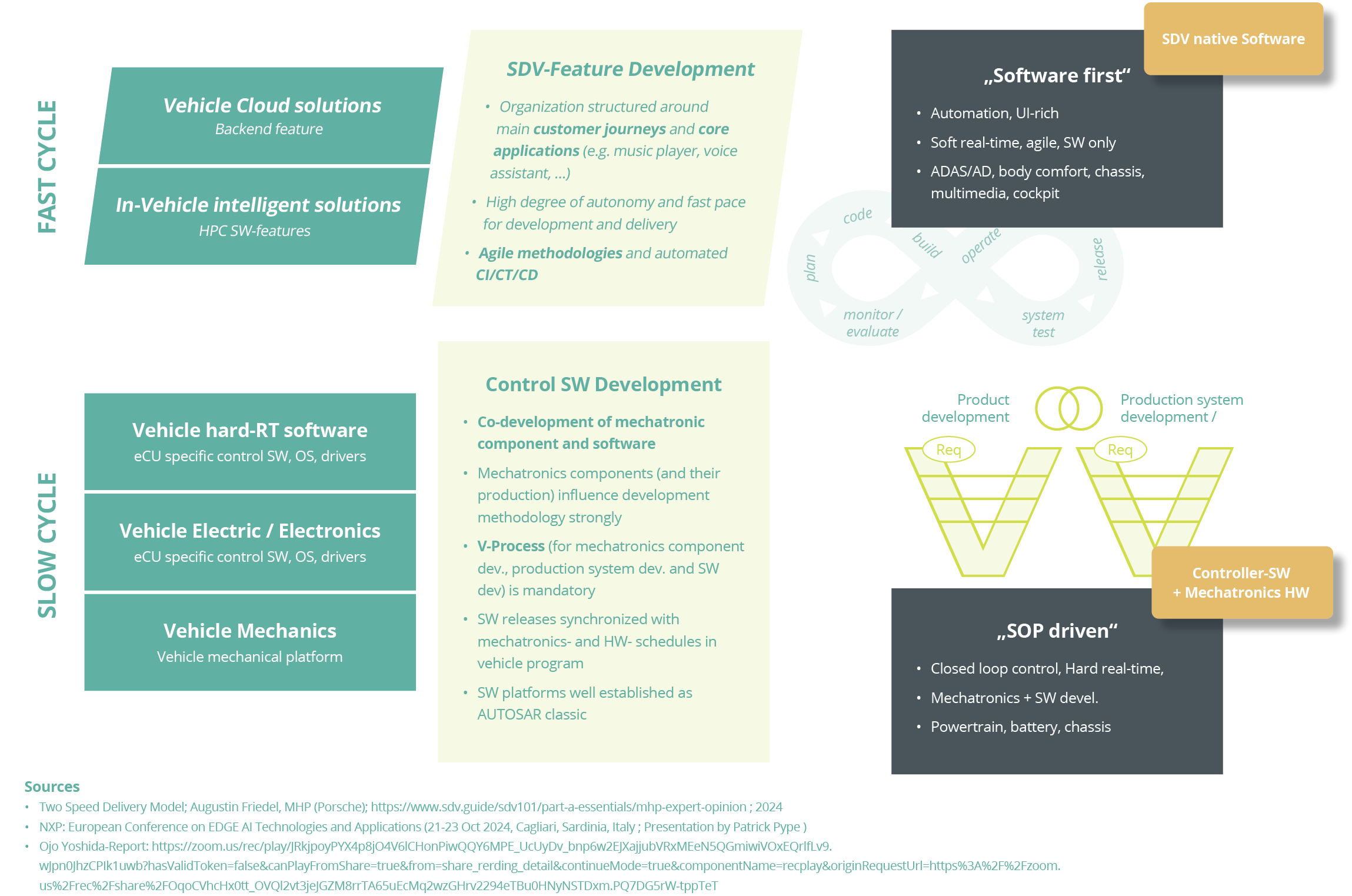
This dual‑speed framework allows OEMs to combine rapid feature delivery with robust platform and lifecycle management. However, increasing functionality, tighter coupling of vehicle and cloud, and shared compute resources across domains are driving a sharp rise in software complexity.
3.1.4 Closing the Gap Between Complexity and Productivity
The automotive industry faces a widening and increasingly unsustainable gap between software complexity and development productivity. Fragmented and incompatible software platforms create significant redundancy and non‑value‑adding effort across development, integration, and maintenance. To remain globally competitive, the automotive software operating model must evolve along several dimensions:
Architecture and Platforms: Adoption of end‑to‑end software platforms with standardized interfaces, enabling reuse across vehicle families and decoupling software lifecycles from hardware.
Open‑Source Collaboration: Systematic development of non‑differentiating building blocks (e.g. middleware, hardware abstraction) based on open‑source software, leveraging community innovation and shared investment.
Development Methodologies and Toolchains: Scalable agile methods, advanced testing, continuous integration, and deployment pipelines across the full SDV lifecycle.
AI‑Assisted Development: Use of AI to automate design, code generation, integration, and testing, while preserving safety, security, and regulatory compliance.
Organizational Transformation: Adaptation of organizational structures, skills, locations, and partnerships to support software‑centric development without losing hardware excellence.
Towards a European SDV Ecosystem and Strategic Autonomy
To reinforce European leadership and strategic autonomy in the digital vehicle value chain, European automotive, embedded‑software, and semiconductor industries—together with the European Commission—are aligning complementary initiatives around a shared SDV vision.
A core objective is the creation of a European SDV ecosystem based on reusable, application‑oriented, and largely open‑source software building blocks, supported by shared toolchains and active participation of start‑ups and SMEs. Agility and development speed are critical success factors, making systematic reuse of proven components and close cooperation across initiatives essential to avoid duplication of effort and reduce time‑to‑market.
Key initiatives contributing to this ecosystem include ECAVA6, AUTOSAR7, Catena-X8, COVESA9, Eclipse SDV10, FEDERATE11, SOAFEE12, 2Zero13, CCAM14.
3.1.5 The Role of ECAVA
ECAVA provides strategic and architectural coordination for the European Connected, Automated, and Virtualized Automotive ecosystem. It supports alignment across SDV, CCAM, and data‑space activities, bridges research and industrial deployment, and promotes consistency between industry‑driven initiatives and European policy objectives.
ECAVA contributes in particular by:
Promoting coherent reference architectures across vehicle, edge, and cloud layers
Supporting collaboration on non‑differentiating building blocks
Strengthening links between SDV platforms, AI technologies, virtualized compute infrastructures, and data spaces
Enhancing Europe’s capacity to industrialize software‑defined mobility solutions
3.1.6 Layered SDV Hardware/Software Stack
European initiatives converge on a layered SDV hardware/software stack that structures complexity and supports reuse:
Layer 1 – Hardware and Virtualization
High‑performance compute platforms, domain and zonal controllers, and abstraction of compute, sensor, actuator, and communication resources as well as hard real-time controllers.Layer 2 – SDV Software Platform (Middleware, OS, Hardware Abstraction)
The core enabling layer, consisting largely of open‑source, non‑differentiating building blocks that decouple hardware and software lifecycles and enable efficient collaboration across OEMs, suppliers, SMEs, and IT companies. This layer is critical for portability, scalability, and edge‑to‑cloud integration.Layer 3 – In-vehicle SDV Applications
Differentiating vehicle applications, including infotainment, automated driving, ADAS, cockpit HMI, charging, routing, powertrain, chassis, and comfort functions.Layer 4 – Cloud SDV applications
Many SDV applications require cloud services and data, such as traffic and weather information, billing services for tolls, parking and charging, parking availability, and infotainment services.
Layer 5 – AI Assisted Engineering Automation and Processes
Modular toolchains supporting model‑based design, simulation, testing, integration, and deployment, increasingly leveraging AI to improve productivity and quality. (see also SRIA Chapter 2.3).
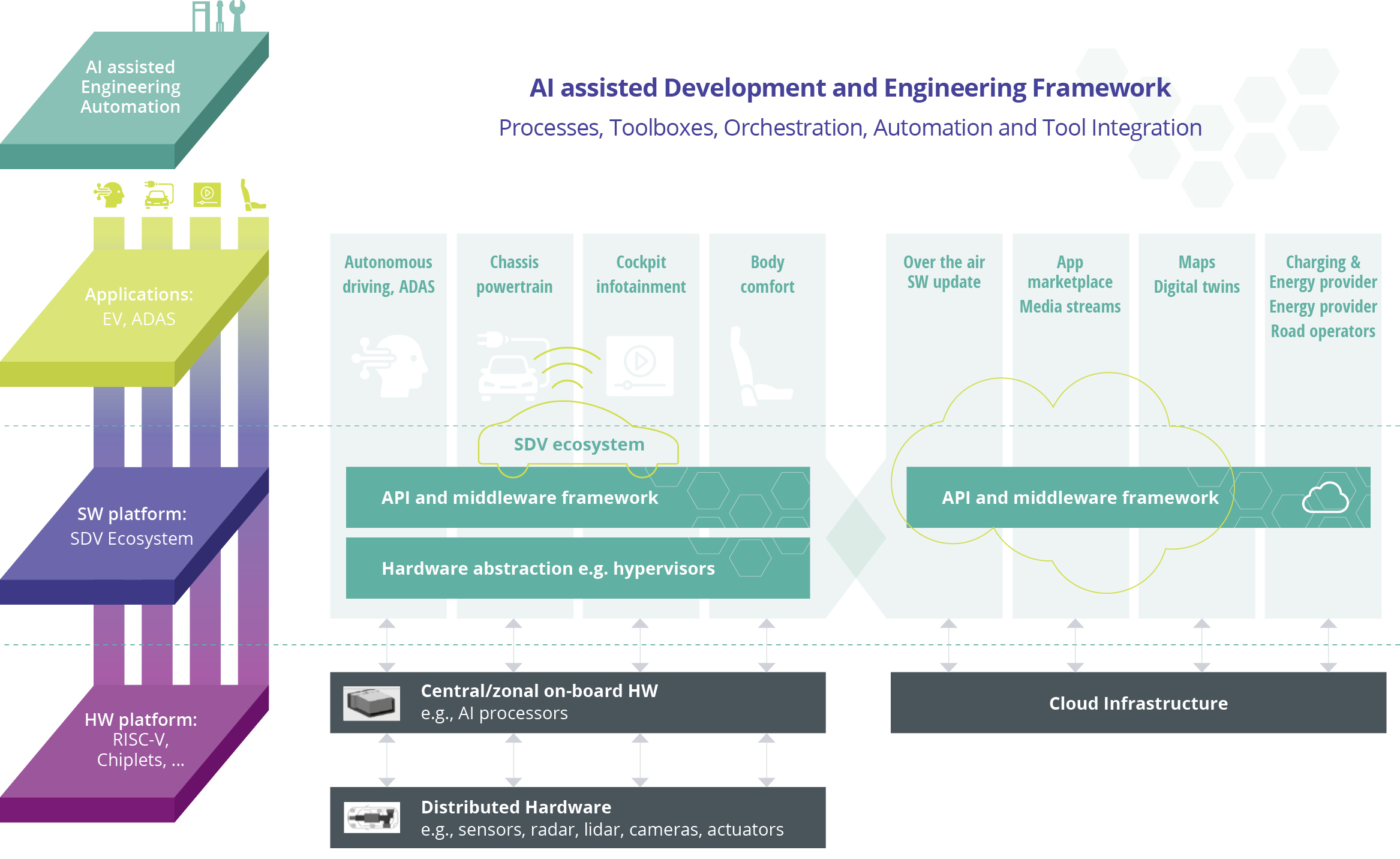
Figure 3.1.2 : SDV Layer model
Standards play a central role in ensuring interoperability, semantic consistency, diagnostics, data governance, and ecosystem integration. Continued contribution to and evolution of relevant standards is essential to support the SDV ecosystem.
By aligning with alliances such as ECAVA, Eclipse-SDV, Catena-X, COVESA, SOAFEE, 2Zero, CCAM and AUTOSAR, Europe aims to create a shared ecosystem that reduces time-to-market and fosters a vibrant startup and SME landscape for mobility applications.
These layers of SDV mobility systems form an integrated framework consisting of hardware, software and AI.
3.1.7 Major Challenges
The ongoing transformation of the mobility landscape defines the following six core RDI (Research, Development, and Innovation) challenges, which are explained in the following sections:
Major Challenge 1: SDV Hardware Platforms – Developing modular, scalable, and flexible hardware architectures that ensure uncompromising safety and security.
Major Challenge 2: Software Platforms for the SDV of the Future – Engineering modular, reusable, and secure software environments that support seamless edge-to-cloud integration.
Major Challenge 3: The Green Deal – Advancing technologies to enable climate-neutral and energy-optimized mobility ecosystems.
Major Challenge 4: Digitalization – Implementing affordable, safe, and connected automated mobility solutions for both passengers and freight.
Major Challenge 5: Edge-to-Cloud Mobility Applications – Delivering enhanced end-user value through interconnected digital services and cloud-integrated functions.
Major Challenge 6: AI-Enabled Engineering Toolchains – Accelerating agile, collaborative software development and streamlining the validation of SDV and ADAS/AD systems through artificial intelligence.
3.1.7.1 Major Challenge 1: SDV hardware platforms: modular, scalable, flexible, safe & secure
3.1.7.1.1 Evolution of SDV EE-architecture
With code complexity projected to reach 1 billion lines by 2030, current E/E architectures face critical bottlenecks in networking, latency, and wiring. This is driving a shift towards software-defined vehicle (SDV) architectures and a transition from distributed ECUs to centralized, high-performance computing for automation supported by zonal controllers mainly for data acquisition and safety-relevant real-time control tasks. Figure 3.1.3 below indicates the transition from the classical distributed ECU architecture to the SDV central-zonal architectures.
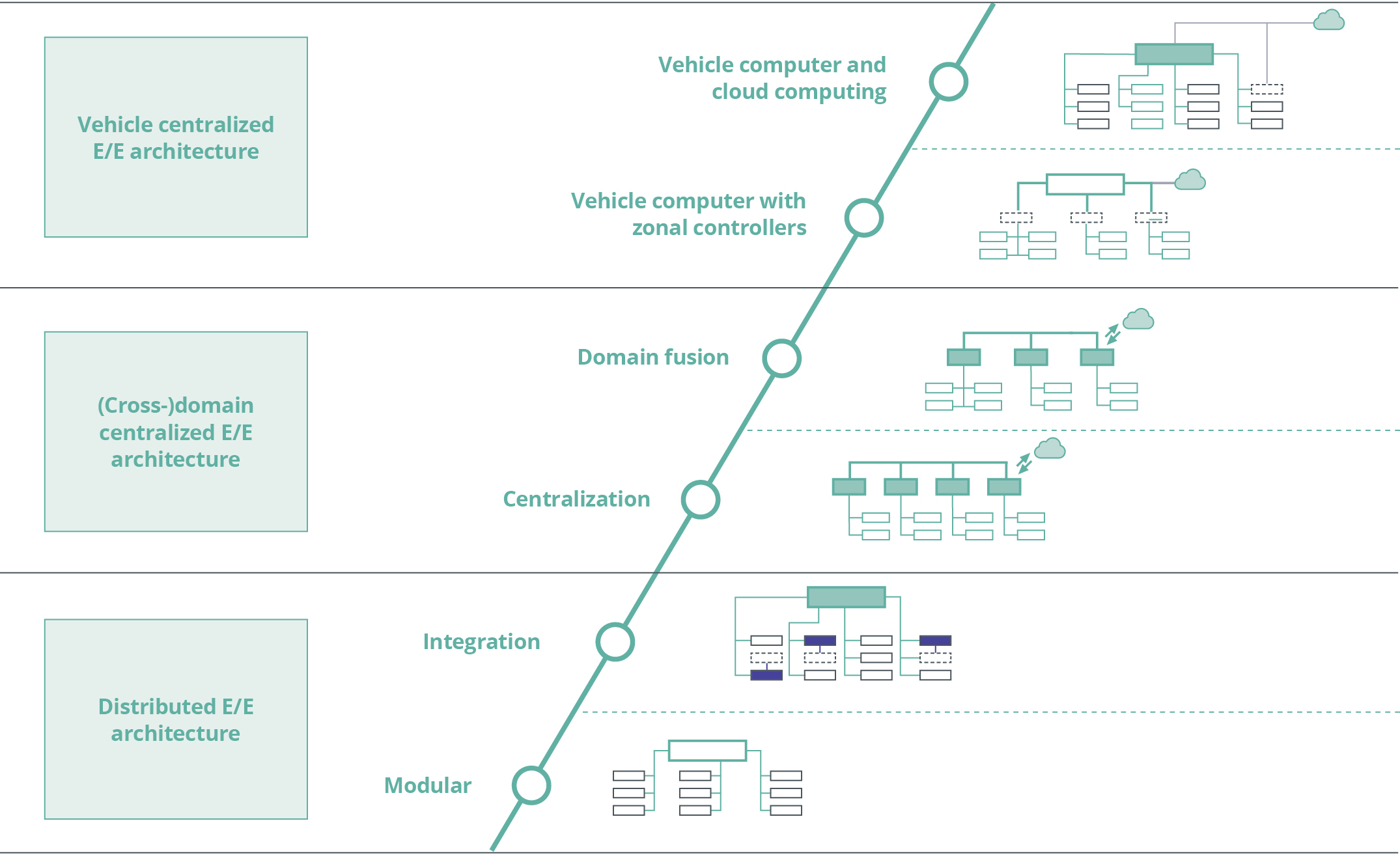
Figure 3.1.3 : Electric and Electronic Architectures for SDV: Topologies and Networking 15
3.1.7.1.2 Layers and roadmap in SDV HW platforms
It is expected that there will be no single vehicle architecture, but that there will be different variants, based on the type of OEM and/or based on the type of car (low-end versus high-end), as depicted in the picture above. In addition, the growing complexity of both automotive software and E/E architectures (as illustrated qualitatively in the figure below) requires new families of high-end control units and application-specific processors with many system integration challenges.
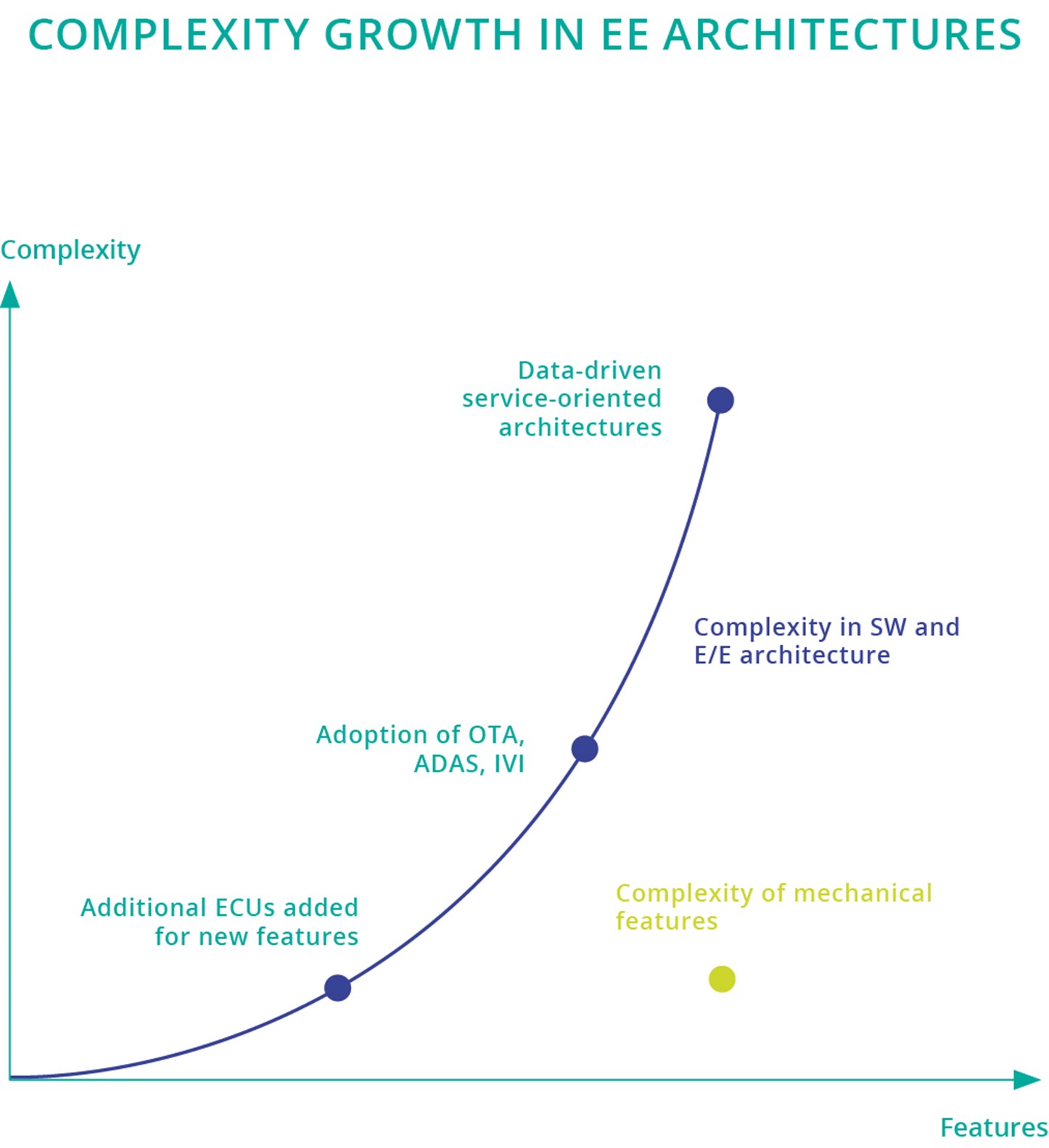
Figure 3.1.4 : Complexity growth in EE architectures
3.1.7.1.3 RISC-V automotive roadmap
The Mobility hardware layer consists of the following major components:
High-Performance Computing (supporting edge-AI) and safety critical real-time controllers: Serving as the foundational enabler for software stacks and SDV platforms
Power Electronics & Actuation: Driving the transition to electric propulsion and energy efficiency (see also Major Challenge 3).
Actuator, Sensing & Perception: Providing the essential hardware for real-time controllers, safety, security as well as environmental awareness and data acquisition (see also Major Challenge 4).
Reliable, high-performance communication within vehicles and between vehicles, the cloud and other vehicles (see also Major Challenge 5).
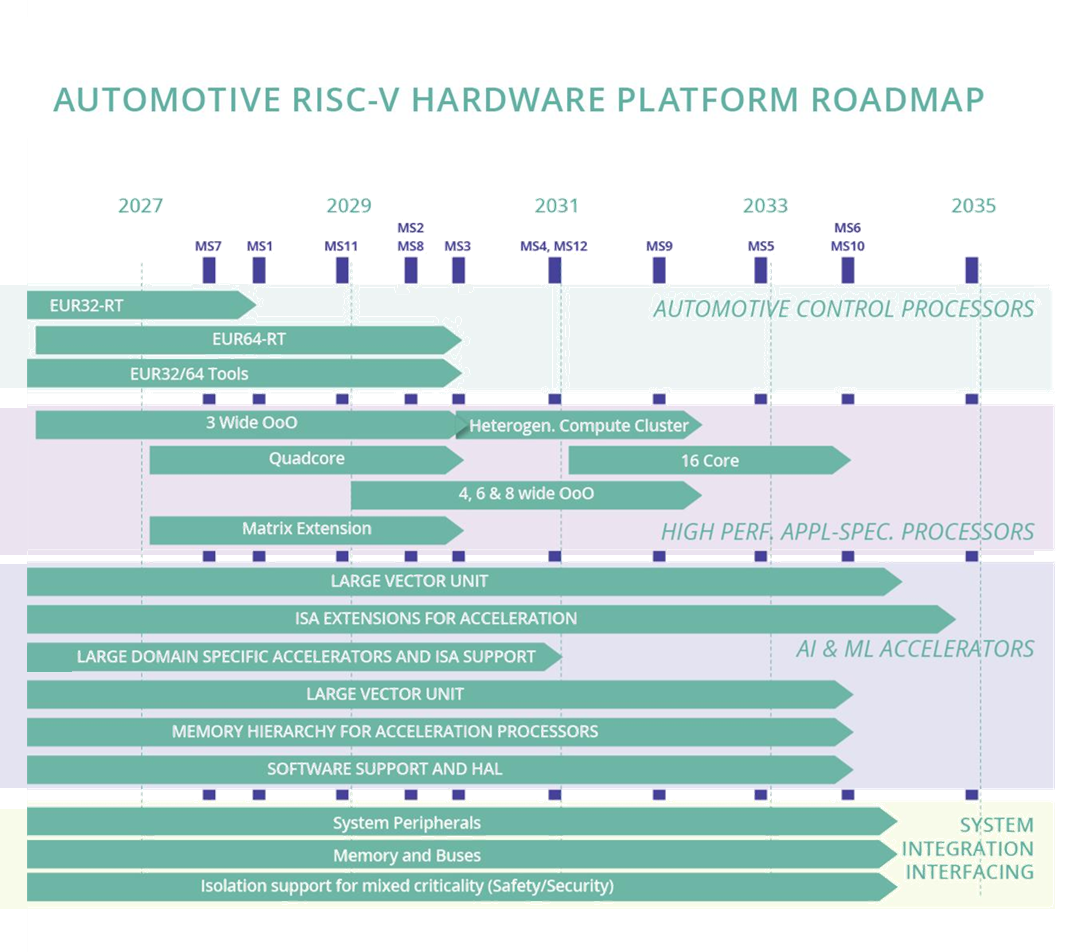
Figure 3.1.5 : Automotive RISC-V hardware platform roadmap
To navigate the shift toward centralized architectures, a high-level roadmap was developed based on the open-standard RISC-V ISA. It offers a flexible reference platform for European innovation16, 17, 18, 19, 20. This framework ensures technological sovereignty by categorizing R&D into four pillars:
Scalable Control & High-Performance Processors: Developing both real-time control and high-end application processors.
AI/ML Accelerators: Integrated hardware for advanced perception and decision-making.
Next-Gen Interfacing: Deploying high-speed fiber optics and wireless "plug-and-play" communication.
System integration using chiplets addresses the challenges of monolithic SoCs, such as suboptimal cost structures, reduced manufacturing yield and increasing development effort by decomposing a SoC into smaller, function‑specific dies—such as CPU, AI acceleration, I/O, networking, and safety—connected via high‑speed die‑to‑die interconnects21
Power electronics
The European semiconductor industry has a very strong footprint in power electronics, in particular for mobility. Cost and quality aspects drive the rapid development of new semiconductor technologies, packaging and system design.
Strong cooperation between automotive manufacturers, Tier-1 suppliers and semiconductor providers is essential for success.
The main development challenges are:
New SiC technologies including vertical SiC architectures
New GaN technologies for high-frequency applications with increased voltage levels
Packaging aspects to increase the power per volume ratio and allow better cooling
New standard packaging and interface solutions to decrease costs and increase reliability
Synergies between different domains (aeronautics, automotive, industry) to allow economies of scale
Data collection on a wider scale to allow in-situ predictive maintenance and input for new device developments
Development of new technologies such as Ga2O3 or Diamond technologies
Standardisation of quality requirements and checks for new technologies in new use cases to speed up adoption
Better understanding of aging effects in order to enable the development of high-quality, high-performance products
3.1.7.1.4 Chiplets and SoCs in SDV hardware platforms
In automotive SDV platforms, chiplet architectures enable:
Heterogeneous integration, allowing each function to use the most appropriate process node;
Performance scalability, by adding or upgrading compute chiplets without redesigning the entire SoC (e.g. also for cybersecurity);
Improved yield and cost efficiency, particularly for AI‑heavy designs; and
Platform longevity and obsolescence management, aligning long vehicle lifecycles with faster silicon innovation22;
Energy efficiency;
Miniaturisation;
Supply Chain Resilience.
For automotive adoption, chiplet architectures must rely on standardized interconnects and automotive‑grade safety mechanisms. Technologies such as UCIe (Universal Chiplet Interconnect Express) and emerging automotive extensions enable:
Deterministic, high‑bandwidth die‑to‑die communication.
Propagation of safety and isolation domains across chiplets; and
Supplier interoperability without vendor lock‑in 23.
Open ecosystems—including RISC‑V‑based compute and AI chiplets—further enhance architectural flexibility and sovereignty by allowing OEMs and Tier‑1s to customize instruction sets, accelerators, and safety mechanisms while retaining software portability 24, 25.
3.1.7.1.5 Critical infrastructure for hardware platforms
To support these high-performance clusters and ensure "freedom from interference" for safety-critical tasks, the roadmap prioritizes: (1) Shared Cache Architectures: Managing massive request volumes from out-of-order cores without serialization; (2) QoS-enabled Interconnects: High-bandwidth fabrics that prioritize safety-critical traffic; (3) Advanced memory controllers: High-throughput controllers designed to minimize contention and latency.
3.1.7.1.6 Hardware abstraction, virtualization and hard real-time controllers as part of the SDV hardware layer
In the SDV hardware layer, hardware abstraction, virtualization, and hard real‑time controllers work together to reconcile mixed‑criticality workloads on shared compute platforms. A standardized hardware abstraction layer (HAL) decouples vehicle software from underlying SoCs and accelerators, enabling portability, OTA updates, and long platform lifetimes despite heterogeneous silicon. On top of this, virtualization and partitioning technologies—including type‑1 hypervisors, microkernels, and hardware‑assisted isolation—allow multiple operating systems (e.g., POSIX/Linux, AUTOSAR Adaptive, and safety RTOSs) to coexist securely on the same hardware, with strict spatial and temporal separation to guarantee freedom‑from‑interference. This HAL connects the SDV-HW layer with SDV middleware layer.
Within this consolidated environment, hard real‑time controllers (often implemented as dedicated cores, safety islands, or isolated partitions) execute time‑critical control loops for braking, steering, powertrain, and body functions, ensuring deterministic latency and compliance up to ASIL‑D, independent of best‑effort or AI‑heavy workloads. Together, these mechanisms enable SDV platforms to centralize compute without compromising safety, determinism, or upgradability, aligning long automotive lifecycles with software‑centric development and heterogeneous hardware evolution.
3.1.7.1.7 Key RDI Priorities:
Centralized E/E Architectures: Consolidating functions into Domain (DCU) or Zonal Control Units (ZCU), ultimately leading to centralized System-on-Chips (SoCs) that integrate autonomous driving, infotainment, and cabin control.
The RISC-V Open Standard: Leveraging the RISC-V ISA to develop flexible, European-led reference platforms. This includes scalable control processors, high-performance application processors, and dedicated AI/ML accelerators.
High-Bandwidth Infrastructure: Developing advanced shared cache memories, QoS-enabled interconnects, and memory controllers to manage high data throughput while ensuring freedom from interference for safety-critical applications.
Automotive Chiplets & Advanced Packaging: Utilizing chiplet-based designs to balance performance with affordability. This involves mixing cutting-edge and mature technologies while defining clear boundaries between "open-source" and "proprietary" architectural zones.
Next-Gen Connectivity: Integrating fiber optics and wireless communication (including plug-and-play software) to handle the massive data flow required for increased vehicle autonomy and security.
HW/SW abstraction and virtualization
Strategic Impact: This modular hardware foundation ensures that European OEMs can manage escalating complexity while maintaining technological sovereignty and the ability to deliver continuous "software freshness" over the vehicle's lifespan.
3.1.7.2 Major Challenge 2: SW platforms for SDV of the future: modular, scalable, re-usable, flexible, safe & secure, supporting edge2cloud applications
3.1.7.2.1 Software‑Defined Vehicles: Platforms, Architectures, and Ecosystems
Software has become the primary value driver for modern mobility, with software complexity increasingly outpacing development productivity. To remain competitive, the automotive industry is transitioning from hardware‑centric designs to a software‑defined vehicle (SDV) paradigm, in which functionality is continuously delivered, updated, and enhanced through software. This shift fundamentally changes how vehicles are designed, developed, produced, and operated over their entire lifecycle.
SDV mobility software leverages data acquisition, sensor fusion and connectivity to orchestrate vehicle actuation, data management, and the human-machine interface (HMI).
3.1.7.2.2 Paradigm Shift: Hardware/Software Abstraction and Edge‑to‑Cloud Integration
Regular over‑the‑air (OTA) software updates and cloud‑integrated edge‑to‑cloud applications are reshaping vehicle lifecycles. Capabilities such as smart charging, automated parking, navigation, ADAS/AD (driving assistance up to autonomous driving) and predictive maintenance increasingly rely on close interaction between in‑vehicle software and off‑board cloud services. OTA updates significantly increase customer value by enabling continuous functional improvements after vehicle delivery.
These capabilities require a robust abstraction layer decoupling software from hardware. This abstraction uses the HAL functionalities and is enabled by comprehensive software platforms comprising virtualization, operating systems, middleware, and standardized APIs. Such platforms support “software freshness” throughout the vehicle’s lifetime, allow independent evolution of hardware and software, and enable scalable edge‑to‑cloud integration.
Recognizing this transformation, the automotive industry has committed to strengthening collaboration and capability-building in open‑source software, formalized through a memorandum of understanding26 signed in June 2025.
The Software‑Defined Vehicle (SDV) software layer comprises the full software stack that defines vehicle functionality independently of the underlying hardware and spans system software (safety‑certified operating systems, hypervisors, and middleware), service‑oriented communication frameworks, platform services for diagnostics, cybersecurity, and over‑the‑air (OTA) lifecycle management, as well as application software covering automated driving, infotainment, body, chassis, and energy domains.27
A central objective of this layer is the systematic decoupling of software from hardware, enabling portability, reuse, continuous deployment, and long‑term maintainability across multiple vehicle generations.28 In the European context, this approach is increasingly anchored in open, standards‑based software platforms—such as Eclipse-SDV, SOAFEE, and COVESA—aimed at reducing fragmentation and strengthening digital sovereignty while preserving OEM differentiation.29,30
The associated research, development, and innovation (RDI) challenges are substantial: ensuring deterministic real‑time behavior and functional safety in mixed‑criticality, virtualized environments; scaling verification, validation, and certification processes for software systems comprising hundreds of millions of lines of code; enabling secure, fail‑operational OTA updates over vehicle lifetimes exceeding a decade; integrating DevOps and cloud‑native development practices into safety‑critical product lifecycles; and aligning open‑source collaboration with automotive quality and regulatory requirements.31,32 Addressing these challenges requires coordinated advances in software architectures, tooling, governance, and validation methodologies and has become a strategic priority for maintaining the competitiveness and autonomy of the European automotive ecosystem.
3.1.7.2.3 Robust governance mechanisms for third-party software and services
Software‑defined vehicles are evolving into open yet controlled platforms that extend beyond OEM functionality. This requires modular software architectures, OTA lifecycle management, and governance for integrating third‑party services.
Standardized, credential‑based trust and authorization mechanisms enable OEMs to certify providers, define execution policies, and control access to vehicle resources, while allowing users to transparently manage consent.
By combining SDV architectures with policy‑bound authorization, vehicles can support dynamic mobility ecosystems while ensuring safety, cybersecurity, compliance, and data sovereignty across the lifecycle.
3.1.7.2.4 Key RDI Priorities:
Scalable, cloud‑capable SDV reference architectures supporting evolving domain‑ and zone‑oriented E/E topologies;
Vendor-neutral SDKs enabling hardware‑ and operating‑system‑independent application development and testing;
Safe, secure, and reusable APIs abstracting hardware, middleware, kernels, and drivers;
Systematic integration of safety and cybersecurity across the full SDV stack for rapid (re-)homologation, especially for OTA updates;
Focus on energy efficiency in software as well (especially when using edge-AI)
Usage of AI‑enabled tools to increase software productivity without compromising compliance;
Integrate and adapt the European GNSS technology into automotive applications to increase the resilience of the mobility in Europe
Provide backward compatibility of middleware for easy updates
Robust governance of third-party SDV SW applications and services
3.1.7.3 Major Challenge 3: Green deal: enable climate and energy optimised mobility
3.1.7.3.1 Strategic Context: Electrification and Defossilisation of Mobility
Global regulations targeting pollution and CO₂ emissions are accelerating the electrification of mobility across all transport modes. Passenger vehicles are increasingly based on battery electric (BEV), hybrid electric (HEV), or fuel-cell (FCEV) architectures. Scenario analyses (e.g. BIPE, France) show that regulatory stringency will determine the pace and structure of this transition. One possible pathway is the “Green Constraint” scenario, aligned with the European decision to ban new fossil-fuel vehicles by 2035. This decision creates a major industrial, technological, and societal transformation challenge.
Industry and politics in Europe predict that by 2035:
The majority of cars sold in Europe will be electrified.
Electrified vehicles will represent ~70% of global vehicle sales.
Around one third of vehicles will rely on high-voltage architectures (400–1000 V) requiring on‑board chargers.
Fuel-cell systems may remain relevant for long-haul trucks, rail, maritime applications, and selected aviation use cases, although industrial commitment remains uncertain.
3.1.7.3.2 Convergence of Mobility and Energy Systems
Electrified vehicles are becoming integral components of the European energy ecosystem. Vehicle batteries will increasingly act as distributed energy storage through bidirectional charging (V2G), while on-board energy generation (e.g. photovoltaics, heat recovery) will partially feed energy back to the grid. This convergence imposes fundamentally new requirements on vehicle electrical and electronic systems.
Vehicle components traditionally designed for ~8,000 operating hours must now withstand continuous grid-connected operation over the full vehicle lifetime, increasing required durability by a factor of 5–15. This creates major challenges for reliability, safety, and validation, and requires systematic use of digital twins, advanced simulation, and lifecycle-oriented design methodologies.
3.1.7.3.3 Systemic Impact and CO₂ Reduction Speed
Electrification will profoundly reshape supply chains and competence distribution across the automotive and electronics ecosystems. However, achieving rapid CO₂ reduction requires solutions beyond new vehicle sales, whose impact unfolds only medium to long term. Measures targeting the existing global vehicle fleet offer higher short-term impact, including:
Retrofit solutions and efficiency upgrades,
Car-sharing and improved vehicle utilisation,
Energy-efficient tires, improved lubrication,
Digital solutions enabling teleworking and optimised mobility.
Electronics and digital technologies play a key role in enabling rapid deployment of such measures.
3.1.7.3.4 Key RDI Priorities
Components and Architectures
Advanced semiconductor technologies (SiC, GaN, Ga₂O₃).
Novel power electronics architectures exploiting wide-bandgap devices.
Modular, scalable and flexible E/E platforms.
Hardware upgradability, repairability, and component replacement with higher-efficiency modules.
Low environmental impact across production, operation, and end-of-life.
Reduction of critical raw materials and design for recyclability and circularity.
Software, Intelligence and Control
Reconfigurable and updateable software architectures (including OTA).
Embedded intelligence (AI-enabled control, real-time algorithms, cognitive perception).
Fault-tolerant and fail-operational concepts.
Predictive diagnostics, maintenance and recovery strategies.
Cloud–edge–fog processing frameworks.
Proof of robustness, trustworthiness, and quantification of operational risks.
Electrified Powertrains and Energy Management
Advanced battery management systems for solid-state, sodium-ion, and high-silicon batteries.
Accelerated lifetime testing, diagnostics and degradation-aware control.
Smart batteries with sensing, communication, lifetime data logging and digital battery passports.
Efficient, safe and fast charging and refuelling solutions (“plug and charge”).
Integrated energy management linking vehicles, charging infrastructure and the power grid to minimise infrastructure investment.
Fuel Cell Systems
Degradation-aware and efficiency-optimised control for fuel-cell vehicles, especially trucks and buses.
Predictive control using route, traffic and weather data.
State-of-health monitoring via virtual sensors and advanced sensing technologies.
AI-enabled safety and IoT-based diagnostics.
Power Devices and Infrastructure
AI-integrated power devices with enhanced functionality.
Seamless interaction between vehicles, charging stations and energy infrastructure.
Interoperability and communication standards (including spectrum and bandwidth management).
Connectivity, Safety and Automation
Reliable, low-latency and resilient wireless communication combined with advanced sensing is essential for traffic efficiency, safety and fatality reduction. This drives stringent requirements on communication components, system architectures, and validation methods.
Collaborative and self-organising multi-agent systems will enable new logistics concepts and cooperation across land, air and maritime domains.
Transport Modes and Application Scope (The addressed technologies apply across a wide range of platforms):
Passenger cars (M1/M2), light vehicles and micro-mobility.
Trucks, commercial vehicles, agricultural and non-road machinery.
Ships and maritime systems.
Aircraft, manned and unmanned air vehicles (including drones).
Two- and three-wheel vehicles.
Off-road and special-purpose vehicles (land, air, water).
Integrated Mobility Concepts and Societal Impact
Cross-modal synergies between automotive, air and freight transport can significantly reduce costs and emissions
Urban light personal and small freight mobility, including shared micro-vehicles interoperable with public transport for last‑mile connectivity.
Flexible multi-passenger vehicles, privately owned or shared, with enhanced safety and autonomous-ready features.
Right-sized long-haul and commercial vehicles optimised for logistics, last-/first-mile delivery, and urban operation.
Environmentally friendly mobile machinery for agriculture and construction, increasing efficiency and safety.
3.1.7.4 Major Challenge 4: Digitalisation: affordable and safe automated and connected mobility for passengers and freight
3.1.7.4.1 Regain European sovereignty and strengthen global competitiveness in embedded software for mobility
The four major mobility megatrends—electrification, automation, connectivity, and shared mobility—are fundamentally enabled by advanced electronics, software, and artificial intelligence. The rapid transition toward software‑defined vehicles and platforms (SDVs) makes software, data, and AI decisive for safety, sustainability, competitiveness, and resilience. This challenge is therefore closely linked to European leadership in both hardware and software technologies.
Europe’s ambition is to deliver safe, sustainable, inclusive and affordable mobility, while strengthening digital sovereignty and open strategic autonomy in critical technologies. This ambition is driven by major societal challenges such as climate change, urbanisation, demographic change, and increasing security risks, as well as by intensified global competition and geopolitical dependencies.
The overarching vision is to realise always‑connected, cooperative, safe, secure and automated mobility systems—for passengers, freight and services—across road, rail, waterborne, air and drone mobility, based on trusted, energy‑efficient, and European‑controlled hardware, software and data infrastructures, combined with advanced human–machine interaction.
3.1.7.4.2 Automation Across Transport and Drone Domains
For road mobility, Europe pursues three core objectives:
Eliminate road fatalities caused by human error by 2050,
Ensure that increased automation introduces no additional fatalities, and
Reduce validation and verification costs from today’s 70–80% of development effort to approximately 60% despite the increased validation effort caused by faster code generation with AI copilots.
Achieving these goals relies on Key Digital Technologies and is central to the Horizon Europe Partnership on Connected, Cooperative and Automated Mobility (CCAM). Given the scale and safety‑critical nature of the challenge, success requires cross‑sector collaboration, shared operational data, and coordinated actions among industry, research, and public authorities.
Automation in rail transport enables driverless trains, optimised asset usage, higher capacity, improved punctuality, and enhanced safety. In waterborne transport, increasing automation and connectivity support condition‑based maintenance, remote operation, and the progressive deployment of autonomous and unmanned surface and underwater vessels, improving efficiency, safety, and environmental performance.
In aviation and aeronautics, automation reduces pilot workload, enhances flight management, and enables predictive maintenance, contributing to safer and more efficient air transport. Urban Air Mobility (UAM) and drone-based services introduce a new layer of mobility above cities and regions.
Drones play a strategic role for Europe’s safety, security, and resilience:
Border and maritime surveillance,
Infrastructure inspection and critical asset protection,
Emergency response, search and rescue, and disaster management,
Environmental monitoring and crisis assessment,
Secure logistics and medical deliveries in hard‑to‑reach areas.
As such, civil and civil‑security drone capabilities must be considered a strategic technology domain. Autonomous and connected drones depend on advanced ECS, AI, secure communications, and reliable control software, making them a key pillar of Europe’s open strategic autonomy. Ensuring European control over drone platforms, autonomy stacks, communication systems, and data flows is essential for safeguarding sovereignty and public security while enabling civilian innovation.
3.1.7.4.3 Key Challenges for Connected, Cooperative and Automated Mobility
Connected, cooperative and automated mobility - including ground vehicles, rail systems, ships and drones - will profoundly shape future mobility and security systems. However, they introduce multidimensional challenges, especially in mixed environments where different levels of automation coexist with human‑operated systems and vulnerable users.
Removing human operators (drivers, pilots) from platforms or supervision loops requires fail‑operational in-vehicle HW and in-vehicle and associated cloud SW, robust tele‑operation and tele‑assistance, and dependable operation across extended operational design domains (ODDs). Both stepwise automation (“conversion design”) and purpose‑built fully autonomous systems (SAE level 5 / unmanned aerial systems) have reached pilot deployment stages but require significant R&I to ensure scalability, safety, certification, and public trust.
As electronics and software represent a growing share of system value, demands increase for:
Cybersecurity, resilience and trustworthiness,
Privacy‑by‑design and sovereign data handling,
Safe degradation, redundancy and fallback strategies from component level to cloud services.
Digital Sovereignty and Open Strategic Autonomy
A European Autonomous and Drone Mobility Stack
A critical cross‑cutting objective is to strengthen Europe’s digital sovereignty, security, and resilience in automated mobility and drone systems. Today, essential parts of autonomy stacks—operating systems, middleware, AI frameworks, perception algorithms, cloud platforms—are largely developed and controlled outside Europe, creating strategic dependencies.
Europe therefore needs to establish a European Autonomous and Drone Mobility Stack:
a modular, interoperable, certifiable and European‑controlled ecosystem spanning hardware, embedded software, AI, tools, and standards, applicable across road vehicles, trains, ships and drones.
Key Objectives
Reduce dependence on non‑European critical software and AI components in safety‑ and security‑relevant mobility systems.
Secure end‑to‑end European value chains, from chips and power electronics to autonomy software and validation toolchains.
Embed safety, security, trust and compliance‑by‑design as competitive advantages.
Enable reuse across transport and drone platforms, including dual‑use civil and security applications.
Strengthen European industry competitiveness and innovation capacity.
Core Stack Elements
European‑controlled SDV middleware, hypervisors and service‑oriented architectures.
Trusted, explainable and certifiable AI for perception, decision‑making and control, including drone autonomy as part of a European controlled autonomous vehicle stack
Standardised interfaces and reference architectures to ensure interoperability without vendor lock‑in.
Digital twins, simulation and verification frameworks for certification and operational assurance.
Sovereign cloud–edge–vehicle–drone data spaces aligned with European data governance and security standards.
3.1.7.4.4 Key RDI Priorities:
Robust perception and situational awareness, including integrated sensing and communication for protecting vulnerable users and enabling safe drone operations in dense airspaces.
Real‑time collaborative and multi‑agent decision‑making under uncertainty, across vehicles, infrastructure and drones.
Energy‑efficient and trustworthy AI, edge intelligence, continual learning and adaptive resource management.
Cybersecurity, safety assurance and certification for highly autonomous and unmanned systems.
Environmental and economic sustainability, including energy efficiency and lifecycle optimisation.
Interoperability and standards, across vehicle, infrastructure and drone ecosystems.
Dependable sensing, resilient localisation and V2X/U‑space communication systems.
Hardware–software co‑design, digital twins and continual learning.
SDV‑centric and drone‑centric ECS architectures with OTA, remote operation and monitoring.
Advanced AI‑based predictive control enabling new active safety paradigms.
Predictive health monitoring and lifetime management of sensors, AI modules and control systems.
Regulatory and legal challenges (refer also to Chapter 2.4, major challenge 4)
Regulatory frameworks and liability: Creating consistent regulatory frameworks that can keep pace with rapid technological advancements as well as determining liability and allowing for interoperable and fast deployment across Europe is challenging.
Ethical and social challenges
Ethical decision-making: Autonomous vehicles must be programmed to make ethical decisions in situations where harm is unavoidable. Creating consensus on these ethical frameworks is difficult.
Public acceptance: Gaining public trust and acceptance of autonomous vehicles is crucial. This involves addressing fears and misconceptions about the safety and reliability of the technology.
Impact on employment: The widespread adoption of autonomous vehicles may impact jobs, particularly in sectors like transportation, logistics and digital industry.
Environmental and Economic Challenges
Energy consumption: Autonomous vehicles, especially when equipped with multiple sensors and communication systems, can have high energy demands. Balancing energy efficiency with performance is necessary.
Economic viability: The high cost of developing, testing, and deploying autonomous vehicles and the necessary infrastructure can be a barrier to widespread adoption. Ensuring economic viability for manufacturers, consumers, and municipalities is challenging.
Interoperability and standardization
Interoperability: Ensuring that autonomous vehicles from different manufacturers can communicate and operate seamlessly with each other and with infrastructure is critical. This requires standardization of communication and data exchange protocols and systems.
Standards development: Developing and implementing standards for autonomous vehicle performance, safety, and communication is a complex and ongoing process that requires coordination among industry stakeholders, regulators, and standards organizations.
Strategic Collaboration and Alignment
The required ECS and software innovations represent a structural shift driven by AI, data volumes, adaptability and multi‑agent coordination. Close collaboration with the European Connected and Autonomous Vehicle Alliance (ECAVA) and European AI, robotics, satellites and drone ecosystems is essential to ensure that automated mobility and drone technologies are developed, deployed and governed on European terms, reinforcing safety, resilience, industrial competitiveness and societal value. The created methods and technology advances should be application-independent in principle (of course, capable of being tailored to specific applications). Collaboration with the AI and robotics community should be strengthened, e.g. with the AI Data Robotics Association (ADRA)33 or the US National Robotics initiative34.
3.1.7.5 Major challenge 5: Edge-to-cloud mobility communication and applications
The rapid advancement of Cloud–Edge–IoT (CEI) technologies is driven by growing demand for digital twins, satellite communication, software-defined vehicles (SDV), and secure mobile robotics. These applications require ultra-low latency, real-time data processing, and distributed intelligence at the network edge. CEI technologies are therefore becoming a cornerstone of future digital infrastructures across multiple innovation domains, particularly transport and mobility.
Beyond technical performance, CEI solutions are essential enablers for addressing major societal challenges such as climate change, energy efficiency, and resilient mobility systems. Combining specialized hardware, AI-based optimization, and distributed computing with CEI architectures significantly improves energy and resource efficiency while enabling data-driven decision-making deep within complex systems of systems. In mobility, this results in powerful services distributed across cloud platforms, roadside infrastructure, and vehicle software, with cloud-native concepts increasingly extending into in-vehicle software architectures.
From a strategic perspective, CEI technologies create competitive advantages and open new business opportunities in a global market. Transport and mobility is one of the most relevant application domains, driven by the vision of zero emissions, zero accidents, and zero friction between transport modes, enabling sustainable, safe, and convenient mobility for passengers and freight. For Europe, CEI adoption represents an opportunity to strengthen domestic cloud and edge capabilities. However, the current dominance of international hyperscalers raises concerns regarding technological sovereignty, strategic autonomy, and long-term competitiveness of European actors.
3.1.7.5.1 Opportunities in Mobility and Transport
Edge-based processing enables safety-critical, privacy-sensitive, and latency-critical data to be handled close to sensors and actuators with high reliability and security.
Centralized shared cloud capabilities allow efficient handling of strategic transport functions such as planning, modelling, analytics, AI training, software engineering, lifecycle management, and software updates, including data valorisation.
New mobility services, including shared mobility platforms, connected and automated driving, and integrated multimodal services, become feasible through CEI-enabled architectures.
3.1.7.5.2 Research topics
Data sovereignty and privacy concerns, particularly in public transport, may limit acceptance of data processing on non-European or externally controlled cloud infrastructures.
Unclear data ownership models, especially in the public sector, raise questions about governance, accountability, and long-term control of transport data.
Vendor lock-in risks due to limited choice of cloud providers threaten competition and innovation in the European CEI ecosystem.
Growing cybersecurity risks, as vehicles and infrastructure become increasingly connected to external networks and cloud services.
CEI Application Scope and Functional Layers
Given the diversity of transport modes and services, CEI applications span traffic management systems, vehicles, mobility platforms, logistics, fleet management, planning tools, and data spaces. Efficient CEI deployment requires innovation across multiple functional layers:
Design Layer: Support for real-time processing of large, heterogeneous data streams (including vulnerable road users), combined with built-in privacy, security, and regulatory compliance.
Installation Layer: Scalable deployment of sensors and edge nodes, addressing power supply challenges (e.g. smart charging via lampposts), grid interaction, cost efficiency, and cross-departmental connectivity.
Operation Layer: Robust, AI-enhanced operation under varying conditions, enabling dynamic traffic control, seamless multimodal transfers, high data quality, and secure real-time access.
Value-Added Services: Two-way communication between vehicles and infrastructure, fast incident and weather detection, and content delivery for infotainment and user services.
Maintenance Layer: Lifecycle-aware maintenance strategies that bridge the mismatch between long-lived traffic control equipment and rapid IT innovation cycles.
Upgrade and Integration Layer: Phased integration of legacy systems and incremental upgrades to ensure continuity, scalability, and future readiness.
3.1.7.5.3 Key RDI Priorities
To realize CEI-based transport systems, research and innovation should focus on the following core building blocks:
High-performance edge computing platforms capable of real-time processing for connected and automated driving (see also SRIA chapter 2.1).
Reliable, low-latency connectivity, including V2V and V2I communication. Edge-to-cloud communication is no longer based solely on terrestrial infrastructure, but also on satellite communication. In this context, it is important for the European industry to develop solutions for safe and reliable communication between cars and satellites. Important items to consider are dedicated hardware solutions in the cars, specific antennas, interface solutions with different satellite systems and means to strengthen cybersecurity and resilience against failures (see also SRIA chapter 2.2).
Secure and privacy-preserving data management architectures handling massive real-time data volumes.
Scalable and modular infrastructures enabling gradual expansion and technology upgrades.
Intelligent sensor networks robust against environmental stress.
Deep integration of AI and machine learning for digital twins, predictive analytics, traffic optimization, and incident detection (see also SRIA chapter 2.3).
Strong interoperability standards to avoid fragmentation.
Cybersecurity-by-design, including encryption, secure updates, and continuous monitoring (see also SRIA chapter 2.4).
Energy-efficient system design, including low-power devices and renewable energy integration.
Flexible maintenance and upgrade mechanisms minimizing downtime and disruption.
Future CEI research in transport and mobility should emphasize large-scale pilots and cross-sector collaboration, particularly in SDV-related applications:
AI-driven traffic management using real-time data from all road users.
Automated tolling systems enabling seamless, Europe-wide payment without driver interaction.
Automated charging and billing, including vehicle repositioning solutions to improve charging accessibility for users without private parking.
Automated parking fee payment across public parking infrastructures.
Road weather information systems supporting automated driving through shared vehicle, infrastructure, and forecast data.
Bidirectional (V2G) charging to stabilize electrical grids using vehicle batteries.
Local traffic and pedestrian management for real-time safety and efficiency.
SDV app ecosystems, including vehicle app stores with OTA deployment.
These applications offer significant customer benefits and societal value but require tight alignment between the automotive industry, infrastructure operators, energy providers, IT vendors, and regulators. The automotive sector alone cannot deliver these solutions. Coordinated frameworks and regulatory support are often essential to accelerate deployment and adoption. European initiatives and associations such as ECAVA, CCAM and 2Zero play a critical role in aligning stakeholders across industries.
Cloud–Edge–IoT technologies are a foundational enabler for the digital transformation of transport and mobility. Their successful deployment requires not only technological innovation across compute, connectivity, data, and AI, but also strategic alignment across industries, governance models, and regulatory frameworks. CEI is therefore tightly interlinked with the broader ECS major challenges in transport and mobility and represents a key lever for achieving Europe’s climate, safety, and competitiveness objectives.
3.1.7.6 Major Challenge 6: AI-enabled engineering toolchain: agile collaborative SDV SW development and SDV as well as ADAS/AD validation (see also SRIA chapter 2.3)
European automotive players face intensified global competition. Non‑EU manufacturers and large technology companies have adopted software‑centric strategies earlier and benefit from:
Massive software investment budgets,
Scalable cloud platforms and hyperscaler ecosystems,
Indirect and data‑driven business models,
Strong state support in parts of East Asia.
To counteract this, Europe must establish new cooperative development models, toolchains, and V&V concepts that support fast, trustworthy, and collaborative SDV software development based on open ecosystems.
3.1.7.6.1 Next‑Generation Toolchains for SDVs spanning the complete DevOps cycle
Modern SDV development requires development pipelines that go beyond traditional CI/CT/CD and DevOps pipelines and address the following challenges:
Bringing AI-assisted automation to the complete DevOps cycle to significantly accelerate development
Multi‑party, collaborative SDV development (“Just‑in‑Time SDV integration”)
End‑to‑end product lifecycle support, from requirement engineering to operation monitoring and very frequent OTA updates
This requires:
Standardised artefact definitions and exchange formats
Integration sandboxes for complete SDV stacks
Domain‑specific testing strategies and tools
Technical and legal SDV guidelines (e.g. ADAS/AD, AI Act, Data Act, SOTIF, ISO standards)
3.1.7.6.2 Towards Fully Automated Software Development using Agentic AI‑Based SDV Software Factories
To meet short development cycles and long operational lifetimes, SDV software engineering must move toward full automation of the development lifecycle. Generative AI and Agentic AI enable:
Automated analysis of business epics into requirements and architectures,
Automated code and test generation,
Continuous quality analysis,
Intelligent and optimized test‑case and scenario selection from ODD, hazard, and scenario databases.
This results in an AI.assisted SDV software factory, combining speed, scalability, and safety. It will comprise several interacting pipelines, as indicated in Figure 3.1.6.
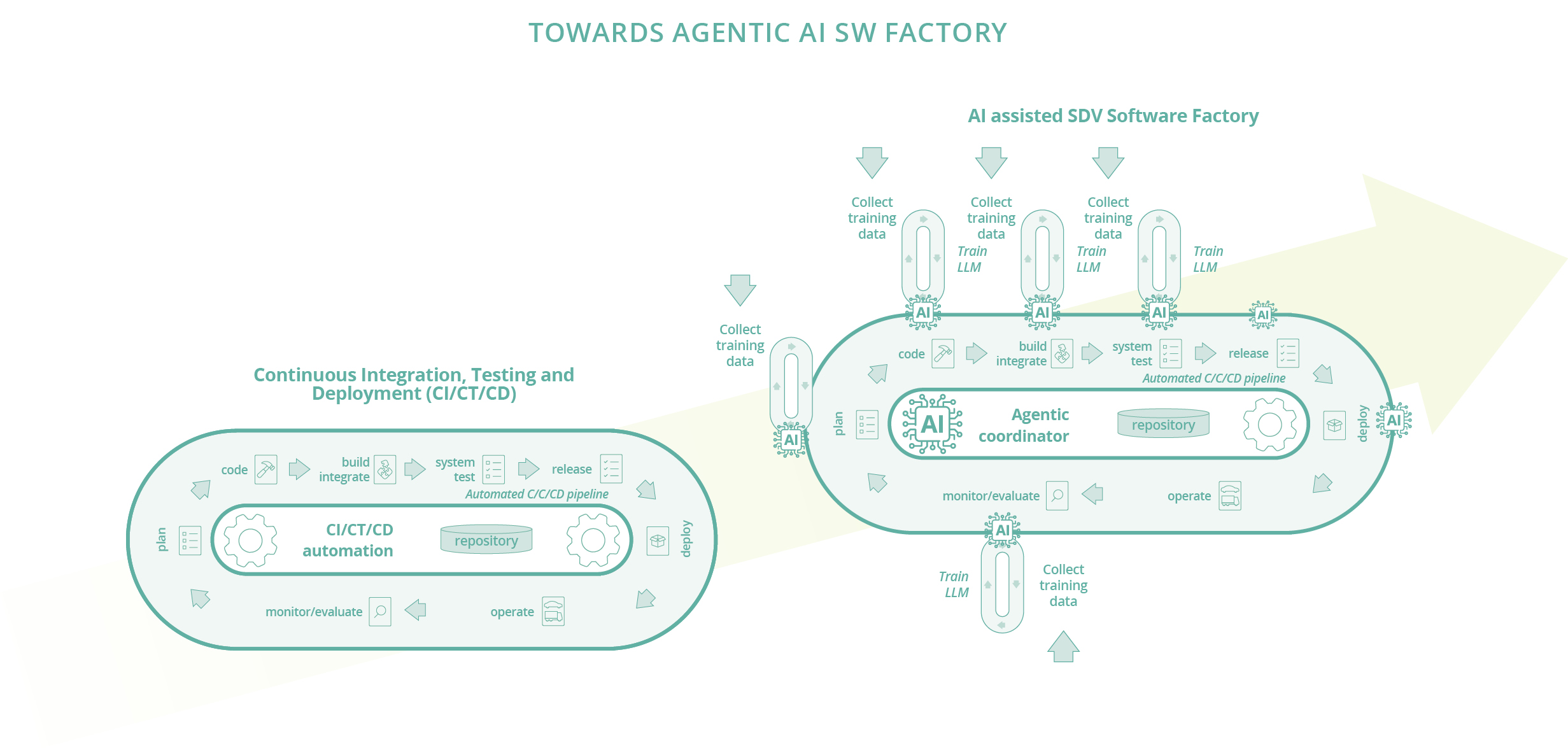
Figure 3.1.6 : Towards Agentic AI SW factory
The yellow parts in the figure above indicate automated activities, which are mainly performed by development agents and coordinated by the agentic coordinator.
Integrated AI‑Enhanced sub-pipelines of the SDV software factory
The automated SDV DevOps environment consists of four tightly coupled pipelines, interacting with human experts:
Development Pipeline
Specification, architecture, coding, integration, and build (extended CI/CT/CD)System Test Pipeline
Automated, scenario‑based testing across SDV domainsDevOps Monitoring Pipeline
Continuous monitoring of field data, quality, and system behaviourAI Knowledge Enhancement Pipeline
Continuous improvement of AI models using development and field data
These sub-pipelines continuously improve their LLMs using the best practice data from within the companies or open source.
3.1.7.6.3 Multiparty Collaborative SDV Development
SDV software stacks are developed by networks of OEMs, Tier‑1 suppliers, SMEs, and open‑source communities. Today’s fragmented CI/CD practices lead to long integration cycles—often several months—making rapid fixes for safety‑critical issues impossible.
New just‑in‑time collaboration models, supported by shared toolchains and automated regression testing, aim to reduce the time from code change to vehicle‑ready software to days rather than months, even for safety‑critical ADAS/AD functions as depicted in Figure 3.1.7.
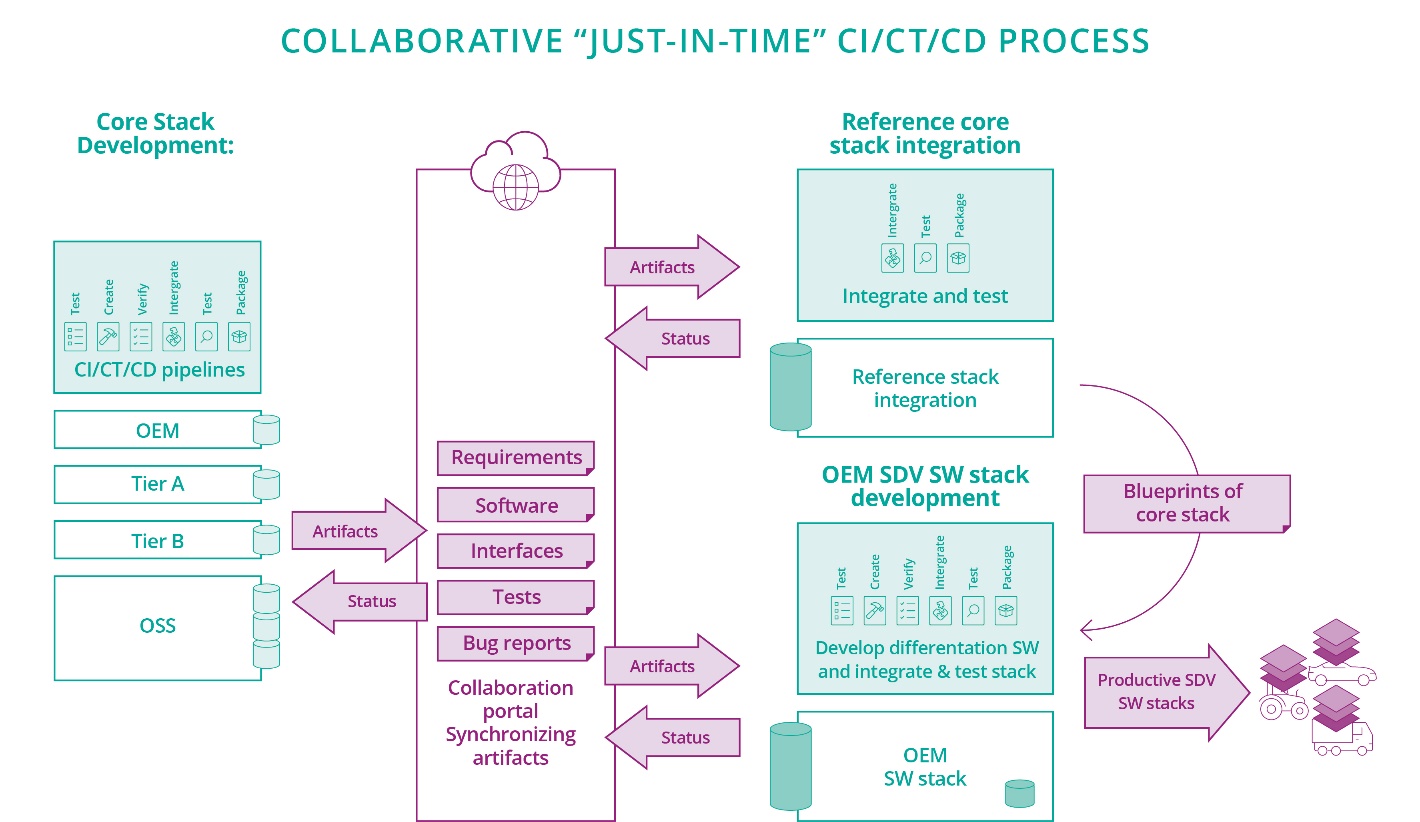
Figure 3.1.7 Collaborative “just-in-time” CI/CT/CD process (Source: Continental)
3.1.7.6.4 Continuous Validation/Homologation of ADAS and Automated Driving
Classical validation approaches are reaching their limits in SDV validation/homologation. Advanced Driver Assistance Systems (ADAS) and Automated Driving (AD) functions represent one of the most demanding domains for verification and validation (V&V) in cyber‑physical systems. Traditional validation approaches based on extensive real‑world driving are no longer viable. Studies estimate that several hundred million kilometres of road testing would be required to statistically demonstrate that an automated vehicle is at least as safe as a human‑driven one. This makes certification based primarily on physical road testing impractical in terms of time, cost, and feasibility.
The challenge is amplified by:
the highly dynamic and open operating environment of road traffic,
the presence of rare but safety‑critical edge cases,
the increasing use of AI and machine‑learning components,
the frequent evolution of software through updates and feature extensions.
As automation levels increase, it is no longer sufficient to validate only nominal system behaviour. Instead, validation must address the full spectrum of possible operational scenarios, including degraded modes, corner cases, internal failures, and unexpected environmental interactions.
A defining characteristic of Software‑Defined Vehicles is the ability—and necessity—to update software frequently via over‑the‑air (OTA) updates, including updates to safety‑critical ADAS and AD functions. This fundamentally challenges the traditional one‑time certification and homologation paradigm.
As a result, continuous validation and continuous homologation emerge as essential concepts.
Continuous validation refers to the permanent, automated re‑verification of system safety, performance, and compliance across the entire vehicle lifecycle. Every software change—whether functional, performance‑related, or security‑driven—must trigger targeted re‑validation activities.
Continuous homologation extends this concept to regulation and certification, enabling incremental approval of software changes rather than requiring full re‑certification of the vehicle.
This approach requires:
modular and traceable software architectures,
precise impact analysis to identify affected functions, scenarios, and safety goals,
automated regression testing focused on the modified components,
digital artefacts that provide continuous evidence of compliance with regulatory and safety requirements.
Continuous validation and homologation are indispensable to enable fast deployment of safety fixes, secure updates, and feature evolution without compromising safety or regulatory acceptance.
3.1.7.6.5 Digital Twins and Scenario‑Based Virtual Validation
To address these limitations, Digital Twins and scenario‑based virtual validation have become central enablers for ADAS and AD V&V. Digital Twins enable a virtual representation of the vehicle, its software stack, sensors, actuators, and environment, allowing systematic exploration of scenarios that would be impractical or unsafe to test in the real world.
Scenario‑based validation focuses on:
representative and critical traffic situations,
rare but safety‑relevant events (e.g. sudden pedestrian crossings, extreme weather, sensor degradation),
systematic variation of Operational Design Domains (ODDs),
interaction with human road users and infrastructure.
Scenarios may be derived from safety analyses, naturalistic driving data, field operational data, or synthetically generated using optimisation and game‑theoretic methods. Statistical safety evidence must be built from large‑scale virtual testing combined with limited, targeted real‑world validation.
3.1.7.6.6 Integration into CI/CT/CD Pipelines
Verification and validation must be fully integrated into automated CI/CT/CD pipelines for SDV software. This includes:
automatic derivation of test plans from requirements, hazards, and change impact analyses,
large‑scale virtual testing using cloud‑based MIL and SIL environments,
selective use of HIL and VIL testing for safety‑critical interfaces,
automatic generation of safety arguments and validation reports,
continuous monitoring of field data to detect emerging risks and unknown scenarios.
These pipelines must support rapid iteration while ensuring that any software deployed to vehicles in the field has passed a level of validation appropriate to its safety relevance.
3.1.7.6.7 OTA, Field Feedback, and Lifecycle Validation
Highly automated vehicles continue to evolve after deployment. New functions, performance improvements, and cybersecurity patches require safe and trustworthy OTA updates. This creates a closed‑loop lifecycle where:
operational field data is continuously collected,
new or unexpected scenarios are identified,
validation models, scenarios, and Digital Twins are updated,
improved software versions are re‑validated and redeployed.
This lifecycle‑oriented approach ensures that safety, security, reliability, and user acceptance are maintained—or improved—throughout the vehicle’s operational life.
3.1.7.6.8 Standards, Regulation, and Research Needs
Existing and emerging standards, such as ISO 26262, SOTIF (ISO 21448), UL 4600, cybersecurity standards, and UNECE regulations, provide a foundation for ADAS and AD validation. However, they are not yet fully aligned with:
AI‑based systems,
continuous learning,
frequent OTA updates,
and continuous homologation concepts.
Consequently, close cooperation between research consortia, industry, and standardisation bodies is essential. Research is required to develop:
scalable and accepted methods for continuous validation,
digital compliance artefacts for homologation authorities,
harmonised approaches across regions and domains.
Key RDI Topics
Automated CI/CT/CD setup using open‑source building blocks (“configuration as code”) (see also SRIA chapter 2.3)
AI‑supported, largely automated SDV development pipelines
Bidirectional artefact synchronisation across partners
Standardised artefact content and formats
AI‑based, adaptive test‑plan generation
Automated test‑environment and stack generation
Key Focus Areas
Integrated V&V toolchains for automated cyber‑physical systems
Scenario‑based virtual validation and Digital Twins
Open ecosystems for scenarios, metrics, and performance indicators
Reliable sensor, vehicle, traffic, and environment models
Secure, trustworthy OTA update and re‑certification processes
Additional challenges covering this topic can also be found in Chapter 2.3 (Architecture and Design: Methods and Tools) and Chapter 2.4 (Quality, Reliability, Safety and Cybersecurity) of this SRIA.
3.1.8
Timeline
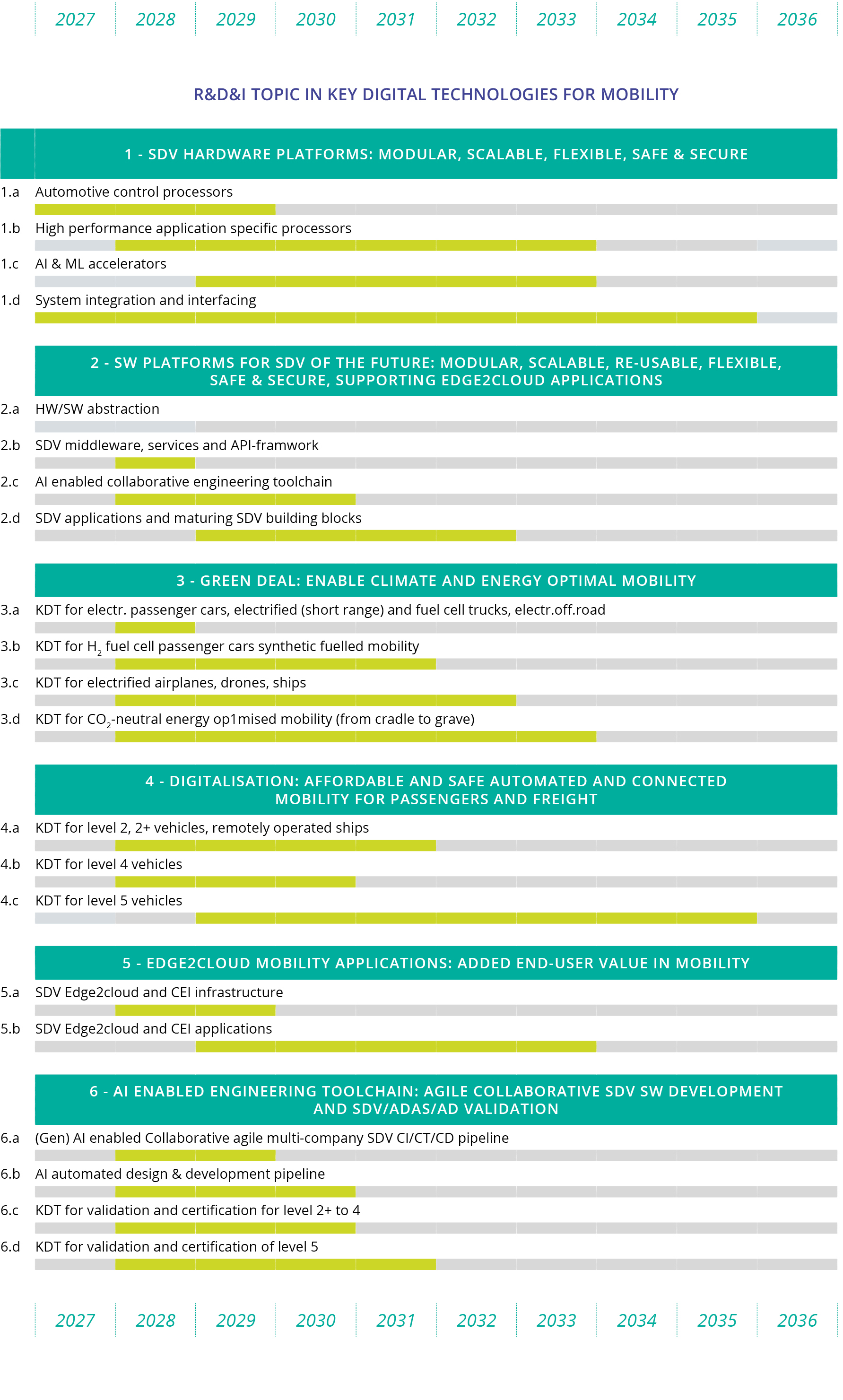
The roadmap for the key digital technologies in mobility is aligned with European roadmaps for terrestrial, maritime and aerospace transport:
ECAVA roadmap
A new European Road Transport Research Advisory Council (ERTRAC) roadmap entitled “Sustainable Energies and Powertrains for Road Transport – Towards Electrification and other Renewable Energy Carriers”.
Urban mobility roadmap.
Long-distance freight transport roadmap.
Towards zero logistics emissions by 2050.
The joint European Technology Platform (ETP) common paper published in 2019.
The European roadmap on connected and automated driving published in 2019.
The Joint Strategic Research Innovation and Deployment Agenda (SRIDA) for the AI, Data and Robotics Partnership (euROBOTICS)
2Zero SRIA.
CCAM SRIA
Internal Market, Industry, Entrepreneurship and SMEs, https://ec.europa.eu/growth/ sectors/automotive_en↩︎
https://federate-sdv.eu/wp-content/uploads/2024/04/2024-04-12-SDVoF-Vision-document-ver017-final.pdf, April 2024↩︎
Two Speed Delivery Model; Augustin Friedel, MHP (Porsche); https://www.sdv.guide/sdv101/part-a-essentials/mhp-expert-opinion ; 2024 NXP: European Conference on EDGE AI Technologies and Applications (21-23 Oct 2024, Cagliari, Sardinia Italy ; Presentation by Patrick Pype )↩︎
Two Speed Delivery Model; Augustin Friedel, MHP (Porsche); https://www.sdv.guide/sdv101/part-a-essentials/mhp-expert-opinion ; 2024↩︎
NXP: European Conference on EDGE AI Technologies and Applications (21-23 Oct 2024, Cagliari, Sardinia Italy ; Presentation by Patrick Pype )↩︎
ECAVA (European Connected and Automated Vehicles Alliance), ECAVA – A European Alliance for Connected and Automated Mobility, European industry alliance supporting coordination on architecture, safety, and validation of connected and automated vehicle technologies, 2023–present. Available at: https://www.ecava.eu↩︎
-
COVESA: https://covesa.global/↩︎
Software Defined Vehicle | The Eclipse Foundation: https://sdv.eclipse.org/↩︎
FEDERATE: https://federate-sdv.eu/↩︎
CCAM - European Partnership on Connected, Cooperative and Automated Mobility: https://www.ccam.eu↩︎
Springer Nature; accessed 2026-04; https://link.springer.com/article/10.1007/s42154-023-00266-9/figures/1↩︎
European Working Group on RISC‑V Automotive. The Road towards a High‑Performance Automotive RISC‑V Reference Platform. Annex 3 to: Roadmap for Future Automotive‑driven RISC‑V Developments in Europe. ECS SRIA / Chips Joint Undertaking, Brussels, Belgium, 2023 (updated final version 2024).↩︎
European Commission. Recommendations and Roadmap for European Sovereignty on Open Source Hardware, Software and RISC‑V Technologies. European Commission, Brussels, Belgium, 2022. Available at: https://digital-strategy.ec.europa.eu↩︎
TRISTAN Consortium. TRISTAN: Expand, Mature and Industrialize the European RISC‑V Ecosystem. Chips Joint Undertaking Project, European Union, 2023. Available at: https://www.tristan-project.eu↩︎
ISOLDE Consortium. ISOLDE Project: Industrialising Open‑Source Low‑Power RISC‑V Solutions. Chips Joint Undertaking Project, European Union, 2023. Available at: https://www.isolde-project.eu↩︎
Cuomo, L.; Scordino, C.; Ottaviano, A.; Wistoff, N.; Balas, R.; Benini, L.; Guidieri, E.; Savino, I. M. Towards a RISC‑V Open Platform for Next‑generation Automotive ECUs. Proceedings of the 12th Mediterranean Conference on Embedded Computing (MECO), Budva, Montenegro, 2023, pp. 1–8. DOI: 10.48550/arXiv.2307.0414↩︎
Chiplet‑Marketplace, CHASSIS: European Industry Initiative for Automotive Chiplets, December 15, 2025. Available at: https://chiplet-marketplace.com/insights/news/chassis-chiplet-based-hardware-architectures-for-software-defined-vehicles↩︎
Müller, B.; Foresi, J., Chiplet Architectures Can Solve Real Performance, Yield and Cost Challenges, ADT Media, March 25, 2026. Available at: https://www.adt.media/software-defined-vehicles/chiplet-architectures-can-solve-real-performance-yield-and-cost-challenges/2635105 [mckinsey.com]↩︎
Renesas Electronics, Renesas Chiplet SoC Technology for Automotive SDV ECUs, The Component Club, February 19, 2026. Available at: https://www.thecomponentclub.com/news/2026-02-19-renesas-chiplet-soc-tech-for-automotive-sdv-ecus↩︎
ISC‑V International, RISC‑V & Automotive: Enabling Scalable Software‑Defined Vehicles, Industry Overview, 2024. Available at: https://riscv.org/industries/automotive/↩︎
eNews Europe, Tenstorrent Powers First Automotive RISC‑V AI Accelerator Chiplet, December 12, 2024. Available at: https://www.eenewseurope.com/en/tenstorrent-powers-first-automotive-risc-v-ai-accelerator-chiplet/↩︎
https://www.vda.de/en/press/press-releases/2025/250624_PM_Automotive_industry_signs_Memorandum_of_Understanding↩︎
Günter Keßler et al., The Software Defined Vehicle – Technical and Organizational Challenges and Opportunities, Proceedings of the International Stuttgart Symposium, 2023.
Available at: https://link.springer.com/chapter/10.1007/978-3-658-42048-2_29↩︎
Strategy&, Software‑defined Vehicles – Revolutionizing the Automotive Industry, PwC Strategy&, 2024.
Available at: https://www.strategyand.pwc.com/de/en/industries/automotive/software-defined-vehicles.html↩︎European Commission, European Digital Vehicle Ecosystem, Shaping Europe’s Digital Future, 2024–2025. Available at: https://digital-strategy.ec.europa.eu/en/policies/digital-vehicle-ecosystem↩︎
European‑driven Open SDV Software Platform Initiative, Technology Roadmap 2025, supported by the European Commission and FEDERATE, 2025. Available at: https://federate-sdv.eu/wp-content/uploads/2024/04/2024-04-12-SDVoF-Vision-document-ver017-final.pdf↩︎
Synopsys, Rethinking Automotive Development: Virtualization for the Software‑Defined Era, Automotive Executive Guide, 2024.
Available at: https://www.synopsys.com/resources/rethinking-automotive.html↩︎European Commission / ECAVA, European Connected and Autonomous Vehicle Alliance – Role in the Software‑Defined Vehicle Ecosystem, 2025.
Available at: https://www.ecava.eu↩︎https://adr-association.eu↩︎
https://hichristensen.com/post/roadmap-2024/↩︎