
ECS SRIA 2027
3.2 Energy
On this page
- 3.2.1 Scope: Change towards a carbon-neutral and resilient society and challenges for ECS
- 3.2.2 Application trends and societal benefits
- Application trends
- External requirements and Societal Benefits
- 3.2.3 Major Challenges
- 3.2.3.1 Major Challenge 1: Smart & Efficient - Managing Energy Generation, Conversion, and Storage Systems
- 3.2.3.2 Major Challenge 2: Energy Management from On-Site to Distribution Systems
- 3.2.3.3 Major Challenge 3: Future Transmission Grids
- 3.2.3.4 Major Challenge 4: Achieving Clean, Efficient & Resilient Urban/Regional Energy Supply
- 3.2.3.5 Major Challenge 5: Cross-Sectional Tasks for Energy System Management, Monitoring & Control
- 3.2.4 TIMELINE
3.2.1 Scope: Change towards a carbon-neutral and resilient society and challenges for ECS
Energy systems supplying affordable, clean and secure energy are the focus of the European Green Deal and its successor, the Clean Industrial Deal1. To achieve this goal, the EU set targets for a renewable energy share of at least 42.5% (new binding target for 2030, but aiming for 45%)2 and a greenhouse gas emission reduction of 55 percent by 2030. Renewable energies bring several benefits such as climate change mitigation, emission reductions as well as improvements in European energy security3. Although the EU even surpassed its 2020 target of 20 percent, sustained action at an accelerated pace is necessary to prepare the economy and society for the upcoming climate challenges and improve resilience, especially that of our power grids4. The power sector must be further transformed from fossil fuel-based to renewable generation and, at the same time, needs to grow to enable decarbonisation of mobility, industry, and thermal energy supply, and reach the climate targets. The change in the supply strategy in Europe towards independence from strategically critical gas or oil suppliers is a further boost for renewable energies and efficiency measures. The shortage of materials (e.g. batteries and other electronic equipment) has already had a serious effect. Furthermore, there is a growing shortage of skilled workers, which needs to be compensated by fast technological progress and innovation. Therefore, smarter components are needed to compensate for the growing shortage of technical knowledge and skills.
Because of the increasing residual load, resulting from the local mismatch between decentralised renewable generation and load, a digitally controlled transmission and distribution infrastructure is required. Thus, electronic components and systems (ECS) are key to future energy systems being optimised in both design and operation, with regard to high efficiency, low CO2 emissions, cost, and security of supply. The development of energy systems is driven by action against climate change, booming decentralised renewable generation (solar, wind), digitalisation and AI technologies, as well as cyber security issues. This is also reflected in the European Commission’s Strategic Roadmap on Digitalisation and AI in the Energy Sector5, which underlines the need to accelerate digital and AI solutions for energy-system optimisation, while ensuring that fast-growing data centres are integrated into the energy system in a sustainable, transparent and grid-supportive manner. The IEA’s Energy and AI report6 further highlights this nexus by showing that AI will significantly increase electricity demand from data centres, while also offering major opportunities to optimise energy-system operation, security and innovation. At the same time, the rapid growth of AI-driven data centres creates new concentrated electricity demand, increasing pressure on already constrained grids, grid connection queues and the need for coordinated planning of generation, flexibility, storage and network infrastructure. The Energy Chapter highlights the Major Challenges in the changing energy landscape associated with electrical energy generation, supply, conversion, and use. High efficiency and highly reliable, secure solutions are required to achieve the transition towards a climate-neutral continent by 2050.
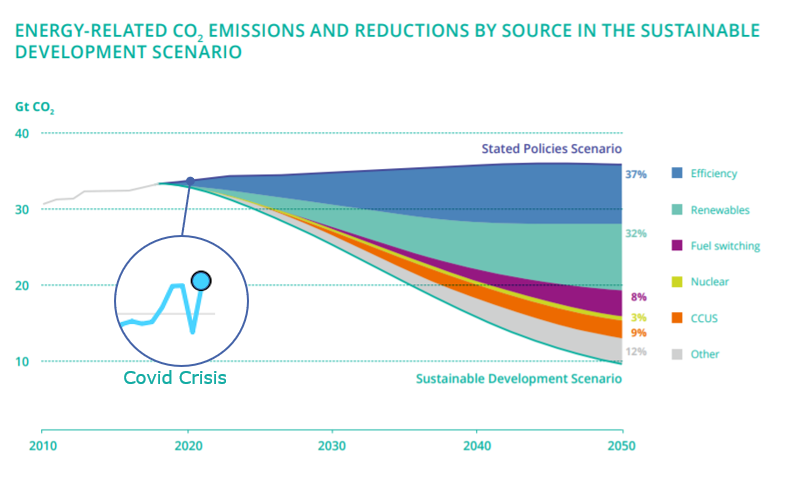
Figure 3.2.1 - Efficiency and renewables provide the most potential for CO2 emissions reductions. Source: IEA World Energy Outlook 2019. In the graph the impact of Covid in 2020 & 2021 is indicated; the emission level is back on the levels from before the Covid crisis. Source: IEA Global Energy Review: CO2 Emissions in 2021.
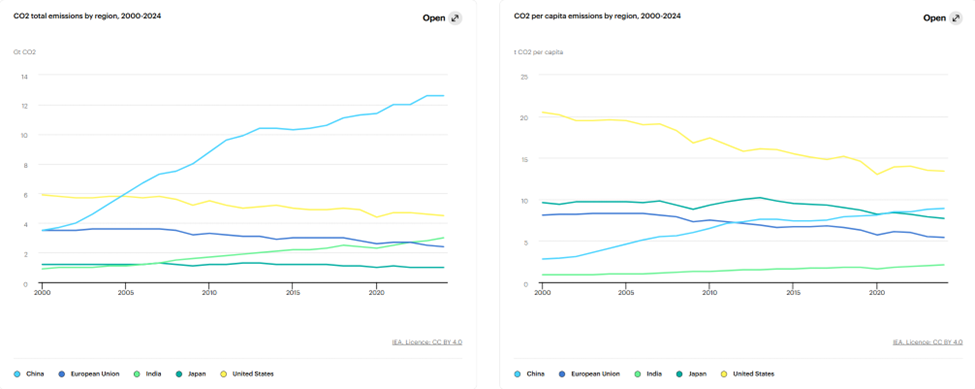
According to the IEA “CO2 Emissions in 2023” report for the EU the trend is towards lower emissions; the main factors are an increased renewable electricity deployment and lower emissions in industry. The challenge is to accelerate that trend and manage the challenges of local use and balancing to integrate the decentralised, highly variable supply into the grid:

3.2.2 Application trends and societal benefits
Application trends
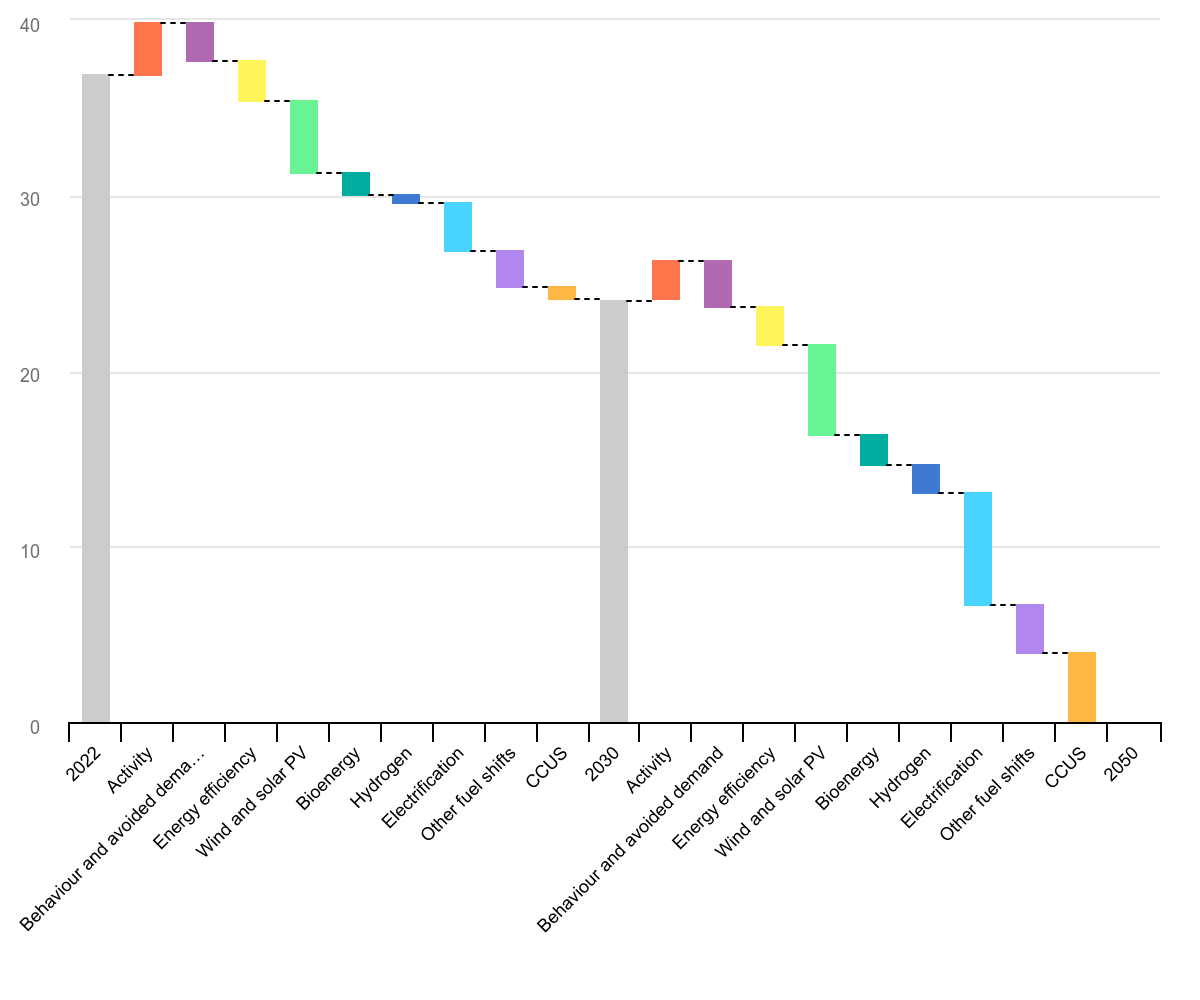
The energy world is undergoing a radical transformation: promoted e.g. by EU and national roadmaps, the globally installed capacity of renewable generation has doubled within the past 10 years. Europe alone expanded its renewable generation capacity by 10% in 2023. This increase is dominated by wind and solar energy, which are characterised by strongly intermittent, distributed generation. The share of wind and solar in Europe's electricity generation reached a record high of 26.6% (718 TWh) in 2023, almost twice the global share of 13.4% with plant capacities ranging from domestic solar (≤ 10 kW) via commercial solar and wind (≤ 500 kW) to power stations at utility scale (≥ 1 MW). At the same time, the levelized cost of electricity (LCOE) from photovoltaic (PV) sources dropped another 12% (global weighted average). However, the rise of renewables is still too slow - wind and solar generation growth must nearly triple to reach Europe’s 2030 Green Deal target. In the long term, this enables the substitution of fossil fuel-based transportation, domestic heating, and commercial & industrial processes and helps address the strong economic growth of non-OECD countries. Since the pursuit of all economically viable opportunities for efficiency improvement can reduce global energy intensity by more than 3% each year, increasing energy efficiency may account for 30 % of CO2 emission reductions by 2050 with current policy settings, while this share could increase to 40 % if worldwide announced climate pledges are met. Affordable and reliable energy supply to all sectors needs to match demand and availability as efficiently as possible (Figure 3.2.4).

 Thus, the power grid architecture developed for centralised, unidirectional, demand-driven power generation will be transformed into a multi-modal energy system (MM-ENS) architecture (Figure 3.2.5). It will comprise distributed renewable generation, energy conversion units for sector coupling, transmission and distribution grids allowing bi-directional power flow, and energy storage for all modes of energy (electric, thermal, chemical). Energy management systems (EMS) will optimise ENS operation. It will match load and demand at all levels ranging from the nanogrid (behind the meter, building level) and the microgrid (district or community level) to the regional distribution grid, which is connected to the cross-regional transmission infrastructure. Fossil-fuelled power plants, which used to operate on schedules oriented towards demand, will turn into back-up power supply facilities.
The overall reduction of energy consumption in addition to efficiency measures will always be a target, since all energy usage that can be avoided also implies a reduction in emissions. This can  be achieved by control elements for switching off energy use and providing zero-power standby functionality or by transitioning to new technologies, as the transition to LED illumination had a high impact over the last decade. Upcoming threats include energy-consuming ICT-related applications such as blockchain, AI, data traffic, or digital currencies. The challenge will be to develop highly efficient algorithms and methodologies to decrease energy consumption despite
 the increased use of these new technologies. According to a study by McKinsey7, global demand for data centre capacity could rise from 60 GW in 2023 at an annual rate of between 19 and 22 percent to reach 171 to 219 GW by 2030. Quantum computing has, in general, the potential to decrease energy consumption for solving specific problems. Already within the design and development cycle, sustainability goals, energy efficiency and environmental legislation will need to be taken into account.
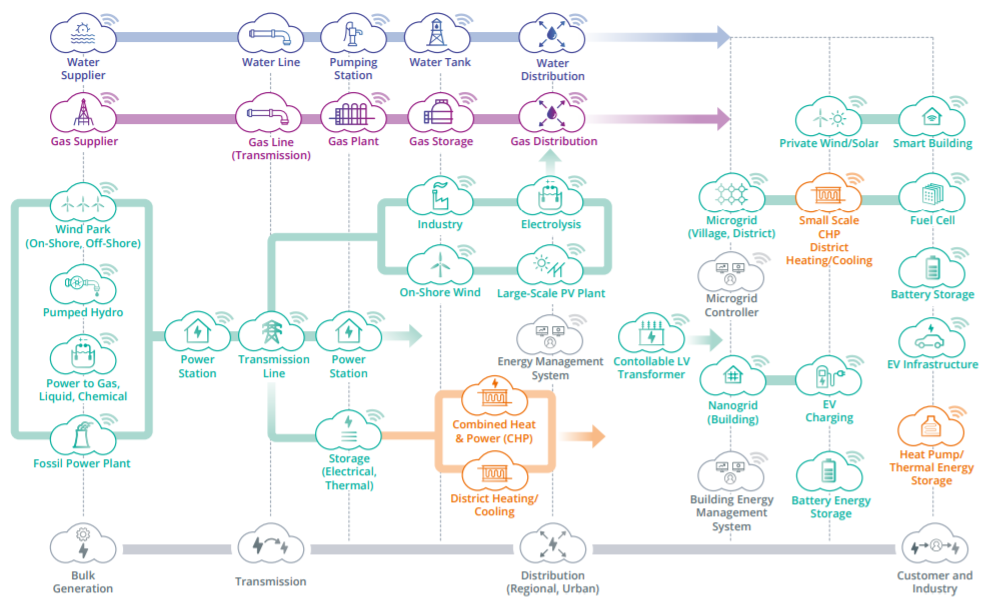
Figure 3.2.5 Interconnected Energy Infrastructure; Source: Siemens Corporate Technology

 Key to these new energy applications will be smart sensors, networks of sensors, and smart actuators that enable status monitoring on each grid level as well as smart converters (for all voltage levels). The converters need to use highly efficient and fast semiconductor power devices and modules that enable real-time control of energy system components and grids for optimised operation based on forecasts of generation and demand as well as in the event of any critical situation. The future grid operation requires a sophisticated information and communication infrastructure including cloud services, IT security, and AI technologies. Altogether, they will contribute to a significant reduction of energy consumption and, consequently, CO2 emissions.
To achieve the targets of the Green Deal and to create competitive advantages for European-based technologies and solutions, research has to be performed in the following areas:
Significant reduction and recovery of losses (application and SoA-related).
 Increase of power density and reduction of losses (e.g. through exploitation of new materials) and a decrease of system size by miniaturisation and smart integration, at the system and power-electronics levels.
Increased functionality, reliability, and lifetime (incl. sensors & actuators, ECS HW/SW, semiconductor power devices, artificial intelligence, machine learning, monitoring systems, etc.).
Manufacturing and supply of energy-relevant components, modules, and systems.
Management of renewables via intermediate storage, smart control systems, share of renewable energies, peak control or viability management for the increase of energy flexibility. Grid stabilisation through e-vehicle charging.
Energy supply infrastructure for e-mobility, digital life, and industry 4.0.
“Plug and play integration” of ECS into self-organised grids and multi-modal systems, real-time digital twin capability in component and complete system design (to simulate system behaviour).
Safety and security issues of self-organised grids and multi-modal systems through smart edge devices and high-level IT security (resilient communications and trustworthy AI).
ECS for energy storage technologies: production, transportation, storage, distribution, combustion and energy conversion systems.
Optimisation of applications and exploitation of achieved technology advances in all areas where electrical energy is consumed.
Energy technologies in the circular economy approach: predictive and condition-based maintenance with repair, refurbishment, reuse and recycling capabilities, LCA of ECS and reduction of environmental impact
Alignment with standardisation of our energy systems.
Manufacturing and world-leading technologies for energy-relevant applications in Europe.
Scheduling for cost-efficient energy consumption.
Involvement of the consumer: traceable eco-footprint and incentives towards environmentally-friendly behavioural change.
Design and development strategies of ECS that optimise the total environmental impact of energy solutions (e.g. trade-offs between environmental footprint and handprint, rebound effects)
Innovation strategies for regulation-enabled energy markets and technologies.
External requirements and Societal Benefits
In alignment with the Paris Agreement, the EU committed to substantial reductions in CO2 emissions. In particular, the EU aims to make Europe the first climate-neutral continent by 2050 (EU long-term strategy) while boosting the competitiveness of European industry. Carbon pricing throughout the EU economy will be implemented more strictly. Further climate laws will be introduced and continuing policies will be clarified by the European Commission in 2022. The “Clean Energy for All Europeans” package was completed by the EU in 2019 as a comprehensive update of its energy policy framework, which was updated with the "European Green Deal" in July 2021 and further enhanced with the "Clean Industrial Deal" in February 2025. It emphasises renewable energy, energy performance of buildings, energy efficiency, governance regulation, and electricity market design. Smarter buildings with more automation and control systems for effective operation shall be promoted. E-mobility infrastructure is going to be supported further. Energy efficiency targets and energy labels were tightened to encourage the industry to innovate.
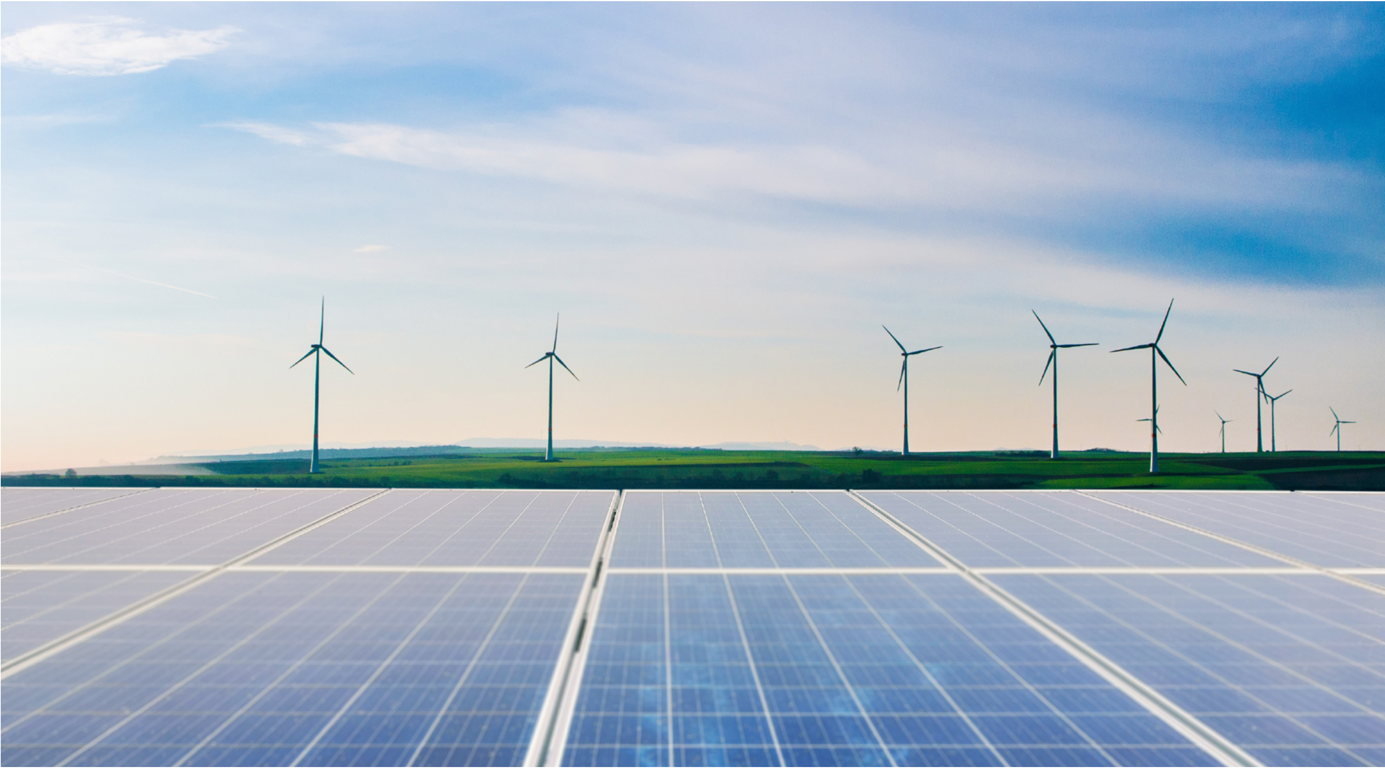
Figure 3.2.6 - Energy from renewable sources: Wind turbines and photovoltaic (Source: © Mariana Proenca/Karsten Wurth – Unsplash)
To achieve the Green Deal goal of “clean, affordable and secure energy” in all sectors, new laws and regulations will be required. While subsidies and regulations will promote sustainable developments in all application domains of ECS (energy, industry, mobility, communication, consumer goods, and cities), the energy domain with a targeted 40% share of renewables in the energy mix until 2030 is the foundation for all of them. Additional perspectives are provided by the United Nations’ “Roadmap 2050”, addressing sustainable development solutions and implementation pathways towards a carbon-neutral global population.
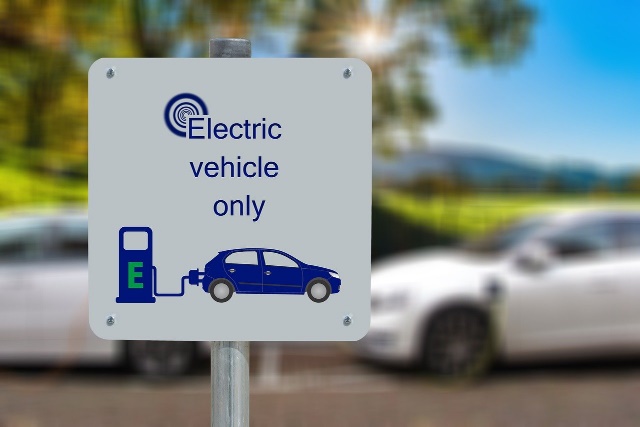
All these factors are considered in the roadmaps for research, development, and innovation of ECS for applications in the energy sector. Potential targets comprise the implementation of electricity storage solutions (e.g. vehicle2grid, battery grid storage), the further increase in efficiency and the reduction in life cycle costs of energy generation from renewable sources (Figure 3.2.6), the electrification of transportation (Figure 3.2.7), and the thermal processes in industry as well as the development of secure, self-learning energy management systems for buildings and industrial sites. ECS as enablers support the EU and national energy targets to achieve sustainability (Figure 3.2.8) and are essential for a highly developed energy landscape towards a fair, democratic, healthy and prosperous society.
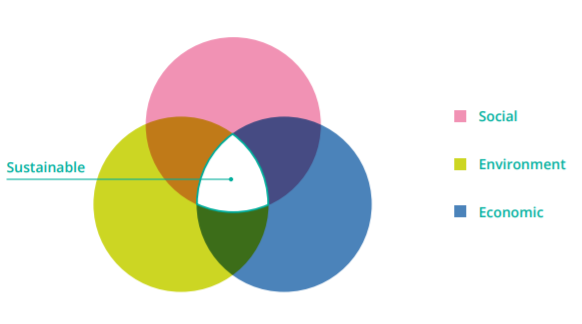
Figure 3.2.8- Three pillars of sustainability (Source: Purvis, Mao, Robinson 2018: Three pillars of sustainability: in search of conceptual origins).
Energy efficiency through ECS fosters economic development towards a circular economy and new employment opportunities. These developments will have a huge impact on job generation and education if they are based on the complete supply chain and fully developed in Europe. With more than 16 million jobs in the field of renewable energy8 and indirectly related technologies, this is a visible and significant factor for economic and societal stability. The capability to maintain an understanding of complete systems as well as competence ranging from small-scale solutions up to balanced regional energy supply solutions are key to European competitiveness and success in the global market of energy solutions. Also, the consumer itself can contribute its share, thus consumer empowerment for energy savings and efficiency should be taken into account for the development of energy systems. Societal benefits include access to knowledge, development of modern lifestyles and the availability of energy all the time and everywhere – with a minimum of wasted energy and a minimum of greenhouse gas emissions. Therefore, ECS and its application domains enable Europe to meet the needs of the present without compromising the ability of future generations to meet their own needs.
3.2.3 Major Challenges
Five Major Challenges have been identified for the energy domain:
Major Challenge 1: Smart & Efficient - Managing Energy Generation, Conversion, and Storage Systems.
Major Challenge 2: Energy Management from On-Site to Distribution Systems.
Major Challenge 3: Future Transmission Grids.
Major Challenge 4: Achieving Clean, Efficient & Resilient Urban/ Regional Energy Supply.
Major Challenge 5: Cross-Sectional Tasks for Energy System Monitoring & Control.
3.2.3.1 Major Challenge 1: Smart & Efficient - Managing Energy Generation, Conversion, and Storage Systems
3.2.3.1.1 Status, vision and selected outcome
According to the IEA’s Efficient World Strategy, digitalisation enhances energy efficiency gains in the transportation and industry sectors9. Smart and efficient energy systems are drivers of energy savings. Therefore, they are in full alignment with the Green Deal. Alternative forms of energy generation (hydro, photovoltaic, and wind) and the electrification of industry, the transport / mobility, and the construction / building sectors result in the challenge of creating smart, efficient, and reliable energy generation, conversion, and storage components.
Smart Energy Systems
To operate smart energy systems, all the energy conversion and storage components need to be equipped with smart actuators and sensors for status and health monitoring as well as optimisation of grid operation. The increasing use of data, data management and AI control systems as well as the integration of sensors, connectivity and edge processing in supplementary/additional components will enable the creation of intelligent facilities by retrofitting. Application domains shall increasingly rely on energy-autonomous sensing systems with embedded intelligence, leveraging event-driven and neuromorphic processing to enable scalable, low-maintenance monitoring and decision-making. The creation of secure electronic control units requires the development of specific hardware and software. Scalable modular renewable energy supply with seamless installation capability enables renewables to be introduced or scaled up from single households to larger installations.
Consequently, smart control units need to be developed for all types of energy production, conversion, and storage components comprising smart electronic converters, actuators, sensors, security systems and reference communication interfaces. They shall have plug-and-play functionality and real-time digital twin capabilities in component and complete system design to simulate system behaviour for evaluation of its health status.
For offshore energy generation, such as wind farms and tidal energy generators, fibre-optic sensors are an emerging technology that is beneficial for online monitoring of metal fatigue and excessive turbulence. This technology is currently being developed for such monitoring in aircraft wings and ship masts.
Conversion
Electrification and automation of industry and mobility are among the main measures to reach the 2050 decarbonisation targets, mainly via the conversion from fuel-based heating processes to electro-heating solutions. In addition, direct electrification of industrial production processes (such as electro-synthesis of  chemicals or electrolysis) is also crucial for replacing current CO2-emitting solutions. In the case of Heating, Ventilation, and Air Conditioning (HVAC) systems, significant reductions in consumption can be obtained by optimising the system that handles all the processes of energy management or by changing the way Machine-to-Machine (M2M) technologies are used. For both strategies, efficient ECS are required to obtain optimal control functionality based on sensing, collecting, processing, and evaluating device-related data. DC power supplies based on advanced semiconductor power devices will provide lower power consumption and thus higher efficiency for the increasing ICT energy demand (i.e. through data centres, autonomous systems like cars, robots). Investments in the next-generation computing, storage, and heat removal technologies will be required to avoid a steep increase in energy demand and to minimise the implications of unavoidable data centre energy use on the global climate. In data centres and 5G/6G networks, photonic ICs can route information streams from fibre to fibre without intermediate conversion to electronics. This will be highly efficient and save energy. The advanced features of 5G/6G will enable innovative uses of the technology (Figure 3.2.9), but as a consequence of larger data rates and throughputs, costs and energy demand will increase substantially. Therefore, energy-harvesting capability of sensors and devices in the 6G environment will be one of the crucial aspects towards a green and cost-efficient technology landscape10.
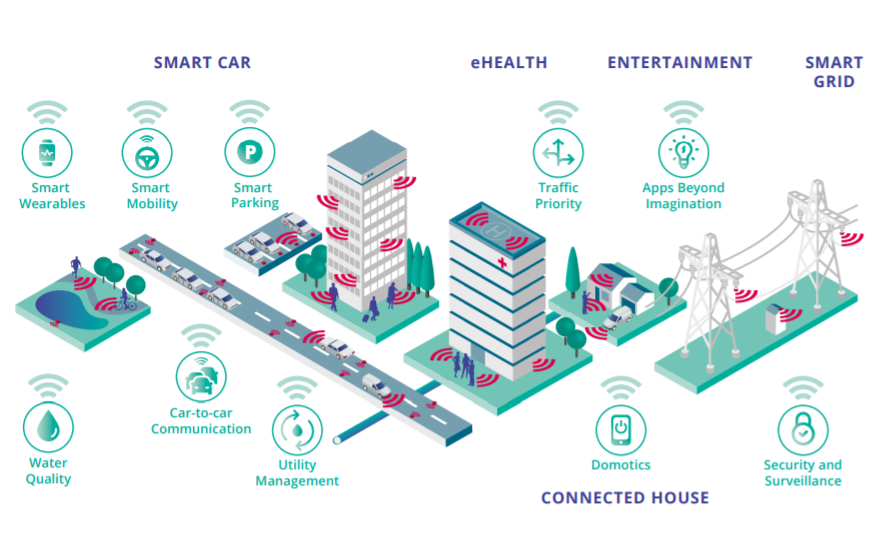
Figure 3.2.9 - 5G as enabler of an interconnected smart network. Source: European Commission, Towards 5G.
Power electronics circuits based on semiconductor power devices are used in all conversion processes. Silicon-based power devices are approaching their ultimate limits in terms of breakdown voltage, current, switching frequency and temperature capabilities. Next-generation power semiconductor devices will rely on Wide Band Gap (SiC, GaN) and Ultra WBG (diamond, Ga2O3) technologies. The integration of ultra-wideband gap (UWBG) semiconductors presents a transformative opportunity for power electronics. With thermal conductivities far surpassing those of traditional materials, UWBG semiconductors such as diamond offer unparalleled heat dissipation, enabling the creation of more compact, efficient, and high-performing power modules. Their capacity to handle extreme voltages further enhances device robustness and energy efficiency. As a strategic initiative, prioritizing research and development in UWBG materials could catalyze breakthroughs in power electronics, paving the way for advanced technological solutions that align with the goals of miniaturization, efficiency, and long-term reliability.
Due to this unstoppable trend, research on device reliability, packaging and assembly methods suitable for very high electric fields and high temperatures is strongly required. A focus also needs to be placed on the medium-voltage grid (< 45 kV), as the power rating of applications will increase beyond 1 MW (EV charging, BESS, hydrogen electrolyzers, etc.) and will preferably be connected directly to the medium-voltage grid. Here, solid-state transformers based on medium-frequency transformers will become a cost-effective alternative in the near future and consequently help to reduce material use for standard grid frequency transformers. As many concepts rely on a modular approach using power electronics building blocks (PEBB), aspects of coordinated system control and reliability based on redundancy also need to be investigated.
Storage
Energy storage deployment provides energy system flexibility. Considering further storage options, different options for different capabilities require further efficiency improvements. As an example, optimised converters, sensor solutions for monitoring, and battery management systems need to be developed for storage options, all of which include ECS. In power generation, hydrogen with its many uses (Figure 3.2.10) is one of the leading options for storing renewable energy. Hydrogen can be used in gas turbines to increase power system flexibility. In combination with fuel cells, it is also a clean-energy carrier since it allows electricity to be produced directly on board EVs or in areas that are cut off from the power grid. With declining costs for renewable electricity, interest is growing in electrolytic hydrogen. ECS will be employed in electronic systems for electrolyzers, fuel cells, as well as power management and health monitoring.

Figure 3.2.10 - The many uses of Hydrogen, source: Bloomberg NEF.
3.2.3.1.2 Key focus areas for increased efficiency and smart energy generation, conversion and storage components
Increased efficiency at all levels:
Power conversion and wide-bandgap semiconductor power devices.
Power supply.
Energy harvesting.
Energy management.
Low-power control and edge-AI-based systems
Residential, commercial, and industrial demand-side management (scheduling and load adaptation):
Sensors, actuators, drives, controls and innovative components.
Full monitoring in adaptive and controlled systems.
High-efficiency electric drives, heat pumps, cooling, HVAC, data centres and other consumers of electricity for variable load operation.
Solutions for the increasing power demand of 5G/6G systems.
Development of Energy Management Systems including:
Optimisation module.
Demand and generation forecast.
Customer preferences.
Weather forecasts.
Price/tariff information/forecast for scheduling controllable loads and generators.
Smart sensor network: internal and external physical parameters that influence energy conversion efficiency.
Resilient and smart communication and edge devices.
Deployment of Trustworthy AI.
Fibre-optic sensors for fatigue detection.
Converters for power quality improvement (e.g. electronics filters to manage resonances).
Sensors and controls for the management of decompression and compression, and leakage detectors for methane, hydrogen, and other gases.
ECS for the coupling of processes in the chemical and electrical industry.
Traceability and labelling of green energy.
Conversion of industrial processes:
“Industrial electrification” (Replacement of CO2-emitting processes by others based on “clean” electricity).
Electric drives for commercial & industrial applications.
Industry 4.0 with a combination of Cyber-Physical Systems (CPS), Internet of Things (IoT), Artificial Intelligence (AI).
DC subsystems for industrial production / data centre applications and DC distribution grids.
Photonic routing in data centres from fibre to fibre without conversion to electronics.
Carbon capture technologies compensating production emissions (up to negative emissions).
Development and application of storage optimised for residential, commercial, industrial utilisation:
Control interfaces to batteries, fuel cells, hydrogen storage electrolysers.
Integrated battery-driven applications (e-car charging, PV – system local storage).
Power Storage to "buffer" net fluctuations and to avoid long-distance transmission.
Smart storage technologies from low to medium voltage.
3.2.3.2 Major Challenge 2: Energy Management from On-Site to Distribution Systems
3.2.3.2.1 Status, vision and expected outcome
The distribution grid comprises commercial-scale renewable generation as well as private smaller renewable power generation units, conversion between different energy modes, storage, control and protection systems for the grid infrastructure together with all kinds of consumption.
Autonomous Control Systems
In the future distribution grid, generation and consumption by power-electronic systems will surpass the share of synchronous generation. This leads to potential grid instabilities due to a lack of inertia. Therefore, autonomous control systems need to be implemented to control the high-demand loads. These control systems should be organised hierarchically to adjust the heavy loads according to the actual local production and storage capabilities so that import or export of power is minimised. Price control systems such as TOU (Time of Use) can help to prevent grid violations. Storage devices, such as local community storage systems or e-vehicles, can be charged when the price is low and discharged when the price is high, to provide flexibility as well as to ensure stability and reliability in the grids.
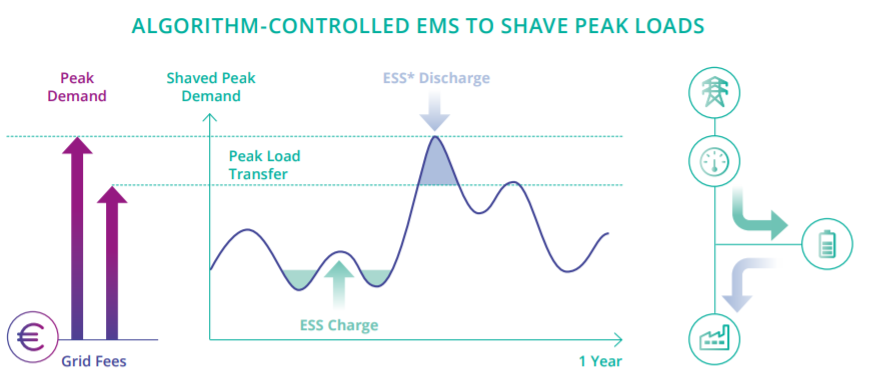
For industry or larger groups of buildings, control methods increase the flexibility of the total system and can be set up using hierarchical and intelligent control methods to minimise costs and to provide peak-shaving (Figure 3.2.11). For larger power production facilities, hybrid generation and storage solutions are also discussed, which integrate the power production facilities with storage devices to optimise arbitrage costs. Novel grid architectures for manufacturing strive to increase topological and energy flexibility within production cells to enable adaptive production optimisation. Also, blackouts and their consequences need to be prevented, since, for example, they result in serious safety and cost issues for large industrial electrolyzers.
Security, Reliability and Stability of Energy Systems
For stable, resilient on-site energy systems, multi-modal energy management systems allowing integration of electricity, heating & cooling, molecules, and transport (e-vehicle charging incl. Vehicle-2-Grid) will be developed. Their features comprise high-level IT security, energy trading via local energy market platforms, renewable energy certification, development of solutions for low voltage electronic systems that are easy to set up, as well as support for self-learning to adapt to evolving needs.
Energy Management Systems for industrial and residential customers include an optimisation module, demand and generation forecasts, customer preferences, weather forecasts and price/tariff information/forecast. They require beyond-state-of-the-art techniques for scheduling controllable loads and generators and forecasting the weather to produce accurate generation profiles. Furthermore, the interface to the grid might be used for additional power quality services based on power electronic converter technologies beyond state-of-the-art reactive power compensation (e.g. virtual inertia and balancing).
3.2.3.2.2 Key focus areas for on-site or behind the meter systems
Security, reliability and stability of total energy system:
Automation of grids.
Storage of data.
Trustworthy AI and ML for optimised operation of the grid.
Machine-learning-based forecasting algorithms for generating accurate generation profiles of expected power production and consumption.
Deployment of sensors and edge computing devices to perform health checks on grid assets to increase their lifetime and optimise operation.
Converters for power quality improvement (e.g. electronics filters to manage resonances).
Stable and Resilient On-Site Energy Systems:
Integration of electricity, heating & cooling, molecules, and transport (e.g. Vehicle2X).
Coupling with energy trading systems, e.g. local energy market platforms.
High level IT security.
Renewable energy certification.
Hybrid solutions:
Integrating power production facilities with storage devices.
Arbitrage costs; maintaining the level of production according to the market bid.
Virtual markets:
Flexibility in demand & supply.
Aggregation of energy consumption and production.
Electric energy supply for manufacturing:
Higher uptime using novel industry grids and UPS.
Stable power supply using novel electronic converter technologies.
Blackout prevention.
Plug-and-play capability for components, self-learning:
Integration of low voltage systems using flexible planning rules.
Cost-effective solutions to minimise setup time and manual parametrisation.
Reduced physical size and weight of individual transformer stations with equivalent power ratings.
Development of solid-state transformers with:
New functions for the operation of power systems.
Avoidance of infrastructure extensions caused by an increasing share of distributed generation.
3.2.3.3 Major Challenge 3: Future Transmission Grids
3.2.3.3.1 Status, vision and expected outcome
New grid challenges
Future transmission and distribution grids will remain an integral backbone of energy systems. Coupling of different domains such as electricity, thermal energy, gas, etc. will enable new business opportunities which require new technological solutions for high-power electronics, combined with sensors and ICT for monitoring, intensive control and prediction.
The energy generation and consumption patterns will drastically change as the industry and society at large will be highly electrified. Base industries such as the chemical industry, steel and cement production will completely change production technology to enable fossil-free production and will require large amounts of electrical energy. New industries such as large-scale battery factories are planned in several places in Europe11. This, together with a massive expansion of supercharger stations for private passenger cars and heavy trucks with individual charging capacity of more than 1 MW, will pose severe challenges for grid capacity both in networking and in electronic components while maintaining the highest possible efficiency. Therefore, further ECS R&D needs to work towards improvements in grid capacity with the highest possible efficiency (Figure 3.2.12). Thus, continued development of components for HV transmission for 1.2 MV or even higher voltages is needed to enable efficient energy transmission across Europe. In addition, new business models must be developed for the electric energy market enabled by the smart-grid technology.
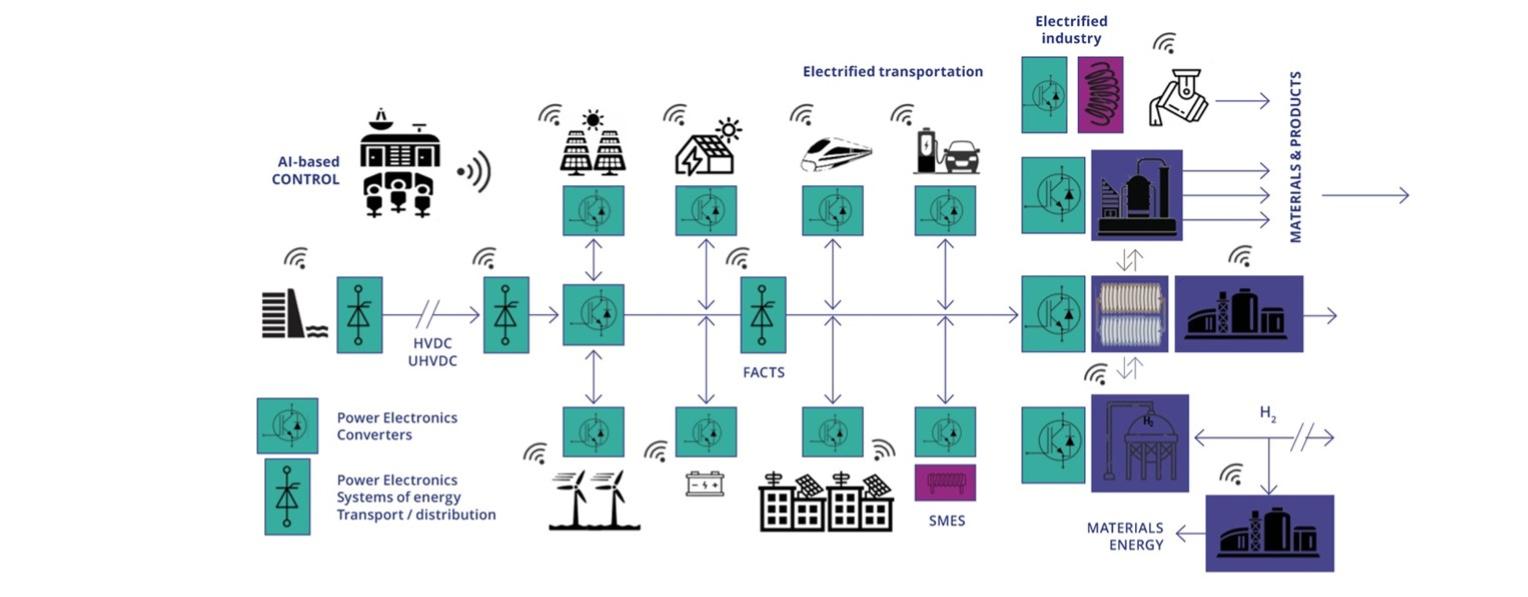
Figure 3.2.12 : Power ECS at each point of the future transport and distribution grid. Source: CSIC Scientific Challenges: Towards 2030, Volume 8.
Resilience
To account for adverse conditions caused by climate change, the new national and transnational grids must include autonomous electricity generators based on fuel cells or local storage systems for communications and network information management as well as water-resistant components or modules. Also, sensors need to be placed at critical points to immediately alert authorities in case of unexpected incidents. To be able to quickly react to an electricity line fault, the system will benefit from powerful switches and AI to successfully reroute the systems. Additionally, predictive maintenance (e.g. with digital twins) of the energy supply sensors provides further safety and resilience. Due to the low tectonic activity in most parts of Europe, transmission grids could become much more resilient and lossless when buried in the ground. Thus, extra isolation technology needs to be considered and critical points should be equipped with smart ECS for monitoring, control, and prediction.
3.2.3.3.2 Key focus areas
Grid stability during the industrial transition:
Efficiency increases.
Development of a smart medium-voltage grid.
Development of components for HV transmission for 1-2 MV or even higher voltages.
New solutions for high-power electronics, combined with sensors and ICT for monitoring, control and prediction.
Development of new simulation and business models to foster innovations regarding grid stability.
Development of a Trans-European energy infrastructure:
Secure, cross-regional transmission infrastructure.
Multi-terminal HVDC systems connecting remote energy generation sites.
Interaction between distribution systems on community and district level.
Development of components for HV transmission for > 1.2 MV.
Minimise Losses.
Requirements for ECS due to disruptive changes in transmission and use:
Flexibility in system design and operation.
Water-resistant components/modules.
Autonomous electricity generators based on fuel cells.
Modelling, sensing and forecasting weather conditions and thus supply and demand.
Intelligent power devices, systems, and switches.
Status/health monitoring (e.g. ice sensor/detection) for transmission lines.
ECS for multi-modal energy systems.
3.2.3.4 Major Challenge 4: Achieving Clean, Efficient & Resilient Urban/Regional Energy Supply
3.2.3.4.1 Status, vision and expected outcome
A 40% renewable energy share in the electricity sector in Europe by 2030 requires additional decentralised, intermittent energy sources, a bi-directional grid and storage for energy supply in transport, industrial, and smart-city applications.
Multi-energy Systems (MES)
MES help to achieve optimised energy management. All sectors are integrated to maximise overall system efficiency. Energy flows between sectors and their storage systems ensure the highest use of renewable energy while balancing fluctuations.
Heating supply uses district heating, supported by heat pumps and boilers, using thermal storage in the district heating system (Figure 3.2.13). Integration with industry makes use of waste process energy using heat pumps to raise temperatures from low (40-50 deg) to high (80-90 deg) in the pipe. Electrolyzers add to the gas system or transport. Water treatment uses excess power from renewables adding further flexibility.
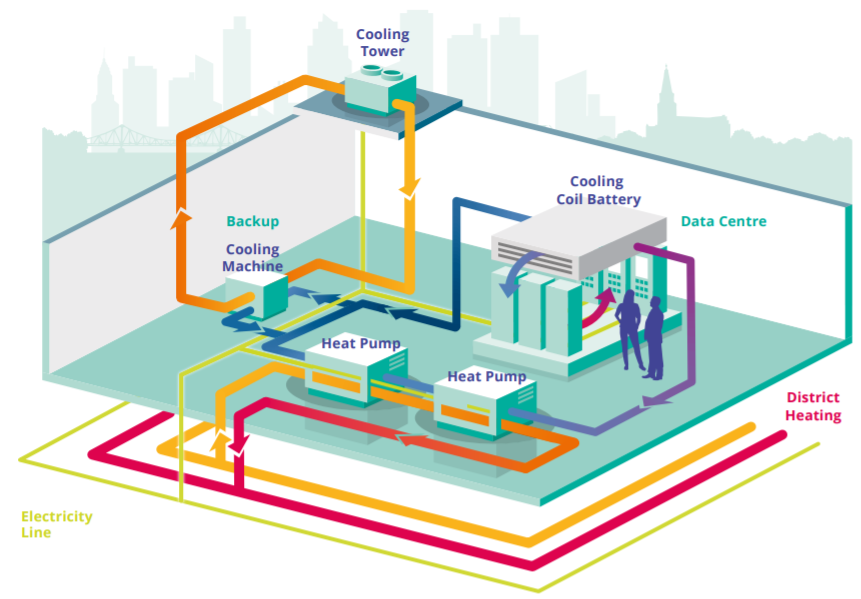
Figure 3.2.13 : A Combination of heat pumps and district heating. Source: IEA HPT.
Local communities use MES concepts at regional level. Different local inputs are also aggregated for overall control of the larger regions. Autonomous controllers are used behind the meters to support overall control. A clear hierarchical setup, control structure and knowledge of market interactions are necessary.
Complex integrated control systems use AI, machine learning and comprehensive communication grid/IoT platforms (including edge computing) to obtain all data for control and optimisation. Risk and security analyses provide resilience and ensure stability of MES.
Urban Transformation
 Emission-free cities use electrification and decentralised storage to improve efficiency and reliability. ECS, as indispensable components, ensure efficient management of data and data storage. AI approaches and the ECS supply chain for integrated applications in energy are key enablers for smart power grids. Electrification of urban mobility supports individual and public transport (incl. utility EV) and, furthermore, contributes to the stabilisation of the grid. The former requires household and public charging, while the latter uses well-defined charging points on (bus) lines or at terminals. Power levels vary from 10 kW (LV) to 600 kW (MV). Reservation and optimisation are based on ICT.
 Other crucial aspects of emission free cities are an efficient urban energy infrastructure, low-carbon and smart residential and service buildings, low-carbon mobility, smart water systems and smart waste management. Carbon capture technologies will add another dimension to the energy systems.
Storage Solutions
In households, battery energy storage devices can be used to increase self-consumption. Some regions will use heat/cooling storage. Algorithms/models for optimal use of storage (community/private/ industrial) are based on technical parameters, demand and generation forecasts, customer preferences, in order to reduce power peaks and to support integration of RES into existing infrastructure.
MES in larger communities with different kinds of storage options (electrical, thermal, gas, water etc.) play an important role. V2X is used as a large distributed electrical energy storage resource. Systems with electrolyzers might use storage tanks for gas production. Thus, the development of grid-supporting control algorithms and support for regional energy management for communities (e.g. P2P trading via storage systems, self-consumption optimisation) are needed.
3.2.3.4.2 Key focus areas for achieving efficient community and regional energy management
Electric Energy Supply for urban mobility:
Development of household and public charging infrastructure.
Creation of HV (wireless) charging points along the (bus) line or at fleet terminals, for public transport.
Reservation and optimisation services implemented with ICT solutions.
Electric Energy Supply for urban life:
Increase the share of renewable generation, self-consumption (mainly heating/cooling and EV) and building optimisation.
Local DC-coupling of various technologies for fast charging at home.
Regional Energy Distribution infrastructure:
Communication infrastructure to support self-organised local energy communities.
Sustainable off-grid supply with power electronics-based grid forming capabilities.
Virtual power plant functionality optimising the match between generation and demand.
Operation of connected energy systems:
Connectivity, Security, Integrity, Resilience, Variability.
Interoperable platform for energy management
Storage systems:
Development of grid-supporting and peak-shaving control algorithms.
Support for regional energy management for communities.
Peer-to-peer trading by using storage systems.
Self-powering systems for small IoT nodes.
Local energy harvesting to substitute battery-powered devices and eliminate the high energy demand for battery manufacturing and distribution logistics.
3.2.3.5 Major Challenge 5: Cross-Sectional Tasks for Energy System Management, Monitoring & Control
3.2.3.5.1 Status, vision and expected outcome
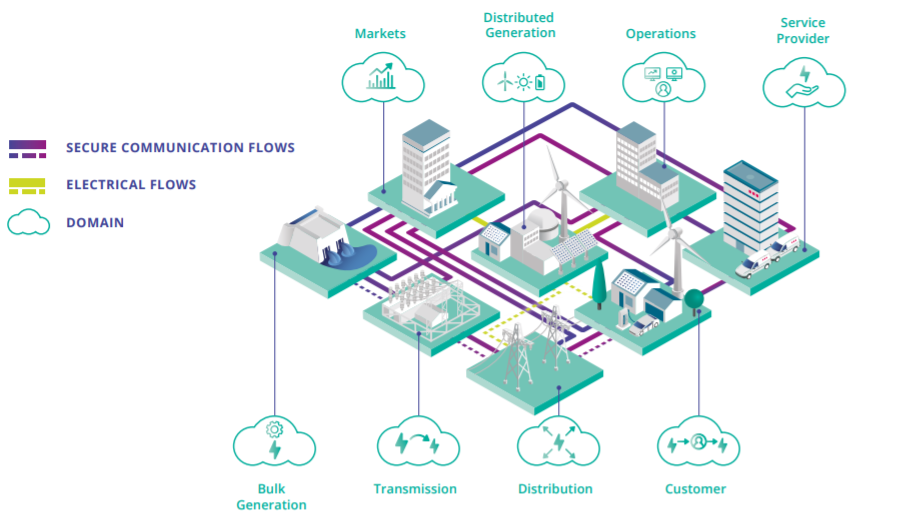
Current energy management platforms still have shortcomings in terms of automation, interaction and intelligence. Thus, as the traditional energy grid evolves into a smart grid, it needs to integrate ICT and power electronics on a large scale. ECS empower electrical utility providers and consumers, improve efficiency and availability while constantly monitoring, controlling, and managing demand. The large, complex networks need cross-sectional approaches for monitoring and control to achieve efficiency, security and reliability of the communication and electrical flows (Figure 3.2.14) - all based on new ECS technologies.
Optimisation in Monitoring and Control
 To ensure security, reliability and stability of the total energy system, it is important to know the current state of the system at all times. Therefore, observability and state estimation together with forecasts of expected production and consumption play an important role. This requires automation of the grids, the use of sensors at different levels, data storage, and AI and machine learning to operate the grids in an optimised way while at the same time complying with data security requirements and GDPR. Data collection within the grid needs to be limited to selected parameters to avoid unnecessary costs and complexity.
The application of IoT technology in the smart power grid can help to achieve sustainable energy, low latency, and reliability.12 Machine learning used for forecasting energy demand in a smart-grid environment contributes to medium-term and long-term prediction of consumption and production and can address energy management issues through improved prediction accuracy13. It allows administrators to optimise and plan their resources and manage energy inconsistencies and variations. Nevertheless, security concerns and vulnerabilities need to be identified in today’s electricity grid and sufficient solutions implemented to reduce the risks to an acceptable level of security.14
Energy Management Platforms for integrated energy systems
The European electrical power system is undergoing a transformation process driven by targets for renewable energy sources. A challenge will be that all the different energy infrastructures (electric, thermal, molecules) will be interconnected at high, medium and low power/voltage scales, but they all have completely different time scales of response. Different energy sources from different operators can be managed through ML, algorithmic trading, agile transformation, etc. In this way, challenges of current and future applications like the energy transition and the digital revolution can be addressed appropriately.15 Energy Management Systems (EMS) are required to enable efficient and combined operation of multiple energy systems and components. Within a study that quantitatively examined 98 scientific papers dedicated to EMS in buildings and households, the identified focus areas were mostly the reduction of energy costs or peaks, as well as the increase of comfort. Results show that long computation time is a significant weakness of current EMS. A possible solution could be heuristic algorithms. Furthermore, the study suggests that a stronger focus on high levels of uncertainty and robustness is needed in order to transfer EMS for operational management and scheduling into practice. The integration of forecasting methods also needs further attention. Regarding sector coupling (e.g. heat and electricity), major challenges exist due to high complexity and uncertainties over longer optimisation horizons. Moreover, multi-level EMS in combination with cloud computing offer promising approaches for new research questions.16
Hardware
 Electrical grids aim to become more distributed, smart, and flexible to meet the increasing electricity demand. For new grids, the trend is towards designing energy generation and consumption areas together in distributed form. Therefore, power electronic devices in particular play a crucial role in regulating distributed generation and dispersed energy-storage devices and integrating them into the grid. Future power converters also act as edge devices, actively contributing to a stable grid through grid-forming operation, virtual inertia and other functions. Hence, the intensive use of power electronic converters in the microgrid brings their control methods to the forefront; these should provide good dynamic response and high reference tracking characteristics17. Combining low-power and high-power components requires fundamentally new HW solutions. It necessitates heterogeneous integration at the highest and most diverse levels, which leads to unprecedented EMC and thermo-mechanical concerns. It may open the door to developments possible in no other application field. For example, when sensors (e.g. for self-monitoring) are placed directly into power switches controlling the energy flow to an entire city, two heterogeneous worlds meet (e.g. kV and pW, MA and nA). The sensors must be able to withstand strong magnetic field changes and temperature fluctuations (300 degrees +), thus requiring research and innovation.
3.2.3.5.2 Key focus areas in the cross-sectional tasks
Self-adaptive control based on Artificial Intelligence / Machine Learning:
Data-driven analytics (descriptive, diagnostic, predictive, and prescriptive) in smart grids.
Fraud detection.
Design, development, and application of deep learning in smart grids.
Artificial intelligence in advanced metering infrastructure.
Predictive and condition-based maintenance concepts resulting in reduced maintenance costs and increased lifetime for equipment and infrastructure.
Algorithms for status, prediction & demand:
Multiobjective optimisation algorithms in smart grids; e.g. forecasting of generation and consumption.
State estimation based on measurement values, simulation values, trained models (machine learning).
Optimal utilisation of storage systems (community storage, private storage, industrial storage systems) based on technical parameters, demand and generation forecasts, customer preferences.
Short/long-term demand and generation forecast algorithms for different energy domains (electricity, warm water consumption, etc.) and integration into overall systems.
New theories and applications of machine learning algorithms in smart grids.
Data management, weather forecast, energy use forecast with a time horizon of 24 hours and with resolutions of at least 15 minutes (prevalent use of renewable solar, wind, hydroelectric sources according to demand profiles and use cases).
Flexibility in management of energy supply and price offers to control the demand and avoid grid congestion
Technologies for an open distributed energy market
IT security, connectivity, integrity:
Artificial intelligence techniques for security.
Smart, secure edge devices for secure data management and control.
Energy management systems for low-power/low-cost devices.
Smart edge computing and AI for autonomous energy control.
Hardware Innovation:
H-bridge quasi-impedance source inverter (qZSI) for PV Systems.
Three-phase back-to-back inverter for Wind Energy Conversion Systems.
Ultra-capacitor with high efficiency (95%) and high-power density.
New generation of smart meters.
3.2.4 TIMELINE
The following timeline outlines the expected short-term, medium-term and long-term developments in the field of Energy.
| Major Challenge | Topic | Short term (2027–2031) | Medium term (2032–2036) | Long term (2037 and beyond) |
|---|---|---|---|---|
Major Challenge 1: Smart & Efficient - Managing Energy Generation, Conversion, and Storage Systems |
Topic 1.1: smart electronic control systems for energy conversion and storage |
High-efficiency converters, smart actuators & sensors, Plug-and-Play Functionality, Real-Time Digital Twin, Integrated Security System, Status & Health Monitoring, Integrated reference communication interface, self-powering systems for off-grid operation Solid State Transformers and Solid State Circuit Breakers |
Further development of intelligent power devices and electronic control towards higher system energy efficiency, lower system costs and integration or use of newly developed device technologies - 55% GHG emissions |
Getting closer to zero emissions (due in 2050) |
Topic 1.2: optimised storage options |
Control interfaces to batteries, fuel cells, electrolysers; Optimised converters Sensor solutions for cell and module monitoring Battery management systems Self-powered electrochemical energy storage systems (SEESs) Grid Integration |
Development of excellent storage options to balance energy generation volatility; efficient energy distribution and usage |
Further development based on the needs and opportunities |
|
Topic 1.3 electric drives for domestic, commercial & industrial applications |
Heat pumps, cooling devices, HVAC development, innovation and installation |
Supplying clean, affordable, and secure (made in Europe) energy to these applications |
“In all cases, the 2050 target is to electrify these [...] processes with technical solutions based on renewable (“clean”) sources.” (Green Deal) |
|
Major Challenge 2: Energy Management from On-Site to Distribution Systems |
Topic 2.1: stable and resilient multi-modal energy management systems |
Distributed Generation, Interconnectivity: Renewable energy sources and grid connection Secure gateways allowing energy trading, Coupling with energy trading systems (e.g. local energy market platforms) Renewable energy certification (labelling through ECS) |
Integration of electricity, heating, cooling, and transport Virtual power plant functionality optimising the match between generation and demand; |
Efficient energy distribution and usage; cost efficiency; high-level IT security |
Topic 2.2: energy management systems for industrial and residential customers |
Development of beyond-state-of-the-art techniques for scheduling controllable loads and generators and forecasting the weather to produce accurate generation profiles Data centre energy management with Solid State Transformers, DC grid and Solid State Circuit Breakers |
optimisation module, demand and generation forecast, customer preferences, weather forecasts and price/tariff information/forecast; Demand side management for buildings Virtual Energy Market |
Energy Management Systems optimising operation of components for lifetime & revenue |
|
Topic 2.3: autonomous control systems |
Control of high-demand loads for efficient energy distribution Storage devices provide flexibility, stability and reliability in the grids |
Price-control systems Minimise costs, provide peak-shaving; hybrid solutions; novel grid architectures for manufacturing to enable adaptive production optimisation |
Further development based on the needs and opportunities |
|
Major Challenge 3: Future transmission grids |
Topic 3.1: Grid stability during the industrial transition |
Development of components for HV transmission for 1-2 MV or even higher voltages New solutions for high-power electronics, combined with sensors and ICT for monitoring, control and protection |
Further improvements on grid capacity with highest possible efficiency Development of business models that encourage new technological solutions |
European Energy transition to zero-carbon emissions |
Topic 3.2: Resilient systems for the European transmission grids |
Water-resistant components/modules Autonomous electricity generators based on fuel cells Modelling Intelligent power devices, systems, and switches |
Modelling, weather forecasting, sensing data Digital twin ECS for multi-modal energy systems (cooling with excessive energy, use thermal capacities) |
Multi-Modality across Europe |
|
Major Challenge 4: Achieving Clean, Efficient & Resilient Urban/ Regional Energy Supply |
Topic 4.1: Regional energy distribution infrastructure |
Secure Cross-Regional Transmission Infrastructure communication infrastructure to support self-organised local energy communities |
Sustainable off-grid supply with power-electronics-based grid-forming capabilities |
Energy flows between sectors and their storage systems ensure the highest use of renewable energy while balancing fluctuations |
Topic 4.2: Electric energy supply for urban life and mobility |
Development of household and public charging infrastructure; charging points on bus lines or terminals Reservation and optimisation services implemented with ICT solutions. Bi-directional charging and grid stabilisation solutions |
Increase the share of renewable generation, self-consumption (mainly heating/cooling and EV) and building optimisation Local DC-coupling of various technologies for fast charging at home Sector coupling of large energy users (e.g. harbours, airfields) with urban users (electric cars, households, offices) |
Emission-free cities with electrification and decentralised storage to improve efficiency and reliability |
|
Topic 4.3 Storage systems for urban communities |
Development of grid-supporting/forming and peak-shaving control algorithms Battery energy/heat/cooling storage devices for households Integration of fuel cells and electrolyzers |
Peer-to-peer trading by using storage systems; Self-consumption optimisation |
Support for regional energy management for communities |
|
| Major Challenge 5: Cross-sectional Tasks for Energy System Monitoring & Control | Topic 5.1: AI, machine learning and algorithms for status, prediction and demand | Data-driven analytics and deep learning in smart grids; AI in advanced metering infrastructure; smart sensors with improved data processing; stream processing for real-time applications | Innovative approaches ensuring clean, secure and affordable energy for EU citizens; multiobjective optimisation algorithms in smart grids; optimal utilisation of storage systems; short-/long-term demand and generation forecast algorithms for different energy domains | Safe and interconnected smart grid network; cross-sectional approaches for energy monitoring and control; integrated energy systems; optimal match between generation and demand; energy flexibility |
| Topic 5.2: IT security, connectivity, integrity | Smart, secure edge devices for secure data management and control | Artificial intelligence techniques for security | Eliminate security vulnerabilities as far as possible | |
| Topic 5.3: Hardware | Improvements in the robustness of HW devices to withstand strong magnetic field changes and temperature fluctuations | Good dynamic response and high reference tracking characteristics of power electronic converters; new HW solutions to combine low-power and high-power components | Optimal regulation of distributed generation and dispersed energy-storage devices; robust devices able to control high energy flows |
https://commission.europa.eu/topics/eu-competitiveness/clean-industrial-deal_en↩︎
https://energy.ec.europa.eu/topics/renewable-energy/renewable-energy-directive-targets-and-rules/renewable-energy-targets_en↩︎
European Environment Agency (2022). Share of energy consumption from renewable sources in Europe. https://www.eea.europa.eu/ims/share-of-energy-consumption-from↩︎
EU Action Plan for Grids / European Grids Package. https://energy.ec.europa.eu/topics/infrastructure/european-grids_en↩︎
https://energy.ec.europa.eu/publications/strategic-roadmap-digitalisation-and-ai-energy-sector_en↩︎
https://managenergy.ec.europa.eu/document/download/9a5aff7f-97ce-4d4f-ae88-b38070db98f8_en?filename=EnergyandAI%20%281%29.pdf↩︎
https://www.mckinsey.com/industries/technology-media-and-telecommunications/our-insights/ai-power-expanding-data-center-capacity-to-meet-growing-demand↩︎
IRENA (2024), Renewable Energy and Jobs – Annual Review.↩︎
IEA (2019), Energy Efficiency.↩︎
Tahir Abbas M. et al. (2024). Towards zero-energy: Navigating the future with 6G in Cellular Internet of Things, Journal of Network and Computer Applications, Volume 230, 2024, 103945, ISSN 1084-8045, https://doi.org/10.1016/j.jnca.2024.103945.↩︎
Maisch, M. (2020). Europe’s Gigafactory Boom in Full Swing with Another Plant Announcement. PV Magazine.↩︎
Laba Y. (2024). The Role of IoT in Smart Grid Technology, https://intelliarts.com/blog/smart-grid-iot/↩︎
Ahmad, Chen 2018: Potential of three variant machine-learning models for forecasting district level medium-term and long-term energy demand in smart grid environment. https://www.sciencedirect.com/science/article/abs/pii/S0360544218313811↩︎
Aloul, Al-Ali, Al-Dalky,Al-Mardini,El-Hajj 2012: Smart grid security: Threats, Vulnerabilities and Solutions.↩︎
Camponesci et al. (2020). ENEL Energy Management Evolution in a growing complexity of the Italian market context. https://ieeexplore.ieee.org/document/9241132↩︎
Schminke (2021). Overview of the current state of research on characteristics and algorithms of energy management systems in households and buildings. https://doi.org/10.1002/er.6738↩︎
Bayhan, Abu-Rub (2020). Smart Energy Mangement System for Distributed Generations in AC Microgrid. Quatar Environment and Energy Research Institute, Hamad Bin Khalifa University; Texas A&M University at Qatar, Doha, Qatar.↩︎