
ECS SRIA 2027
2.4 Quality, Reliability, Safety and Cybersecurity
On this page
- 2.4.1 Scope
- 2.4.2 Major Challenges
- 2.4.2.1 Major challenge 1: Ensuring Quality in ECS Design and Manufacturing
- 2.4.2.2 Major challenge 2: Ensuring Hardware Reliability in ECS Design and Use Phases
- 2.4.2.3 Major Challenge 3: Ensuring dependability in connected software
- 2.4.2.4 Major Challenge 4: Ensuring cybersecurity and privacy
- 2.4.2.5 Major Challenge 5: Ensuring safety and resilience
- 2.4.2.6 Major Challenge 6: Human systems integration
- 2.4.3 TIMELINE
2.4.1 Scope
2027 and beyond. The concurrent demand for increased functionality, uninterrupted availability of service, and continuous miniaturisation of electronic components and systems (ECS) confronts the scientific and industrial communities in Europe with many thorny challenges.
A key issue is how to enable the massive increase in computational power and low communication latency of ECS, with its hybrid and distributed architectures, without losing crucial properties such as quality, reliability, safety, or cybersecurity. It needs to be understood what would happen if any of those properties degraded, or if they were not correctly integrated in a critical product. In addition, what role will AI (artificial intelligence) play in addressing these challenges? Are the application of the EU Artificial Intelligence Act (AIAct) and the IEC standards on AI sufficient to ensure safety and cybersecurity of an AI-driven application?
All these problems form the core background to this chapter, which investigates the quality, reliability, safety, and cybersecurity of ECS by highlighting the required industrial research directions via six major challenges.
Related chapters. Techniques described in Chapter 2.3 “Architecture and Design: Method and Tools” are complementary to the techniques presented here: in that chapter, corresponding challenges are described from the design process viewpoint, whereas here we focus on a detailed description of the challenges concerning reliability, safety, and cybersecurity within the levels of the design hierarchy.
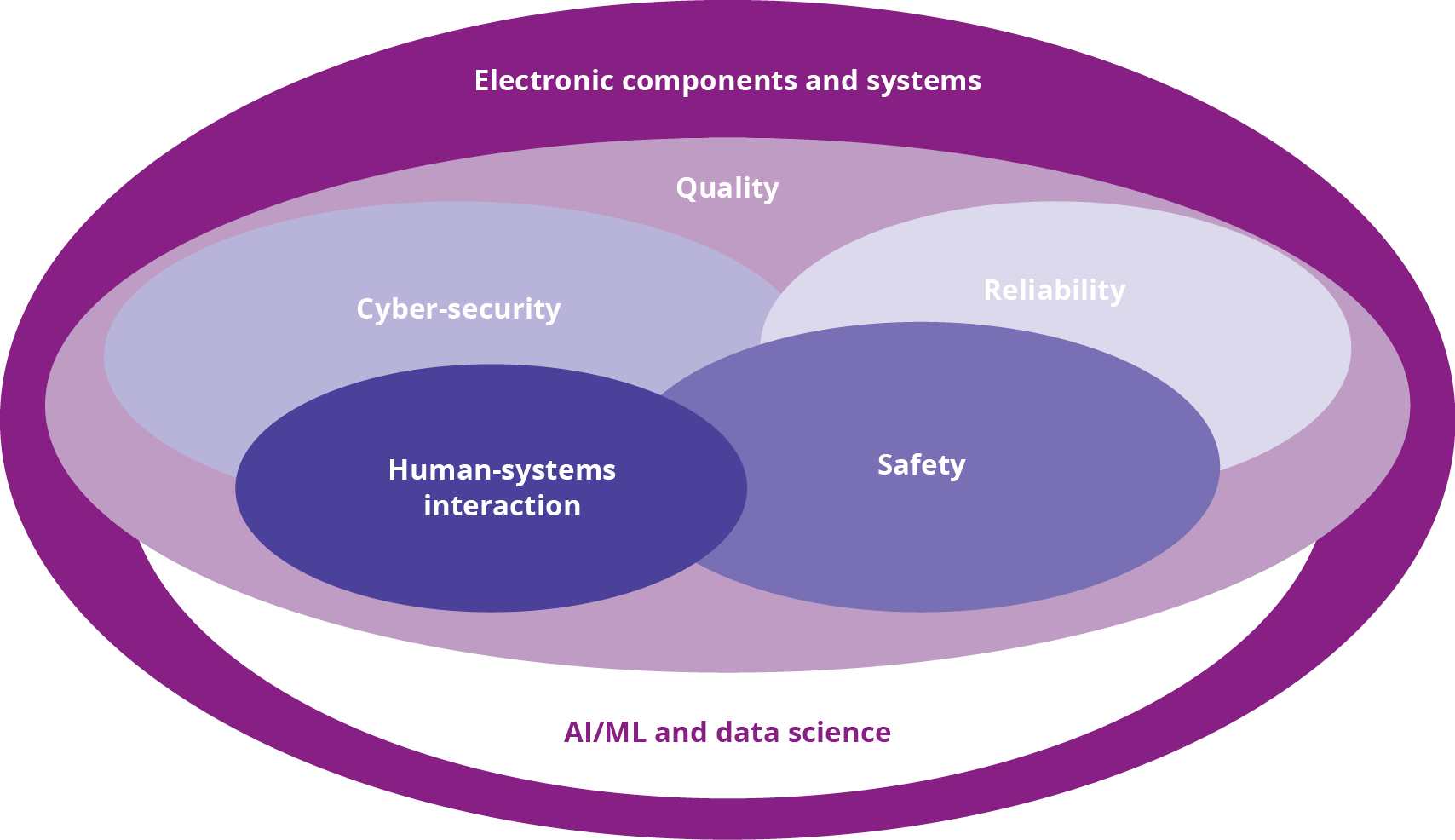
Figure 2.4.1 - Role of quality, reliability, safety and cybersecurity of electronic components and systems for digitalisation
2.4.2 Major Challenges
With the increasing dependence on multiple manufacturing nodes, accelerated by advanced packaging, heterogeneous integration, AI, and human-developed software, the need for verification of the authenticity of incoming components (HW and SW) has become critical. Numerous reports indicate that counterfeit components are entering production chains; however, an even greater concern is the risk of tampered devices that may introduce backdoors into critical systems.
This challenge is particularly relevant to applications in defence, automotive, communications and other safety-critical domains, but is not limited to these. The ability to verify authenticity and detect tampering in semiconductor components and electronic systems is therefore essential. This is especially important for sub-components manufactured outside the EU.
Robust tools and methodologies for verification and traceability are required to ensure the safe deployment of ECS in critical environments. These capabilities must guarantee the integrity and trustworthiness of components, uphold the highest standards of quality and reliability, and prevent vulnerabilities that could compromise system security.
Six Major Challenges have been identified:
Major Challenge 1: Ensuring quality in ECS design and manufacturing
A compilation of the research needs for methods and tools enabling quality assurance during design and manufacturing of future European electronic components and systems. This spans the full front-end and back-end fabrication chain, starting from material growth and wafer processing to advanced packaging, assembly, and integration.
The focus is on defect prevention, process control, and design-for-quality, ensuring that ECS are built in accordance with specifications and meet stringent performance requirements of European standards from the outset.
Major Challenge 2: Ensuring HW reliability during ECS Design and Use Phases
A compilation of the research needs for all methods required to assess and assure the reliability of the hardware of future electronic components and systems during design, fabrication, testing, qualification, and use – starting from single-crystal growth and wafer fabrication, proceeding through all wafer processes, covering all the diverse steps in the back-end-of-line, packaging and assembly, and including comprehensive studies of field-use conditions in order to prepare new products optimally for these conditions and to establish the most effective predictive health management.
The aim is to ensure that 'Made in EU' remains the label that stands for the highest quality and reliability, as well as for solutions at the highest level of functional safety so that these ECS can be used effectively for the most demanding applications in sectors such as automotive and mobility, industry and robotics, medical and healthcare, as well as energy infrastructure facilities and future quantum technologies.
Major Challenge 3: Ensuring dependability in connected software
Ensuring dependability in connected software aims to make networked systems as reliable and predictable as traditional industrial applications. To achieve this, connected software components, architectures and technologies must treat dependability as an explicit operational property across the device-edge-cloud continuum. Future systems should detect and communicate relevant changes in network or platform conditions, such as bottlenecks, maintenance or degraded service states, and provide clear feedback on scope, expected duration and available degraded modes. For critical applications, redundancy and failover mechanisms must be considered in the software architecture.
Building a strong European ecosystem for dependable software will reduce reliance on US and Chinese ICT technologies, strengthening both resilience and technological sovereignty.
Major Challenge 4: Ensuring cybersecurity and privacy
This challenge aims to develop secure, resilient and trustworthy electronic systems by integrating cybersecurity and privacy measures across the entire digital ecosystem. It addresses cybersecurity and privacy in an increasingly connected digital environment. It considers how the growth of 5G, IoT, AI, and autonomous systems expands complexity, attack surfaces, and risks. Key issues include protecting sensitive data, countering hybrid and adversarial attacks, and ensuring trustworthiness, resilience and compliance across heterogeneous systems. The vision highlights robust trust frameworks, privacy-by-design, quantum-safe cryptography, and green, secure solutions. Expected outcomes focus on trustworthy AI, open-source hardware/software security, certification methods, and safety-security integration to protect critical assets and data through advanced, adaptable technologies and frameworks, ensuring compliance, reliability, and European digital sovereignty.
Major Challenge 5: Ensuring safety and resilience
This challenge highlights the need for continuous industrial research to enhance the safety and resilience of electronic components and systems as they increasingly integrate AI. It explores how evolving regulations, such as the EU AI Act and international standards, frame requirements for transparency, robustness, and traceability. The vision foresees autonomous and adaptive systems that remain dependable under physical, operational, and legal constraints, while supporting sustainability and interoperability. Key focus areas include dynamic adaptation, modular certification, trustworthy electronics, and safe human–machine interaction. Outcomes target improved resilience, liability traceability, and dependable deployment in real-world environments.
Major Challenge 6: Human–systems integration
It aims to ensure that the operational requirements of human stakeholders are sufficiently taken into consideration early on in the design and development of embedded systems. The goal is to reduce unintended consequences and risk exposure by ensuring that human requirements and oversight are built in from the outset. As systems become more complex, particularly with AI components, user integration and effective human oversight by design are essential. Key objectives are effective human oversight, calibrated trust, and acceptance.
2.4.2.1 Major challenge 1: Ensuring Quality in ECS Design and Manufacturing
2.4.2.1.1 State of the art
With the ever-increasing complexity and demand for higher functionality of electronics, combined with constraints on cost, power consumption, and miniaturisation, ensuring high quality in design and manufacturing has become a major challenge. Modern ECS rely on heterogeneous integration, advanced packaging, and multi-node fabrication, making process control and defect prevention significantly more complex.
Traditional quality assurance approaches based on post-process inspection are no longer sufficient. Instead, in-line monitoring, real-time process control, and data-driven manufacturing approaches must be deployed across the entire production chain.
Digitalisation of manufacturing, including the use of AI, advanced metrology, and digital twins, enables early detection of deviations, improved yield, and tighter control of variability. In parallel, design-for-quality (DfQ) and virtual verification approaches allow early identification of manufacturability and integration issues before fabrication.
The integration of data across the supply chain further enables a shift from isolated optimisation towards collaborative, data-driven quality assurance, ensuring that ECS meet stringent specifications from the outset.
2.4.2.1.2 Vision and expected outcome
The vision is to establish a fully digitalised, data-driven and collaborative manufacturing ecosystem that ensures ECS are built correctly from the outset, despite increasing complexity and heterogeneity.
Key outcomes include:
Early detection and prevention of defects through in-line monitoring and predictive process control
Integration of digital twins and virtual verification to minimise design and manufacturing risks before tape-out
Enhanced design-for-quality methodologies supporting advanced integration technologies
Improved yield, manufacturability, and time-to-market through model-based and AI-driven approaches
Strengthened supply chain collaboration and traceability, enabling consistent quality across distributed manufacturing environments
This will ensure that “Made in EU” remains a benchmark for manufacturing excellence and high-quality ECS.
2.4.2.1.2.1 Quality: In situ and real-time assessments
Inline inspection and highly accelerated testing methods for quality and robustness monitoring during production of ECS with ever-increasing complexity and heterogeneity for demanding applications should increase the yield and reduce the rate of early failures (failures immediately following the start of the use period), and prevent the early onset of wear-out failure modes.
Controlling the process parameters in the era of Industry 4.0 beyond traditional approaches will minimise deviations and improve the quality of the responses related to those parameters:
Implement advanced sensor fusion and real-time data analytics to monitor process parameters across the entire manufacturing chain, from raw material input to final assembly.
Develop and deploy AI-driven predictive process control systems that anticipate and automatically correct deviations, optimising parameters for material-specific characteristics and desired performance.
Integrate in situ metrology and feedback loops directly into production equipment, enabling continuous adaptation of process conditions based on immediate material or component response.
Establish digital twins of manufacturing processes to simulate and optimise process flows, identify bottlenecks, and predict the impact of parameter variations on final product quality.
Process and material properties (electrical, mechanical, thermal, chemical, etc) and their variability will have to be characterised to quantify their effects on hardware reliability, as well as to enable prediction of reliability in final products through combinations of empirical studies, fundamental RP models and AI approaches:
Develop standardised methodologies for multi-scale characterisation of material properties (e.g. microstructure, composition, mechanical properties, electrical behaviour) and their inherent statistical variations.
Conduct comprehensive empirical studies and accelerated stress testing to generate robust datasets on how specific material and process variabilities lead to degradation and failure mechanisms.
Advance fundamental Reliability Physics (RP) models to accurately describe the propagation of material defects and process-induced weaknesses into macroscopic hardware failures.
Utilise AI and machine learning (ML) models (e.g. Bayesian networks, Gaussian processes) to correlate complex multivariate material and process data with observed reliability outcomes, enabling robust prediction and risk assessment.
Advanced/smart monitoring of process output (e.g. measuring the 3D profile of assembled goods) for the detection of abnormalities (using AI for the early detection of standard outputs):
Deploy high-resolution non-destructive testing (NDT) techniques such as advanced X-ray computed tomography (CT), high-frequency ultrasound, optical coherence tomography (OCT), and active thermography for comprehensive internal and external defect detection.
Develop AI-powered image and signal processing algorithms to analyse complex NDT data, automatically identify anomalies, and classify defect types with high accuracy and speed.
Implement predictive quality analytics that move beyond pass/fail criteria to identify subtle "signatures" in the process output that indicate potential future reliability issues, even if the current output meets specification ("early detection of standard outputs" that might degrade prematurely).
Establish closed-loop feedback from process output monitoring to process control, enabling immediate adjustment of production parameters based on real-time quality insights.
Smart screening methodologies for critical latent defects, which include the use of intelligent, adaptive or automated techniques, such as machine learning, statistical analysis, or pattern recognition, within systematic procedures like inline inspection, stress testing, or predictive algorithms:
Develop methodologies aimed at identifying latent defects that are not detectable through standard inspection, and typically do not cause immediate failure but may emerge under stress, ageing or specific usage conditions. When such defects are critical, they have a high likelihood of leading to significant or safety-related failures.
Create and implement smart screening methods combining physical testing and virtual assessments based on physical and data-driven (AI-supported) approaches that enable comprehensive proactive detection of these hidden, high-risk flaws prior to product deployment without necessitating burn-in.
Early detection of potential yield/reliability issues by simulation-assisted design for assembly/design for manufacturing (DfM/DfA) as a part of virtual prototyping:
Integrate multi-physics simulation tools (e.g. thermo-mechanical, fluid dynamics, electrical field analysis) into the DfM/DfA workflow to predict manufacturing-induced stresses, deformations, and potential failure points before physical fabrication.
Develop virtual qualification and testing methodologies that simulate entire production runs, including assembly steps, to identify potential yield losses or reliability weak points stemming from design choices or material combinations.
Utilise generative design and topology optimisation techniques, informed by manufacturing constraints and material properties, to create designs inherently more robust against common manufacturing defects.
Establish digital threads from design to manufacturing, ensuring that material specifications, process tolerances, and quality requirements are consistently communicated and verified throughout the entire product lifecycle.
2.4.2.1.2.2 Design-for-quality and virtual verification
Design-for-quality and virtual verification approaches enable early detection of potential yield and manufacturability issues prior to fabrication, reducing development cycles and improving first-time-right success.
Integrate multi-physics simulation tools (e.g. thermo-mechanical, fluid, electrical) into DfM/DfA workflows to predict manufacturing-induced stresses and process sensitivities
Develop virtual qualification methodologies that simulate full production and assembly flows
Apply generative design and optimisation techniques considering manufacturing constraints
Establish digital threads linking design, materials, process parameters, and quality requirements across the lifecycle
2.4.2.1.2.3 Digitalisation: A paradigm shift in the fabrication of ECS from supplier/customer to partnership
Digitalisation is not possible without processing and exchanging data between partners.
Involving European stakeholders to resolve the issue of data ownership:
Create best practices and scalable workflows for sharing data across the supply chain while maintaining intellectual property (IP).
Standardise the data exchange format, procedures and ownership, and create an international legal framework.
Conceive and validate business models creating economic incentives and facilitating data sharing, and machine learning algorithms dealing with data.
Handling and interpreting big data:
Realise consistent data collection and ground truth generation via annotation/labelling of relevant events.
Create and validate a usable and time-efficient workflow for supervised learning.
Standardised model-training and model-testing processes.
Standardised procedures for model maintenance and upgrade.
Linking data from Industry 4.0 with model-based engineering:
Derive working hypotheses about system health.
Validate hypotheses and refine physics-based models.
Construct data models embedding (new) domain knowledge derived from model-based engineering.
Identify significant parameters that must be saved during production to be re-used for design optimisation and manufacturing process improvement, and vice versa – i.e. feed important insights derived from field data (product usage monitoring) into design and production. This is also mandatory to comply with data protection laws.
Evaluate methods for the indirect characterisation of ECS using end-of-line test data.
Wafer fabrication (pre-assembly) online and offline tests for electronics, sensors and actuators, and complex hardware (e.g. multicore, graphics processing unit, GPU) that also cover interaction effects such as heterogeneous 3D integration and packaging approaches for advanced technology nodes (e.g. thin dice for power applications – dicing and grinding).
2.4.2.2 Major challenge 2: Ensuring Hardware Reliability in ECS Design and Use Phases
2.4.2.2.1 State of the art
Progress in ECS technology means the continuous (i) increase in complexity and number of components integrated into one system, often shrinking in size and (ii) a growing share of highly safety-related applications being exposed to harsh service conditions, while at the same time (iii) global competition demands shorter development cycles and lower costs for fabricating and testing the new products. Meeting these conflicting challenges while still assuring ECS reliability necessitates a new generation of reliability methodologies that spans from the beginning of development to the end of the use phase of the ECS technologies and products. During development, design for reliability (DfR) needs to be implemented comprehensively along the entire value chain based on sound knowledge of the physics of degradation. During the use phase, reliability assessment requires in situ monitoring of the state of health at both local (e.g., the single IC package) and system levels. Hybrid prognostic and health management (PHM) supported by AI is the key methodology here. DfR concerns the total lifetime of a full population of systems under anticipated service conditions and its statistical characterization. PHM considers the degradation of the individual system in its actual service conditions and the estimation of its specific remaining useful life (RUL).
2.4.2.2.2 Vision and expected outcome
The trend towards interconnected, highly automated and autonomous systems will change the way we own products. Instead of buying commodity products, we will purchase personalized services. The vision of Major challenge 2 is to provide the tools and methods for novel ECS solutions to meet the ever-increasing product requirements in terms of product availability during use in the field. Both types of reliability methodologies will contribute, i.e., the continuous improvement of DfR methods and the development of new PHM techniques. They are the cornerstone of future developments in ECS. Hence, the main focus of Major challenge 2 will centre on the following topics:
Digitalisation, by improving collaboration within the supply chain to introduce common DfR and PHM methods for faster market entry of better ECS.
Continuous improvement of the DfR methodologies by applying compact models and AI.
Data science and AI will drive technology development and pave the way for PHM implementation for ECS.
AI- and PHM-based risk management, in situ mitigation, and active RUL extension.
2.4.2.2.3 Key focus areas
2.4.2.2.3.1 Reliability: Tests and modelling
Continuous improvement of physics-of-failure (PoF)-based methodologies combined with new data-driven approaches: tests, analyses, degradation and lifetime models (including their possible reconfiguration):
Identifying and adapting methodologies to the main technology drivers.
Methods and equipment for dedicated reliability assessments at the first level (component), second level (board), and third level (system with the housing, e.g., massive metal box), as well as accounting for the interactions between the hierarchy levels (element, device, component, sub-module, module, system, application).
Comprehensive understanding of failure mechanisms, lifetime prediction models (including multi-loading conditions), continuously updating them for new failure mechanisms related to innovative technologies (advanced complementary metal–oxide–semiconductor (CMOS), µ-fluidics, optical input/output (I/O), 3D printing, wide bandgap technologies, etc). New materials and production processes (e.g. 3D printing, wide bandgap technologies), and new interdisciplinary system approaches and system integration technologies (e.g. micro-fluidics, optical input/output (I/O)).
Accelerated testing methods (e.g., high-temperature, high-power applications) based on mission profiles and failure data (from field use and tests):
Use field data to derive hypotheses that enable improved prioritisation and design of testing.
Use of field, PHM and test data to build models for ECS working at the limit of the technology as accelerated testing is limited.
Standardisation of how the mission profiles are deduced from multi-modal loading.
Design to field – better understanding of field conditions through standardised methodology across the supply chain using a field-load simulator.
Implementation of monitoring methods for the 10 most relevant failure modes in the field
Replacement of burn-in by built-in sensors and AI/ML to screen out weak components (leading to early failures)
New standards/methodologies/paradigms that evaluate the “ultimate” strength of systems – i.e. no longer test whether a certain number of cycles are a “pass”, but instead test to the limit to identify the actual safety margin of systems, and additionally the behaviour of damaged systems so that AI can search for these damage patterns.
Digital twin software development for reliability analysis of assets/machines, etc.
Comprehensive understanding of the SW influence on HW reliability and its interaction:
SW/HW reliability modelling: find ways to combine the modelling techniques (in other words, reconcile the different time domains).
SW/HW reliability testing: find ways to test systems with software and find the interaction failure modes.
2.4.2.2.3.2 Design for reliability: Virtual reliability assessment prior to the fabrication of physical HW
Approaches for exchanging digital twin models along the supply chain while protecting sensitive partner IP and adaptation of novel standard reliability procedures across the supply chain.
Digital twins as main drivers of robust ECS systems:
Identifying main technology enablers.
Development of infrastructure required for safe and secure information flow.
Development of compact PoF models at the component and system level that can be executed in situ at the system level – metamodels as the basis of digital twins.
Training and validation strategies for digital twins.
Digital twin-based asset/machine condition prediction.
Virtual design of experiments as a best practice at the early design stage.
Realistic material and interface characterisation depending on actual dimensions, fabrication process conditions, ageing effects, etc., covering the critical structures, generating interface strength data with statistical distributions.
Mathematical reliability models that also account for the interdependencies between the hierarchy levels (device, component, system).
Mathematical modelling of competing and/or superimposed failure modes.
New model-based reliability assessment in the era of automated systems.
Development of fully harmonised methods and tools for model-based engineering across the supply chain:
Material characterisation and modelling, including effects of ageing.
Multi-domain physics of failure simulations.
Reduced modelling (compact models, metamodels, etc).
Failure criteria for dominant failure modes.
Verification and validation techniques.
Standardisation as a tool for model-based development of ECS across the supply chain:
Standardisation of material characterisation and modelling, including effects of ageing.
Standardisation of model exchange format within the supply chain
Simulation data and process management.
Automation of model build-up (databases of components, materials).
Use of AI in model parametrisation/identification, e.g. extracting material models from measurements.
Virtual release of ECS through referencing.
2.4.2.2.3.3 Prognostics and health management of ECS: Increase in functional safety and system availability
Self-monitoring, self-assessment and resilience concepts for automated and autonomous systems based on the combination of PoF, data science and ML for safe failure prevention through timely predictive maintenance.
Self-diagnostic tools and robust control algorithms validated by physical fault-injection techniques (e.g. by using end-of-life (EOL) components).
Hierarchical and scalable health management architectures and platforms, integrating diagnostic and prognostic capabilities, from components to complete systems.
Standardised protocols and interfaces for PHM facilitating deployment and exploitation.
Monitoring test structures and/or monitor procedures at the component and module levels for monitoring temperatures, operating modes, parameter drifts, interconnect degradation, etc.
Identification of early warning failure indicators and the development of methods for predicting the remaining useful life of the practical system in its use conditions.
Distributed data collection, model construction, model update and maintenance.
Concept of digital twin: provide quality and reliability metrics (key failure indicator, KFI).
Development of AI-supported failure diagnostic and repair processes to improve field data quality.
Development of AI-based asset/machine/robot life-extension methods based on PHM.
AI-based autonomous testing tools for verification and validation (V&V) of software reliability.
Implementation of hardware-based security tokens (e.g. physical unclonable functions, true random number generators) with optimised randomness, reliability and uniqueness.
Lifecycle management. Contribute to the modelling of the HW cost across the lifecycle.
2.4.2.3 Major Challenge 3: Ensuring dependability in connected software
2.4.2.3.1 State of the art
Connected software applications spanning embedded devices, gateways, edge platforms and cloud services differ significantly from traditional industrial software that operates within a tightly controlled system boundary. In many deployments, connected functions reuse mainstream IT communication stacks, middleware, web technologies and open-source components that were not originally developed for stringent dependability or graceful degradation. For critical functions, transient network failures, overload, failed updates or platform outages must not lead to unpredictable behavior. Future connected software therefore needs to be engineered for dependable operation across the full device-edge-cloud continuum, including fault containment, diagnosability, redundancy where needed and controlled degradation under infrastructure failures.
2.4.2.3.2 Vision and expected outcome
The vision is that networked systems will become as dependable and predictable for end-users as traditional industrial applications interconnected via dedicated signal lines. This requires connected software components, architectures and technologies that make dependability an explicit operational property. Future dependable connected software should detect and communicate relevant changes in network or platform conditions, such as bottlenecks, maintenance measures or degraded service states. If outages occur, the user or end application should receive clear feedback on scope, expected duration and available degraded modes so appropriate measures can be taken. For critical applications, redundancy and failover mechanisms must be considered in the software architecture. The availability of a European ecosystem for reliable software components will also reduce the dependence on current ICT technologies from the US and China.
2.4.2.3.3 Key focus areas
2.4.2.3.3.1 Dependable connected software architectures
In the past, dependable software was typically deployed on specialised, tightly controlled reliable hardware. With the increased use of IoT, edge and cloud computing, critical software functions now span devices, communications infrastructure and remote platforms. Dependable operation must therefore be ensured across the full operational continuum:
Software reliability under connectivity loss, infrastructure instability and partial outages.
Dependable edge and cloud computing, including AI/ML-enabled functions where relevant.
Dependable communication methods, protocols and infrastructure.
Formal verification of protocols, coordination mechanisms and safety-relevant decision logic (including those using AI/ML).
Runtime monitoring, diagnosis and mitigation of communication and platform faults.
Deterministic and time-sensitive communication where bounded latency is required.
Increasing software quality by AI-assisted development and testing methods.
Infrastructure resilience to maintenance events, overload and cascading failures.
Reliable over-the-air (OTA) software and configuration updates.
Controlled autonomy and self-adaptivity under explicit dependability constraints.
Dependable integration platforms.
Dependable cooperation of Systems of Systems (SoS).
This Major Challenge is tightly interlinked with the cross-sectional technology in Chapter 2.2, Connectivity, where the focus is on innovative connectivity technologies. The dependability aspect covered within this challenge is complementary to that chapter since dependability and reliability approaches can also be used for systems without connectivity.
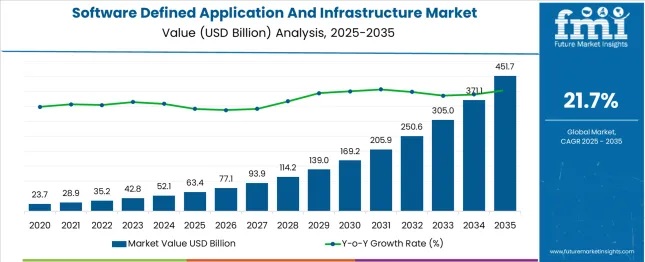
Figure 2.4.2 -Current and expected market value and year-on-year growth rate for the software-defined application and infrastructure market (Ref: Software Defined Application And Infrastructure Market | Global Market Analysis Report - 2035, Future Market Insights, 2024
2.4.2.3.3.2 Dependable softwarisation and virtualisation technologies
Changing or updating software while retaining existing hardware is common in many industrial domains. However, keeping dependable software while changing the execution platform or underlying hardware remains difficult, especially for critical applications. By decoupling software functions from specific hardware, softwarisation and virtualisation bring flexibility and shorter deployment cycles, but they also introduce new dependability concerns because critical software is increasingly executed on shared or general-purpose computing platforms:
Dependability of software-defined communication stacks and programmable networking components in critical systems.
Reliability of virtualised execution platforms, orchestration layers and resource management.
Reliable containerisation and virtual machine technologies.
Resilient multi-tenancy environments with fault containment and isolation.
AI-based autonomous testing for V&V of software reliability, including the software-in-the-loop (SiL) approach.
Testing tools and frameworks for V&V of AI/ML-based software reliability, including the SiL approach.
2.4.2.3.3.3 Combined SW/HW test strategies
Unlike hardware, software does not physically wear out, but connected products are modified frequently through updates, reconfiguration and continuous deployment. Dependability therefore requires reducing latent defects and controlling change-related regressions across software, platforms and hardware. Software reliability growth models (SRGM), i.e. statistical models that estimate how software reliability improves as faults are detected and removed during testing, combined with Bayesian statistics, merit further attention within the hardware-oriented reliability community over the coming years:
HW failure modes are considered in the software requirements definition.
Design characteristics must not cause the software to overstress the HW, or adversely change failure-severity consequences when failures occur.
Establish techniques that can combine SW reliability metrics with HW reliability metrics.
Develop efficient (hierarchical) test strategies for combined SW/HW performance and update validation of connected products.
Dependability in connected software is strongly connected with other chapters in this document. In particular, additional challenges are examined in the following chapters:
Chapter 1.3 Embedded Software and Beyond: Major Challenge 1 (MC1) efficient engineering of software; MC2 continuous integration of embedded software; MC3 lifecycle management of embedded software; and MC6 Embedding reliability and trust.
Chapter 1.4 System of Systems: MC1 SoS architecture; MC4 Systems of embedded and cyber-physical systems engineering; and MC5 Open system of embedded and cyber-physical systems platforms.
Chapter 2.1 Edge Computing and Embedded Artificial Intelligence: MC1: Increasing the energy efficiency of computing systems.
Chapter 2.2 Connectivity: MC4: Architectures and reference implementations of interoperable, secure, scalable, smart and evolvable IoT and SoS connectivity.
Chapter 2.3 Architecture and Design: Method and Tools: MC3: Managing complexity.
2.4.2.4 Major Challenge 4: Ensuring cybersecurity and privacy
2.4.2.4.1 State of the art
The pervasive deployment of connected digital products — accelerated by 5G infrastructure and the emerging development of 6G networks — has dramatically expanded attack surfaces across personal, industrial, and critical-infrastructure domains.
In this context, the largest and most exposed attack surface increasingly resides at the level of deployed systems and end-user environments, where devices interact with users, applications, and dynamic software ecosystems. While hardware-rooted security mechanisms are essential, vulnerabilities and attacks often materialize at runtime within software layers operating above the hardware.
Connectivity provides better flexibility and usability of these products in different sectors, with tremendous growth in sensitive and valuable data. Moreover, the variety of deployments and configuration options, and the growing number of sub-systems with increasing dynamism and variability, increase the overall complexity. In this scenario, new security and privacy issues should be addressed, and the continuously evolving threat landscape must also be considered. These should include both software and hardware approaches towards data security. New approaches, methodologies and tools for risk and vulnerability analysis, threat modelling for security and privacy, threat information sharing and reasoning are required. Artificial intelligence (e.g. machine learning, deep learning and ontologies) not only promotes pervasive intelligence supporting daily life, industrial developments, the personalisation of mass products around individual preferences and requirements, efficient and smart interaction among IoT in any type of services, but it also fosters automation to mitigate such complexity and avoid human mistakes. This is particularly relevant in critical sectors such as energy, healthcare and digital infrastructures, where the convergence of IT and OT has increased attack surfaces. In these domains, cybersecurity research must address the protection of vital assets from both conventional and hybrid attacks, approaching solutions with a dual-use perspective considering threats that could affect civilian and strategic infrastructure alike. This requires strong perimeter defence against external threat actors and advanced intrusion detection mechanisms.
Embedded and distributed AI functionality is growing at speed in both (connected) devices and services. AI-capable chips will also enable edge applications, allowing decisions to be made locally at the device level. Therefore, resilience to cyber-attacks is of utmost importance. AI can have a direct effect on the behaviour of a device, possibly affecting its physical operation and inducing potential safety concerns. AI systems rely on software and hardware that can be embedded in components, but also on the set of data generated and used to make decisions. Cyber-attacks, such as data poisoning or adversarial inputs, could cause physical harm and/or also violate privacy.
At the same time, the dynamic nature of modern ECS requires continuous, runtime-aware security approaches capable of detecting, analysing, and responding to evolving threats throughout the operational lifecycle of systems. This includes the ability to monitor system behaviour, identify anomalies, and support adaptive security responses in deployed environments, particularly at the edge and at the interface with end users.
The rapid proliferation of large language models (LLMs) introduces additional attack vectors — including prompt injection, model extraction, and LLM-assisted malware generation — while simultaneously offering new capabilities for automated vulnerability discovery and security testing. To address this issue, adaptable protection mechanisms and robust security measures at both device and network levels should be deployed, allowing integration of current and future technologies. For instance, advances in embedded machine learning should be considered, for example, lightweight AI models deployed directly on ECS for real-time intrusion detection and anomaly detection (e.g. TinyML), providing real-time, on-device threat detection without dependence on cloud connectivity. The development of AI should therefore go hand in hand with frameworks that assess security and safety to guarantee that AI systems developed for the EU market are safe to use, trustworthy, reliable and remain under control (c.f. Chapter 1.3 “Embedded Software and beyond” for quality of AI used in embedded software when being considered as a technology interacting with other software components). In addition, the tremendous increase of computational power and reduced communication latency of components and systems, coupled with hybrid and distributed architectures, require a rethink of many of the “traditional” approaches and expected performance concerning safety and security, exploiting AI and ML. Data protection should not only rely on complex software encryption algorithms, but also hardware‑level safeguards leveraging emerging materials and techniques to protect information at that level.
Approaches for providing continuous evaluation of the compliance of systems of systems with given security standards (e.g. IEC 62443, which uses technical security controls*) will allow a homogeneous level of security across a multi-stakeholder ecosystem, challenging tech giants with platforms providing overall levels of security but often resulting in vendor lock-in.
More recently, the EU Cyber Resilience Act (CRA, Regulation 2024/2847), entering into force in December 2024, introduces mandatory cybersecurity-by-design requirements and vulnerability handling obligations for all products with digital elements placed on the EU market, creating new compliance imperatives directly relevant to ECS manufacturers and integrators.
Early tools have demonstrated the feasibility of continuous compliance evaluation for specific policy sets. However, the rise of powerful language models and code generation may allow for the dynamic creation of evaluation machinery to support the evaluation of compliance against any given standard.
The combination of composed digital products and AI highlights the importance of trustable systems that weave together privacy and cybersecurity with safety and resilience. Automated vehicles, for example, are adopting an ever-expanding combination of Advanced Driver Assistance Systems (ADAS) developed to increase the level of safety, driving comfort by exploiting different types of sensors, devices and on-board computers (sensors, Global Positioning System (GPS), radar, lidar, cameras, on-board computers, etc). To complement ADAS systems, Vehicle-to-X (V2X) communication technologies are gaining momentum. Cellular-based V2X communication provides the ability for vehicles to communicate with other vehicles, infrastructure and the environment around them, exchanging basic safety messages to avoid collisions and, according to the evolution of 5G standards, also high-throughput sensor sharing, intent trajectory sharing, coordinated driving and autonomous driving. The connected autonomous vehicle scenarios offer many advantages in terms of safety, fuel consumption and CO2 emissions reduction, but the increased connectivity, number of devices and automation expose those systems to several crucial cyber and privacy threats, which must be addressed and mitigated.
Autonomous vehicles represent a truly disruptive innovation for travelling and transportation, and should be able to guarantee the confidentiality of the driver’s and vehicle’s information. Those vehicles should also avoid obstacles, identify failures (if any) and mitigate them, as well as prevent cyber-attacks while staying safely operational (at reduced functionality) either through human-initiated intervention, by automatic on-board action or remotely by law enforcement in the case of any failure, security breach, sudden obstacle, crash, etc.
In the scenario described the main cybersecurity and privacy challenges deal with:
Interoperable security and privacy management in heterogeneous systems including cyber-physical systems, IoT, virtual technologies, clouds, communication networks, autonomous systems.
Real-time monitoring and privacy and security risk assessment to manage the dynamism and variability of systems.
Developing novel privacy-preserving identity management and secure cryptographic solutions.
Novel approaches to hardware security vulnerabilities including side-channel attacks, microarchitectural exploits, attacks on Trusted Execution Environments (TEEs), and hardware supply chain integrity threats.
Understanding and addressing the interdependencies between hardware-level security properties and the software security ecosystem operating above them, ensuring that secure components are effectively integrated into resilient, system-level cybersecurity architectures
Developing new approaches, methodologies and tools empowered by AI in all its forms (e.g. machine learning, deep learning, ontology).
Investigating a deep verification approach also for open-source hardware in synergy and implementing the security by-design paradigm.
Investigating the interworking among safety, cybersecurity, trustworthiness, privacy and legal compliance of systems.
Evaluating the energy and environmental footprint of deployed security solutions, in line with European sustainability objectives.
Developing advanced data protection techniques that take advantage of unique physical phenomena – such as physical unclonable functions (PUFs) – to address the inherent vulnerabilities of conventional password-based systems to hacking.
Strengthening consumer-facing and endpoint-level cybersecurity, including capabilities for continuous threat detection, behavioural anomaly identification, and response mechanisms operating within deployed systems and user environments.
2.4.2.4.2 Vision and expected outcomes
The vision for this major challenge is anchored on a chain of trust that provides continuous, uninterrupted security from device level up to the application layer, including AI-enabled components operating in dynamic and unpredictable environments.
This chain of trust must extend beyond design-time and component-level assurances to include runtime protection mechanisms and the software layers interacting with end users, ensuring that security is maintained throughout the full system lifecycle and across all operational contexts.
This foundation is especially critical for mission-critical systems where reliability, quality and safety and security are tightly connected. Building on this, the vision emphasises the protection of EU citizens’ privacy and security while safeguarding usability, market competitiveness, industrial intellectual property. Technical solutions should be designed for energy efficiency and reduced environmental impact, contributing to EU sustainability objectives. Ultimately, the development of proof-of-concept demonstrators should simultaneously guarantee defined levels of security and privacy and be capable of evolving into reference designs providing reusable, adaptable implementations for industry.
End-to-end encryption of data, both in transit and at rest, is maintained to effectively protect privacy and security. The advent of quantum computing technology introduces new risks and threats, since attacks using quantum computing may affect traditional cryptographic mechanisms. New quantum safe cryptography is required. Following the 2024 NIST finalisation of post-quantum cryptography standards (FIPS 203/204/205), the priority now shifts to migration strategies, hybrid classical/PQC deployments, and hardware-accelerated implementations suitable for resource-constrained ECS
Also, the roadmap for Open Source HW/SW & RISC-V IP blocks will open the path to domain-focused processors or domain-specific architectures (for instance, but not limited to the “chiplet-based approach”), which may lead to new approaches to cybersecurity and safety functions or implementation, as well as new challenges and vulnerabilities that must be analysed.
Putting together security and privacy requirements seamlessly is a difficult challenge that also involves some non-technical aspects. The human factor can often cause security and privacy concerns, despite the technologically advanced tools and solutions. Security and privacy requirements must also address socio-technical dimensions, including user behavior and organizational practices, which remain significant attack vectors. Another aspect relates to security certification versus certification cost. A security certification that does not mitigate risks and threats increases costs with minimal benefits. Therefore, all techniques and methodologies to reduce such costs are in the scope of the challenge.
In light of this scenario, this Major Challenge aims at contributing to the European strategic autonomy plan in terms of cybersecurity, digital trustworthiness and the protection of personal data. The relevant regulatory frameworks are the EU Cyber Resilience Act (CRA, Regulation 2024/2847) and the AI Act (Regulation 2024/1689).
In addition, the NIS2 Directive (2022/2555), has extended mandatory security and incident-reporting obligations to a broader set of critical entities and their supply chains, reinforcing the regulatory imperative for sector-specific cybersecurity frameworks.
Particular attention should be given to sectors like health, energy, and digital infrastructures due to their strategic importance and increasing exposure to sophisticated hybrid attacks. These sectors demand advanced, sector-specific cyber-defense frameworks capable of protecting data, operational continuity, and public safety, including through dual-use technologies that support both civilian and critical mission resilience. The vision includes prioritising external threat hunting, robust perimeter security, and proactive defense against adversarial intrusion.
2.4.2.4.3 Key focus area
2.4.2.4.3.1 Trustworthiness
Digital Trust is mandatory in a global scenario, based on ever-increasing connectivity, data and advanced technologies. Trustworthiness is a high-level concern – including not only privacy and security issues, but also safety and resilience and reliability. The goal is a robust, secure, and privacy-preserving system that operates in a complex ecosystem without interruption, from the hardware level up to applications, including systems that may be AI-enabled. This challenge calls for a multidisciplinary approach, spanning technologies, regulations, compliance, legal and economic issues. To this end, the main expected outcomes can be defined as follows:
Defining different methods and techniques of trust for a system, and proving compliance with a security standard via certification schemes.
Defining methods and techniques to ensure trustworthiness of AI algorithms, including explainable AI (XAI) (cf. Chapter 2.1 “Edge Computing and Embedded Artificial Intelligence”)
Developing methodologies and techniques spanning trustworthy hardware and trustworthy software layers (cf. Chapter 1.3 “Embedded Software and Beyond” and Chapter 1.4 “System of Systems”). Trustworthiness should also focus on trustworthy architectures with security and privacy by design as follows.
Support the adoption of secure virtualisation and dependable software update mechanisms.
Defining methods and tools to support the composition and validation of certified parts addressing multiple standards (cf. Chapter 1.4 “System of Systems” and Chapter 2.3 “Architecture and Design: Methods and Tools”).
Definition and future consolidation of a framework providing guidelines, good practices and standards oriented to trust.
Enhancing current tools and procedures for safety and security verification and certification for open-source hardware/software.
Implementing risk-based security testing and threat modelling for ECS systems.
Targeting end-to-end transparency and resilience in global ECS supply chains and developing component authentication and firmware integrity verification mechanisms for the ECS supply chain, addressing risks of hardware Trojans, pre-compromised firmware and counterfeit devices entering critical system assemblies.
Definition of architectures that provide mitigation, remediation and restoration against physical and software cyber threats, ensuring integrity in data, software and systems.
2.4.2.4.3.2 Security and privacy-by-design
The main expected outcome is a set of solutions to ensure the protection of personal data in the embedded AI and data-driven digital economy against potential cyber-attacks:
Ensuring cybersecurity and privacy of systems in the edge to cloud continuum, via efficient automated verification and audits, as well as recovery mechanisms (cf. Chapter 1.4 “System of Systems” and Chapter 2.3 “Architecture and Design: Method and Tools”).
Ensuring performance in AI-driven algorithms (which need considerable data) while guaranteeing compliance with European privacy standards (e.g. General Data Protection Regulation, GDPR).
Establishing a cybersecurity and privacy-by-design European data strategy to promote data sovereignty.
Establishing Quantum-Safe Cryptography Modules.
Establishing a transparency security approach toward open-source hardware/software trustworthy architectures.
Establishing advanced data security devices based on neuromorphic/probabilistic computing approaches, utilising advanced spintronic/nanomagnetic materials.
Extending confidential computing paradigms – based on hardware-enforced Trusted Execution Environments (TEEs) – to resource-constrained ECS and edge nodes, ensuring data confidentiality and code integrity during processing, not only at rest or in transit.
2.4.2.4.3.3 Ensuring both safety and security properties
The main expected outcome is to ensure compatibility, adequacy and coherence in the joint use of the promoted security solutions, and the safety levels required by the system or its components:
Maintaining the nominal or degraded system’s safe level of behaviour when the system’s security is breached or there are accidental failures.
Guaranteeing information properties under cyber-attacks and adversarial AI (quality, coherence, integrity, reliability, etc).
Ensuring safety, security and privacy of embedded intelligence (cf. Chapter 1.3 “Embedded Software and beyond”).
Guaranteeing a system’s coherence among different heterogeneous requirements (i.e. secure protocols, safety levels, computational level needed by the promoted mechanisms) and different applied solutions (i.e. solutions for integrity, confidentiality, security, safety) in different phases (i.e. design, operation, maintenance, repair and recovery).
For safety-critical applications, the open-source software (for instance, Virtual Prototypes, compilers and linkers, debuggers, programmers, integrated development environments, operating systems, software development kits and board support packages) must be qualified regarding functional safety and security standards to offer a possibility to create transparent, auditable processes for ensuring safety and security (cf. Chapter 3.1 “Mobility”).
Assess complex System-on-Chip implementations and a chiplet approach assembling functional circuit blocks with different functions (e.g. processor, accelerator, memories, interfaces, etc) with regard to security functionalities, focusing on scalability, modularity as well as Edge paradigm.
Developing rigorous methodology supported by evidence to prove that a system is secure and safe, thus achieving a greater level of transparency without compromising information and trustworthiness.
Evaluating the environmental impact of the implemented safety and security solutions (the green chapter connection).
Development of hybrid-attack resilient strategies integrating cyber and physical defence layers.
Asset protection frameworks addressing dual-use technologies to ensure both civilian and critical infrastructure safety. The aim is to define integrated frameworks ensuring both safety and security properties.
Continuous monitoring and adaptive response mechanisms for sector-specific threats.
Integrating rapid vulnerability detection and incident‑analysis processes to provide real‑time feedback for R&D, accelerating remediation, and strengthening overall system resilience.
2.4.2.5 Major Challenge 5: Ensuring safety and resilience
2.4.2.5.1 State of the art
In 2027 and beyond, why is it still important to finance European industrial research on safety? Have not decades of studies and applications already addressed this major challenge? What key issue still demands our attention?
The recent spread of AI applications is forcefully and naturally making its way into the digitalisation of ubiquitous electronic components and systems (ECS), and is stretching traditional safety analysis. To govern this, over the last couple of years the international community has published and updated a series of standards, technical specifications and regulations related to safety and AI.
In 2024, the European Parliament and the Council of the European Union published the EU AI Act. Although this regulation does not apply to “any research, testing or development activity regarding AI systems or AI models” [Art. 2 Pf. 8], it indirectly applies to industrial research if the product is deployed on the market. Moreover, the AI Act highlights the importance of guidelines and principles for safety, linking this latter to the risk-based AI classification system as well as to robustness, resilience, transparency, traceability and explainability [e.g., art. 27].
At the same time, the international standardisation group ISO/IEC JTC 1 42 published a set of standards and technical specifications that are focused on domain-independent applications. Even in the nuclear domain, and certainly among the most restrictive and conservative ones, the related industrial community is investigating, amid active internal debate, how to use AI-based techniques, identify the limits and study their impacts on safety (see, e.g., the activities and works of IEC TC 45 SC 45A and the International Atomic Energy Agency).
The current landscape of regulations and standardisations concerning safety and AI underlines the need for ongoing industrial research into the safety and resilience of ECS, to deliver answers and innovations. This major challenge is therefore devoted to understanding and developing innovations that are required to increase the safety and resilience of systems in compliance with the AI Act and other related standards – by tackling key focus areas involving cross-cutting considerations such as legal concerns and user abilities, and to ensure safety-related properties under a chiplet-based approach (cf. Introduction).
2.4.2.5.2 Vision & expected outcomes
The vision points to the development of safe and resilient autonomous systems in dynamic environments, with a continuous chain of trust from the hardware level up to the applications involved in the accomplishment of the system’s mission. Our vision considers physical limitations (battery capacity, quality of sensors used in the system, hardware processing power needed for autonomous navigation features, etc), interoperability (that could be brought, for example, via open-source hardware), and considers optimising energy usage and system resources of safety-related features to support sustainability of future systems.
Civilian applications of (semi-)autonomous mobile systems are increasing significantly. This trend represents a great opportunity for European economic growth. However, unlike traditional high-integrity systems, the hypothesis that only expert operators can manipulate the final product undermines the large-scale adoption of the new generation of autonomous systems.
Civilian applications thus inherently entail safety, and in the event of an accident or damage (for example, in uploading a piece of software to an AI system) liability and the certification/qualification of AI systems should be clearly traceable.
In addition to the key focus areas below, the challenges cited in Chapter 2.3 on Architecture and Design: Methods and Tools are also highly relevant for this topic, as are those in Chapter 1.3 on Embedded Software and Beyond
2.4.2.5.3 Key focus area
2.4.2.5.3.1 Dynamic adaptation and configuration, self-repair capabilities, (decentralised instrumentation and control for) resilience of complex and heterogeneous systems
The expected outcome is systems that are resilient under physical constraints and are able to dynamically adapt their behaviour in dynamic environments:
Responding to uncertain information based on digital twin technology, run-time adaptation and redeployment based on simulations and sensor fusion.
Automatic prompt self-adaptability at low latency to dynamic and heterogeneous environments.
Architectures, including but not limited to those based on RISC-V that support distribution, modularity and fault containment units to isolate faults, possibly with run-time component verification.
Use of AI in the design process – e.g. using ML to learn fault injection parameters and test priorities for test execution optimisation.
Develop explainable AI models for human interaction, systems interaction and certification.
Resource management of all system components to accomplish the system mission in a safe and resilient way. Consideration should be given to minimising energy usage and system resources of safety-related features to support sustainability of future cyber-physical systems.
Identify and address transparency and safety-related issues introduced by AI applications.
Support for dependable dynamic configuration and adaptation/maintenance to help cope with components that appear and disappear, as ECS devices connect/disconnect, and communication links that are established/released depending on the actual availability of network connectivity (including, for example, patching) to adapt to security countermeasures.
Concepts for SoS integration, including legacy system integration.
2.4.2.5.3.2 Modular certification of trustable systems and liability
The expected outcome is clear traceability of liability during integration and in the event of an accident:
Having explicit workflows for automated and continuous layered certification/qualification, both when designing the system and for checking certification/qualification during run-time or dynamic safety contracts, to ensure continuing trust in dynamic adaptive systems under uncertain and/or dynamic environments.
Concepts and principles, such as contract-based co-design methodologies, fault identification and failure analysis (FIFA), and consistency management techniques in multi-domain collaborations for trustable integration.
Certificates of extensive testing, new code coverage metrics (e.g. derived from mutation testing), and formal methods providing guaranteed trustworthiness.
Having a workflow for guaranteeing compliance with the AI Act.
Ensuring trustworthy electronics, including trustworthy design IPs (e.g. source code, documentation, verification suites) developed according to auditable and certifiable development processes, which give high verification and certification assurance (safety and/or security) for these IPs.
2.4.2.5.3.3 Safety aspects related to the human/system interaction
The expected outcome is to ensure safety for the human and environment during the nominal and degraded operations in the working environment (cf. Major Challenge 6 below):
Understanding the nominal and degraded behaviour of a system, with/without AI functionality.
Minimising the risk of human or machine failures during the operating phases.
Ensuring that humans can safely interface with machines in complex systems and SoS, and also that the machine can prevent unsafe operations.
New self-learning safety methods to ensure safe system operations in complex systems.
Ensuring safety in machine-to-machine interaction.
2.4.2.6 Major Challenge 6: Human systems integration
2.4.2.6.1 State of the art
This ECS SRIA roadmap aligns RD&I for electronic components with real-world deployment contexts in which the resulting technologies will be operated, maintained, and overseen. In practice, technological benefits only materialise when systems are designed to fit their intended use environment and operational workflows, so that the people interacting with them can use them effectively, safely, and with acceptable effort. Only under these conditions can the promised benefits be realised at scale. It is common for human users and beneficiaries to remain mostly invisible during subsystem development. Only once subsystems are assembled into an operational system do the interactions with a human user become apparent. At this point, however, it is often too late to make substantial changes to the technological subsystems and partial or complete failure to reach market acceptance and intended societal benefits can result. To avoid such expensive and resource-intensive failures, the key challenge is to integrate the human into the technological system throughout the innovation cycle. This means making user and beneficiary needs visible during subsystem development, so that interaction constraints, operational realities, and foreseeable misuse can shape architectures, interfaces, and safeguards before they become costly to change. Approaches from Human Factors, Human-Centred Design, and User Research offer practical means to do so. Building on psychological scientific research methods, they enable the systematic elicitation of stakeholder needs, the study of real-world use, and the evaluation of prototypes and concepts early and iteratively. These activities must therefore be planned and coordinated alongside technological maturation to support effective human oversight, calibrated trust, and acceptance. As this is currently only rarely done in most industrial R&D activities, this chapter describes the challenges and outlines a vision to address them.
There are three high-level challenges in integrating the human into ECS-based technological systems along the product lifecycle:
The first challenge is to design products that are acceptable, trustworthy, and support effective human oversight, so that they are likely to be used safely and sustainably to realise the expected individual, organisational, or societal benefits. In practice, the overall vision for how a product will be used by real users in their operational context is often still unclear at the time the technological specification is defined. Instead, innovation efforts frequently prioritise assembling available capabilities to demonstrate technical feasibility, while leaving operational use, roles, workflows, and constraints under-specified. As a consequence, sufficiently detailed operational knowledge about the environment, organisational processes, user characteristics, tasks, and failure modes is not available early enough to shape technology development. Therefore, achieving technologies that users accept and can effectively oversee often becomes a trial-and-error outcome rather than the result of strategically planned development.
The second challenge is to bridge engineering-led innovation with operational fit: while technological leaps originate from engineering excellence, they only translate into real-world value when systems also work reliably for the people and processes that operate, supervise, and maintain them. In practice, specialised teams often optimise within their domain, and cross-cutting requirements that arise from human interaction in operation are not consistently carried into subsystem specifications and early architecture decisions. As automation and AI-enabled functions increase interaction complexity and shift responsibilities between human and system, it becomes increasingly important to integrate established, empirically grounded human-factors knowledge into design choices, e.g., limitations of human attention and vigilance in supervision tasks, workload and situation awareness effects, typical error modes, and interaction design principles. The situation is further amplified by technical unknowns (often pronounced in AI) where not all behaviours and corner cases can be characterised upfront; even then, systems must communicate capabilities, limitations, and confidence in ways that support appropriate user understanding and responsibility. Accordingly, engineering excellence should be complemented by user-centred excellence by intentionally bringing together applied user research, human-factors expertise, and engineering to translate operational realities into integrated requirements and architecture decisions.
Third, continuous maintenance and updates are turning many technical solutions into dynamically changing systems, which can undermine effective human oversight, calibrated trust, and sustained use across all usage situations if change is not managed well. Frequent, often automated, software and model updates (including over-the-air updates) are now commonplace to maintain security levels, roll out new capabilities, and allow adaptive or self-learning functions to adjust to user preferences, usage history, and environmental changes. However, when changes occur without clear notice, are hard to interpret, or alter behaviour in subtle ways, users may become confused about what the system will do, what it can be relied upon for, and when intervention or caution is required; this can lead to inappropriate use and, in turn, additional safety, security, and acceptance risks. This challenge is intensified in ecosystems with server-hosted components and rapidly iterated services where “the product” may change without an obvious change in the user-facing tool, and where versioning is not transparent or easily traceable (e.g., AI assistants/chatbots that look identical while their underlying settings and change). Therefore, maintenance and update cycles must be designed as part of the full product lifecycle to preserve user understanding and control, through predictable change management, meaningful release communication, and user-facing transparency about capabilities, limitations, and relevant version/state, so that oversight remains feasible and trust remains appropriately calibrated beyond initial design and fielding.
2.4.2.6.2 Vision and expected outcome
The vision and expected outcome are that these three human-centred challenges can be addressed by appropriately orchestrating the assessments of needs, constraints and abilities of the human users, and use conditions with the design and engineering of products as well as their lifetime support phases. Specifically, this vision can be formulated around three cornerstones:
Vision cornerstone 1: Conceiving systems and their missions based on a detailed analysis of acceptance and usage criteria during the early assessment of the usage context. This specifically entails the assessment of user needs and constraints within their context of use and the translation of this information into functional and technical requirements to effectively inform system design and development. Such information is currently not readily available to system architects, as such knowledge is currently either hidden or not assessed at the time when it is needed to make an impact during system conception. Instead, such assessments require specific efforts using the expertise of psychologists and human-factors researchers who are also familiar with engineering processes. As part of this cornerstone, assessments are conducted that describe the user population and the usage situation, including criticality, responsibilities, environment, required tasks and time constraints. Also, the organisational conditions and processes within which the users are expected to use the system play an important role that should impact design decisions, for example, to determine appropriate explainability methods. This assembled information is shaping the system architecture decisions, and is formulated as use cases, scenarios, and functional and technical requirements.
Vision cornerstone 2: To translate the foundational requirements from cornerstone 1 into an orchestrated system mission and development plan using a holistic design process. Multifaceted developer communities thereby work together to achieve products that are safe, capable of being overseen in operation, and trusted and adopted in a calibrated and sustainable manner. In this way, the product is not designed and developed in isolation but within actively explored contextual infrastructures to bring the development and design communities close to the use environment and conditions of the product. Considering this larger contextual field in the design of products requires advanced R&D approaches and methodologies, to pull together the various fields of expertise and allow mutual fertilisation. This also requires sufficiently large, multi-disciplinary research environments for active collaboration and enablement of sufficient interaction between experts and innovation approaches. This also requires virtual tool sets for collaboration, data sharing, and solution generation.
Vision cornerstone 3: Detailed knowledge about the user and use conditions is also pertinent to appropriately plan and design the continuous adaptations and updates of products during the lifecycle. Converging user knowledge and expectations will allow more standardised update policies. This will be addressed by bringing the end-users, workers, and operators towards achieving the digital literacy with a chance to enable the intended societal benefits. The formation of appropriate national and international training and educational curricula will work toward shaping users with sufficiently converging understanding of new technology principles and expectations as well as knowledge about responsibilities and common failure modes to facilitate sustained and positively perceived interactions.
Within these cornerstones, the vision is to intermingle the multidisciplinary areas of knowledge, expertise, and capabilities within sufficiently interdisciplinary research and development environments where experts can interact with stakeholders to jointly design, implement, and test novel products. Early and iterative stakeholder involvement is established to link the various tasks: users and beneficiaries are engaged through interviews, contextual inquiries, and targeted studies, and emerging concepts are explored and validated with low‑fidelity prototypes and early demonstrators; where simulation and modelling are used, they incorporate parameters explicitly derived from observed human behaviour and user studies to ensure realism and relevance. Involving experts on the “human factor” ensures that these activities are methodologically sound and that results are integrated into development through well-founded interpretations and requirement formulations.
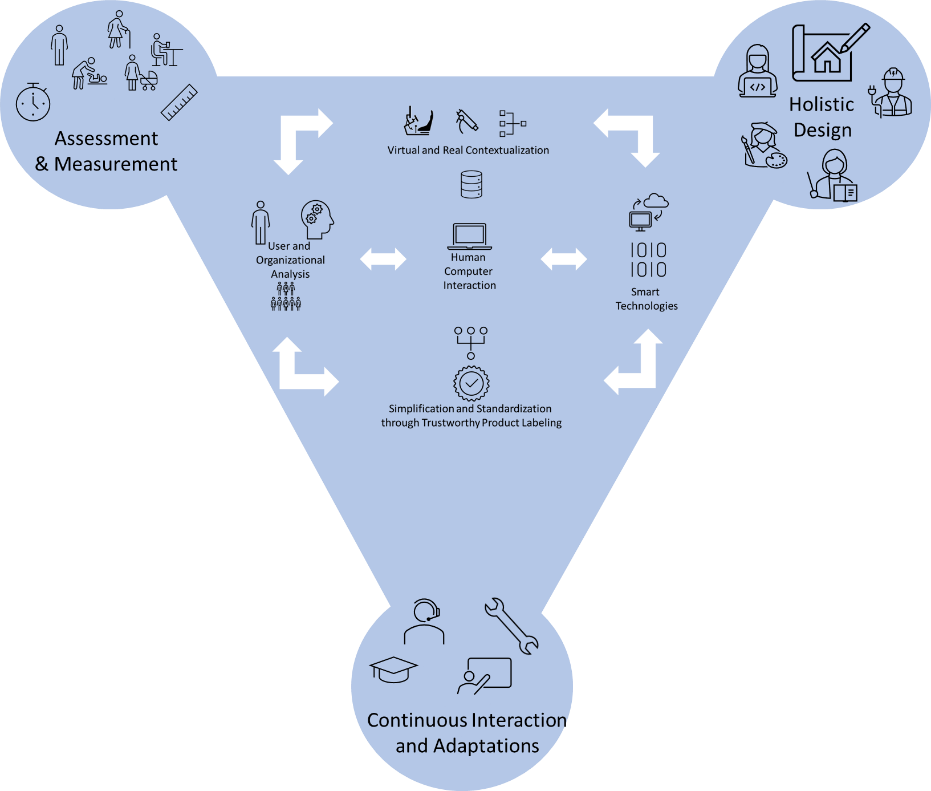
Figure 2.4.3 – Human–Systems Integration in the ECS SRIA
2.4.2.6.3 Key focus areas
Systematise methods for user, context, and environment assessments, and the sharing of information for user-requirement generation. Such methods are necessary to allow user-centred methods to achieve an impact on overall product design.
Integrate parameters derived from empirical human-behaviour research into simulation and modelling, enabling virtual assessments that reflect realistic user behaviour and constraints and that can be traced back to evidence. This supports early requirements and design decisions as well as lifecycle updates, and helps align researchers, developers, and stakeholders.
Establish multi-disciplinary research and development centres and sandboxes. Interdisciplinary research and development centres allow for the intermingling of experts and stakeholders for cross-domain coordinated products and life-long product support.
2.4.3 TIMELINE
| Major Challenge | Topic | Short term (2027–2031) | Medium term (2032–2036) | Long term (2037 and beyond) |
|---|---|---|---|---|
Major Challenge 1: Ensuring Quality in ECS Design and Manufacturing |
Topic 1.1: Quality: in situ and real-time assessments |
|
|
|
Topic 1.2: Design-for-quality and virtual verification |
|
|
|
|
Topic 1.3: Digitalisation: A paradigm shift in the fabrication of ECS from supplier/customer to partnership |
|
|
|
|
Major Challenge 2: Ensuring Reliability and Lifetime Performance of ECS |
Topic 2.1: reliability: tests and modelling |
|
|
|
Topic 2.2: design for (EoL) reliability: virtual reliability assessment prior to the fabrication of physical HW |
|
|
|
|
Topic 2.3: PHM of ECS: increase in functional safety and system availability |
|
|
|
|
Major Challenge 3: Ensuring dependability in connected software |
Topic 3.1: dependable connected software architectures |
|
|
|
Topic 3.2: dependable softwarisation and virtualisation technologies |
|
|
|
|
Topic 3.3: combined SW/HW test strategies |
|
|
Continuous SW/HW assurance qualified across component replacement and adaptive updates with traceable fault coverage and independent validation. |
|
Major Challenge 4: Ensuring privacy and cybersecurity |
Topic 4.1: trustworthiness |
|
|
|
Topic 4.2: security and privacy- by-design |
|
|
|
|
Topic 4.3: ensuring both safety and security properties |
|
|
|
|
Major Challenge 5: Ensuring safety and resilience |
Topic 5.1: safety and resilience of (autonomous AI) systems in dynamic environments |
|
|
|
Topic 5.2: modular certification of trustable systems and liability |
|
|
|
|
Topic 5.3: dynamic adaptation and configuration, self-repair capabilities (decentralised instrumentation and control for), resilience of complex systems |
|
|
|
|
Topic 5.4: safety aspects related to HCI |
|
|
|
|
Major Challenge 6: Human–systems integration |
Topic 6.1: Skills & competences for user/context/environment assessments |
|
|
|
Topic 6.2: Simulation and modelling for early integration of humans and technologies. |
|
|
|
|
Topic 6.3: Establish multi-disciplinary research and development centres and sandboxes |
|
|
|