
ECS SRIA 2027
2.1 Edge Computing and Embedded Artificial Intelligence
On this page
- 2.1.1 Summary
- 2.1.2 Scope
- 2.1.3 Introduction
- 2.1.3.1 Positioning edge and cloud solutions
- 2.1.3.2 Positioning Embedded Artificial Intelligence
- 2.1.4 State of the Art
- 2.1.4.1 Emerging technologies for AI accelerators
- 2.1.4.2 Impact of AI and embedded intelligence in sustainable development
- 2.1.4.3 Market perspectives
- 2.1.4.4 AI components vendors
- 2.1.5 Applications breakthroughs
- 2.1.5.1 Example of AI application ranging from deep-edge to cloud
- 2.1.5.2 Other application domains
- 2.1.6 Major challenges
- 2.1.6.1 Major Challenge 1: Increasing the energy efficiency of computing systems and embedded intelligence
- 2.1.6.2 Major Challenge 2: Managing the increasing complexity of systems and embedded intelligence
- 2.1.6.3 Major Challenge 3: Supporting the increasing lifespan of devices and systems and embedded intelligence
- 2.1.6.4 Major Challenge 4: Ensuring European sustainability of embedded intelligence
- 2.1.7 Timeline
2.1.1 Summary
Edge computing and embedded AI advance digital technologies while addressing energy efficiency, system complexity and sustainability. By processing sensitive data close to its source, edge computing and embedded AI, as part of the edge–cloud computing continuum, improve performance, latency, bandwidth, privacy, safety and security while reducing data transfers and overall power.
Embedded and agentic AI are already used in several application domains, including productivity, environmental protection and security, transport, autonomous and other vehicles, with open-source initiatives supporting innovation, lower costs and security. Initially optimized for energy-efficient perception—vision, audio and signal processing—embedded AI now includes generative AI running locally on smartphones and PCs (Copilot+ PC, Apple Intelligence), a first step towards wider adoption. Local processing will extend to robotics, interfaces and high-level environmental perception, creating new computing and memory-efficiency constraints.
The four major challenges, common for edge computing and embedded AI, are:
1. Energy efficiency: innovative hardware and less data movement are essential as AI shifts computing from a compute-centric to a data-centric paradigm. Edge devices need efficient memory and computing, near-zero standby energy and consumption proportional to load.
2. System complexity: modern embedded systems need safety, security, interoperability, modularity and dynamic resource allocation. As they become increasingly connected, web technologies—including containers, WebAssembly (WASM) and protocols—extend to the edge, while federations of smaller models (Mixtures of Agents or agentic AI) can reduce dependence on cloud resources and improve modularity, privacy and lower communication costs.
3. Device lifespan: hardware must support software upgrades, interoperability, second-life uses, unforeseen functions and new operating modes, larger memory capacities and future communication stacks. Aggregating older devices into a larger, more powerful, virtual device can keep them useful for longer.
4. Sustainability: Europe must turn ethical embedded-AI innovation into commercial success through open standards (such as RISC-V and innovative technologies such as neuromorphic computing). It should master the full value chain for collaborative AI agents, advanced AI hardware and systems directly integrated into the physical world, with traceability (Life Cycle Assessment) and lower ecological impacts.
2.1.2 Scope
This chapter covers computing components for embedded architectures, edge devices and systems using AI at the edge. These depend on process technology, embedded software, system-of-systems composition, design methods and tools, under quality, reliability, safety and security constraints.
The elements foreseen to be used to compose AI or edge systems are:
Processors (CPUs) with high energy efficiency,
Accelerators (for AI and for other tasks, such as security):
GPUs (including their general-purpose use),
NPUs (neural processing units)
DPUs (data processing units, e.g., controlling data communications and logging and collecting information for automotive and other systems) and processing data early or on the fly (decreasing the load on processors/accelerators),
Other accelerators (xPUs) (FPU, IPU, TPU, XPU, …)
Memories and associated controllers, specialized for low power and/or for processing data locally (e.g., using non-volatile memories such as PCRAM, ReRAM, MRAM, FeRAM for synaptic functions, and In/Near Memory Computing), etc.
Power management.
…1
A key development and recommendation for edge computing is a shift from isolated SoCs to distributed, low-power architectures across the cloud–edge computing continuum, with AI placed where appropriate to create distributed intelligence and added value (like the computing infrastructure of SDx, such as Software-Defined Vehicles).
2.1.3 Introduction
2.1.3.1 Positioning edge and cloud solutions
The emerging “continuum of computing” combines edge and cloud resources so that each task runs where latency, bandwidth, cost, processing power and energy are best balanced (see Figure 2.1.2). Tasks and services may migrate dynamically (in a later step), while interconnected devices can form virtual meta-devices that divide a global task and extend the useful life of less powerful nodes2. This requires sophisticated orchestration, decomposition into subtasks, secure protocols and strong authentication.
An illustration of the edge to cloud continuum can be observed in the local processing of AI tasks in Apple devices: voice recognition, routine summarization and text organization run locally on the device’s NPU when resources permit, providing fast responses, lower network energy and greater privacy. More demanding tasks are offloaded to Apple’s trusted cloud, and the largest language-model workloads can use external cloud AI services such as ChatGPT. This layered approach matches resources to task complexity without overloading the device (see Figure 2.1.1).
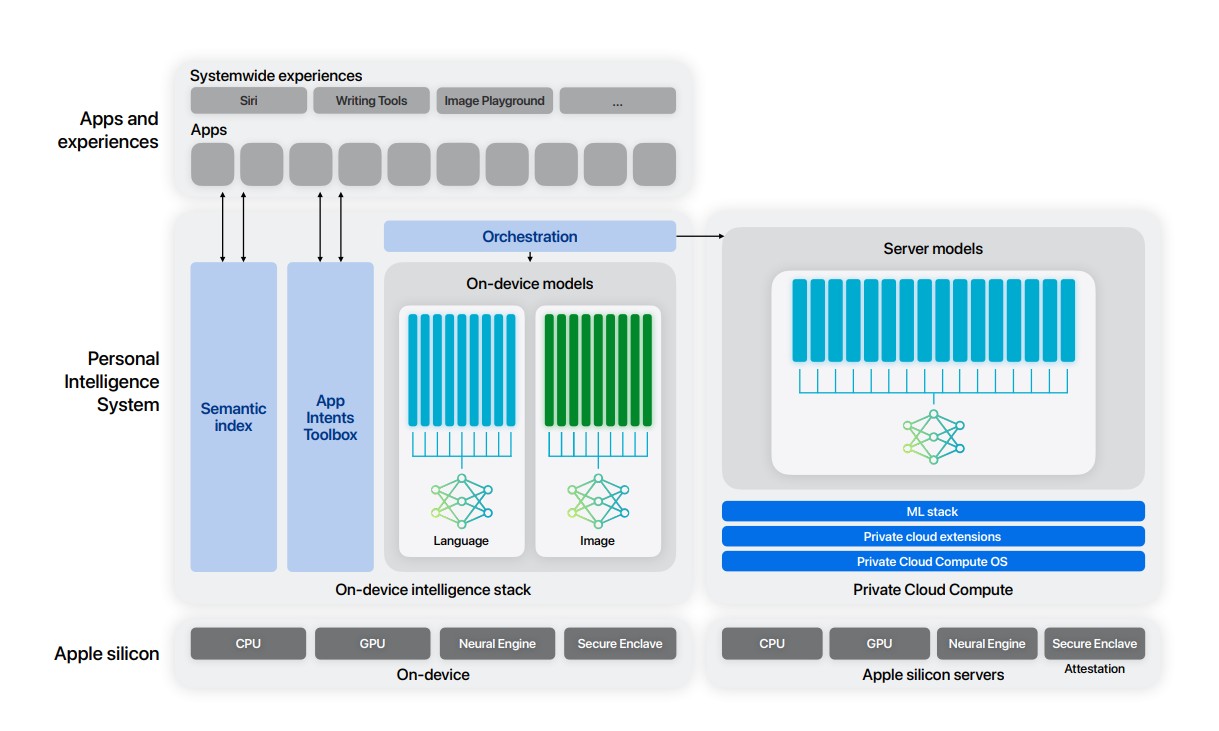
Edge architectures must therefore support web and cloud protocols, communications, security, encryption and containerized execution of external code in secure sandboxes. Modern microcontrollers already integrate wired and wireless stacks (IP, Wi-Fi, Bluetooth, Thread), security IP and multiple operating systems, such as an RTOS and Linux on separate cores.
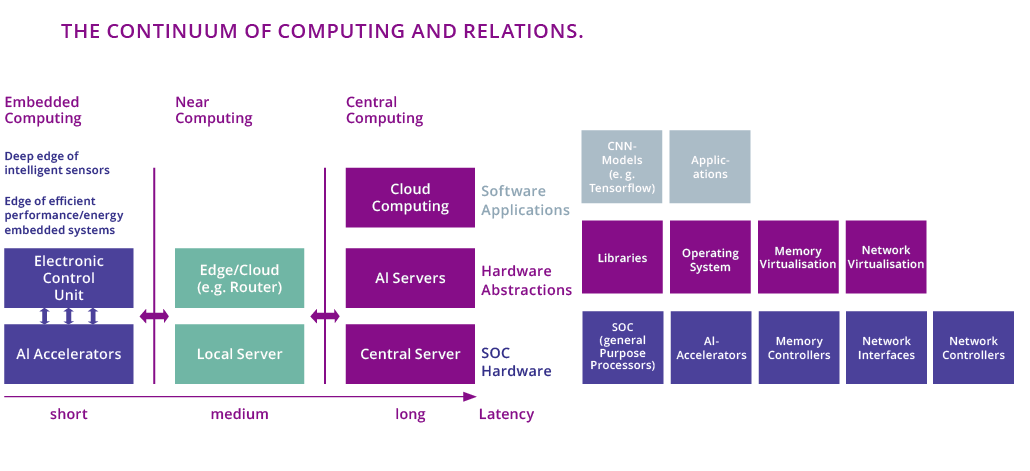
Figure 2.1.2 : The continuum of computing and relations between the elements constituting an embedded AI system (figure from Gerd Teepe)
Inside the “continuum of computing”, edge computing involves processing data locally, close to where it is generated, for example by sensors. This has the benefit of reducing communication cost (as local processing generally generates higher-level data that are more compact to transmit) and latency, while decreasing the load of the other levels of processing. For intelligent embedded systems, the edge computing concept is reflected in the development of edge computing levels (micro, deep, meta) that cover the computing and intelligence continuum from sensors/actuators, processing units, controllers, gateways, on-premises servers to the interface with multi-access, fog, and cloud computing.
A description of the micro, deep and meta edge concepts is provided in the following paragraphs (as proposed by the AIoT community).
The micro-edge comprises intelligent sensors, machine vision and IoT devices close to the data source. Small neural networks on low-cost, low-power microcontrollers such as Arm Cortex-M4 and RISC-V process raw data with minimal latency, generate insights or actions, and may perform local inference and self-training. Embedded AI adds new functions and can replace complex exact algorithms with more embeddable approximations, improving performance, latency, power and usefulness—especially when networked devices collaborate, with a minimum loss of quality.
The deep-edge includes intelligent PLC and SCADA controllers, connected machine vision, network equipment, gateways and computing units that aggregate sensor and actuator data. Processors and microcontrollers such as Intel i-series or Atom and Arm M7+, together with CPUs, GPUs, TPUs and ASICs, enable controllers to acquire, aggregate, interpret, exchange and react to information.
The meta-edge integrates processing units, typically located on-premises, implemented with high-performance embedded computing units, edge machine vision systems, and edge servers (e.g., high-performance CPUs, GPUs, FPGAs, etc.) that are designed to handle compute-intensive tasks, such as processing, data analytics, AI-based functions, networking, and data storage.
These levels mainly reflect distance from the data source and therefore communication latency. The following table (Figure 2.1.3) gives indicative ranges from sub-millisecond micro-edge processing to cloud or data-centre processing beyond 1,000 km and 50–100ms.
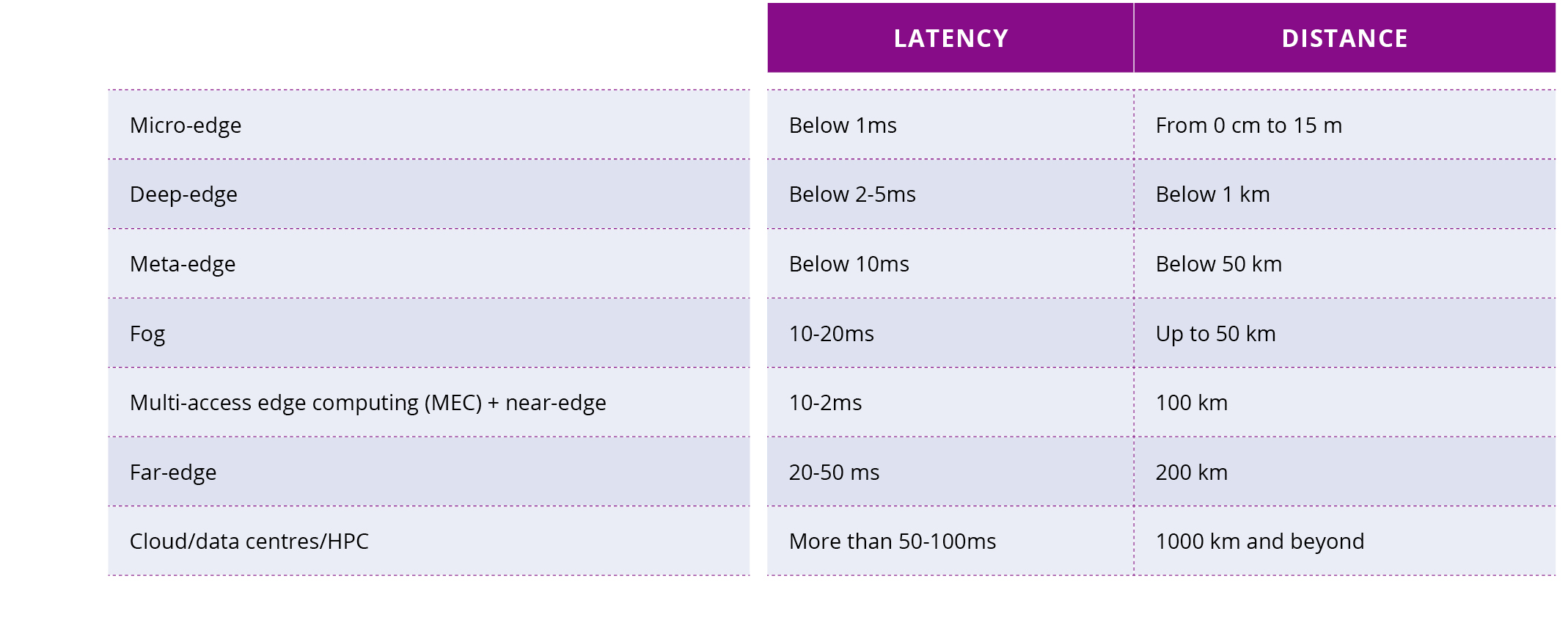
Figure 2.1.3 : A tentative classification of the edge-to-cloud levels
View the classification as a table
| Latency | Distance | |
|---|---|---|
| Micro-edge | Below 1ms | From 0 cm to 15 m |
| Deep-edge | Below 2-5 ms | Below 1km |
| Meta-edge | Below 10 ms | Below 50 km |
| Fog | 10-20 ms | Up to 50 km |
| MEC3 + near-edge | 10-20 ms | 100 km |
| Far-edge | 20-50 ms | 200 km |
| Cloud/data centres/HPC | More than 50 -100 ms | 1000 km and beyond |
In general, the edge (at the periphery of a global network such as the Internet) includes compute, storage, and networking resources, at different levels as described above, that may be shared by several users and applications using various forms of virtualization and abstraction of the resources, including standard APIs to support interoperability. The edge can scale to several nodes, distributed in distinct locations and the location and identity of the access links are essential. Ultimately, the edge computing concept supports a dynamic pool of distributed nodes, using communication on partially unreliable network connections while distributing the computing tasks to resource-constrained nodes across the network.
Flexible edge deployments can combine specific accelerators (like neuromorphic), efficient microcontrollers and AI units to meet local needs while reducing traffic, storage, energy and carbon footprint. It is important to consider that optimization should start from what data is collected and why, then co-optimize hardware and software and measure the energy used to achieve the target on the whole chain, rather than making only local optimizations.
2.1.3.2 Positioning Embedded Artificial Intelligence
Although many applications will not use AI, embedded systems increasingly need AI-ready architectures. The hardware landscape spans Cloud AI, high-performance Embedded AI and low-power Deep Embedded AI (for near sensor processing). Across this continuum, computation should be placed according to latency, energy, privacy, bandwidth and total-cost KPIs.
Embedded artificial intelligence devices can be classified into 3 clusters.
1. Cloud AI (~1 to 20 TOPS/W):
Cloud AI offers the greatest processing power: GPUs above 2,000 TOPS and LLMs with more than eight billion parameters support training and inference in data centres and servers. Leading systems exceed 5 TFLOPS/W in FP32 and reach above 20 TOPS/W in FP4 tensor-core operation.
2. Embedded AI (1 to ~50 TOPS/W):
Embedded AI brings NPUs of roughly 40 TOPS, several GB of RAM and models from about one million to eight billion parameters closer to data sources. It serves PCs, smartphones, vehicles, robotics and factories. The rapid emergence of sub-billion-parameter models shows that specialized small models can compete with much larger ones.
In the near future, we can expect that high end embedded AI hardware will be able to serve larger models, in the sub 30G range (for example Qwen 3.8 27B has the performances of frontier model of few months before its release – in the range of Claude 4.5 Opus). LLM based on mixture of experts can benefit from tricks allowing to reduce the RAM memory footprint by reading data from flash (for example, the project TurboFieldfare4 allows to run Gemma 4 26B-A4B inference in about 2 GB of RAM).
As illustration of this category, for automotive ADAS, Embedded AI hardware provides the necessary computational power to process sensor data in real-time, enabling advanced features like object detection, lane keeping, and adaptive cruise control.
3. Deep Embedded AI (>10 TOPS/W):
Deep Embedded AI targets lower compute with very high efficiency through specialized ASICs, Compute-Near-Memory or Compute-In-Memory and compact models such as CNNs and Bayesian approaches rather than transformers. Typical platforms deliver 1–100 TOPS with kilobytes to a few megabytes of RAM for microcontrollers, IoT nodes and embedded control. This tier also hosts most perceptive AI, typically using CNN-related methods for sensor, image, video, audio and signal data.
Another dimension can also be used to characterize AI devices: their memory capacity and hence the size of the model they can perform:
below 1GB RAM: microcontrollers, CNN accelerators, local AI near sensors, etc.
1 to 8 GB RAM: able to execute small LLM, VLA or VLM5, on device (e.g., phone, laptops, specialized accelerators in M.2 format, ...)
up to 128 GB: near consumer/on-premises local servers, with unified memory between CPU and GPU/NPU. "Consumer" systems with these characteristics are now available (but not cheap!), but they can run AI model that are now of similar capabilities than frontier models of few months before.
up to 1 TB: local servers on-premises, able to run larger (open-weights) LLMs for companies with privacy in mind.
Systems above 1 TB are outside the scope of this chapter; these belong to servers and HPC computers. Other characteristics, such as latency, energy, generality and accuracy, can also be used, but are harder to assess across models and applications. Additional R&D could identify more representative end-to-end benchmarks
2.1.4 State of the Art
The key issues for the digital world are the availability of affordable computing resources and transfer of data to the computing node with an acceptable power budget. Each computing device should be as efficient as possible and reduce the amount of energy used.
Low-power neural network accelerators enable sensors to perform online, continuous learning and build complex information models of the world they perceive. Neuromorphic technologies such as spiking neural networks and compute-in-memory architectures are compelling choices to efficiently process and fuse streaming sensory data, especially when combined with event-based sensors. Edge computing and embedded AI shall further advance toward highly energy-efficient and event-driven architectures, enabling intelligent processing under constrained and harvested energy conditions, including neuromorphic approaches for continuous operation at ultra-low power. Intelligent power and energy management policies remain essential for extending operational lifetime and enabling scalable energy-autonomous embedded systems.
AI also changes the way people interact with machines, by adding new modalities besides switches, keys and screens such as voice interaction, gesture recognition, etc.
As extracting useful information should happen on the (extreme) edge device, personal data protection must be achieved by design, and the amount of data traffic towards the cloud and the edge-cloud can be reduced to a minimum and encrypted.
Online-learning intelligent sensors require more than semiconductor advances. Neuroscience and information theory could provide new ways to turn sensory data into knowledge, model cortical coding and guide efficient neural-network structures and learning rules.
Compared to the previous SRIA, we can observe new trends:
The recent explosion of AI, and more precisely of generative AI, has driven the development of new solutions for embedded systems (for now mainly PCs and smartphones), with potentially very large market growth.
Parallel to the development of data centres for AI (training and mainly inference), their demand for semiconductors, especially in RAM and Flash, makes these resources scarce for other markets, like embedded systems, smartphones and other consumer devices. Therefore, there is a need to find solutions to decrease the size of RAM (and Flash) in systems to keep an affordable price.
RISC-V is coming to various ranges of products, and especially from ICs from China that support many features for connectivity (security), IOs and accelerators.
AI accelerator chips for the embedded market have traditionally been designed to support convolutional neural networks (CNNs), which are particularly effective for image, audio, and signal analyses. But now there is an evolution towards higher processing (cognitive) functions.
Generative AI at the edge (mainly for Embedded AI): the rise of federations of smaller models
Transformers—the basis of LLMs—use attention to map one sequence to another and support self-supervised learning without labelled examples. Beyond text generation, translation, summarization, question answering and code, they now address video and robotic reasoning. Although the largest models remain cloud-based, 1–13B-parameter models already run on Jetson Orin Nano, Raspberry Pi and smartphones. Quantization, including 4-bit models and GPU FP8/FP4 support, reduces memory, but efficient low-power edge execution remains a major challenge.
Generative AI can bring real-time analysis and decisions to micro- and deep-edge sensors, reducing latency, cloud traffic and bandwidth while improving privacy and sustainability in healthcare, mobility, robotics and industry. Its compute intensity nevertheless demands advances in hardware, memory and power management, plus interoperable orchestration of many devices. Security, privacy and local fine-tuning must be designed in, consistent with European ethical and sustainability goals.
Large LLMs are costly to train and update, whereas smaller models can be incrementally improved or replaced without disrupting the system. Multiple agents also provide fault tolerance: one failure need not disable the whole. Distributed edge deployment therefore requires integrated, secure connectivity between specialized models and devices.
Federations of specialized generative models—Mixtures of Agents or Agentic AI—can match or surpass a monolithic LLM with a suitable harness6. Each agent is trained for a domain, and tasks are routed dynamically to the best agent, improving accuracy while reducing training, inference and energy overhead. This modular approach also improves scalability and maintainability and suits one or more edge devices. Agentic AI harness coordinates smaller specialized models (and allows them to have access to tools), often tuned from open-weight foundations. Open-weight models are becoming competitive with closed ones7.
Mid-2026 announcements (from Nvidia/Microsoft, Apple, …) ( see section 2.1.4.4) reinforced interest in edge-scale models that could run on (high end) consumer devices. In any case, the field seems very active in small models operating on the periphery8, and it is reasonable to assume that an optimized, very low-power NPU capable of running models with a few billion parameters are likely to find a market for specialized functions in edge devices.
Training large foundation models still requires cloud-scale data and compute, but they can be adapted locally through fine-tuning or a large context. Parameter-efficient methods such as LoRA and adapters update only a small share of weights on domain data (see Figure 2.1.4). PCs with sufficient storage, RAM and compute could perform this work locally while idle, for example overnight, allowing models to be adapted models to a particular use or set of data.

Another trend is to increase the token context. Leveraging a large context window refers to the model’s ability to process and understand long sequences (of text for example). This extended context allows the model to capture more nuanced dependencies and relationships within the data, improving its comprehension and relevance to specific local contexts. Enlarging the context mainly implies more memory, as shown in Figure 2.1.5.
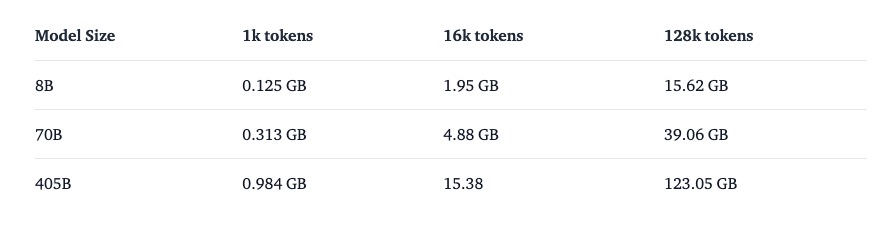

However, there are a lot of recent algorithmic innovations in this field, for example the Multi-Head Attention, followed by Multi-Head Latent Attention and Compressed Sparse Attention (from DeepSeek), and so on... Google proposed in 2026 the TurboQuant approach. If we combine all these techniques, the size of the KV cache (hence the RAM requirement) can be reduced by several orders of magnitude (see Figure 2.1.6).
Energy efficiency of AI training:
AI training can be energy-intensive: a 2019 estimate compared the carbon emitted by training an NLP model with the lifetime emissions of five cars. Algorithmic and hardware progress is rapid, however; a comparable model emitted 21 times less CO₂ in 2022 (see Figure 2.1.7).
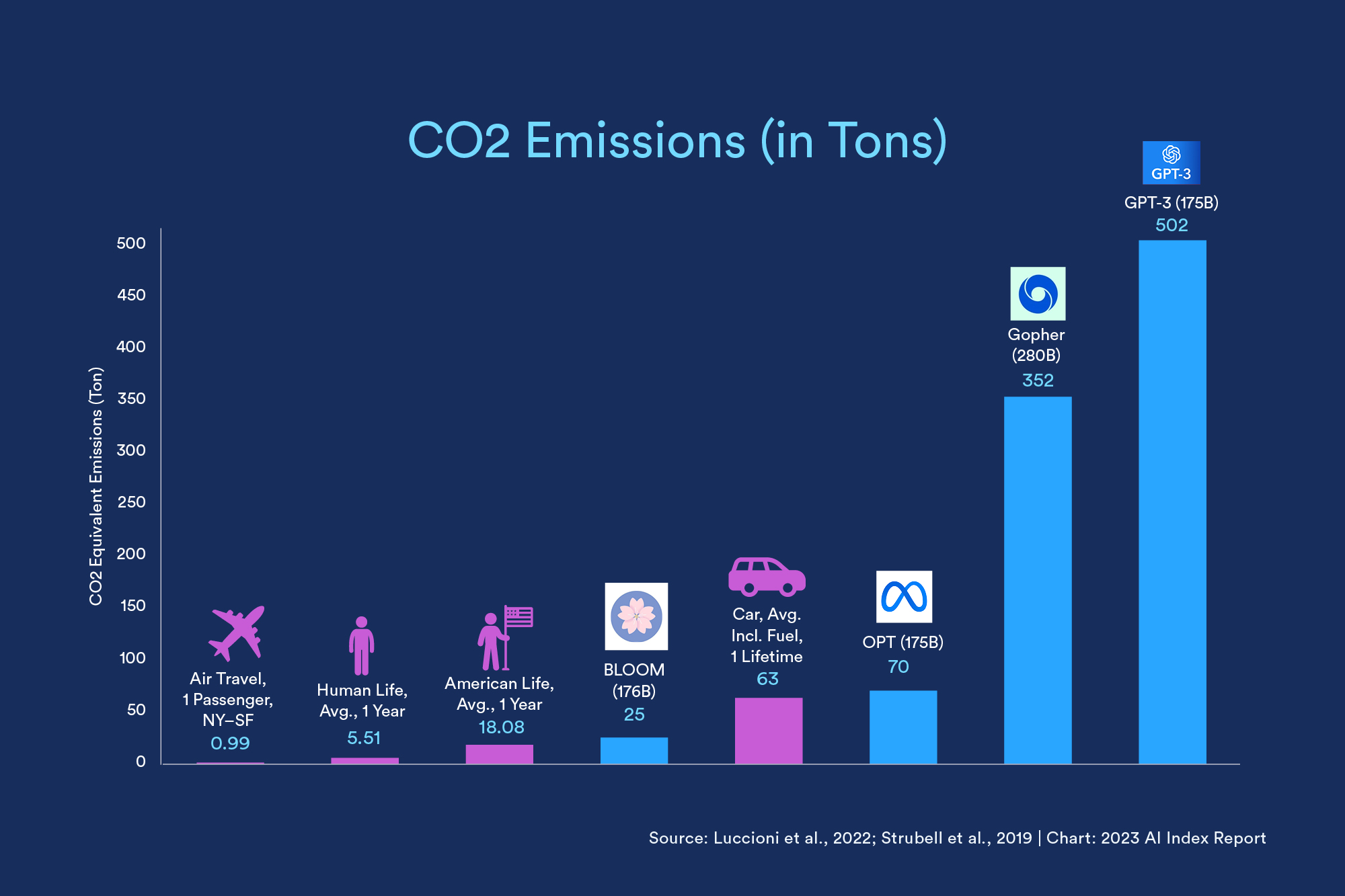
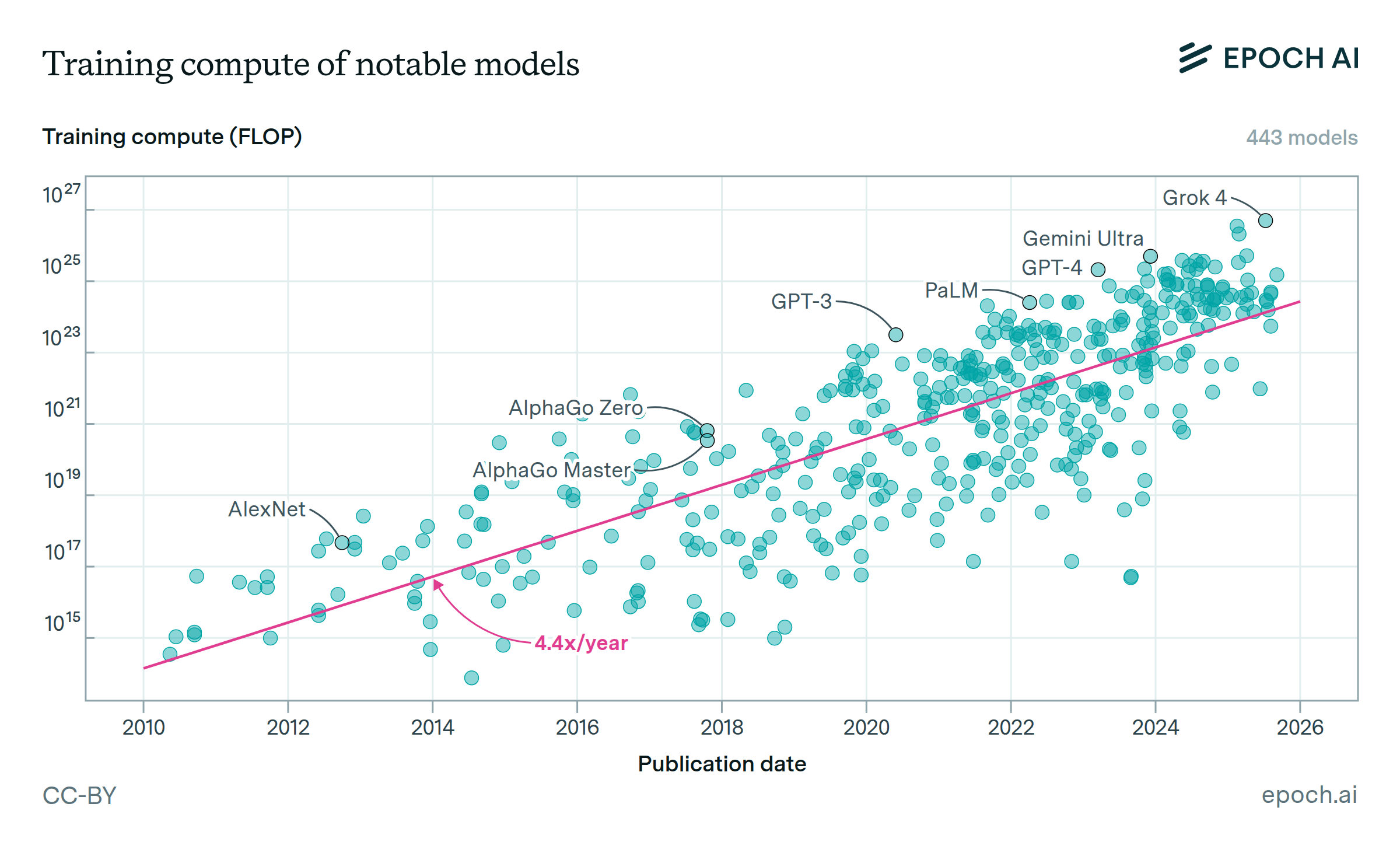
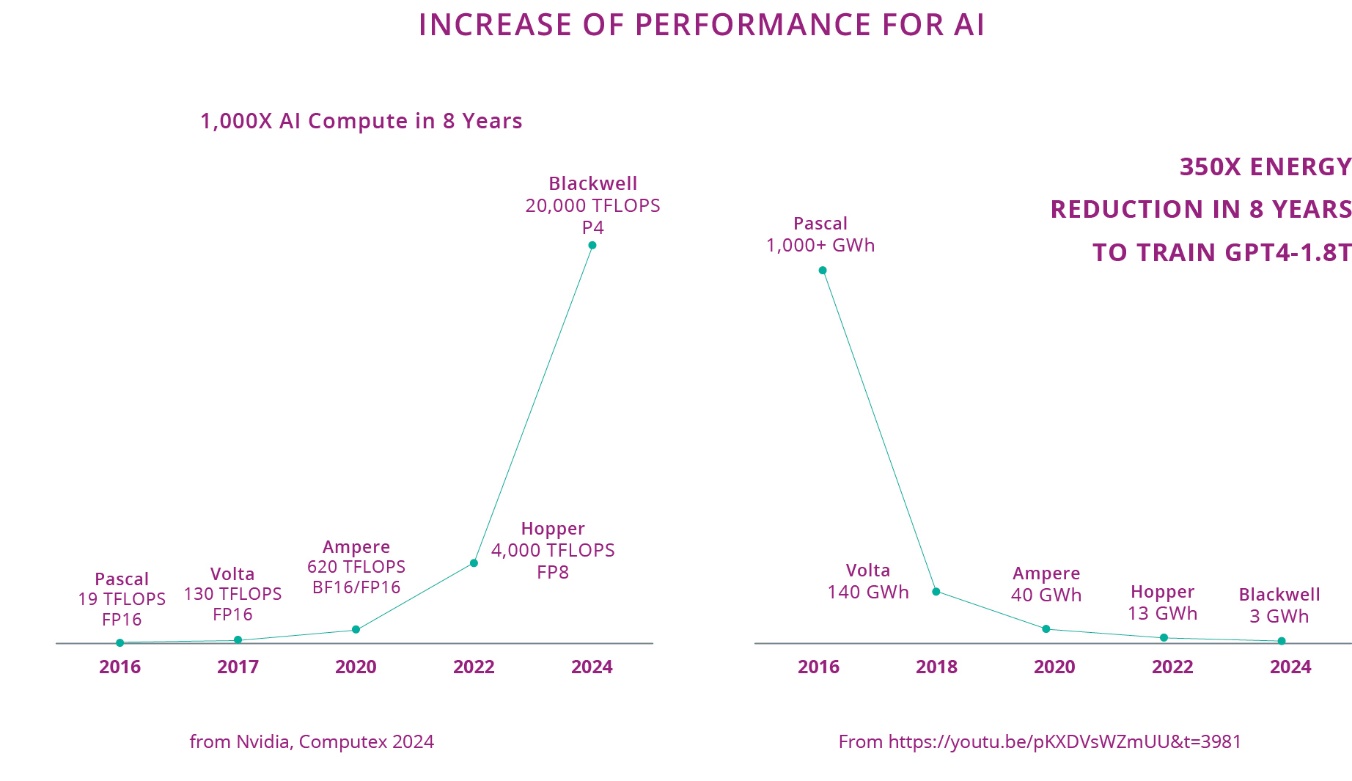
At billions of executions, inference can outweigh training emissions. Meanwhile, compute used by the largest training runs has grown exponentially, historically doubling about every 3.5 months rather than every two years as under Moore’s law (see Figure 2.1.8). Both training and inference therefore need greener, more efficient computing, beyond what Moore’s law alone can offer. This is achieved by global optimization, co-design, more efficient algorithms and smaller size data type (going from float 16 bits to 4 bits computations, and sometimes less). Neural-network progress is driven by operations per watt of accelerators. GPT-4 became economically trainable in 2022 because GPU performance had increased by roughly three orders of magnitude in eight years through new architectures, smaller process nodes and reduced data types from FP16 to FP4; energy per operation fell about 350-fold (see Figure 2.1.9).
For a given use-case, the search for the optimal solution should meet multi-objective trade-offs among accuracy of the trained model, its latency, safety, security, and the overall energy cost of the associated solution together with cost implications related to the hardware (processing power in terms of CPU and accelerator, RAM, etc.).
In addition, novel learning paradigms such as transfer learning, federated learning, self-supervised learning, online/continual/incremental learning, local and context adaptation, etc., should be preferred not only to increase the effectiveness of the inference models on particular applications (local post-training using specialized – often private – data) but also as an attempt to decrease the energy cost of the global learning scheme. Open weight models are often a base for post-training (by companies or even individuals), allowing to increase efficiency on particular use cases.
Non-trivial deep-learning inference often exceeds the 0.5–1 MB of SRAM typical of microcontrollers, so special tricks or other approaches are used for these very low power systems10. Quantizing weights and biases and pruning layers reduce model size and inference power (see Figure 2.1.11), but are not a complete long-term solution, so mid-range microcontrollers are teaming up with special accelerators in embedded context, such as the NXP Ara24011or Axelera Metis12 allowing them to run efficiently billion-parameter models locally within a power envelope of a few watts.
The role of hardware-software co-design for improving sustainability of edge AI devices and algorithms should be highlighted, for example to reduce the memory footprint of LLM during their execution, and reducing the computing load (the Mixture of Expert approach is an example). Due to the cost of RAM, solutions are developed to dynamically stream experts (for the Mixture-of-Experts LLM) from storage (SSD) to RAM, allowing them to run models far larger than the RAM footprint would allow. Now the limiting factor is the bandwidth between the RAM and the SSD and the architecture of the system (unified memory between CPU and GPU is essential for those approaches). The speed is still very slow but usable for some applications13. Algorithmic improvements also reduce the RAM required for the KV cache by orders of magnitude (see Figure 2.1.6).
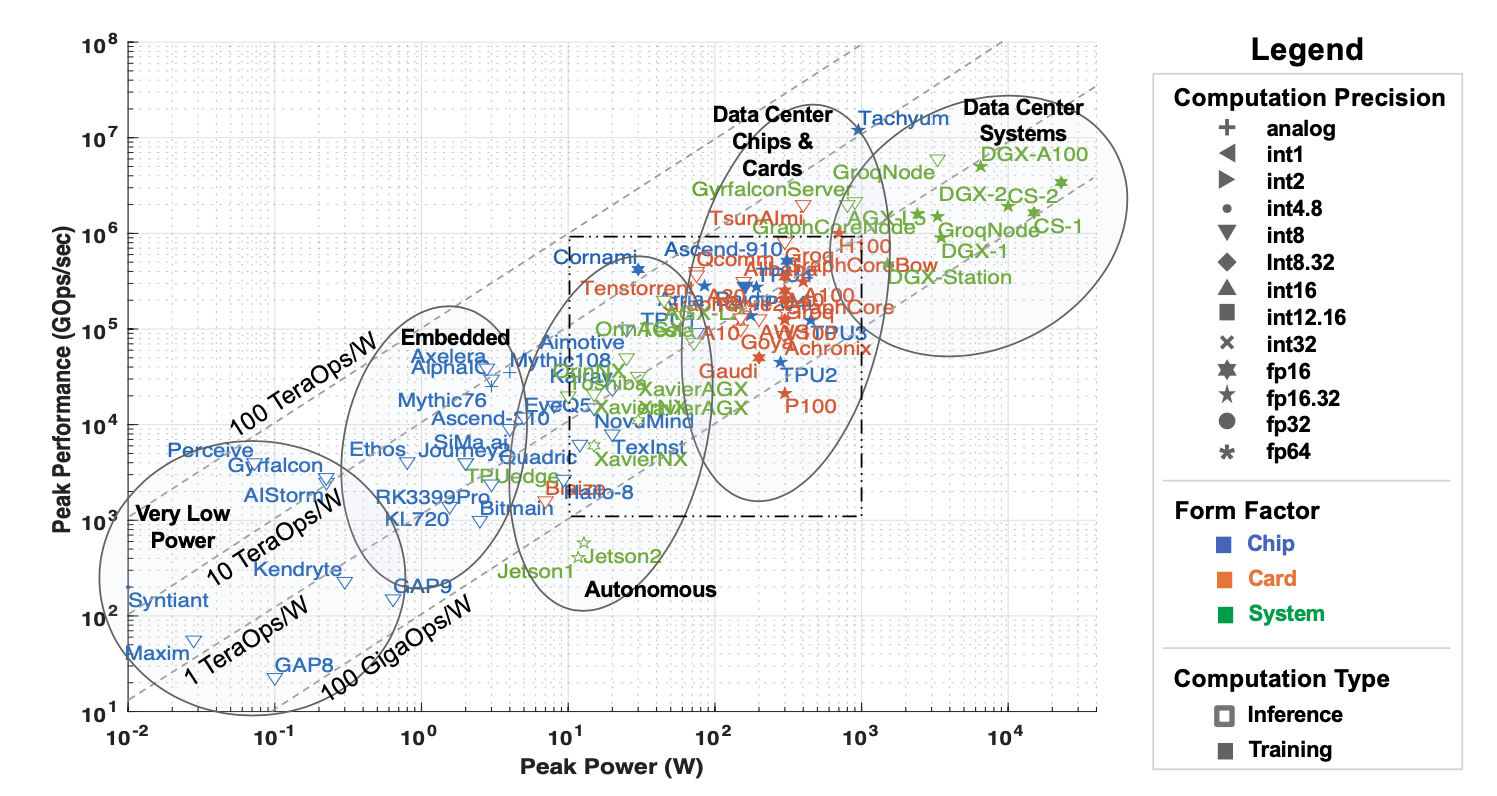
There is a large development of activities to design computing systems explicitly supporting novel AI-oriented use cases, spanning different implementations, from chips to modules and systems, usable from far edge to data centres (Figure 2.1.10).
Complex neural networks can fit embedded devices through topology pruning, lower-precision weights and activations, or analog hardware that processes sensor signals without prior A/D conversion. Compression may occur during or after training; pruning removes low-contribution nodes, while quantization moves from BF16 toward FP16/FP8/FP4 or integers. Eight-bit inference usually has little accuracy loss and four-bit LLMs remain effective. Tools such as TensorFlow Lite and Aidge14 already support post-training quantization, but further tools and algorithms are essential.
New server and edge accelerators must support variable precision, including bfloat formats, rather than defaulting to 32/64/128-bit floating point. Neural networks also require close coupling of various compute units and storage (hence the drive for unified memory architectures), adapted access patterns and memory hierarchies across local and cloud storage. Efficient edge LLMs will depend on 2–4-bit quantization, new memories, novel architectures and possibly beyond-CMOS hardware. Vendors are proposing their own data representation, efficiently supported in their hardware, but less suitable for portability (for example, Nvidia NVFP4 (see Figure 2.1.18), MXFP4) and with different middleware (CUDA for Nvidia, ROCm for AMD, MLX for Apple, …), creating challenges for applications that must run on hardware provided by various vendors. But there is a trend towards portability of AI models between hardware platforms (with tools such as Aidge14), helped by intermediate portable representations such as ONNX.
Edge AI accelerators must deliver real-time inference at low power. Deep learning uses simple multiply-accumulate operations over very large datasets, making data access and reuse—especially for CNNs and shared weights—the main challenge. Compute and storage are therefore intertwined, and accelerators must integrate efficiently with conventional systems. Fixing and optimizing some parts of the processing (e.g., feature extraction for CNNs) leads to specialized architectures with very high-performance, as exemplified in the ANDANTE15 project. Many European and national projects produced isolated edge-AI accelerators without a complete software stack, limiting micro-edge adoption. Aidge—an Eclipse open-source initiative also supported by NeuroKit2E—provides a European development and mapping environment spanning microcontrollers, GPUs, NPUs and FPGAs.
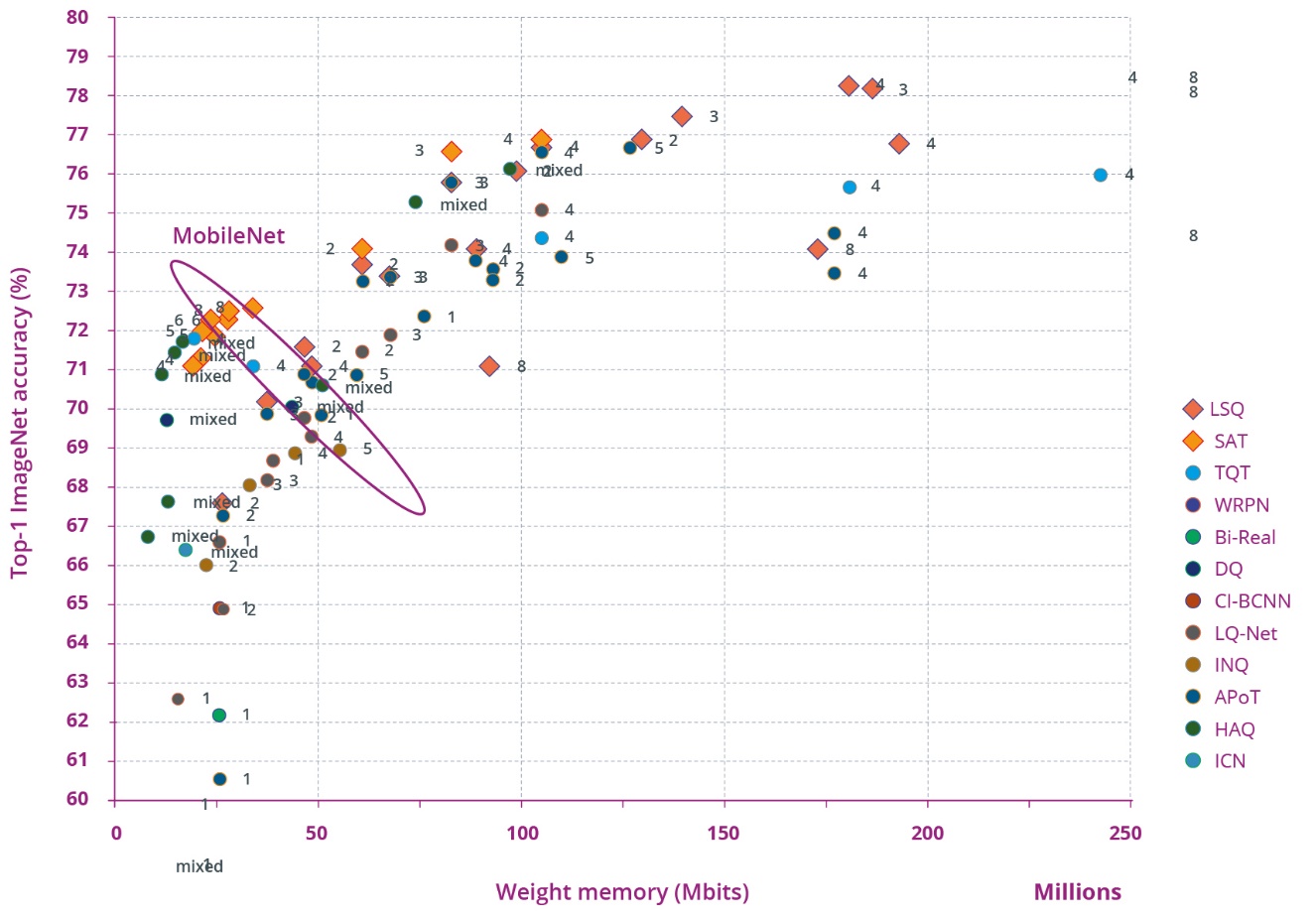
Figure 2.1.11 : Results of various quantization methods versus Top-1 ImageNet accuracy
2.1.4.1 Emerging technologies for AI accelerators
To improve AI-hardware efficiency further, non-silicon technologies are also being explored:
Photonic: photonics hardware for AI acceleration16
Neuromorphic: One innovative approach to reducing energy consumption in computing involves leveraging physical phenomena to perform computations (such as leveraging frequency multiplexing methods in spin-based or photonics components), effectively using the inherent properties of physical systems to solve complex problems.
The term “neuromorphic computing” covers various kinds of implementations, for example using sparse information coding method of “spikes” (impulses in which information is encoded in the timing), using RRAMs (resistive RAMs), memristive devices17 or spintronic devices (that include MRAM and Nano-Oscillators) to perform the weighted summation which is the basis of artificial neural network-based AI, including LLMs. Scalability to large networks, variability in properties and interfacing with other systems still need improvement.
2.1.4.2 Impact of AI and embedded intelligence in sustainable development
Recently, the attention paid to the identification of sustainable computing solutions in modern digitalisation processes has significantly increased. Climate change and initiatives such as the European Green Deal are generating more sensitivity to sustainability topics, highlighting the need to always consider the technology impact on our planet, which has a delicate equilibrium with limited natural resources. This is especially the case in the US where AI is associated with gigantic data centres using non-clean energy sources such as gas turbines18, leading to a majority of young US adults saying they’re more concerned than excited about AI.
Another direction could be taken in Europe, focusing on local AI. Local AI could become an important part of a more sustainable computing continuum. Open-weight models such as Qwen3.8-27B show how capabilities that recently required access to large cloud systems are gradually becoming available on personal computers, smartphones and other devices that people already own. For many everyday uses, including writing, translation, information retrieval, document processing and personal assistance, these local resources may provide sufficient computing power. Instead of systematically sending every request to a remote data centre, AI workloads could be executed close to the user whenever the local device can meet their requirements, while larger systems would remain available for tasks that genuinely need them. Such an approach makes better use of an enormous installed base of computing hardware and reduces data movement, network traffic and demand for additional data-center capacity. In the longer term, distributing AI across existing devices, edge systems and large computing facilities according to the needs of each task could help limit the energy use, water consumption and material footprint associated with the rapid expansion of AI infrastructure.
AI and particularly embedded intelligence, with its ubiquity and its high integration level having the capability “to disappear” in the environment (ambient intelligence), is significantly influencing many aspects of our daily life, our society, the environment, the organizations in which we work, etc. AI is already impacting several heterogeneous and disparate sectors, such as companies’ productivity, environmental areas like natural resources and biodiversity preservation, society in terms of gender discrimination and inclusion, smarter transportation systems, etc. just to mention a few examples.
From a technological perspective AI sustainability depends, at first instance, on the availability of efficient hardware and software technologies. Computing near, or in-memory, can lead to parallel and highly efficient processing to ensure sustainability.
The second important component of AI that impacts sustainability concerns software and involves the engineering tools adopted to design and develop AI algorithms, frameworks, and applications.
The report on “Recommendations and roadmap for European sovereignty on open-source hardware, software and RISC-V Technologies”19 discusses these aspects in more detail.
Eventually, open-source initiatives (being so numerous, heterogeneous, and adopting different technologies) provide a rich set of potential solutions, allowing to select the most sustainable one depending on the vertical application. However, some initiatives should be developed, at European level, to create a common framework to easily develop different types of AI architectures (CNN, ANN, SNN, LLM, etc.). This initiative should follow the examples of GAMAM (Google, Amazon, Meta, Apple, Microsoft) and their Chinese counterparts have large in-house databases required for the training and the computing facilities. Sustainability through open technologies extends also to open data, rules engines and libraries. Already, Aidge and the Edge AI Foundation are bringing Deep Learning to microcontrollers with limited resources and at ultra-low energy budget, and this should be extended to cover the complete spectrum of computing resources.
From the application perspective, impact of AI and embedded intelligence on sustainable development could be important. For example, AI-powered systems could be used to optimize energy consumption and improving the efficiency of renewable energy sources. Predictive analytics enable better forecasting of energy production and consumption patterns, reducing waste and enhancing the reliability of renewable energy.
Finally, embedded intelligence in consumer products promotes sustainability by enabling smarter usage and longer lifespans, mainly if various devices can be virtually combined to share their hardware resources to create a more powerful virtual computing device. This idea is already present in operating systems like Harmony OS and its European open-source counterpart Oniro20.
2.1.4.3 Market perspectives
Several market studies, although they don't give the same values, show the substantial market opportunities for AI use in the coming years. The market for semiconductors powering inference systems will likely remain fragmented because potential use cases (e.g., facial recognition, robotics, factory automation, autonomous driving, and surveillance) will require tailored solutions.
According to a study (Figure 2.1.12), the global AI chip market is expected to grow to USD 253.30 billion by 2030, with a CAGR of 35.0% from 2020-2030.
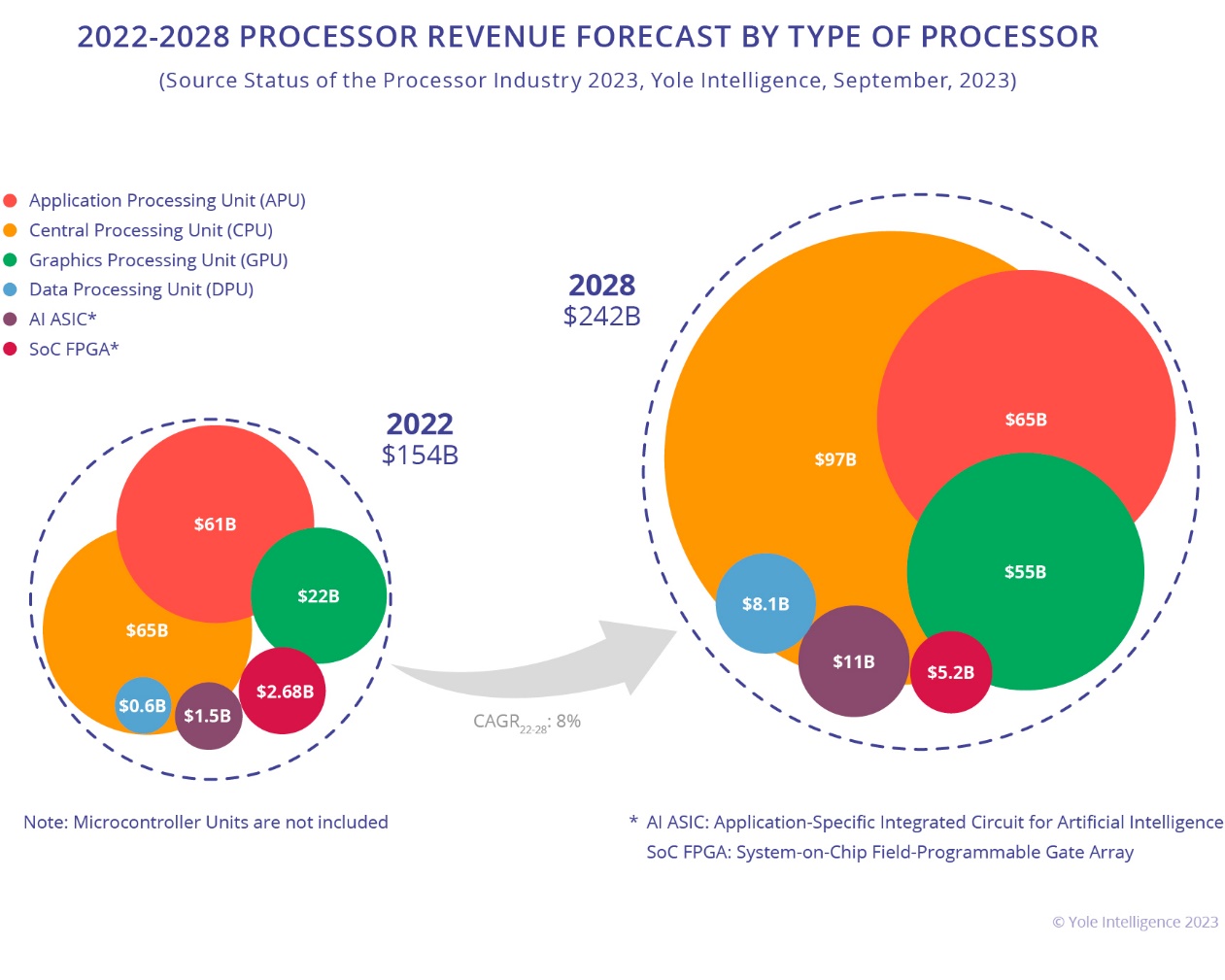
The market value is increasing strongly in the field of AI chips (Figure 2.1.13) mainly for servers/data centres, but the market for Edge AI is also forecasted to have a large increase in the coming years.
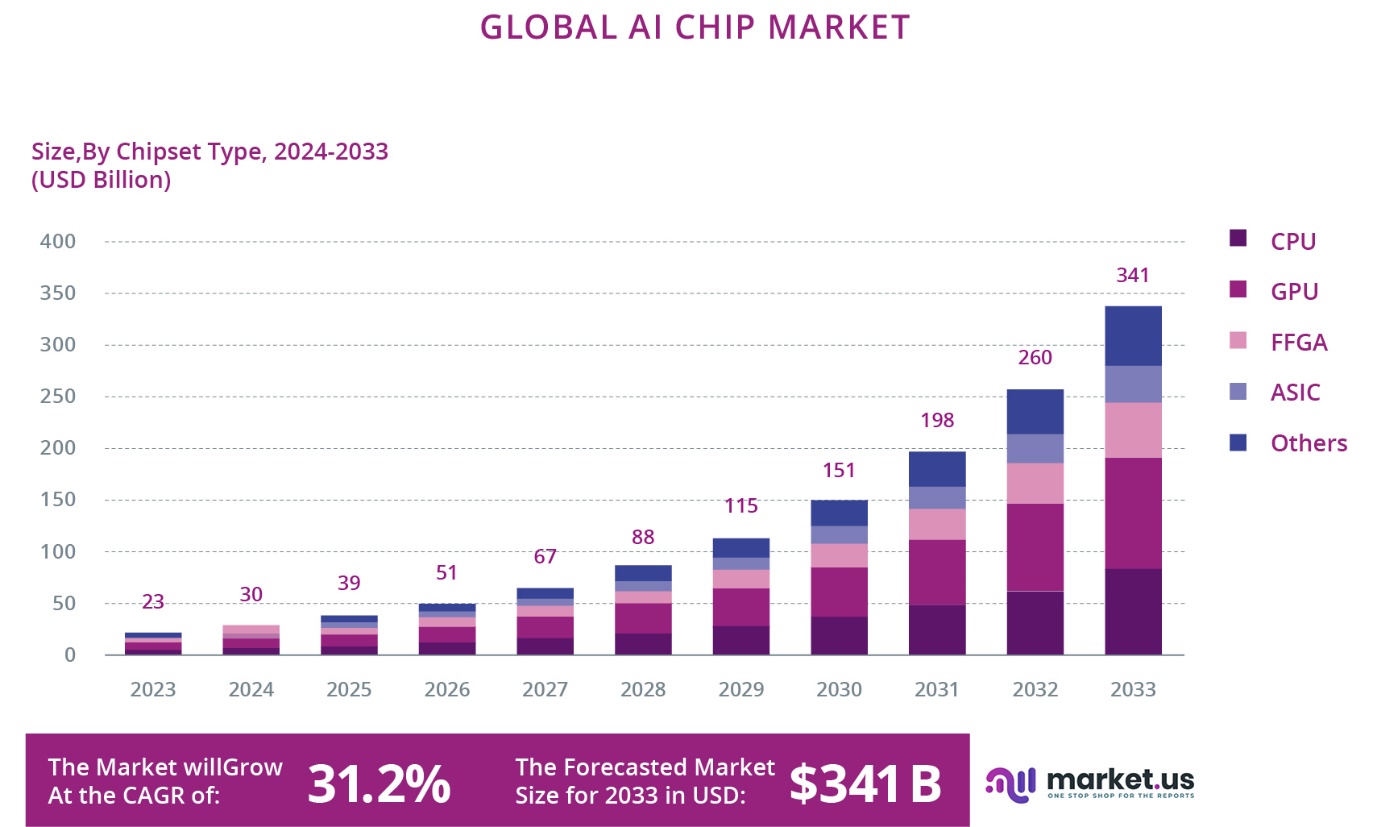
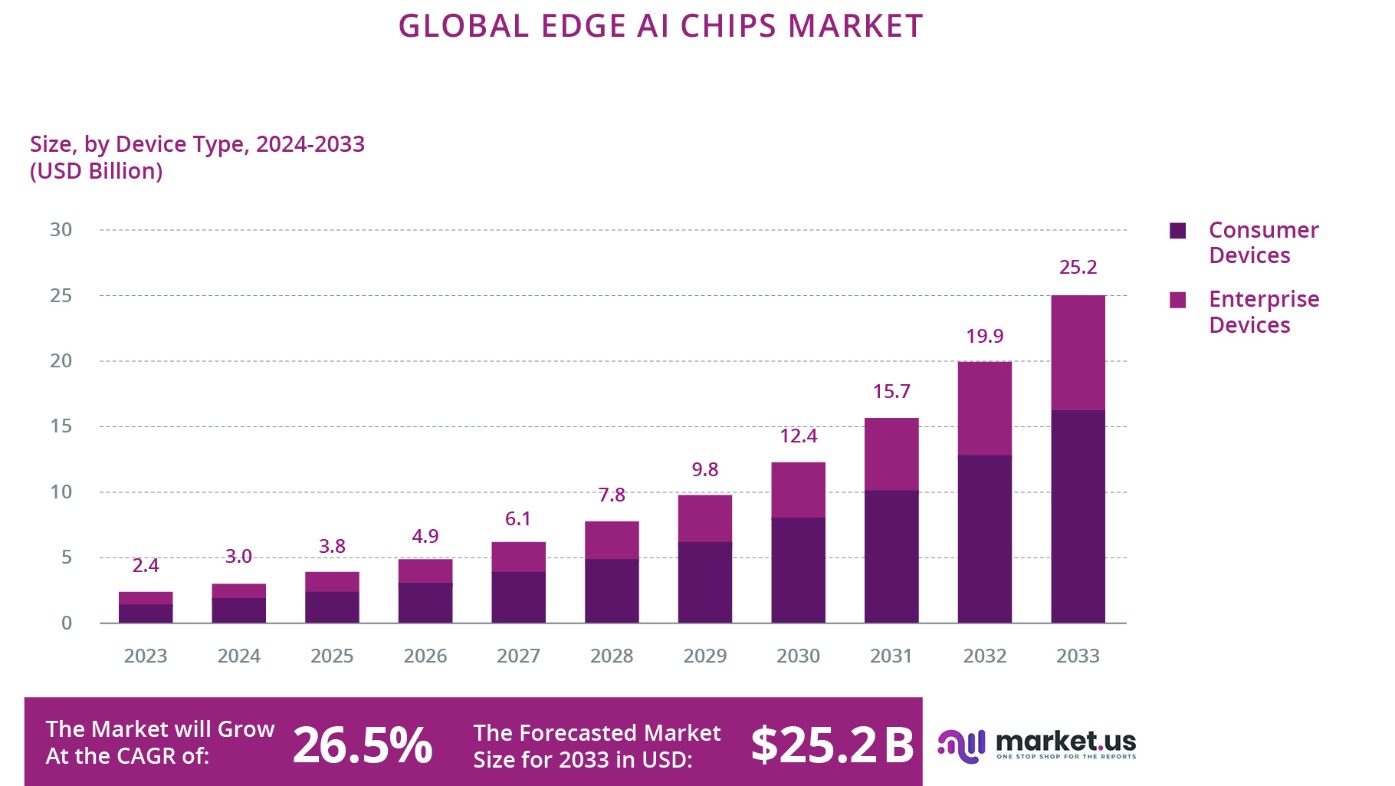
However, there is now an increasing trend towards AI chips that can execute generative AI models at the edge, and this trend is clearly increasing in 2025 mainly for smartphones (Figure 2.1.14). These models can generate new content, predict complex sequences, and enhance decision-making processes in more sophisticated ways.
European semiconductor companies are not in this market of chipsets for smartphones or PCs, but it is expected that, with the progress in the size reduction and specialization of large Foundation Models, generative AI at the edge will be used in the near future in more and more domains, including the ones primarily targeted by European chip manufacturers.
Another recent trend is that the RISC-V instruction-set-based chips are also developing rapidly, especially in China or Taiwan. Various Chinese companies are announcing high-performance RISC-V chips for servers, for example Alibaba with its C930. US companies are also present in this market (SiFive, Esperanto, Meta – MTIA chip, etc.). European companies are also involved in developing or using RISC-V cores (Codasip, Bosch, Infineon, NXP, Nordic semiconductors, …).
2.1.4.4 AI components vendors
In the next few years, hardware will serve as a differentiator in AI, and AI-related components will constitute a significant share of future demand for different applications.
Qualcomm has launched a generation of Snapdragon processors, with NPU, allowing them to run models more than 10 billion parameters in smartphones (such as Samsung Galaxy S26) or in PCs (Copilot+PCs), MediaTek also has chips allowing them to run generative AI on smartphones and Google, with its Tensor G6 (for the Pixel 11) also introduces chips able to run small models in consumer grade (embedded) devices.
In the field of (advanced) PCs, there is also a trend towards more efficient support for local AI. One key element is to have unified memory for the processor and the GPU, and high memory bandwidth. This was originally implemented by Apple in its ARM based architecture, and then in the NVIDIA DGX-Spark, targeting developers and having a 128 GB of unified memory between the processor and the GPU. This trend was also followed by AMD with its Strix halo and the NVIDIA Microsoft joint announcement21 of PC based on the RTX Spark, a derivative of the GB10 used in the DGX Spark. They are still very expensive (mainly due to the cost of the RAM) but they are powerful enough to run local models that have benchmark performance equivalent to that of frontier models of few months ago. These boxes are small enough to be embedded in various edge devices that can afford a 200 W power consumption.
Huawei and MediaTek incorporate their embedded architectures into IoT gateways and home entertainment, and Xilinx finds its niche in machine vision through its Versal ACAP SoC.
Arm is also developing several processors and accelerators for machine learning applications (Figure 2.1.15).
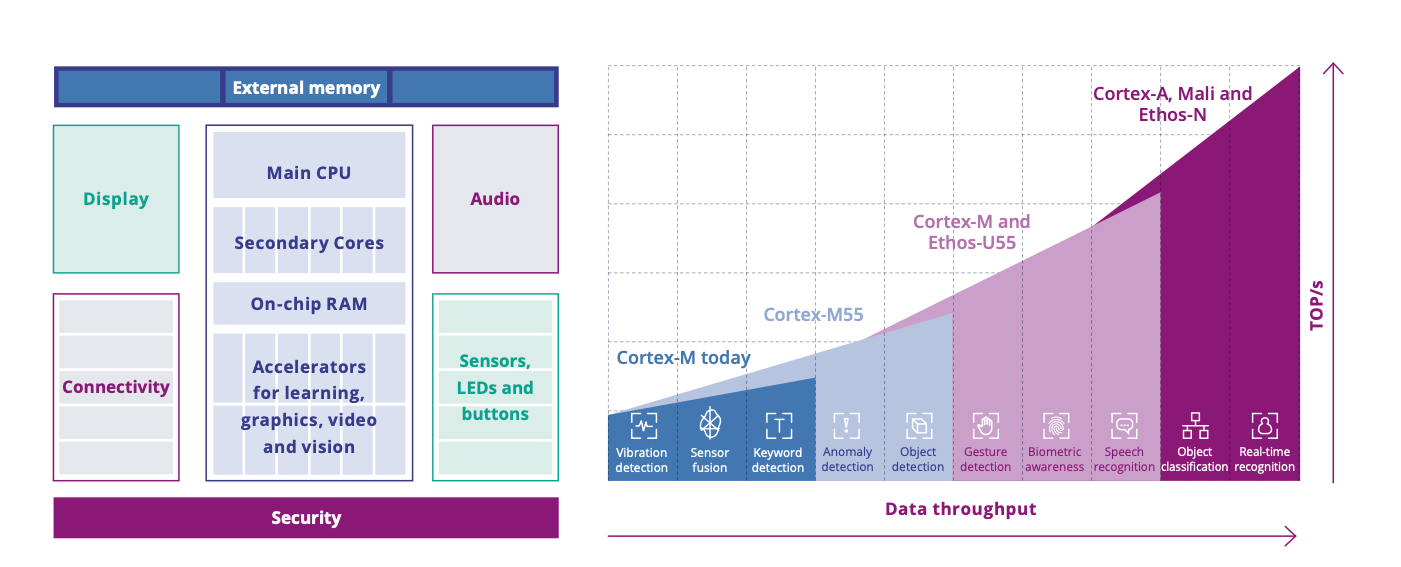
Figure 2.1.15 : Example of architecture of a modern SoC (from Paolo Azzoni, see also Chapter 1.3) / Arm’s Cortex-M55 and Ethos-U55 (now replaced by M85 and Ethos-U85) tandem, providing processing power for gesture recognition, biometrics, and speech recognition applications (Source: Arm).
Companies like Google, Gyrfalcon, Mythic, Axelera, NXP, STMicroelectronics and Syntiant are developing custom silicon for the edge.
Open-source hardware, championed by RISC-V, will bring forth a new generation of open-source chipsets designed for specific ML and DL applications at the edge.
The development of the neuromorphic architectures is accelerated as the global neuromorphic AI semiconductor market size is expected to grow.
The major European semiconductor companies are already active and competitive in the domain of AI at the edge:
Infineon:
“Infineon enables reliable and efficient AI at the edge. As a global semiconductor manufacturer, our products, software, tools, and services enable the creation of the AI-based applications of today and tomorrow, by providing the right solution for every AI project in automotive, industrial and the IoT: Ranging from data, ML pipeline and chips to high-performance, low-power AI-enabled MCUs, e.g., Infineon's AURIX™, TRAVEO™, and PSOC™, to modern sensors and easy-to-integrate AI solutions.
Infineon’s AURIX™ TC4x integrates AI with microcontrollers, enabling real-time applications like autonomous driving and eMobility. Its architecture combines a TriCore CPU cluster and a SIMD-based PPU for efficient AI tasks like linear algebra and signal processing. Together with Fraunhofer IKS, Infineon developed SAFE AI processes compliant with ISO 26262, 8800, and 21448.
Infineon's PSOC™ Automotive microcontrollers (MCUs) integrate artificial intelligence (AI) to enhance human-machine interfaces, smart sensing, and general-purpose applications in vehicles. PSOC™ Automotive 4 integrates capacitive sensing technology for Human Machine Interface (HMI) applications enhancing user experience by facilitating gestures over non-uniform surfaces or compensating for surface gradients.
TRAVEO™ T2G offers high performance, advanced human-machine interfaces, and robust security for automotive applications, among them: AI applications, including predictive maintenance, intrusion detection, and thermal management, enhancing vehicle performance and security, besides supporting the ARM ecosystem for AI training, development, and deployment via ModusToolbox™.
PSOC™ Edge series of Arm® Cortex®-M microcontrollers feature high-performance, low-power, secured MCUs with hardware-assisted machine learning (ML) acceleration for next generation applications. The PSOC Edge devices are based on high-performance Cortex-M55, including Helium DSP support paired with Arm Ethos-U55 as well as a low-power Cortex-M33 paired with Infineon’s ultra-low power NNLite hardware accelerator intended to accelerate neural networks in Machine Learning and AI applications.
Infineon’s ModusToolbox – a development ecosystem supporting a wide range of Infineon microcontroller devices, DEEPCRAFT™ Studio – a development platform for Edge AI / ML and DEEPCRAFT™ Ready Models – complete ML solutions guaranteed to be robust, high-performing, and production-ready for edge devices – complement Infineon’s portfolio.”
NXP:
NXP, a semiconductor manufacturer with strong European roots, has begun adding AI hardware accelerators and supporting software to several of their microprocessors and microcontrollers targeting the automotive, consumer, health, and industrial market, for example the NXP’s i.MX 95 and eIQ Neutron. The Ara240 Discrete Neural Processing Unit (DNPU) enables real-time generative AI, large language models (LLMs) and vision language models (VLMs) execution on AI-enabled compute and embedded systems, delivering low latency, lower operational costs and enhanced data privacy. For automotive applications, embedded AI systems process data coming from the onboard cameras and other sensors to detect and track traffic signs, road users and other important cues. In the consumer space the rising demand for voice interfaces led to ultra-efficient implementations of keyword spotters, whereas in the health sector AI is used to efficiently process data in hearing aids and smartwatches. The industrial market calls for efficient AI implementations for visual inspection of goods, early onset fault detection in moving machinery and a wide range of customer-specific applications. These diverse requirements are met by pairing custom accelerators, multipurpose and efficient CPUs with flexible SW tooling to support engineers implementing their system solution.
STMicroelectronics:
STMicroelectronics integrated edge AI as one of the main pillars of its product strategy plan. By combining AI-ready features in its hardware products to a comprehensive ecosystem of software and tools, ST aims to overcome the challenge of AI: opening technology access to all and for a broad range of applications. STMicroelectronics delivers a stack of Hardware and Software specifically designed to enable Neural Networks and Machine Learning inference in an extremely low-energy environment. Most recently, STMicroelectronics has started to bring MCUs and MPUs with Neural accelerators to market, able to handle workloads that were not conceivable in an edge device a few years ago. These devices rely on NPUs (Neural Processing Units) that execute Neural Network tasks up to 100 times faster than in traditional high-end MCUs. The STM32MP2 MPU has been made available in the second quarter of 2024, it will be followed by a full family of STM32 MCUs leveraging STMicroelectronics home-grown NPU technology, Neural Art. The first MCU leveraging this technology is already in the hands of tens of clients for workloads such as visual event recognition, people and object recognition, all executed at the edge in the device. On the software side, to adapt algorithms to small CPU and memory footprints, STMicroelectronics has delivered the ST Edge AI Suite, a toolset specifically designed to address all the needs of embedded developers from ideation with a rich model zoo, to datalogging to optimization for the embedded world of pre-created Neural Networks to creation of predictive maintenance algorithms. Two tools are particularly interesting: 1) STM32Cube.ai, an optimizer tool which enables a drastic reduction of the power consumption while maintaining the accuracy of the prediction. 2) NanoEdge AI studio, an Auto-ML software for edge-AI, that automatically finds and configures the best AI library for STM32 microcontroller or smart MEMS that contain ST’s embedded Intelligent Sensor Processing Unit (ISPU). NanoEdge AI algorithms are widely used in projects such as arc-fault or technical equipment failure detection and extends the lifetime of industrial machines.
2.1.5 Applications breakthroughs
2.1.5.1 Example of AI application ranging from deep-edge to cloud
One example of an application that can leverage all three categories of AI hardware simultaneously in a practical example of “continuum of computing” is an advanced autonomous driving system in smart cities.
In the cloud, massive amounts of data from numerous autonomous vehicles, traffic cameras, and other city infrastructure are aggregated and used to train large-scale AI models. These models analyze patterns, improve decision-making algorithms, and enhance predictive capabilities.
In the vehicles themselves, high-performance NPUs handle real-time inferencing tasks based on smaller models. These processors power the Advanced Driver Assistance Systems (ADAS) within each vehicle, enabling real-time perception, decision-making, and control.
Within the vehicle, low-power AI hardware is used for continuous monitoring and processing of data from various sensors. This also ensures that continuous monitoring and safety features remain active without interruption.
The integration of these three AI hardware categories creates a robust autonomous driving ecosystem, leading to high-performance Embedded AI within the vehicle that handles immediate, critical decision-making and control functions, allowing the car to operate safely and effectively in real time. It seems clear that advanced AI capabilities can enhance autonomous driving systems, in-car entertainment, and real-time vehicle diagnostics.
2.1.5.2 Other application domains
What we observe in the automotive domain can also be applied to other domains of edge computing and embedded Artificial Intelligence, such as systems for factories, systems for homes, monitoring of distributed infrastructures like the energy grid, etc. As we have seen, there is more and more convergence between edge computing and embedded (generative) AI.
An evolution of artificial intelligence is “embodied AI”, where, like for self-driving cars, drones and robots, AI directly interacts with the physical world by processing in real-time data coming from sensors and controlling actuators. “World models”, i.e., AI specialized for this kind of interaction with the world, are still in the research phase in 2026, but the domain is evolving rapidly. The rise of Physical AI or embodied AI, enabled by multimodal Vision-Language-Action (VLA) models and robot foundation models, is bringing increasingly capable perception, reasoning, and action directly into robots and autonomous systems. Running critical parts of these models locally on-device is essential to achieve the low and predictable latency required for real-time interaction, while improving autonomy and safety by avoiding dependence on remote infrastructure. Local inference also allows physical systems to continue operating reliably when connectivity is limited, intermittent, or unavailable.
Training these models is no longer done solely by feeding them with texts and books, but by having them interact with digital twins, that are modelling the world with the laws of physics, and allowing a faster training than through direct interaction with the real world. Omniverse from NVIDIA is an example of such digital twin system used to train AI; like alpamayo22, an open-source AI for self-driving cars.
Industrial automation and robotics also stand to benefit from this technology. By embedding AI chips with generative capabilities, industries can improve productivity, reduce downtime, and enhance operational flexibility.
Internet of Things (IoT), smart home devices, wearable technology, and even agriculture technology can leverage generative AI for a variety of innovative applications, such as detection of diseases, automatic harvesting of fruits, crop analysis etc. While AI-accelerated chips have traditionally focused on supporting CNNs for image, audio, and signal analysis, the rise of generative AI capabilities is driving a new wave of AI chips designed for edge computing.
Another significant market is the healthcare sector. Important examples are its contribution in the recovery from the Covid-19 pandemic as well as its potential to ensure the required resilience in future crises and for personalized medicine, such as prediction of tumor neoantigens for personalized mRNA cancer vaccines23.
2.1.6 Major challenges
The convergence between edge computing and embedded generative AI is becoming increasingly evident, but many edge applications currently operate without AI integration. This trend includes areas primarily targeted by European chip manufacturers, signaling a shift towards broader AI integration in various applications.
Europe must maintain its status as a key player in the embedded MCU (Microcontroller Unit) and MPU (Microprocessor Unit) markets by preparing to introduce generative AI accelerators in their products, even in more affordable devices. Europe could leverage AI algorithms and models that are open source or open weights, enabling an early adoption of systems using these models. These systems should also be ready for software upgradability, and connectivity allowing modularity and collaborative performances.
Embedded systems are heavily hit by the increase of price of memories such as DRAM (and flash), caused by the large demand of memories for (US) data centres. Innovative approaches using less RAM could be rapidly developed until the RAM market becomes stable again (see Figure 2.1.16) .
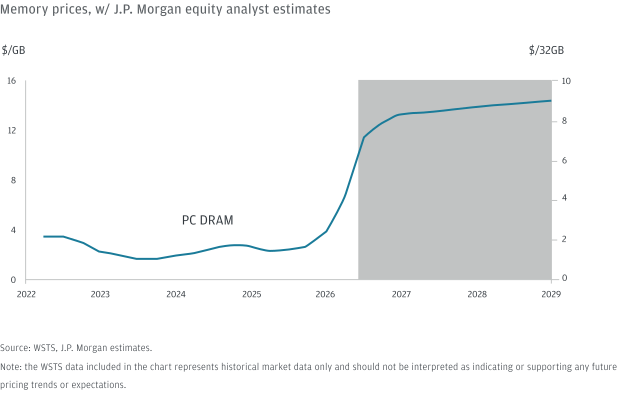
Europe should also be ready for the smooth integration of the devices into the computing continuum, which is forecasted to be an important trend.
The previous list only highlights some aspects that need to be further developed in Europe, and four Major Challenges have been identified to help Europe remain an important player in the further development of computing systems, especially in the field of embedded AI architectures and edge computing:
Increasing Energy Efficiency
Managing the Increasing Complexity of Systems
Supporting the Increasing Lifespan of Devices and Systems
Ensuring European Sustainability
2.1.6.1 Major Challenge 1: Increasing the energy efficiency of computing systems and embedded intelligence
2.1.6.1.1 State of the art
Increasing energy efficiency is the result of progress at multiple levels:
Technology level:
At the technology level (FinFet, FDSOI, silicon nanowires or nanosheets), technologies are pushing the limits of CMOS technology to be ultra-low power. However, the scaling is near its limits, and technology will have a limited impact on the improvement of efficiency in the coming years.
Device level:
Greater gains can now be expected at the architectural level, and various types of architectures are currently being developed worldwide.
Fully digital solutions have addressed the needs of emerging application loads such as AI/DL workloads using a combination of parallel computing (e.g., SMP and GPU) and accelerated hardware primitives (such as systolic arrays), often combined in heterogeneous Embedded architectures. Some applications also require further development due to their need for more flexibility and precision in numerical representation (32- or 16-bit floating point compared to the requirements of AI which codes information in a lower number of bits), which puts a limit to the amount of hardware efficiency that can be achieved on the compute side.
Avoiding moving data: this is crucial because the energy required to access off-chip memory is currently 10–100 times higher than access to on-chip memory. While IMC in particular is extremely promising, careful optimization at the system level must really take advantage of the theoretical peak efficiency potential. Figure 2.1.17 shows that moving data requires more energy than processing it (an operation on 64-bit data requires about 20pJ in 28nm technology, while getting the same 64-bit data from external DRAM takes 16nJ – without the energy of the external DRAM).
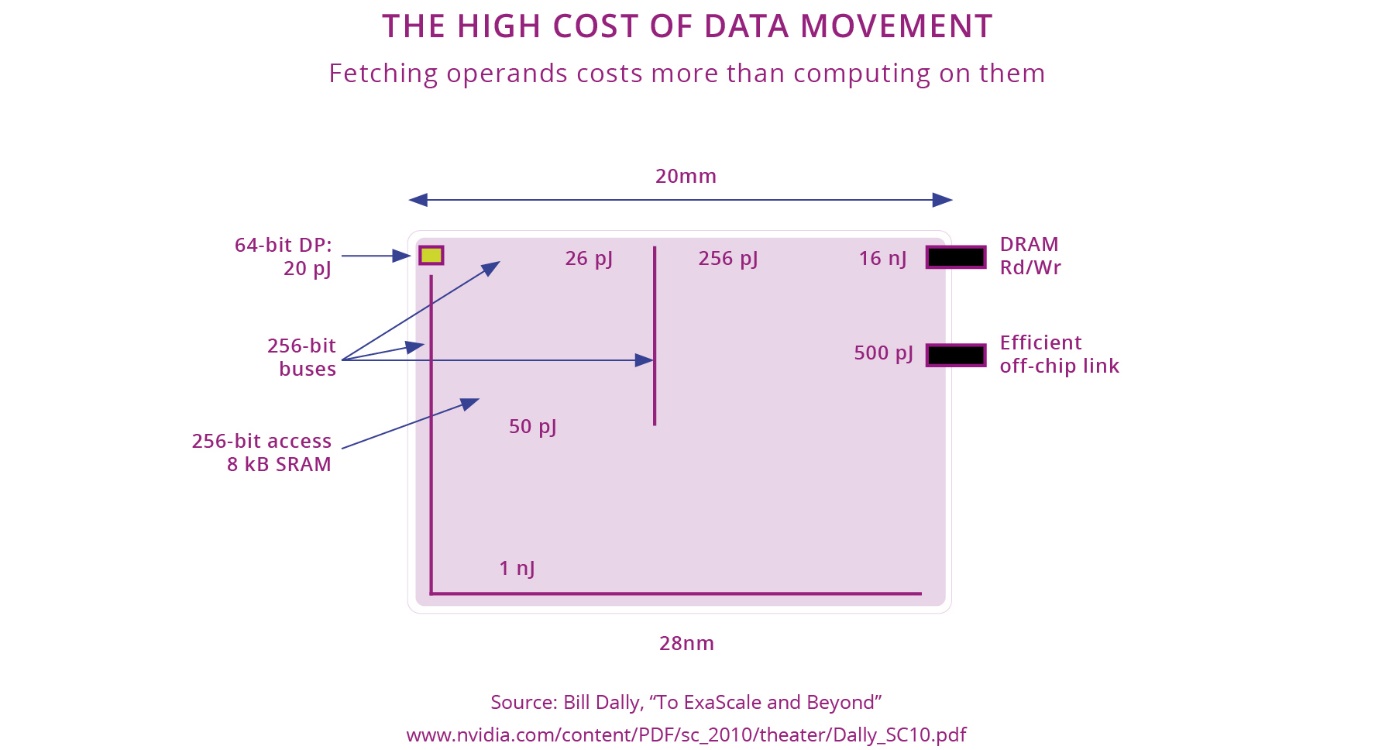
Table 1 shows that in a modern system, large parts of the energy are dissipated in moving data from one place to another. Not only the memories themselves, e.g., bitcells, are needed but the complementing libraries and IP for IMC or NMC as well.
Flash reference |
MRAM type |
PCM type |
ReRAM type |
FeFET |
Hf based FeRAM 1T1C |
||
|---|---|---|---|---|---|---|---|
Performance |
Programming power |
<200pJ/bit - # 100pJ/bit (eSTM) |
~20pJ/bit |
~90pJ/bit |
~100pJ/bit |
<~20pJ/bit |
<pJ/bit |
Reading access time |
HV devices ~15ns |
Core oxide device ~1ns |
No HV devices ~5ns |
No HV devices ~5ns |
No HV devices ~5ns |
Write after read ( Destr. Read) |
|
Erasing granularity |
FN mechanism Full page erasing |
bit-2-bit erasing Fine granularity |
bit-2-bit erasing Fine granularity |
bit-2-bit erasing Fine granularity |
bit-2-bit? Depend on archi |
bit-2-bit erasing |
|
Reliability |
Endurance |
Mature technology |
High capability 10^15 ? |
500Kcy |
10^5 trade Off with BER |
10^5 Gate stress sensibility |
10^11 #10^6 with write after read |
Retention |
Mature technology |
Main weakness |
150°C auto compliant |
Demonstrated Trade Off with power |
About 10 years (with the aim of replacing NAND flash by increasing the bias voltage) |
To be proven |
|
Soldering reflow |
Mature technology |
High risk To be proven |
pass |
possible |
To be proven |
To be proven |
|
Cost |
Extra masks |
Very high (>10) |
Limited (3-5) |
Limited (3-5) |
Limited (3-5) |
Low (1-3) |
Low (1-3) |
Process flow |
Complex |
Complex |
Simple |
Simple |
Simple |
Simple |
|
New assets vs CMOS |
Shared |
New _ manufacturable |
New _manufacturable |
BE High-k material |
FE High k material |
BE High-k material |
System level:
Micro-edge computing near sensors (i.e. integrating processing inside or very close to the sensors or into local control) will allow embedded architectures to operate in the range of 10mW (milliwatt) to 100mW with an estimated energy efficiency in the order of hundreds of GOPS/W up to a few TOPs/Watts in the next 5 years. On top, the device itself can go in standby or in sleep mode when not used, and connectivity need not be permanent. Devices currently deployed on the edge rarely process data 24/7 like data centres: to minimize global energy, a key requirement for future edge Embedded architectures is to combine high performance “nominal” operating modes with lower-voltage high compute efficiency modes and, most importantly, with ultra-low-power sleep states, consuming well below 1mW in fully state-retentive sleep, and less than 1-10 µW in deep sleep. The possibility to orchestrate and manage edge devices becomes fundamental from this perspective and should be supported by design.
Unified (or shared) memory, which allows CPUs and GPUs (or NPUs) to share a common memory pool, is gaining traction initially for high-end systems such as Mx series of systems from Apple, followed by architectures from Nvidia (GB10 and RTX Spark) and AMD (Strix). This is particularly advantageous for handling the diverse and dynamic workloads typical of AI applications and reduce the amount of energy required to move data between different parts of the system. In “classical” PC architecture, the weights of the Neural networks are first copied to the main memory (CPU) and then copied again to the VRAM of the accelerator, losing time and energy compared to a system with unified memory.
Maximum utilization and energy proportionality: Energy efficiency in cloud servers relies on the principle that silicon is utilized at its maximum efficiency, ideally operating at 100% load. Unlike centralized cloud servers, edge devices often face fluctuations and unpredictable workloads. These devices must be capable of maintaining high efficiency across many utilization levels, not just at peak performance. To accomplish this, edge hardware needs to be designed with adaptive power management features that allow it to scale power usage dynamically in response to varying workloads. This means the hardware should be as efficient at low workloads as it is at 100% utilization, ensuring that energy is not wasted during idle or low-demand periods. Energy proportionality aims to scale computing power according to the computational demand at any given moment. This concept is crucial for modern computing environments, which must handle a diverse range of workloads, from the intensive processing needs of self-driving vehicles to the minimal computational requirements of IoT devices. The ability to dynamically adapt power usage ensures efficiency and effectiveness across this spectrum of applications. In high-demand scenarios, such as those faced by self-driving cars, the computational power must scale up to handle complex algorithms for navigation, sensor fusion, and real-time decision-making. Conversely, IoT devices often require minimal computational power, as they are designed to perform specific, limited functions with a few lines of code. To minimize the power consumption at the edge, IoT sensors with integrated AI must evolve to "wake-up-and-process" paradigms where the processing only takes place under relevant contexts which might be triggered by relevant events (like a sensor readout moving above or below a certain threshold). This wide range of computational needs presents a significant challenge because the requirements and hardware for each application are vastly different.
Data level:
At data level, memory hierarchies will have to be designed considering the data reuse characteristics and access patterns of algorithms, which strongly impact load and store access rates and hence, the energy necessary to access each memory in the hierarchy and avoiding to duplicate data.
The right data type should be also supported to perform correct (or as correct as acceptable) computation with the minimum number of bits and, if possible, using integers (the floating-point representation as specified in IEEE 754 is very costly to implement, especially with the particular cases). This seems to be particularly true for hardware that supports AI operations in close proximity to sensors (where the number of “synapses” can be limited). Current consensus is that 4-bit representation for the weights didn’t degrade too much inference performances, and quantization to fewer bits (down to a trinary coding +1,0,-1) is possible for particular cases.
Tools level:
At tools level, HW/SW co-design of systems and their associated algorithms are mandatory to minimize the data movement and optimally exploit hardware resources, particularly if accelerators are available, and thus optimize the power consumption. For LLM, we observe that concepts similar to those for system design can be reused (like replacement policies for the KV cache similar to the ones used for ordinary caches, mapping RAM in file system (SSD) to decrease the RAM requirement for MoE LLMs, etc.).
Additionally, new paradigms of computation based on beyond CMOS technologies (such as spintronics, photonics and memristors) require the development of specialized tools to implement the training and learning of the network.
2.1.6.1.2 Key focus areas
Therefore, there are several key axes to further develop to increase energy efficiency of computing and AI systems:
Processing Data Locally and reducing data movements:
Increasing the energy efficiency of computing systems in general is a multifaceted challenge that requires innovations across various domains, including hardware, software, and data management. Local-first software is designed to ensure that users maintain control over their data by storing it primarily on their local devices, thus enabling full functionality even without an active internet connection. In the local-first paradigm, the software architecture is designed to prioritize local operations, using Conflict-free Replicated Data Types (CRDTs) and other synchronization mechanisms to manage concurrent data updates and ensure consistency across distributed systems. As shown in the beginning of this chapter, this concept is involved in Apple Intelligence and in HarmonyOS.
Co-Design of Algorithms, Hardware, Software:
The co-design of algorithms, hardware and software represents a holistic approach to optimizing system performance and energy usage. This integrated design process can help to identify and eliminate bottlenecks, streamline operations, and reduce overall energy consumption. NVIDIA claims that the improvement of performance of their GPUs is mainly due to “global co-design” and not anymore to the technology improvement (Figure 2.1.18).
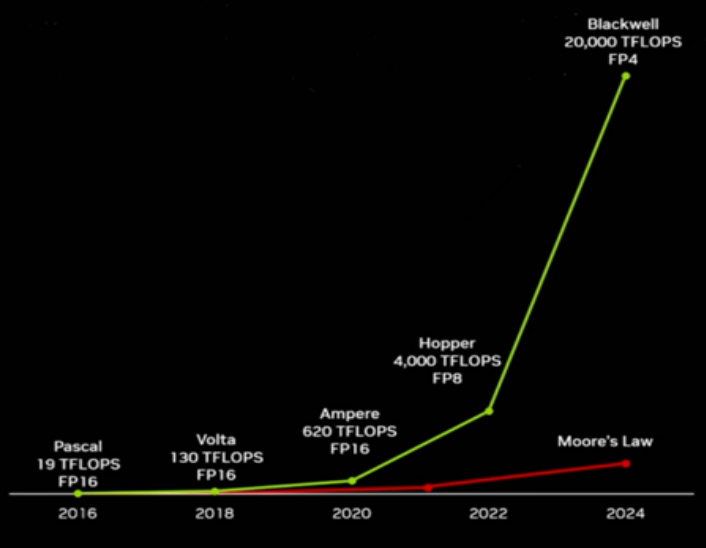
The co-design of sensing systems and artificial intelligence, particularly at the edge is very important direction and should be further considered and enforced. Currently, sensing is largely treated as a data source for AI, while future ECS systems will increasingly rely on tightly integrated sensor–AI solutions. This includes hardware–algorithm co-design, physics-informed machine learning, adaptive sensing strategies, and intelligent signal processing directly at the sensor or node level. Such approaches are essential to reduce data transmission, improve robustness under real-world conditions, and enable energy-efficient operation in distributed IoT and System-of-Systems environments. Strengthening this link between sensing technologies and embedded AI would better reflect emerging trends in edge intelligence and enhance the impact of ECS solutions across application domains.
Efficient Management of storage resources:
In the landscape of edge AI, the efficient management of memory resources is becoming increasingly critical to guarantee both a sustainable energy consumption profile and the required performances. Local execution of smaller language models (SLMs) often encounters bottlenecks primarily at the memory level.
Moreover, the cost of memory remains a crucial factor for deploying generative AI at the edge, mainly in this period of RAM shortage. This involves strategic allocation (between Flash, DRAM or other kind of memories) and utilization of memory to ensure that AI tasks are handled efficiently without unnecessary data copy (which consumes energy and requires more resources). Algorithmic innovations in compressing weights, pruning neural networks, or reducing the RAM requirement of long context are also important to reduce the usage of storage.24
Concept of Unified Memory:
The concept of unified memory, where a common memory pool is shared between the CPU and GPU/NPU, offers significant advantages for energy efficiency (see above).
Innovations in Memory Technology:
Advances in memory technology are essential for increasing energy efficiency (see Table 1).
Energy Proportionality:
Energy proportionality is a critical principle for hardware design, ensuring that devices are as efficient at low workloads as they are at 100% utilization.
Ultra-Low Standby Current:
Maintaining an ultra-low standby current is vital for devices that spend significant amounts of time in idle or low-power states, waiting to perform tasks triggered by specific events or intervals.
Leveraging Physical Phenomena for Computation:
One innovative approach to reducing energy consumption in computing involves leveraging physical phenomena to perform computations, effectively using the inherent properties of physical systems to solve complex problems (using Ohm’s law for making products and Kirchoff law or summation of charges for addition). This is the case for neuromorphic computing. For example, the value of RRAM can be also locally modified, allowing to implement some training algorithms very efficiently. Scalability to large networks, variability in properties and interfacing with other systems still need improvement for industrial use. Neuromorphic technologies such as spiking neural networks and compute-in-memory architectures are compelling choices to efficiently process and fuse streaming sensory data. Event-based sensors, such as retinomorphic cameras, are becoming extremely important, especially in the case of edge computing where energy could be a very limited resource. Edge computing and embedded AI shall further advance toward highly energy-efficient and event-driven architectures, enabling intelligent processing under constrained and harvested energy conditions, including neuromorphic approaches for continuous operation at ultra-low power. Intelligent power and energy management policies remain essential for extending operational lifetime and enabling scalable energy-autonomous embedded systems.
2.1.6.2 Major Challenge 2: Managing the increasing complexity of systems and embedded intelligence
2.1.6.2.1 State of the art
The growing complexity of embedded systems and devices for embedded intelligence is becoming increasingly difficult to manage. Modern SoCs combine general-purpose processors, AI and domain-specific accelerators, memories, communication interfaces and many other functions, while requirements for performance, energy efficiency, safety and real-time operation continue to increase. Moving from large monolithic SoCs towards chiplet-based architectures can help address some of these difficulties, but it also moves part of the complexity from the chip to the system and package level. Interoperable interfaces, interposers, advanced packaging, system-level design methods and common ways of describing and combining chiplets will therefore be needed. Automotive computing is already driving work in this direction, with initiatives such as ASRA25 in Japan and imec’s chiplet program26 in Europe. Shared architecture specifications and international agreement on interfaces and system architectures are important to reduce global costs and ensure reusability of IPs. Europe should build on these efforts and develop an end-to-end approach covering architecture, hardware, packaging, software, design tools and validation. Without such capabilities, increasing system complexity may become an obstacle to innovation and weaken the competitiveness of the European electronic components and systems industry.
A holistic end-to-end approach is necessary to manage the increasing complexity of systems, to remain competitive and to continuously innovate the European electronic components and systems ecosystem.
Tools and techniques leveraging AI to help in the management of complexity, both for embedded systems and for embedded AI systems, e.g., tools to adapt LLMs to edge / embedded targets are required. The solutions for edge AI must provide dynamic transfer learning, by assuring the transfer of training instance, feature representation, parameters, and relational knowledge from the existing trained AI model to a new one that addresses the new target task. They should also ensure hyperparameter tuning for automated machine learning scenarios, etc. Furthermore, and more generally, environments for modeling how the various parts interact together should be considered since this topic is still a challenge; having accurate digital twins of complex systems with the right level of abstraction for the various uses (conception, runtime optimization, etc.) is still an unsolved challenge.
New design and architecture concepts including HW-SW co-design with corresponding HW/SW platforms for AI-born embedded systems should be promoted to facilitate trust by providing dependable design techniques, that enable the end-to-end AI systems to be scalable, make correct decisions in a repetitive manner, provide mechanisms to be transparent, explainable, interpretable.
Enabling factors to manage the complexity of the continuum of computing are the use and development of standardized APIs for hardware and software toolchains, methods and interoperability across different system layers like sensors, gateways, on-premises servers and edge processing units. Additionally, interoperability concepts for AI edge-based platforms for data tagging, training, deployment, and analysis should be supported, allowing the development of distributed edge computing architecture with AI models running on distributed devices, servers, or gateways away from data centres or cloud servers. Protocols such a MCP27 or A2A28 are steps in the direction of agents communicating with each other (in a distributed manner).
Deterministic behaviors, low latency and reliable communications are also important for other vertical applications, such as connected cars.
The increasing complexity of systems will make them more prone to attacks so managing cybersecurity from the start is a mandatory action. Privacy-preserving, on-device AI compute is well-aligned with both regulatory direction and the operational realities of consumer device deployments. It should be further extended to explicitly include on-device security tooling as a parallel R&I priority — specifically, AI-powered threat detection capable of operating locally without dependence on cloud-side processing.
Two converging pressures make this a strategically important research direction. First, EU privacy regulation is constraining the data flows that cloud-dependent security architectures rely on, requiring security inference to move closer to the device. Second, the rapid proliferation of edge AI devices is expanding the consumer attack surface at a pace that centralized security models cannot match. R&I into energy-efficient, on-device security inference — capable of detecting novel and evolving threats without continuous cloud connectivity — would strengthen European digital resilience while creating a meaningful competitive differentiator for European cybersecurity vendors. This aligns directly with the chapter's existing focus on energy-proportional, privacy-preserving compute and merits explicit treatment alongside it.
Five Key Focus Areas have been identified to tackle this complexity challenge:
Complexity Management Utilizing AI
Decomposition of Complex SoCs into Chiplets and Interposers
Ensuring Programmability and Interoperability
Combining Processing Devices to Work Together
Modeling Interactions Among System Components
2.1.6.2.2 Key focus areas
Complexity management utilizing AI
In the domain of edge AI, the concept of a Mixture of Agents (MoA) or Agentic AI, where a set of smaller Large Language Models (LLMs) called agents work collaboratively, presents an approach to managing complexity more effectively than relying on very large “universal” foundation models. In 2026, these agents are managed by a harness such as Codex (OpenAI), Claude Code (Anthropic) or open-source harnesses like OpenCode, Hermès, PI, DeepSeek etc. The harness manages the agents, their memory and the tools they can access. Consequently, the MoA paradigm not only simplifies the management of AI complexity but also optimizes performance and resource utilization in edge computing environments, paving the way for more responsive and efficient AI applications. It was observed that a harness can improve the performances of a “raw” LLM on complex and long tasks. Some harnesses, like DeepSeek harness, keep track of all the actions and messages, allowing to trace what was done. By end of 2026, AI is also starting to be used to improve the harness itself29, in a RSI (Recursive Self Improvement) loop.
Decomposition of Complex SoCs into Chiplets and Interposers
The decomposition of complex SoCs into chiplets and interposers is an emerging strategy to manage system complexity. This approach involves breaking down a monolithic SoC into smaller, modular components (chiplets) that are interconnected using interposers. However, for chiplets and interposer ecosystems to really emerge, an agreed standard for interconnect (such as UCIe) will be required, together with physical specifications allowing interoperability between providers. Europe, with its large set of SMEs, is an ideal setting for creating this ecosystem of multiple providers of (interoperable) chiplets.
Chiplet integration can be realised using different packaging concepts, such as silicon interposers (2.5D), polymer‑based RDL substrates, organic interposers (2.3D), or direct chiplet integration on organic substrates without an interposer (2.1D). These packaging concepts are not just implementation details; they directly determine die‑to‑die connectivity, bandwidth, latency, signal integrity, and power distribution. Organic substrates play a central role in chiplet‑based systems, as they enable the practical partitioning of SoCs into chiplets, define the achievable interconnect density, and provide scalable and robust power delivery, while at the same time meeting requirements for industrial‑scale manufacturability and system reliability.
Ensuring Programmability and Interoperability
To handle the increasing complexity of systems, it is essential to ensure programmability and interoperability for example through techniques and adherence to standards that originate from the web and cloud computing (but not necessarily involving the cloud). Technologies such as containers, orchestration, and WebAssembly (WASM) maintain high flexibility and adaptability and enable seamless integration and operation across different platforms managing the diversity and dynamic range of modern computing environments. These tools allow developers to manage and update systems more efficiently, ensuring that various components can communicate and function together effectively while developers’ productivity can also be helped by generative AI.
Combining Processing Devices to Work Together
The combination of various processing devices working together is another key focus area for managing system complexity. By combining CPUs, GPUs, NPUs, and other specialized processors systems can distribute tasks according to the strengths of each device. Coordinating these devices requires sophisticated management and scheduling techniques, but it leads to more robust and scalable systems. Together with interoperability, the ability of devices to work together is the foundation of the computing continuum approach.
Modeling Interactions Among System Components
Modeling the interactions among various parts of a system remains a significant challenge in managing complexity. Advanced modeling techniques and simulation tools are necessary to accurately represent these interactions and predict system behavior under different conditions.
2.1.6.3 Major Challenge 3: Supporting the increasing lifespan of devices and systems and embedded intelligence
2.1.6.3.1 State of the art
Supporting the increasing lifespan of devices and systems can mainly be based on three main principles:
Upgradability
Modularity
Reuse
By extension, this means that devices and systems have to increase their scalability and interoperability.
Upgradability
This requires hardware that can accommodate for example software upgrades, ensuring that devices remain functional and up-to-date over extended periods. This is the drive for approaches such as Software Defined Vehicle. The first level of lifetime extension is clearly the upgrade to avoid replacing an object but instead improving its features and performance through either hardware or software update.
Hardware requirements for edge processing devices that support software upgrades must address several critical factors to ensure that these devices remain functional and up-to-date over extended periods. The hardware must have sufficient computational power and memory flexibility or capacity to handle the evolving complexity of software applications and some level of flexibility and reconfigurability that allows it to be used in ways that were not originally intended without compromising performance.
Secondly, hardware for edge processing devices must be compatible with various operating systems, RTOS and software ecosystems, providing the flexibility needed to adapt to different applications and use cases over time. This is an important point that should also happen in the other domains of edge computing.
Modularity
Enhancing interoperability and modularity allows different generations of devices to work together, extending their usability and reducing electronic waste. It would lead to systems which are more eco-designed and with greater sustainability. The hardware should be designed with modularity in mind, enabling easy replacement or upgrading of individual components. This implies a long-lasting chip-to-chip communication protocol between units (like I2C, SPI, PCI-e, USB, Ethernet, MIPI, AXI, etc.).
Interoperability, modularity, scalability, virtualization, upgradability are well-known in embedded systems and are already widely applied. But they are brand new in AI and nearly non-existent in edge AI.
Reuse
The last aspect of increasing lifetime is to reuse a system in an application framework less demanding in terms of performance, power consumption, safety, etc. Developing the concept of a second life for components further contributes to sustainability by repurposing older hardware for new applications. Another approach is to combine “old” devices to share their hardware resources to create a more powerful virtual computing device. This idea is already present in operating systems like Harmony OS and its European open-source counterpart Oniro30 as explained before.
2.1.6.3.2 Key focus areas
Ensuring Long-Term Functionality and Up-to-Date Operation
A fundamental aspect of supporting the increasing lifespan of devices is ensuring that they remain functional and up-to-date over extended periods. This may incur over-specification to be able to be future proof.
Dynamic reconfiguration and Self-X techs
Intelligent reconfigurable concepts are an essential key technology for increasing the re-use and service life of hardware and software components.
Dynamic reconfiguration: a critical feature of the AI circuits is to dynamically change their functions in real-time to match the computing needs of the software, AI algorithms and the data available, and create software-defined AI circuits and virtualise AI functions on different computing platforms. The use of reconfigurable computing technology for IoT devices with AI capabilities allows hardware architecture and functions to change with software providing scalability, flexibility, high performance, and low power consumption for the hardware.
Realizing self-X (adaptation, reconfiguration, etc.): for embedded systems self-adaptation, self-reconfiguration has an enormous potential in many applications. Usually in self-reorganizing systems the major issue is how to self-reorganize while preserving the key parameters of a system (performance, power consumption, real-time constraints, etc.). Thanks to AI, when some malfunctioning parts are identified, it may be possible to assess, relying on AI and the data accumulated during system operation, if it affects the behaviors of the system regarding its real operating conditions. It would then extend its lifetime “in place”. The second case is to better understand the degraded part of a system and then identify its new operating space. This can decide how it could be integrated in another application making sure that the new operating space of the new part is compatible with the operational requirements of the new hosting system.
Self-learning techniques are promising. Many domains can benefit from AI in mobility, smart building, and communication infrastructure. LLMs show interesting properties in this field, such as few-shot learning.
Monitoring the devices and systems’ health
Dynamic reconfiguration and Self-X Techs also need data to be as efficient as possible. It means that monitoring of devices and systems’ health are necessary to acquire those data. Several techniques exist.
Distributed monitoring: continuous monitoring and diagnosis also play a crucial role for the optimization of product lifetime. Where a large amount of data is collected during daily life operation (e.g., usage, environment, sensor data), big data analysis techniques can predictively manipulate the operational strategy, e.g., to extend service life or optimizing energy. This also allows to detect shifting behavior or faulty conditions in the systems, for example, early failures of individual systems could be predicted in advance. This monitoring should also cover the performance of the semiconductor devices themselves, especially to characterize and adjust to ageing and environmental effects and adjust operations accordingly.
Distributed predictive optimization is possible, whenever information about future events in a complex system is available. Examples are load predictions in networked traffic control or demand forecasts in smart energy supply networks. In automation, a concept dual to control is monitoring and state observation, leading to safety-aware and reconfigurable automation systems. Naturally, all these concepts, as they concern complex distributed systems, must rely on the availability of vast data, which is mostly processed, condensed, and evaluated locally thus relieving both communication and computational infrastructure.
The other area of lifetime extension is how AI could identify very low signals in a noisy data environment. for predictive maintenance, for instance, it is difficult for complex machinery to identify a potentially failing part well in advance. Thanks to AI and collecting large datasets it is possible to extract some very complex patterns which could allow for very early identification of parts with a potential problem. AI could not only identify these parts but also give some advice regarding when the exchange of a part is needed before failure, and then help with maintenance planning.
Artificial Intelligence challenges
Secure software upgradability is now essential. Hardware, software stacks, tools and data must therefore be co-developed for plasticity, interoperability and long life, supported by virtualization and standards. Like power management, lifetime extension must be designed in from the start.
One challenge for the AI edge model is upgradability of the firmware and new learning/training algorithms for edge devices. The related security questions regarding model confidentiality, data privacy etc. need to be addressed specifically for such fleets of devices.
The novelty with AI systems is to upgrade while preserving and guaranteeing the same level of safety and performance. Another upgrade-related challenge is that of designing systems with a sufficient degree of architectural heterogeneity to cope with the performance demands of AI and machine learning algorithms, but at the same time to be flexible enough to adapt to the fast-moving constraints of AI algorithms. Often, new AI models employ different algorithmic strategies from older ones, outdating fixed-function hardware accelerators and necessitating the design of hardware whose functionality can be updated.
Designing with Modularity and Extensibility in Mind
To achieve long-term functionality, devices need to be designed with modularity and extensibility as core principles. For this to be practically usable means that a specific chip-to-chip interface should be added and internally connected to ensure this modularity at board/system level. This design philosophy supports easier maintenance and enables incremental improvements, which can significantly extend the device's lifespan.
Advancing Modularity at the Chiplet Level
While the concept of modularity is well-established at board and system level, achieving it at the level of chiplets is an emerging challenge that has not yet been fully realized. This approach promises greater flexibility, improved scalability, and easier integration of new technologies.
Virtual Modularity
Virtual Modularity refers to the dynamic integration and seamless interaction between multiple devices within an interconnected ecosystem, enabling them to function as a unified system.
Virtual Modularity can increase the lifespan of devices by distributing workloads and optimizing resource usage across a network of connected devices, rather than relying on a single device to handle all tasks. Older devices can have their lifetime extended thanks to the extra computing and storage resources delivered by other devices in the pool.
Reuse of components or systems in a downgraded or requalified use case
Re-use: One concept called the “2nd life” is actually the re-use of parts of systems. First, it is possible to extract the edge AI HW/SW module which is performing a set of functions. For example, this module performs classification for images, movement detection, sound recognition, etc. Second, the edge AI module can be requalified and recertified downgrading its quality level. A module implemented in aeronautic systems could be reused in automotive or industrial applications. A module used in industrial could be reused in consumer applications. Third, an AI system may be re-trained to fit the “2nd life” similar use case, going for example from smart manufacturing to smart home. A specific edge AI embedded module integrated in tens of thousands of cars could be removed and transferred in a new consumer product being sold on the market.
2.1.6.4 Major Challenge 4: Ensuring European sustainability of embedded intelligence
2.1.6.4.1 State of the art
Edge computing and Artificial Intelligence are quickly becoming more and more tied together, converging towards the unified concept of Embedded Artificial Intelligence.
Economic and environmental sustainability represents two key factors when defining actions and investments promoting the coverage of the value chain and of the technology stack. e.g., cloud computing, based on data centres, plays a fundamental role for the digitalisation process.
Data centres and transmission networks consume roughly 2–3% of global electricity and account for about 1% of energy-related greenhouse-gas emissions, although efficiency gains have moderated demand growth (Figure 2.1.19). The IEA reported in January 2024 that data-center electricity demand could double by 2026; cryptocurrency processing may still consume more electricity than AI that year (Figure 2.1.20 ).
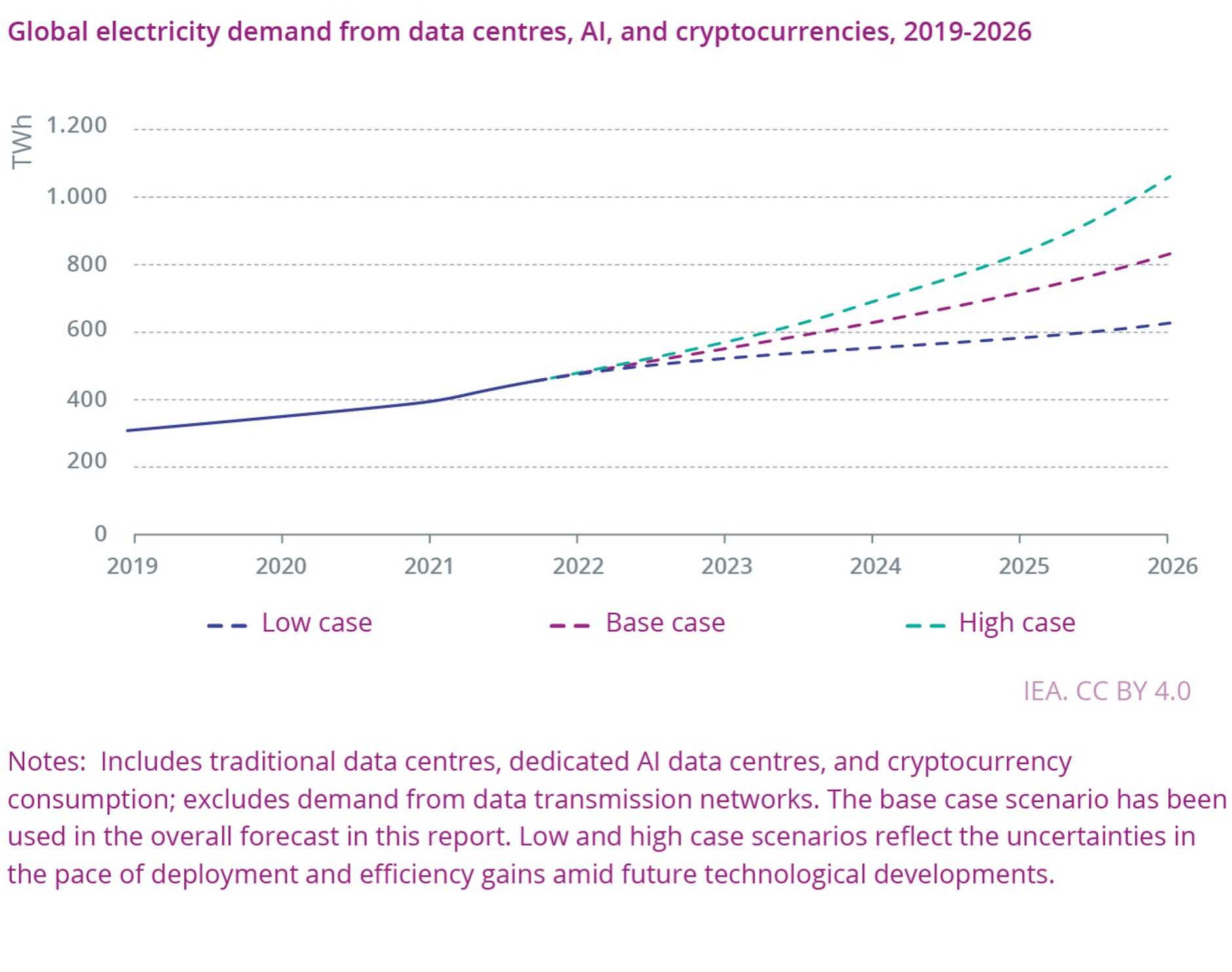
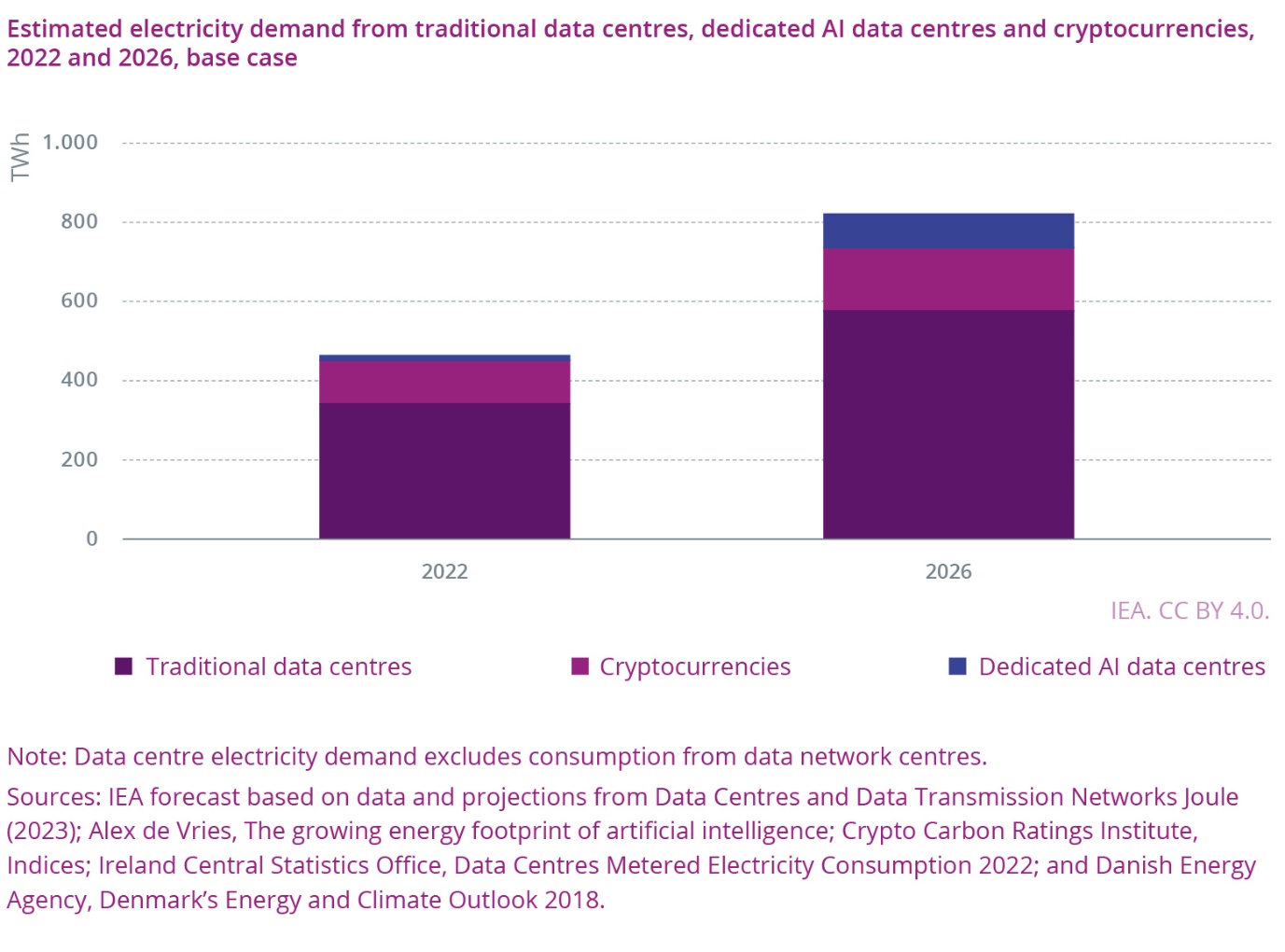
Data centres are progressively becoming more efficient, but shifting the computing to the edge, for example, allows to reduce data traffic, data centres storage and processing.
Shifting to green energy is certainly a complementary approach to ensure sustainability, but the conjunction of AI and edge computing, the Embedded AI, has the potential to provide intrinsically sustainable solutions with a wider and more consolidated impact. These solutions also bring other important benefits such as real-time data analysis, reduced memory and storage capacity and better data protection. To avoid such drawbacks, new AI algorithms specifically tailored for embedded systems, in conjunction with new HW components (e.g., based on neuromorphic architectures), should be designed and developed.
Sustainability of Edge Computing and AI is affected by many technological factors, which require investments to consolidate and strengthen EU global positioning, generating a potential positive impact on the sustainability of future digitalization solutions and related applications.
Ensuring sustainability for Embedded AI in Europe involves several key initiatives: open-source hardware can drive innovation and reduce costs, while energy efficiency improvements are critical for sustainable development. Engineering support represents the third key factor. It is necessary to advance sustainable Embedded AI from several perspectives: optimize the energy profile of Embedded AI solutions (technical and environmental levels), tackle the lack of expertise and of human resources (operational/engineering level), and keep the costs of these solutions sustainable (economic). For example, by mastering the adoption of new Embedded AI techniques, such as transformers and large language models (LLMs) with a focus on federation of smaller specialized models developed in Europe32, and integrating them with efficient accelerators and algorithms, Europe can maintain a competitive edge. This is crucial for many vertical domains that are key for Europe: for example, in the domain of autonomous systems, Europe has the potential to lead in the development of autonomous vehicles and robots, leveraging advanced AI and embedded intelligence. The necessity to ensure an efficient engineering process, with consequent short time-to-market, is motivated by the speed of global market evolution: for example, the emergence of cheap Chinese RISC-V microcontrollers emphasizes the necessity for fast development, robust, cost-effective computing solutions made in Europe.
Sustainability can also be measured in terms of democratizing technology use, to make it more accessible to a broader community of users and facilitate market entry to startups and SMEs: natural language interfaces for example could contribute to facilitate the access to digital technologies. It is also crucial to support the research into new computing paradigms, like neuromorphic and analog computing based on a diverse set of technologies that include spintronics, photonics and memristors, and to ensure they can reach high TRL levels (i.e. 7, 8 and 9).
One of the major challenges that need to be accounted for in the next few years is related to the design of progressively more complex electronic systems to support advanced functionalities such as AI and cognitive functionality, especially on the edge. This is particularly challenging in the European landscape, which is dominated by small and medium enterprises (SMEs) with only some large actors that can invest and support larger-scale projects.
2.1.6.4.2 Key focus areas
Leveraging Open-source Hardware and Software for Innovation and Cost Reduction
Open-source Hardware and Software are drivers of innovation and cost reduction in the fields of Edge Computing and Embedded AI, allowing democratization of design and creating a collaborative environment where innovation can emerge and making the development of cutting-edge solutions that are both affordable and highly effective possible.
Developing and Federating Smaller Specialized AI Models
The federation of smaller specialized AI models developed in Europe represents a strategic approach to harnessing localized expertise and enhancing the efficiency of AI applications at the edge. These models, when federated (in “Agentic AI”), can work together to tackle complex tasks as, or even more effectively than monolithic models. Specialized agents can be derived from few foundation models (made by few European companies or from Open Source) by fine tuning that can be achieved by SMEs or start-ups on specialized datasets, as this specialization requires less computing power and data than the creation of a completely new foundation model.
Training Models with European Data and Ethical Compliance
For AI models to be truly sustainable and beneficial to Europe, they must be trained on data that covers European languages and reflects the diverse cultural and social contexts of the continent.
Finding solutions which ensure privacy, fairness, and transparency in AI systems, thereby aligning technological advancements with the core values and regulations of Europe.
Allowing those AI to work at the edge, hence promoting the development of specialized AI chips for edge AI, this will facilitate access to digital technologies to a broad audience.
Supporting natural language interfaces which enable users to interact with technology in intuitive ways, breaking down barriers to adoption and use, in a continent characterized by cultural, societal and language diversity.
Increasing the re-use and sharing of knowledge and models generated by embedded intelligence, improving the energy- and cost-efficiency of AI training, and adopting a new benchmarking AI approach oriented to sustainability.
Deploying Efficient and Sustainable Embedded AI-oriented ECS
Efficient ECS like new memories, accelerators and algorithms specifically conceived for Embedded AI are fundamental to the performance and sustainability of the domain. This will require for example:
New materials and substrates oriented to low power consumption.
New generations of embedded ultra-low power electronic components.
3D-based device scaling for low power consumption and high level of integration.
Chiplet-based solutions promoting modularity and reuse (sustainability by design).
Strategies for self-powering nodes/systems on the edge and efficient cooling solutions.
Policies and operational algorithms for power consumption at edge computing level.
Efficient and secure code mobility.
Advanced Neuromorphic components.
Generative AI for the edge.
Inclusion of existing embedded systems on the edge (huge market opportunity).
Accelerating Development of Robust, Cost-Effective Solutions
There is a pressing need for the rapid development of robust, cost-effective computing solutions made in Europe. These solutions must be designed to meet the specific demands of European markets and regulatory environments.
Engineering process automation for full lifecycle support of Embedded AI solutions.
Edge Computing and Embedded AI security and sustainability by design.
Engineering support for Embedded AI verification and certification, addressing end-to-end edge solutions.
Support for education and professional training to enable, facilitate, improve and speed-up the design, development and deployment of Embedded AI.
Engineering process automation based on generative AI.
2.1.7 Timeline
The timeline indicates expected high-TRL operational prototypes or early commercialisation. The 2027–2031, 2032–2036 and 2037-and-beyond bands are conditional maturity estimates, particularly for adaptive and multi-paradigm systems.
Legend:
(EC): edge computing
(eAI:) Embedded Artificial Intelligence
| Major Challenge | Topic | Short term (2027–2031) | Medium term (2032–2036) | Long term (2037 and beyond) |
|---|---|---|---|---|
Major Challenge 1: increasing the energy efficiency of computing systems |
Processing data locally and reducing data movements: towards the computing continuum |
Energy-aware edge/cloud orchestration demonstrated with measured data-movement costs, shared-memory interfaces and secure local processing. |
Dynamic compute/storage placement qualified under latency, availability, energy and privacy constraints. |
Federated compute placement qualified across operators with verified energy/latency trade-offs and resilient local fallback. |
Co-design of algorithms, hardware, software |
HW/SW/algorithm co-design demonstrated for embedded generative AI, with measured accuracy, memory, latency and energy trade-offs. |
Specification-driven accelerator and software generation qualified for selected workloads and multi-paradigm packages. |
Lifecycle co-design automation qualified across successive heterogeneous platforms with independently verified resource and functional constraints. |
|
Efficient management of storage resources |
33 Memory-efficient edge inference demonstrated using quantisation, caching, streaming and parameter-efficient adaptation, with measured end-to-end energy. |
Qualified near/in-memory AI platforms and heterogeneous memory management, including retention, endurance and software support. |
Adaptive memory hierarchies qualified across device generations with reproducible energy, endurance and numerical-accuracy evidence. |
|
Energy proportionality |
Workload-aware accelerators demonstrated with power gating, voltage scaling and measured energy proportionality across operating modes. |
Adaptive power control qualified across heterogeneous compute resources while preserving real-time and safety constraints. |
Distributed energy-proportional control qualified under changing workloads, ageing and coordinated fault recovery. |
|
Ultra-low standby current |
Event-driven sensing and always-on wake-up systems demonstrated with measured standby, wake-up energy and false-trigger rates. |
Energy-harvesting nodes qualified for intermittent workloads, state retention and safe recovery under variable supply. |
Long-lived autonomous sensor systems qualified under seasonal energy variation, component ageing and secure intermittent operation. |
|
Development of innovative hardware architectures |
Neuromorphic and in-memory accelerator prototypes demonstrated with usable toolchains, measured accuracy and system-level energy benefits. |
Hybrid computing platforms qualified for selected workloads with interoperable runtimes and validated device variability. |
Multi-paradigm embedded platforms qualified where lifecycle energy and application benefits justify integration. |
|
Major Challenge 2: managing the increasing complexity of systems |
Balanced mechanisms between performance and interoperability |
Machine-readable resource characteristics demonstrated for offline composition and validated performance/energy trade-offs. |
Bounded runtime reconfiguration qualified against changing requirements, with monitored constraints and rollback. |
Cross-vendor resource partitioning qualified through interoperable capability descriptions and conformance tests. |
Developing distributed edge computing systems |
Distributed edge platforms demonstrated with standard APIs, secure orchestration and measured communication overhead. |
Agent-assisted orchestration qualified across selected platforms, including fault isolation and safe fallback. |
Federated edge orchestration qualified across independent administrative domains. |
|
Scalable and Modular AI |
Modular AI compute prototypes demonstrated with chiplets, package-level reliability and interoperable software interfaces. |
Manufacturing-qualified embedded AI chiplet platforms with tested interoperability and reusable toolchains. |
Composable AI hardware qualified across successive chiplet generations with maintained interfaces, thermal integrity and software compatibility. |
|
Easy adaptation of models |
Transfer and federated learning demonstrated with application-specific evaluation, privacy controls and labelled validity limits. |
Automated model adaptation qualified against drift, forgetting, latency and safety constraints. |
Model adaptation services qualified across defined application families with maintained evidence. |
|
Easy adaptation of modules |
Portable execution demonstrated across selected CPU/accelerator platforms with performance and numerical-conformance tests. |
Cross-platform migration qualified using virtualisation and validated compiler/runtime mappings. |
Lifecycle module replacement qualified across heterogeneous device generations with verified behavioural equivalence and rollback. |
|
Realizing self-X Self-optimize, reconfiguration and self-management |
Self-assessment and bounded optimisation demonstrated with monitored operating envelopes and recovery. |
Resource self-reconfiguration qualified against explicit goals, fault conditions and stability criteria. |
Twin-supported self-management qualified across evolving edge deployments. |
|
Using AI techniques to help in complexity management |
AI-assisted architecture exploration demonstrated with reproducible requirements, objective functions and independent validation. |
Architecture generation qualified for defined application domains and verified resource constraints. |
Bounded AI-assisted lifecycle engineering qualified for changing architectures with independent verification and traceable decisions. |
|
Safeguarding emergent behavior of interacting edge AIs |
Interacting edge-AI agents demonstrated with bounded authority, conflict detection and systemic safety tests. |
Multi-agent coordination qualified against emergent failure scenarios and monitored operating limits. |
Federated agent coordination qualified across independent operators with assured containment, authority transfer and recovery under evolving interactions. |
|
Using AI techniques modeling of interactions among system components |
AI-assisted interaction models demonstrated against measured component and communication behaviour. |
Agent-supported simulation workflows qualified with model provenance, uncertainty and independent checks. |
Lifecycle interaction models qualified under changing compositions using physical feedback, uncertainty bounds and monitored validity. |
|
Major Challenge 3: supporting the increasing lifespan of devices and systems |
HW supporting software upgradability (eAI) |
Updatable edge-AI hardware/software platforms demonstrated with versioned interfaces, compatibility testing and rollback. |
Long-lived platforms qualified for successive model generations with revalidation and maintained security support. |
Successive hardware and model generations qualified within maintained update ecosystems with transferable assurance and security support. |
Realizing self-X Also partially in Managing the increasing complexity of systems (eAI) |
Health-aware adaptation demonstrated with bounded retraining, ageing indicators and verified operating margins. |
Lifetime-extension control qualified using degradation evidence, safe reconfiguration and monitored model change. |
Coordinated lifetime-extension strategies qualified across ageing fleets with independent evidence of safety, residual life and recovery. |
|
Improving interoperability (with the same class of application) and between classes, modularity, and complementarity between generations of devices. (EC) Also, partially in Increasing the energy efficiency of computing systems |
Open interfaces demonstrated for interoperability between selected current and legacy device generations. |
Qualified reusable function modules and virtualisation preserving compatibility across successive platforms. |
Cross-generation interoperability qualified across independently maintained device families with governed interface evolution. |
|
Improving interoperability of AI functions (with the same class of application) and between classes, modularity, and complementarity between generations of devices. (eAI) Also, partially in Increasing the energy efficiency of computing systems |
Portable AI interfaces demonstrated across selected model/runtime families with numerical and resource-conformance tests. |
Reusable AI modules qualified across device generations with traceable behaviour and update compatibility. |
Federated AI-function replacement qualified across application families with monitored semantic compatibility and maintained assurance. |
|
Developing the concept of 2nd life for components (EC) (Link with sustainability) |
Second-life edge modules demonstrated with health histories, secure sanitisation and use-case-specific requalification. |
Reusable component libraries qualified with remaining-life evidence and traceable functionality. |
Second-life qualification workflows validated across supply chains, including retraining and safe reuse. |
|
Major Challenge 4: ensuring European sustainability of embedded intelligence |
Leveraging Open-source Hardware and Software for Innovation and Cost Reduction |
Maintained open embedded-AI software, models and hardware designs demonstrated with reproducible builds, licences and benchmarks. |
Open hardware/software platforms qualified with verified interfaces, security maintenance and industrial support. |
Sustained European open-platform ecosystems qualified across product generations with reproducible builds, long-term maintenance and verified reuse. |
Developing and Federating Smaller Specialized AI Models |
Specialised small-model federations demonstrated with measured task quality, energy, communication cost and failure handling. |
Cross-domain model federation qualified with auditable routing, interoperability and bounded actions. |
Federated specialised models qualified across independently operated domains with controlled routing, drift management and auditable resource benefits. |
|
Training Models with European Data and Ethical Compliance |
European-language/data adaptation demonstrated with provenance, representative evaluation, privacy controls and measured training energy. |
Qualified cross-domain datasets and adaptation workflows with validated bias, privacy and energy trade-offs. |
Continuously maintained European data/model ecosystems qualified with traceable rights, population coverage and independent fairness evaluation. |
|
Deploying Efficient and Sustainable Embedded AI-oriented ECS |
Low-power edge-AI platforms demonstrated with event-driven processing, energy management and measured lifecycle benefits. |
Qualified 3D/chiplet and neuromorphic platforms with secure code mobility and demonstrated application-level efficiency. |
Successive embedded-AI technologies qualified through measured lifecycle resource benefits, repairability and maintained security. |
|
Accelerating Development of Robust, Cost-Effective Solutions |
Reproducible continuous-engineering flows demonstrated for secure, modular edge AI with independent model and software checks. |
Lifecycle engineering environments qualified for deployment, update assurance and evidence reuse across embedded-AI products. |
Cross-organisational engineering services qualified across successive product generations with reusable assurance and measured lifecycle cost benefits. |
Of course, all the elements to build a SoC are also necessary, but not specifically in the scope of this chapter:
Security infrastructure (e.g., Secure Enclave) with placeholder for customer-specific secure elements (PUF, cryptographic IPs…). Security requirements are dealt with details in the corresponding chapter. The acceptance of LLMs / Generative AI calls for security measures, e.g., proof of origin/authenticity etc. will have an impact on the hardware that should efficiently support them. Tasks also run efficiently, in a protected environment (silo) without consuming too many resources.
Field connectivity IPs (see connectivity chapter, but the focus here is on field connectivity) (all kinds, wired, wireless, optical), ensuring interoperability.
Integration using chiplets and interposer interfacing units are detailed in the chapters 1.1 and 1.2.
And all other elements such as coherent cache infrastructure for many-cores, scratchpad memories, smart DMA, NoC with on-chip interfaces at router level to connect cores (coherent), memory (cache or not) and IOs (IO coherent or not), SerDes, high speed peripherals (PCIe controllers and switches, etc.), trace and debug hardware and low/medium speed peripherals (I2C, UART, SPI etc.).↩︎
Some OS are designed for this kind of distribution, like HarmonyOS ( https://developer.huawei.com/consumer/en/doc/harmonyos-guides-V3/harmonyos-overview-0000000000011903-V3 ) : « The devices running HarmonyOS are aggregated at the system layer to form a super device, allowing flexible scaling of device hardware capabilities.
With the support of HarmonyOS, users can integrate capabilities of their various smart devices, implementing ultra-fast connection, capability collaboration, and resource sharing among them. This way, services can be seamlessly transferred to the most suitable device, delivering smooth all-scenario experience. ». Some concepts are also developed in the open source Oniro project (https://oniroproject.org/ ) ), also based on OpenHarmony ( https://gitee.com/openharmony ).↩︎
Multi-access edge computing (ETSI/ISG): Multi-access edge computing (MEC) brings technology resources closer to the end user. Data is processed and stored at the network’s edge, not at some distant data centre, significantly reducing latency.↩︎
https://github.com/drumih/turbo-fieldfare↩︎
A VLM (Vision-Language Model) understands and reasons about visual and textual information, while a VLA (Vision-Language-Action model) extends this capability to generate actions that allow an embodied system, such as a robot, to interact with the physical world.↩︎
For example, in cybersecurity, Microsoft MDASH using 100+ specialized agents per bug type has better success rate than Claude Mythos preview; from https://www.microsoft.com/en-us/security/blog/2026/05/12/defense-at-ai-speed-microsofts-new-multi-model-agentic-security-system-tops-leading-industry-benchmark/↩︎
See for example https://huggingface.co/Qwen/Qwen3.8-27B↩︎
See for example, a list at https://www.intuz.com/blog/best-small-language-models/↩︎
https://huggingface.co/blog/llama31↩︎
For example, the Cactus Needle 2 which is an open 14MB model for tool calling, device use, and structured extraction that can run even on a microcontroller like an ESP32S3 (https://cactuscompute.com/needle)↩︎
https://www.nxp.com/design/design-center/development-boards-and-designs/ARA2-M2-16G-GT↩︎
https://store.axelera.ai/products/axelera-embedded-110m↩︎
For example, TurboFieldFare allows to run Gemma 4 26B-A4B (a 26B Mixture of exExpert model) inference in about 2 GB of RAM (https://github.com/drumih/turbo-fieldfare)↩︎
https://eclipse.dev/aidge/↩︎
https://www.andante-ai.eu/↩︎
https://www.eetimes.com/production-of-q-ant-photonic-ai-accelerators-begins-in-stuttgart/↩︎
https://www.tdk.com/en/news_center/press/20241010_01.html↩︎
https://www.cnbc.com/2026/08/29/tech-backlash-ai-data-centers-elections.html↩︎
https://digital-strategy.ec.europa.eu/en/library/recommendations-and-roadmap-european-sovereignty-open-source-hardware-software-and-risc-v↩︎
https://projects.eclipse.org/projects/oniro.oniro4openharmony↩︎
https://nvidianews.nvidia.com/news/nvidia-microsoft-windows-pcs-agents-rtx-spark↩︎
https://www.nvidia.com/fr-fr/solutions/autonomous-vehicles/alpamayo/↩︎
This is now under experiment on humans. The technology is described, for example in https://febs.onlinelibrary.wiley.com/hub/journal/18780261/honourable-mention-2023-molecular-oncology-writing-competition-aviles-huerta↩︎
see for example the state-of-the-art section of this chapter related to the improvement of the size of the KV cache.↩︎
https://www.imec-int.com/en/expertise/cmos-advanced-and-beyond/compute/automotive-chiplet-program↩︎
https://en.wikipedia.org/wiki/Model_Context_Protocol↩︎
https://en.wikipedia.org/wiki/Agent2Agent↩︎
For example, in HarnessX, https://arxiv.org/abs/2606.14249↩︎
https://projects.eclipse.org/projects/oniro.oniro4openharmony↩︎
https://www.iea.org/energy-system/buildings/data-centres-and-data-transmission-networks#tracking, captured in August 2024↩︎
For example, see https://mistral.ai/↩︎
It seems that Apple is doing something similar in its « Apple Intelligence »↩︎