
ECS SRIA 2027
1.4 System of Systems
On this page
- 1.4.1 SCOPE
- 1.4.2 Application breakthroughs
- 1.4.3 MAJOR CHALLENGES
- 1.4.3.1 Major Challenge 1: Open SoS architecture and infrastructure
- 1.4.3.2 Major Challenge 2: SoS interoperability
- 1.4.3.3 Major Challenge 3: Evolvability of SoS composed of embedded and cyber-physical systems
- 1.4.3.4 Major Challenge 4: SoS integration engineering along the life cycle
- 1.4.3.5 Major Challenge 5: SoS monitoring and management
- 1.4.4 TIMELINE
1.4.1 SCOPE
The System of Systems (SoS) technology layer represents the upper layer of the ECS technology stack for digitalisation solutions. This technology layer emerges from the composition of embedded and cyber-physical systems (CPS), connectivity and distributed software platforms.
In the ECS domain, a constituent system in a System of Systems (SoS) is an embedded hardware–software unit built to perform a specific function. A constituent system can be distributed, but from a logical/conceptual perspective it is “contained” in one unit and it is autonomous and/or independent of the other constituent systems (i.e. it shows managerial and operational independence from any other constituent system). The complexity of these constituent systems is rapidly increasing with the development of the underlying hardware-software technologies, as well as the rising demand from the users of these systems for functional and extra-functional requirements.
According to the definition developed by Mayer, 19981, SoS must satisfy five characteristics: (i) the operational independence of constituent systems; (ii) the managerial independence of constituent systems; (iii) geographical distribution; (iv) emergent behavior; and (v) evolutionary development processes. The introduction of hardware chiplets creates the possibility that one or more systems can reside within a chiplet, which makes geographical distribution less generally applicable today.
The operational and managerial independence result in SoS difficulties regarding composability and the integration of systems that were not designed together. SoS engineering aims to develop architectures, methods and tools that can address such difficulties. Model-based techniques for the design of an SoS can be used in a similar way to those for regular systems; however, the systems being integrated rely on different models and paradigms. Further methodologies and tools are needed to address this systematically.
New systems must be designed such that they are prepared for SoS integration and composability. Here, model-based techniques can be useful in applying AI techniques to learn how systems should work together to increase the semantic level of interoperability. Research should address the development of methodologies, tools, data models and APIs for SoS that complement current methodologies for system design. Focus should be on SoS-specific aspects such as the mentioned managerial and operational independence and the new development of chiplet technologies. Research should also provide support for SoS dynamics, evolution and life cycle. Advanced development and life cycle use will also include SoS business models and suitable technology for machine execution of such models.
In modern hyper-connected digital solutions, systems rarely operate independently. On the contrary, the primary added value of these digital solutions is the cooperation between heterogeneous systems to solve more complex problems by exploiting the set of multi-technology, multi-brand and even multi-domain functionalities generated by the cooperation. An SoS emerges from the composition/integration of multiple systems to perform a task or reach an objective that none of the constituent systems can perform or reach on their own. In the SoS, each constituent system is considered a “black box”: it remains operationally and managerially autonomous and/or independent, relying on its own hardware, software, and networking resources, and remaining focused on its own goals. At the SoS level, the SoS evolves with components, functions and purposes added, removed, and modified, leading to increasing dynamism and variability along its life cycle (a life cycle that is intertwined with the life cycles of constituent systems and potentially never finishes!). The SoS structure evolves with the addition or removal of the constituent systems, which always cooperate, coordinate, and adapt to achieve the SoS goals, providing additional features to the SoS as a whole and capabilities and functionalities unavailable in the constituent systems. Having an up-to-date inventory and real-time monitoring of the SoS is challenging.
Like a nervous system – i.e., partially centralized, distributed and peripheral – a software integration infrastructure is a key element of a SoS. The nervous system has an architecture, and so should any SoS. The most common architectural approach in SoS is based on SOA (Service-Oriented Architecture) and microservices from edge to cloud. Splitting such an architecture into three parts - Infrastructure, Integration Platform and Solution Implementation - provides a logical base for what can be shared and what will be company-specific among the involved stakeholders, as shown in Figure 1.4.1.
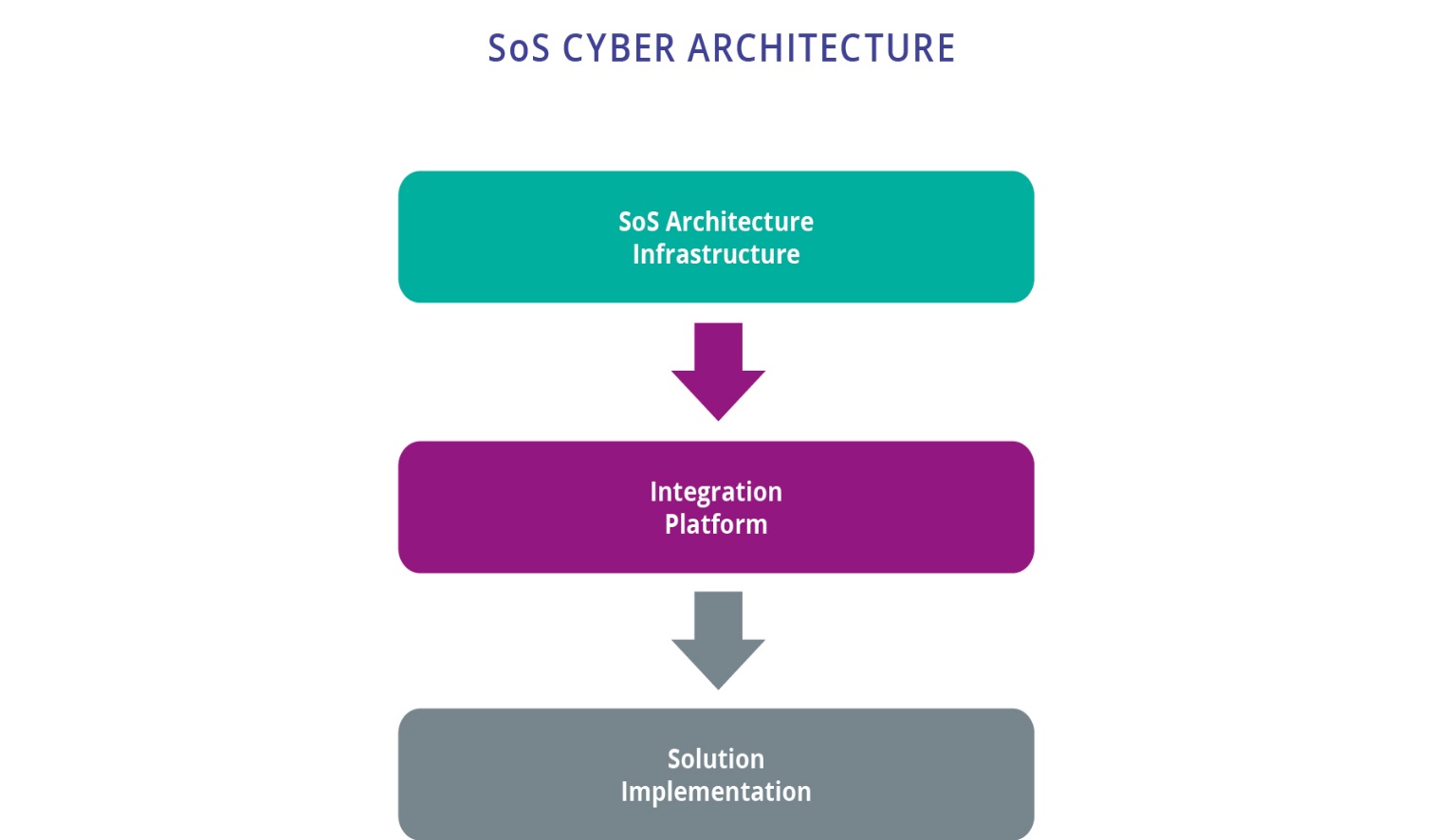
The SOA architecture infrastructure will provide, for example:
Fundamental SOA property support: Look-up, Late binding and Loose coupling
Service orchestration
Security and safety support
Interoperability support
System of Systems integration support
Basic engineering and operations support
Model-based engineering support
Chiplet development calls for new approaches to SOA integration with chiplet-system hardware. An emerging view is that chiplet integration can also be viewed as a SoS.
Using the SoS infrastructure, SoS platforms are created by vendors and larger companies. SoS platforms will be used for solution-specific implementations, engineering, deployment and operation.
To create added value, an SoS needs to be trustworthy, and here, e.g., end-to-end security issues have to be properly taken into account. A secure SoS should be able to defend against both deliberate attacks and accidental threats, and against its misuse. Moreover, it is not enough to ensure that each of the constituent systems is secure, safe and stable in the pre-deployment phase, but also that the evolved/composed/integrated SoS, whose exact composition may not be known in advance, is secure, safe and stable. Dynamic adaptation to, e.g., security, safety and stability requirements, as well as risk analysis should be considered over time in relation to emergent functionalities, properties and behaviors arising from the complex interactions among the constituents of the SoS. New methodologies and tools for risk and vulnerability assessment and threat modeling are needed. Artificial intelligence, machine learning and ontology- and semantics-based approaches can complement each other for improved knowledge and decision-making processes in an SoS structure. AI/ML can make predictions based on experience or training. Ontologies/semantics and knowledge graphs provide information enabling human- or machine-supported reasoning for various sorts of functional optimization and adaptations. Clearly, non-functional properties can be addressed similarly.
SoS will be deployed across computing infrastructure from the cloud to the very deep edge, enabling E2CCC. This calls for engineering and management capabilities supporting the edge-to-cloud compute continuum paradigm throughout evolution and the lifecycle. This will require additional SOA architecture infrastructure capabilities:
Compute orchestration
Deployment orchestration
Network orchestration
It is unrealistic to imagine that a single SoS infrastructure could drive an entire market because, considering the interdisciplinarity and complexity required to develop them, very seldom will a single vendor be able to provide a complete end-to-end and domain-independent solution. However, platform “competition” will at least have to identify a set of European solutions that covers key vertical domains. For key European vertical domains, an SoS has to address a multitude of cross-sectoral requirements such as security, safety, evolution, maintenance and trustworthiness. For example, security and safety certification issues at the component, system and SoS levels should be properly addressed with the aim of effectively mitigating risks/threats in competitive scenarios, while also considering the EU Cybersecurity Certification framework.
Recent advancements in interoperability, particularly information interoperability based on semantic integration, translators and AI approaches, open up advanced AI usage in complex SoS solutions such as complex products, production, and distributed infrastructures.
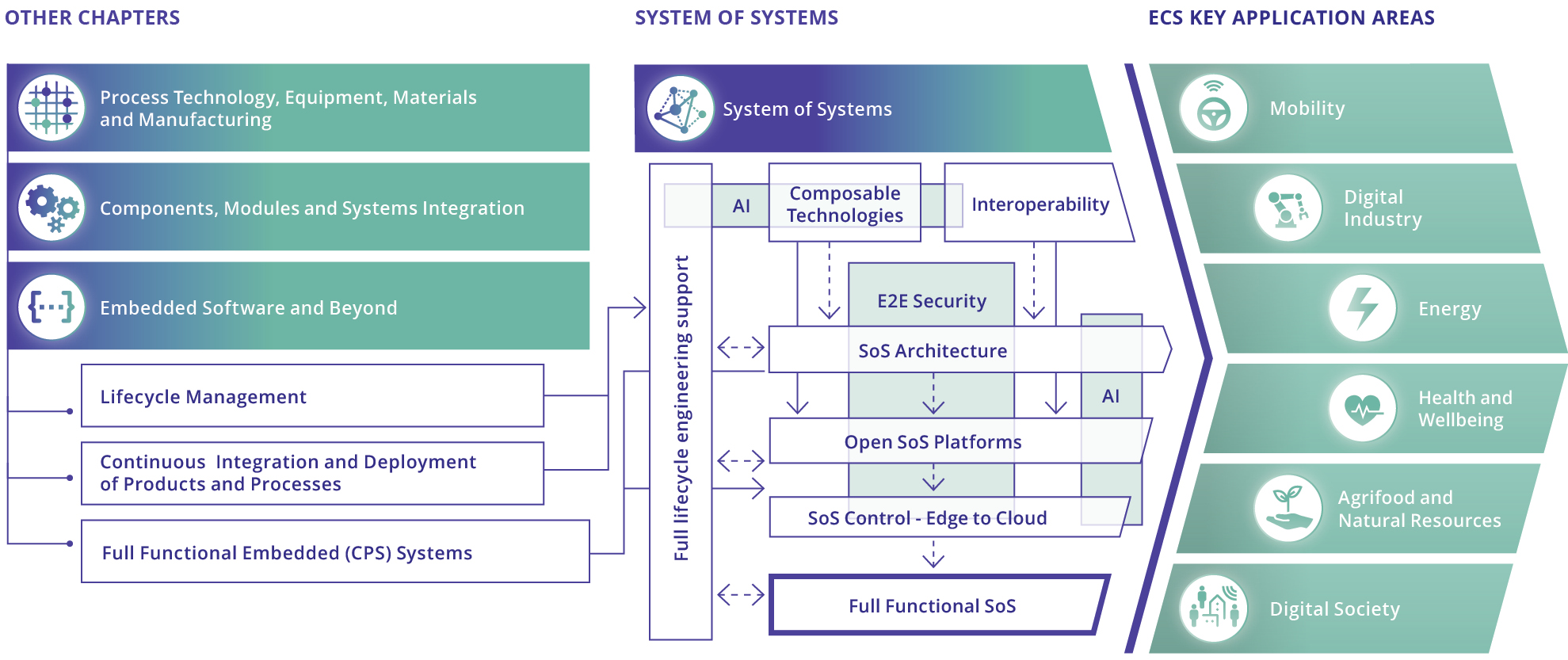
Figure 1.4.2 - Structure: System of Systems
1.4.2 Application breakthroughs
Improvements in SoS technology will have an impact on all ECS application areas. They will enable or support faster translation of ideas into economically viable solutions and might open new markets by further upscaling.
Examples of health and well-being application breakthroughs supported by SoS are:
Interoperability of health information.
Strengthening where and how healthcare is delivered, supporting home-based care.
Supporting the clinical workforce and healthcare consumers to embrace technology-enabled care.
High level of digital trust.
Information security technology for interoperability between secure hardware and software components.
Improved integration and analysis of multimodal data.
Integration platforms for embedded ultrasound, low-power edge computing, AI and digital health.
For the mobility application area, the provision of EU capabilities within SoS will support breakthroughs regarding:
Software-defined vehicle product engineering and life cycle evolution
Increased road safety through V2V information sharing
Improving the competitiveness of the European industrial mobility digitalization value chain.
Ensuring inclusive mobility for persons and goods by providing mobility access to everyone, with a focus on special needs.
In the energy application domain, the provision of improved SoS capabilities and engineering efficiency will support breakthroughs regarding:
Management of multi-domain coupling (electricity, heating / cooling, mobility) for the future all-electric society.
Supporting grid stabilisation through intermediate storage of renewable energy, peak control or viability management to increase energy flexibility.
Energy supply infrastructure for e-mobility, digital life, and Industry 4.0.
“Plug-and-play integration” of ECS into self-organised grids and multi-modal systems, real-time digital twin capability in component and complete system design (to simulate system behaviour).
Significant reduction and recovery of losses (application and SotA-related).
Increased functionality, reliability, and lifetime (incl. sensors & actuators, ECS HW/SW, semiconductor power devices, artificial intelligence, machine learning, monitoring systems, etc.).
Addressing safety and security issues of self-organised grids and multi-modal systems through smart edge devices and high-level IT security (resilient communications and trustworthy AI).
Optimisation of applications and exploitation of achieved technology advances in all areas where electrical energy is consumed.
Energy technologies in the circular economy approach: predictive and condition-based maintenance with repair and recycling capabilities.
Aligning with standardization of different energy systems.
In the industry and agrifood application domains, the provision of advanced SoS architectures, platforms and engineering automation will support the EU regarding:
Intelligent control room systems to enable correlations between machine malfunctions and load parameters to be detected immediately, thereby enabling maintenance work to be carried out early and on schedule, with a reduction in costly downtimes.
The food industry imposes specific requirements (e.g. in food processing) that may take advantage of smart (bio-)sensing for high-quality monitoring to reduce the amount of water and chemicals used in such processes, and to prevent contamination.
Semantically annotated data models enabling the use of advanced AI/ML technology for, e.g., intelligent decision-making, energy efficiency and product quality.
Remotely piloted autonomous unmanned aerial vehicles (UAVs), either flying alone or in swarms, to improve efficiency.
Smart systems based on portable real-time pest and disease diagnostics and monitoring platforms to provide rapid local and regional disease incidence alerts (georeferenced).
IoT devices specialising in pest and disease measurements, such as insect traps and other systems based on image recognition or AI models.
Large-scale and high-precision measurements of plant growth, architecture and composition.
IoT configuration and orchestration management that allows for the (semi)autonomous deployment and operation of a very large number of devices.
In the digital society application domain, the provision of improved, robust, secure and interoperable connectivity will support the overall strategy regarding:
Use energy and resources more efficiently within the existing installed base of industrial processes. Reduce or prevent waste.
By introducing AI into the design, manufacturing, production and deployment processes, productivity can be improved.
Collaborative product-service engineering, life cycle engineering: extending R&D to consider how products and systems will be integrated into the industrial service program of the company.
Remote engineering and operations, tele-presence: operating or assisting in operations of industrial systems from remote sites.
Local and global services: organizing services locally close to customers and centrally at vendors’ sites.
Edge/cloud solutions: implementing distributed service applications on effective edge-cloud systems.
Moving from SoS generations to evolvable SoS, extending solution life cycles.
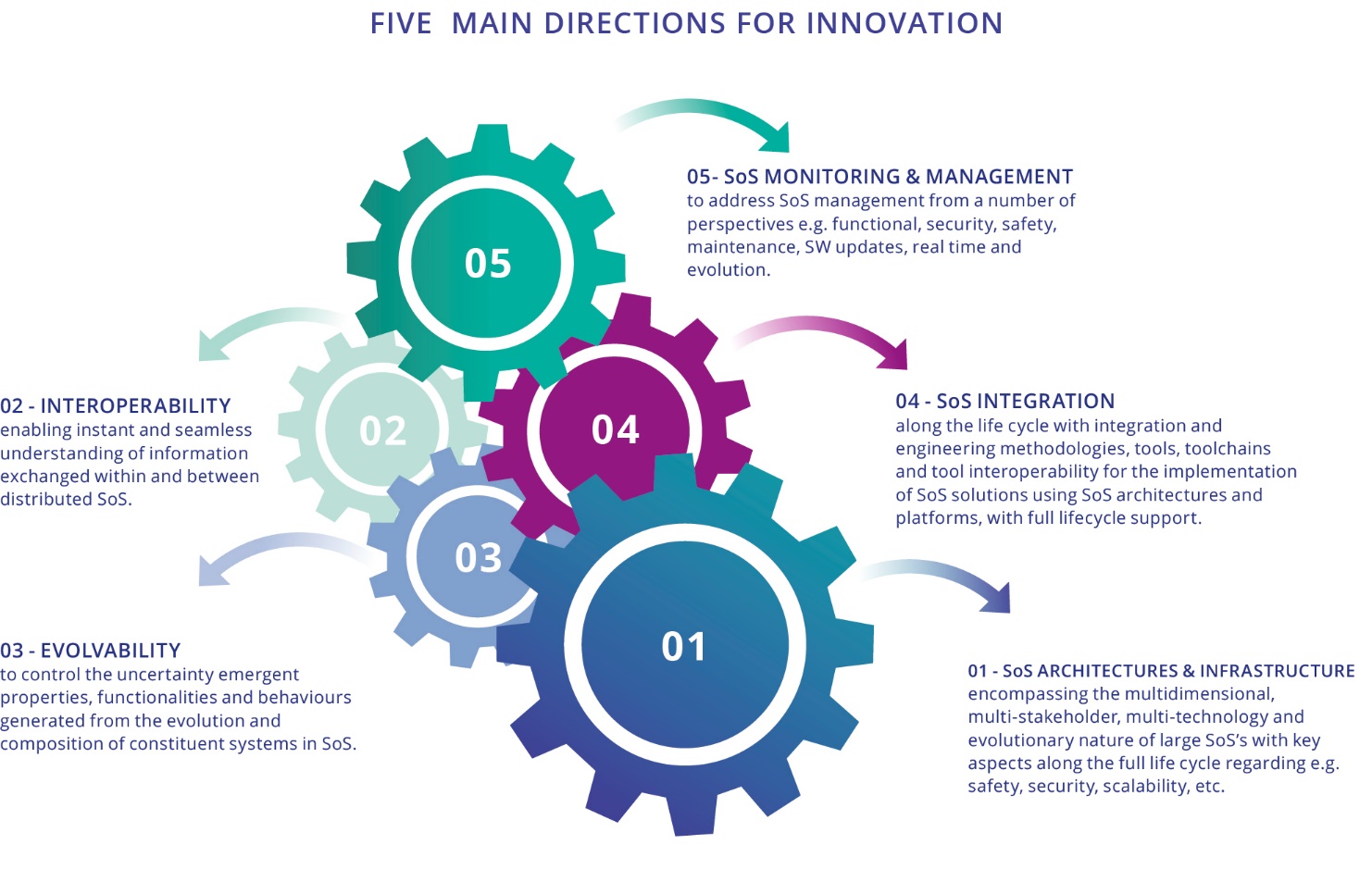
1.4.3 MAJOR CHALLENGES
Five major challenges have been identified for the System of Systems domain:
Major Challenge 1: Open SoS architecture and infrastructure.
Major Challenge 2: SoS interoperability.
Major Challenge 3: Evolvability of SoS composed of embedded and cyber-physical systems.
Major Challenge 4: SoS integration along the life cycle.
Major Challenge 5: SoS monitoring and management.
1.4.3.1 Major Challenge 1: Open SoS architecture and infrastructure
Open SoS architecture and infrastructure encompass the multidimensional, multi-stakeholder, multi-technology and evolutionary nature of large SoSs with key aspects along the full life cycle regarding, e.g., safety, security, scalability, interoperability, engineering efficiency, real-time performance, advanced control, QoS and distributed intelligence.
1.4.3.1.1 State of the art
SoS requires an architecture and available infrastructure that encompass the multidimensional, multi-stakeholder, multi-technology and evolutionary nature. Architecting a SoS is fundamentally different from architecting a single embedded system. The complexity of SoS architecting can be exemplified by the architecture of a complete smart city, with all its subsystems, stakeholders, technologies and evolutionary nature.
The current industrial state of the art consists of a couple of major commercial and proprietary information/communications/control/technology platforms offering industrial solutions for complex systems from companies such as Schneider Electric2, Siemens3, Bosch4, Emerson5, ABB6, Advantech7, AUTOSAR. These proprietary digital platforms, at various levels, support design, implementation and operation of SoS architectures tailored for dedicated solutions in sectors including, e.g., manufacturing, water and wastewater, minerals and mining, oil and gas, energy sectors, smart cities and automotive. It is also clear that the fundamental computer science basis for these products is quite old.
The current industrial state-of-the-art SoSs are based on extensions to existing major enterprise resource planning (ERP), manufacturing execution system (MES), supervisory control and data acquisition (SCADA), distributed control systems (DCS), robot controllers (RC), computer numerical controllers (CNC), and programmable logic controllers (PLC) products. Such extensions are mostly based on a central service bus concept. Such service buses are responsible for integrating legacy ERP, MES, SCADA, DCS, RC, CNC and PLC technologies from multiple vendors with cloud-based solutions. For emerging SoS application areas such as autonomous driving, smart energy grid, smart agriculture and smart cities, the SoS technology is still in an emerging phase.
To take the next step, Europe and other regions have invested in a number of open SoS integration frameworks and platforms. The approach is moving from classical Operational Technology (OT) towards extensive use of IT technology from cloud to edge. Europe has been building from the current edge towards the cloud while competing regions have taken the cloud and IT technology as the starting point for distributed automation. 8A summary of such platforms and frameworks is shown in Figure 1.4.4.
In general, the spectrum of systems making up an SoS includes both systems in the cloud, where security can be closely monitored as, e.g., in data warehouses, and systems at the edge. Edge systems pose a higher level of cyber insecurity because of the limited resources often available at the edge (e.g. power, communication bandwidth).
Most platform initiatives are based on Service-Oriented Architectures (SoA) and microservices, which points to a primary technology for such platforms. Although none of these open SoS platforms are currently in wide commercial usage, early examples can be found in small IoT solutions in various application areas. Major industrial usage remains rare, but MES-level adoption can be found in automotive production, for example.
Open architectures and reference implementations such as the IMC-AESOP approach9, Eclipse Arrowhead10, Eclipse Basyx11, FiWare12, PERFoRM3013 provide a link to standardisation activities in national and international innovation platforms. In the automotive domain, AUTOSAR is developing in the microservice direction. Such standardisation activities include, e.g., DIN Specification 9134514 “Reference Architecture Model for Industry 4.0” (RAMI 4.0), the “Industrial Internet Architecture” (IIA), the “High Level Architecture of the Alliance for Internet of Things Innovation”, the “NIST Big data Reference Architecture”, to name just a few. To further support E2CCC, compute, deployment and network orchestration are important. Here open architectures and 15reference implementations such as ColonyOS and OpenSlice16 are important emerging technologies beyond, e.g., Kubernetes17.
Europe has strongly invested in large projects that have delivered open platforms for the implementation of solutions based on SoS platforms18. Considering the platforms referred to in Figure 1.4.4, Eclipse Arrowhead, AUTOSAR, FiWare and BaSyx have all been developed with substantial European leadership and partnership.
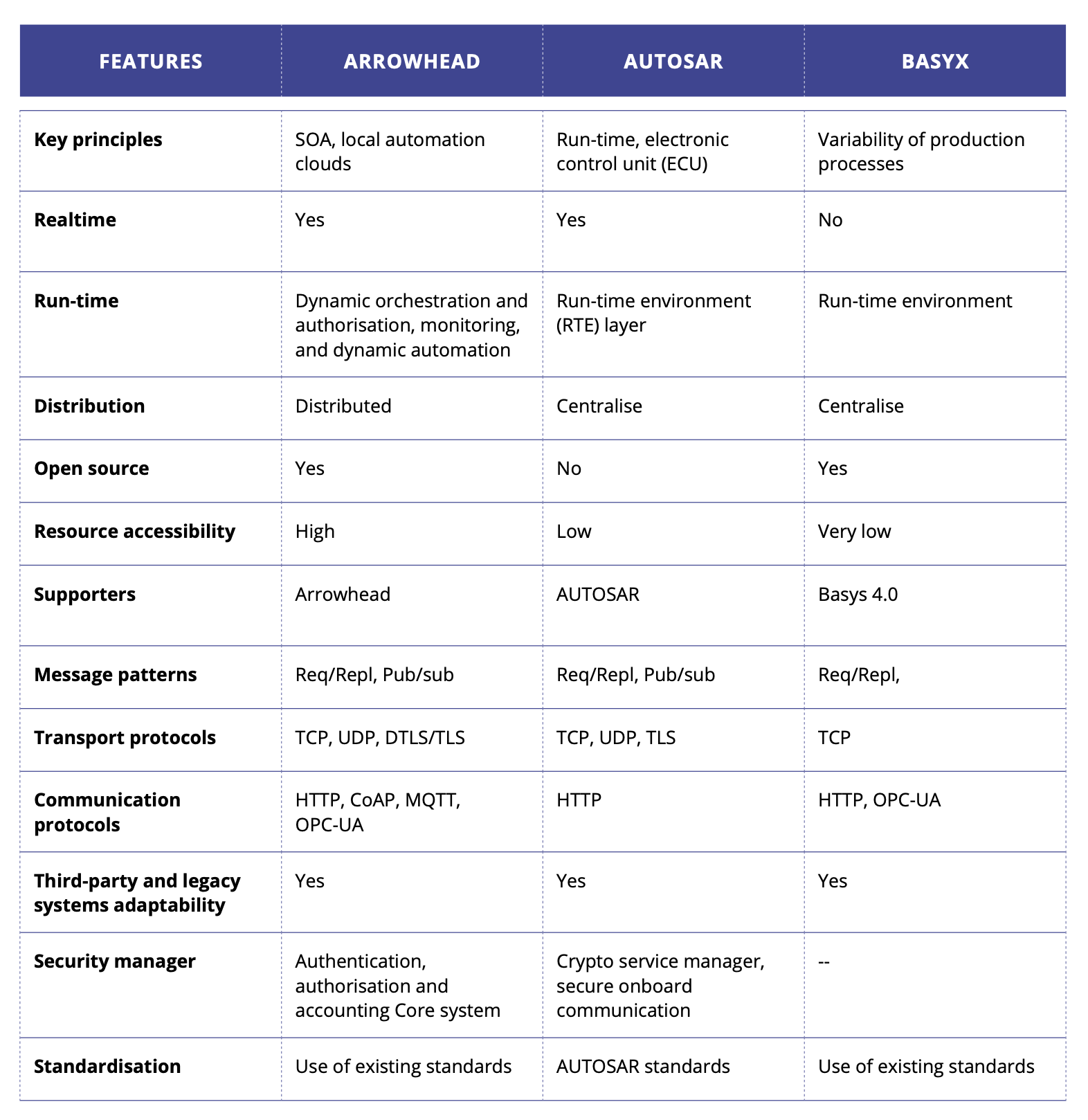
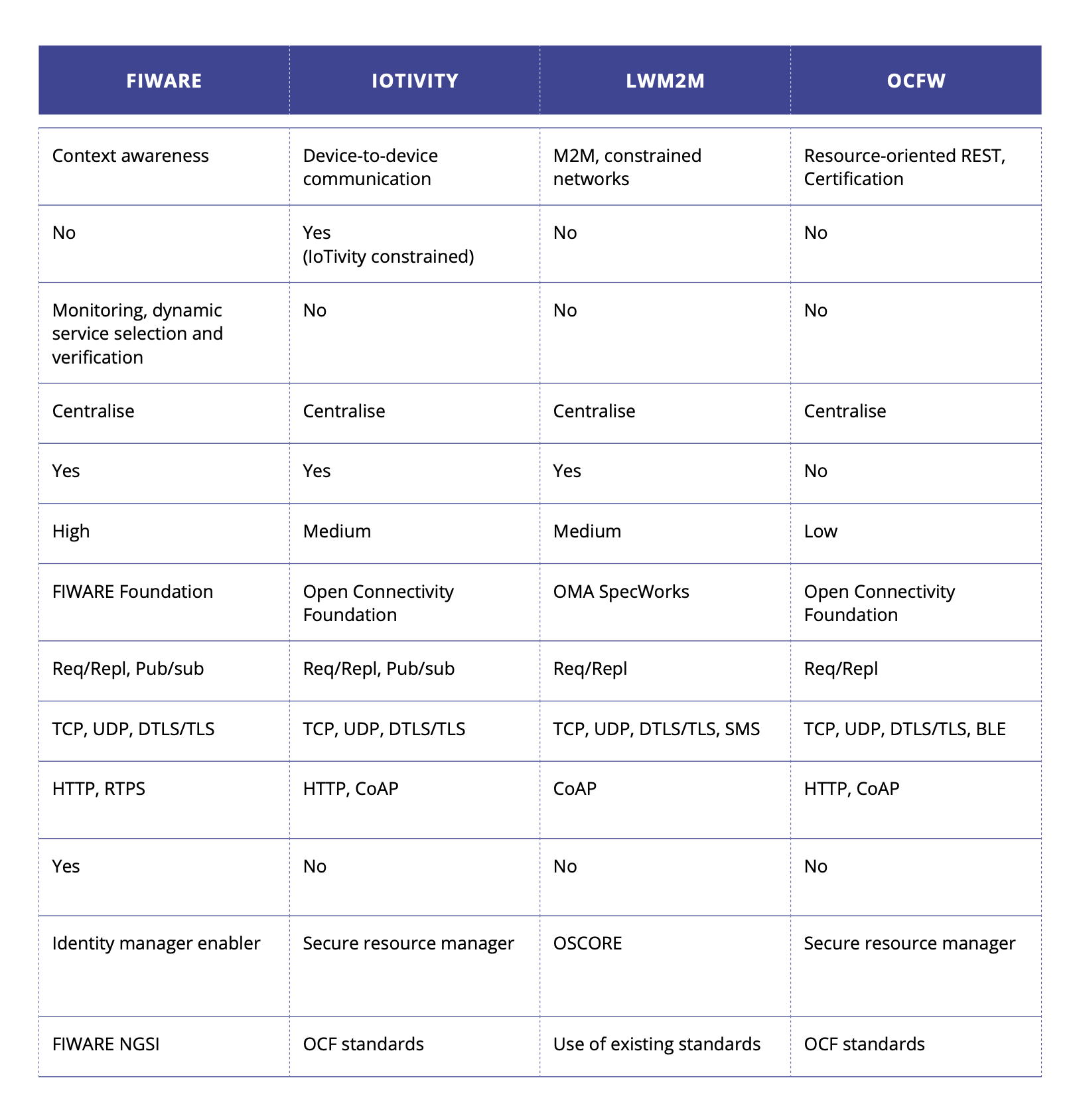
Figure 1.4.4 - Open SoS integration frameworks and platforms19
For cross-domain requirements on, e.g., security, safety and evolution, application- and business-critical details need to be considered. As an example thereof, security takes on new dimensions in the case of SoS. In this Chapter, security is taken to be the ability to prevent leaking information and to prevent the taking over of control of the SoS by agents that are not part of the SoS, but also to guarantee that no hostile party can prevent the sharing of essential information between the systems comprising the SoS. Several security aspects require attention. First, the level of security of each individual system requires attention: the lower bound to security of an SoS is determined by the system with the lowest security level, and by the link with the lowest security level between systems (“weakest link in the chain”). Thus, requirements such as Quality, Reliability, Safety and Cybersecurity at the system and SoS levels are covered in Chapter 2.4 of this ECS-SRIA.
However, combining a very large number of systems in an SoS can result in a lower overall security level than the lowest security level of any system in the SoS: an attacker can now combine and relate information from two or more systems, which in combination can reveal new information. Segmentation of an SoS is thus of great importance both for architecture and for actual implementation, maintenance and lifecycle updates.
A growing concern is the inherent stability of SoS from a local to a global perspective. A key question is: how to engineer for SoS stability along the life cycle? Systems must not only defend against and monitor possible attacks, but also provide measures to ensure that SoS evolution will preserve local or global SoS stability.
Another aspect is SoS safety. Here, architectures and platforms need to address safety from various application domains and their respective standards and regulations. More details related to the ECS application domain requirements on Quality, Reliability, Safety and Cybersecurity at the system and SoS levels are covered in Chapter 2.4 of this ECS-SRIA.
1.4.3.1.2 Vision and expected outcome
This Major Challenge is expected to lead to a set of EU-strategic open SoS architectures and infrastructures. From such infrastructures, vendor and large-company platforms can be devised, capable of supporting a wide range of solutions in diverse application fields covering the ECS supply chain and supporting efficient life cycle management.
This requires new and improved infrastructure technologies comprising:
Robust design- and run-time infrastructure enabling integration and orchestration of functionalities from edge to cloud, E2CCC.
Infrastructure support for multi-level security, security management, safety, safety management, scalability, engineering efficiency, real-time performance, closed-loop and digital control, QoS, distributed intelligence that is energy-aware and event-driven, enabling scalable deployment of energy-autonomous sensing nodes and neuromorphic processing across large-scale infrastructures.
Autonomous information and connectivity interoperability addressing both OT and IT technologies.
Support for autonomous operation, resilience, failover and mitigation management.
Enabling SoS flexibility.
Engineering support through model-based engineering and associated domain-specific languages (cf. Chapter 2.3 Architecture and Design: Method and Tools).
The expected outcome is a set of EU-strategic open-source platforms. These infrastructure platforms should have long-term governance with industry-friendly licensing schemes such as Eclipse ECL2. Such platforms should also have strong EU-based value chain support.
To cope with increasing complexity, the SoS engineering community is constantly researching improvements to its engineering processes. To ensure that the complexity remains manageable, modeling approaches are used. The challenge in these approaches is to find the right level of abstraction that also allows for reasoning about the system while still containing sufficient information to connect to lower levels of abstraction, often by generating code for some underlying implementation platform.
It is not only that the complexity of the SoS is growing, but there are also often interlinked extra-functional requirements that play an increasingly important role. For example, with the demand for greater speed and the concomitant energy consumption, systems are often required to process information quickly but within a tight energy budget. These two requirements are clearly conflicting and choosing the right trade-off can be a balancing task. With the realisation that the planet’s resources are limited, as exemplified in the European Green Deal, also comes the demand for resource conservation, resulting in more numerous and intertwined requirements, putting greater demand on the dynamic and evolution capabilities of both the SoS architectures and the architecture tools that support the complexity of SoS.
Some important but necessary aspects of SoS architecture are:
Security and trust,
Safety,
Robustness,
Composability,
Evolution,
Autonomous interoperability -- seamless integration of data models enabling scalable exchange and machine understanding of information
Edge to Cloud Compute Continuum, E2CCC
Engineering tools and procedures,
Energy consumption,
Unified environmental data model,
Environmental footprint optimisation,
Resilience.
1.4.3.1.3 Key focus areas
The key focus is how SoS architectures and their open infrastructure can enable and leverage important and necessary aspects while also enabling efficient adaptation to specific application solutions.
To support EU strategic autonomy, a small number of SoS architectures and integration platforms should be driven by EU-based ecosystems. Important features that such platforms should provide include:
Robust SoS infrastructure capable of supporting a wide range of solutions in diverse application fields from edge to cloud,
SoS infrastructure and associated engineering tools and toolchains that support the complete engineering processes in both design- and run-time, including SoS critical aspects such as information interoperability, security, safety and risk mitigation,
Suitable and adaptable engineering processes, with associated training material for solution engineering.
Methods for the handling of (often wide-spread) legacy elements, e.g. as black box models.
1.4.3.2 Major Challenge 2: SoS interoperability
SoS interoperability enables instant and seamless understanding of information exchanged within and between networked and distributed systems.
1.4.3.2.1 State of the art
Interoperability in the SoS domain is a rising problem for cost-effective engineering and operation of systems of embedded and cyber-physical systems (see Figure 1.4.5).
There is currently no widespread industrial solution to this problem. Academia and industry are experimenting with approaches based on, for example, ontologies20, machine learning21, model-based engineering and open semantic frameworks22. Even if no clear winning approach can be identified based on current research results, growing interest can be noted in, e.g., ontology, data and model-driven approaches. Automating considerable parts of interoperability engineering (design-time and run-time) will improve SoS operational quality and will be very cost-efficient. Recent developments in semantically based data model integration show very promising results and growing industrial interest. It is clear that semantically annotated data will help AI models to produce more accurate results, which will enhance the value of AI usage.
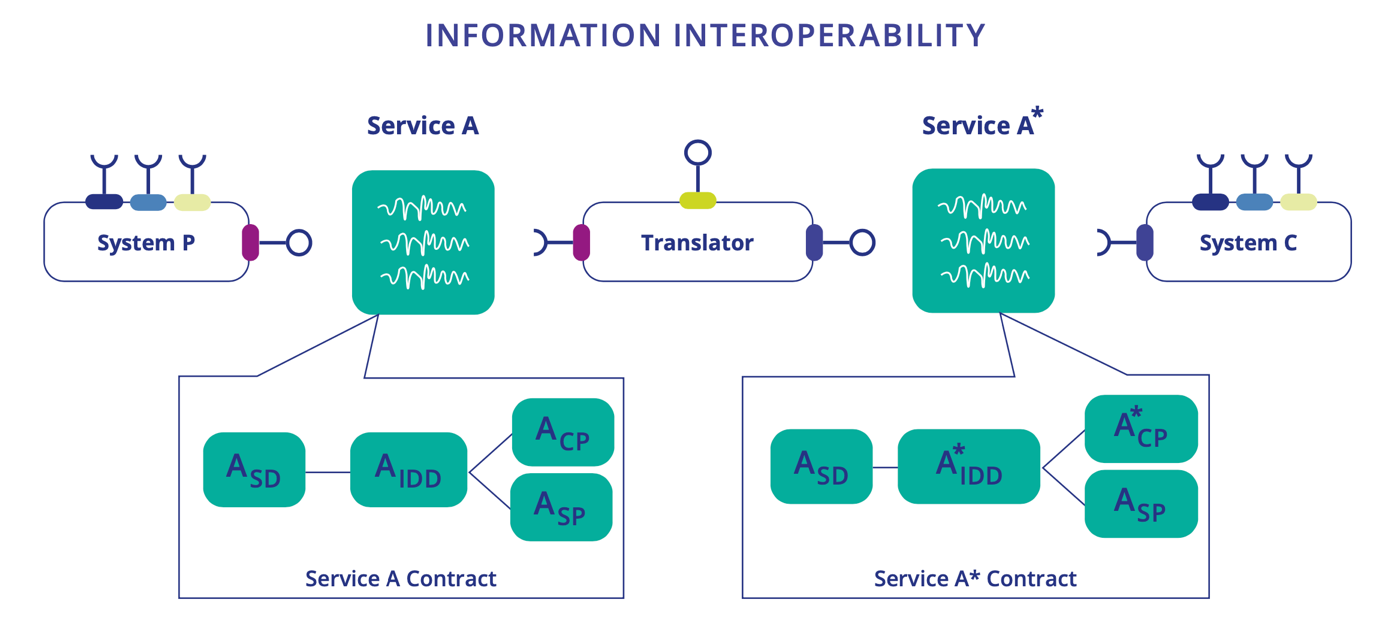
Figure 1.4.5 - Information interoperability between two service providers can be addressed by means of translators. The design of such translators for the payload information is currently necessary for every situation where interoperability is requested.
1.4.3.2.2 Vision and expected outcome
To enhance EU leadership and sovereignty in the field of SoS based on embedded and cyber-physical systems, autonomous information translation for understanding is a necessity. Some integration platforms already focus on protocol and information interoperability (Derhamy, 201823). To enable the cost- and time-efficient engineering of solution integration and extension, updates and upgrades over the lifecycle are crucial. Therefore, SoS integration platforms have to provide mechanisms for dynamic and instant information translation across the ontologies and semantics used by the individual constituent systems of the SoS.
1.4.3.2.3 Key focus areas
To facilitate substantial cost reductions for SoS solutions, autonomous and dynamic mechanisms for information translation are required. Such mechanisms should cover:
Translation and integration between standardised data models (e.g. ISO 1030324, ISO 1592625, BIM26).
Translation and integration between different implementations of standardised data models.
Automated data model translation and integration.
Autonomous data model translation and integration.
Efficient and flexible engineering procedures.
Engineering tools that support the complete engineering process in both design- and run-time.
Support for key automation requirements.
Automated translation and integration engineering, e.g., AI-driven, model-based code generation.
1.4.3.3 Major Challenge 3: Evolvability of SoS composed of embedded and cyber-physical systems
The intrinsic nature of SoS is dynamic and SoS evolve with components, functions and purposes added, removed, and modified along their continuously evolving lifecycle (a life cycle that potentially never finishes). An SoS has properties, behaviours and functionalities that mainly do not reside in any constituent system but in the SoS as a whole and allow the SoS to achieve its own goals. These properties, functionalities and behaviours at the SoS level emerge in a direct relationship to the SoS evolution and, being potentially unknown, must be governed, with monitoring and management are key ingredients. Because the results of the composition/evolution could be uncertain and unstable, SoS architectures and platforms, both open and proprietary, in conjunction with the proper engineering support (methods and tools), should provide solutions to manage the evolution and resulting uncertainty, emergent properties, stability, functionalities and behaviours.
1.4.3.3.1 State of the art
Evolvability and composability are multi-dimensional aspects of SoS evolution that affect SoS architectures, properties, functionalities and behaviours from different perspectives (evolvability, trust, interoperability, scalability, availability, resilience to failures, etc.). Primarily, composability must ensure the persistence of the five major attributes that characterise an SoS (see Maier, 199827). Vertical (hierarchical) composability provides the most common way to build an SoS that is typically structured in a hierarchical stack composed of adjacent layers. Vertical composability has to deal with the different abstraction levels of the stack layers, adopting aggregation and de-aggregation solutions as references to compose the constituent systems of the SoS. Architectural composability, on the other hand, is fundamental for SoS design, specifically when critical requirements such as trust or safety must be satisfied (see Neumann 200428, for an extensive report on trustworthy composable architectures).
In the hierarchical structure of an SoS, the constituent systems that are at the same level typically compose horizontally (in parallel or serially), potentially generating competing chains of constituent systems. Serial composability represents a critical issue for all properties that are not automatically transitive, such as trust. Indeed, the inclusion of AI in embedded and cyber-physical systems increases the required level of trust, as well as the uncertainty of the results of the composition process (see, for example, Wagner, 201529).
When the constituent systems expose high-level services, service composability allows for the creation and provision of new added-value services at the SoS level, combining the resources, functionalities, information, etc., of the constituent systems. Eventually, the engineering process deals with composability, enabling it by design (already present from the constituent systems level) and/or managing it during the operation of the SoS, to address the dynamic nature of SoS over time (run-time composability associated with evolutionary development and potential emergent properties, behaviours, and functionalities).
A rising question for evolving large and complex SoS is stability, locally and globally. Technology to provide SoS stability will be increasingly important as our SoSs grow in size.
1.4.3.3.2 Vision and expected outcome
The dynamic nature of SoS is based on the composition and integration of embedded and cyber-physical systems. The role of composability is to ensure that functional and extra-functional properties (scalability, quality of service (QoS), performance, reliability, flexibility, stability, etc.), and the functionalities and behaviors of the constituent systems are preserved in the SoS or combined in a predictable and controlled way, even when the constituent systems recombine dynamically at run time. The lack of solutions to dynamically manage composability represents one of the limitations hindering the market uptake and diffusion of SoS.
Composability should be conceived as a quality of SoS that makes them future-proof: (i) the relationships between components that allow them to recombine and assemble in different and potentially unlimited architectural combinations, and ensure and exploit the re-use of components; (ii) the extension of component lifetimes within the evolution of the SoS during its lifecycle; (iii) the possibility that SoS will easily evolve, adapting to new contexts, new requirements and new objectives; and (iv) the simple substitution of faulty, inadequate and/or new components with a minimal impact on the SoS, guaranteeing the survival and sustainable evolution of the SoS. Composability also has to consider cross-sectoral requirements such as security, safety, stability, trust, evolution.
Ensuring composability at the SoS level represents a very challenging goal, potentially generating serious and critical consequences, and even preventing the integration of the SoS. Indeed, considering a property that characterizes a constituent system with a certain attribute, it is not guaranteed that the same property will characterize it when the constituent system becomes part of an SoS. In addition, if the property is still present, it is not guaranteed that it will have the same attribute. The same applies to the constituent system’s functionalities, behaviors, etc.
As a consequence, one major effect of the composition, integration and evolution of the constituent systems is the evolution of the SoS, with emergent properties, functionalities and behaviors that generate uncertainty. For instance, when SoS evolution affects security, safety, trust, interoperability, scalability, availability, resilience to failures, etc., the impact of the uncertainty could potentially be extremely serious.
The inclusion of AI in SoS increases the importance of composability, because it may significantly increase the complexity, variability and fuzziness of composability results. AI enables a completely new category of applications for SoS. Therefore, the availability of specific solutions for the validation, verification and certification of SoS composed of AI-based systems is a critical requirement.
Predicting and controlling the effects of composability is also fundamental for human interaction along the SoS lifecycle. The protection of human life should be ensured during SoS evolution. Uncontrolled and unmonitored composition could lead to deviations from expected behaviors or generate unknown emergent behaviors potentially dangerous for humans. The increasing level of automation introduced by SoS accentuates this criticality, and will require that humans still intervene in cases of emergency (for example, in automated driving).
The solutions proposed to manage composability will also have to support the multi-domain nature of SoS, the presence of different stakeholders in its lifecycle, and the different regulations and standards that apply to these domains. From an engineering perspective, emergent behaviors require that SoS development, when applying composability, is evolutionary and adaptive over the continuously evolving SoS lifecycle, which may potentially never finish. In fact, SoS architectures and platforms, jointly with the proper engineering support, will have to provide solutions to control the uncertainty of evolvability and ensure adequate countermeasures.
1.4.3.3.3 Key focus areas
Since the technology base and the organizational and human needs are changing along the SoS lifecycle, SoS architecting will become an evolutionary process based on composability. This means: (i) components, structures, functions and purposes can be added; (ii) components, structures, functions and purposes can be removed; or (iii) components, structures, functions and purposes can be modified as the owners of the SoS gain experience and use the system. In this sense, the dynamically changing environmental and operational conditions of SoS require new architectures that address the SoS goal(s), but thanks to composability will also evolve to new system architectures as the goal(s) change.
Evolution in SoS is still an open research topic requiring significant effort, and the key areas of research and innovation include:
Methods and tools for engineering evolvability of systems of embedded and cyber-physical systems, e.g. AI-driven, model-based (cf. Chapter 2.3. Architecture and Design: Methods and Tools).
Evolutionary architectures in systems of embedded and cyber-physical systems.
Evolvable solutions for trust, availability, scalability, and interoperability.
Evolvable solutions capable of managing resulting uncertainty, emergent properties, functionalities and behaviours, including resilience to failures.
Evolvability in systems of cyber-physical systems through virtualisation, e.g. digital twins.
SoS evolution stability.
Governance of SoS evolution.
Methods and tools to manage emergencies in embedded and composable systems of cyber-physical systems.
Service-based vertical and horizontal evolvability to enable high-level, and potentially cross-domain, interoperability of embedded and cyber-physical systems.
Autonomous machine evolution through self-engineering, verification and validation.
1.4.3.4 Major Challenge 4: SoS integration engineering along the life cycle
Integration and engineering methodologies, tools, tool chains and tool interoperability are fundamental for enabling the implementation of SoS solutions using SoS architectures and platform technologies, supporting the whole lifecycle.
1.4.3.4.1 State of the art
Europe is a world leader in the engineering of systems of systems. Major European companies such as Siemens, ABB, Schneider, Valmet, Bosch and Endress+Hauser, together with a number of large system integration companies (e.g. Afry, VPS and Midroc), offer complete engineering solutions, making Europe the leading global automation SoS provider.
Most solutions for embedded and cyber-physical systems engineering are based on highly experienced teams of engineers supported by a heterogeneous set of SoS engineering tools. Engineering practice and associated standards provide design-time solutions based on, for example, IEC 61512 (ISA 88)30, IEC 62264 (ISA95)31, IEC 8134632, ISO 10303, ISO 15924, IEC 6289033. The proposed Industry 4.0 architectures, formally provided by the DIN specification 91345 RAMI 4.0, have not yet made it into industrialized engineering procedures, or associated tools and toolchains. Many of these standards are investigating updates of their data models to be based on, e.g., ontologies and the semantic web.
The current state of the art in SoS engineering remains more an art than a well-structured integration and engineering process. For example, the analysis of emergent behaviour of very large SoS is still at a foundational research level in academia.
1.4.3.4.2 Vision and expected outcome
The European leadership in application fields such as distributed automotive and industrial automation and digitalisation indicates some excellent skill sets in the art of SoS engineering. In the short to medium term, Europe has to transfer these skills into systematic and robust engineering procedures supported by integrated and efficient tools and tool chains. Please also refer to Chapter 2.3 and Chapter 1.3.
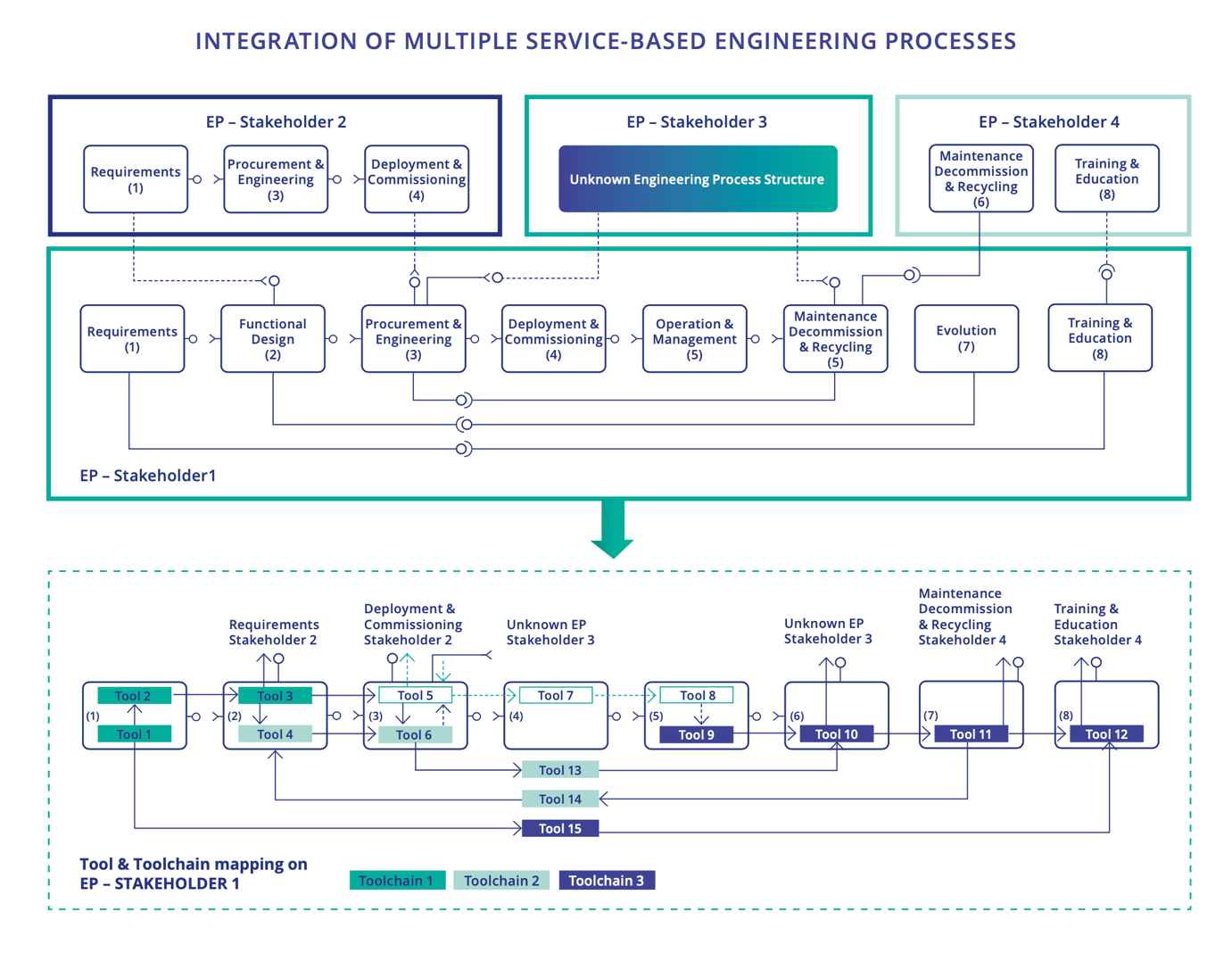
This is expected to lead to engineering processes, tools and tool chains covering the whole life cycle that can, to a significant extent, be automated or even become autonomous, while supporting integration between multiple stakeholders, multiple brands and multiple technologies. To support such integration and engineering efficiency, 34solution quality and sustainability, concrete advancements such as those in Figure 1.4.6 will become necessary. These advancements may include integration and engineering process capabilities such as:
Flexible integration and engineering procedures.
Model-based engineering procedures and tools,
Supported by interoperable and flexible toolchains.
Integration of multi-stakeholder engineering processes.
Automation of substantial parts of the integration and engineering process.
Autonomous machine self-engineering, verification and validation
1.4.3.4.3 Key focus areas
In support of EU leadership and sovereignty in the field of SoS engineering, the ambition is to invest in a small number of architectural infrastructures and their associated tools, tool chains and engineering processes. Strong European-based ecosystems should be created and provided with long-term governance, also connected to open source. These engineering processes, methodologies, tools and toolchains shall provide, for example:
Efficient, flexible and automated engineering processes.
Model-based engineering.
AI-supported engineering tools and processes
Engineering tools supporting the complete engineering process along the system's lifecycle.
Support for key automation requirements.
Automated engineering, low-code engineering.
SoS traceability and analytics interoperable with engineering tools and tool chains.
SoS evolution impact analysis.
Automated testing, validation and verification (TV&V) along the life cycle.
Autonomous machine self-engineering, verification and validation
In particular, SoS TV&V introduces significant challenges, mainly due to complexity, the effects of composition (not always known in advance), and the dynamic evolution of SoS over time. For SoS, a full TV&V procedure prior to deployment is practically unrealistic. Typically, the TV&V of each constituent system is asynchronous and independent of SoS, challenging SoS TV&V as features and capabilities evolve. For this reason, a structured framework, methodology and tools are necessary to demonstrate an appropriate level of confidence that the feature under test is present in the SoS, and that no undesirable behaviours are present. This implies a need for end-to-end system capability metrics and, according to the flow of data, control and functionalities across the SoS, additional test points, recurring tests and AI-empowered data collection. This analysis should be considered when addressing changes in the constituent systems and receiving feedback on anomalous behaviours.
1.4.3.5 Major Challenge 5: SoS monitoring and management
Management of SoA-based SoS will require structured and scalable approaches to status monitoring and strategies and methodologies to address SoS management from a number of perspectives, e.g., functional, security, safety, maintenance, SW updates, real-time and evolution. It is clear that a high degree of automation and autonomy needs to be introduced to keep quality up and cost down. Management and monitoring of SoS play a particularly crucial role when application faults result in personal injuries or property and environmental damage: e.g., critical infrastructures (electric grid, rail network), connected (semi)-autonomous automotive systems, medical monitoring, industrial plant control systems, robotics and autopilot avionics.
1.4.3.5.1 State of the art
Current industrial state of the art for monitoring and management of SoS reflects practices used in the monitoring and management of production automation, energy grid automation and similar systems. Looking closer, we find a plethora of commercial application solutions tailored to specific applications. Many of these are very application- and site-specific and “home-brewed”.
There is a wide range of realms to be monitored and managed, ranging from modern production processes, smart grids, smart cities, automotive traffic networks, to name only some of them. Furthermore, the operation of each of these realms requires different competences and groups within an organization, and follows different guidelines. Some examples are:
Status of operation
Safety
Real-time performance
Real-time monitoring of sensors and actuators, incl. fault detection and isolation
Validation of signals (using redundancies created by the data network of the SoS)
Control
Maintenance
Assets
Security
Detection of deviations from expected system behaviors
These aspects have more or less known and understood relationships/dependencies that will also change at run time. This provides a monitoring and management landscape that is very heterogeneous and dynamic. As a result, management methodologies need to be supported by automated and autonomous control technology. In this context and in view of limiting data traffic in an SoS, synchronization of systems becomes a major goal as it is directly linked to the stability of the management system.
In addition, management of complex cyber-physical SoSs must address scalability (i.e. to deal with a variable number and interconnections of systems and automated control loops) and network phenomena (such as computation/communication latency, data loss). Looking at the aspect of data management, open SoS control platforms should ensure information security management, SoS scalability, SoS engineering efficiency and also SoS real-time performance.
A wide set of tools is available, each supporting one or a few of these dimensions. In most cases these tools mandate underlying information sources and data models, which sometimes correlate with current major industrial standards such as ISA95, BIM, ISO 15926 and ISO 10303.
In summary, this is a very complex and heterogeneous landscape of largely non-interoperable tools and methodologies, with little or no capacity to be integrated across SoS dimensions.
1.4.3.5.2 Vision and expected outcome
The increasingly close digital integration of industrial and societal functionalities and domains requires SoS integration and associated monitoring and management in very complex and heterogeneous environments. The current state of the art is far from efficiently enabling this. Enabling this will require closer cooperation and integration between several levels of the ECS domain stack and societal policies and governance. An example thereof is the integration and functional interoperability between open and proprietary SoS architecture and implementation platforms that reside under different jurisdictions. Here, solution requirements for lifecycle and evolution also need to be considered.
Emerging outcomes are systems or SoS that exhibit plasticity behaviors like those of biological neural systems.
1.4.3.5.3 Key focus areas
To advance towards the vision, technology and knowledge steps are required regarding:
Monitoring and management strategies and architectural concepts in OT-IT environments.
Methodologies and technologies for monitoring and management of multiple and interrelated SoS dimensions.
Processes and technology for life cycle monitoring and management across SoS dimensions and societal borders.
Engineering support, tools and methods for monitoring and management strategy and policy implementation
Tools for control system analysis of SoS.
Considering humans, environment and the economy in the loop.
Engineering tools and methods for SoS control design.
Reduction of communication effort, variable structure, variable number of systems in control loops.
Autonomous system testing, validation and verification (TV&V) in design and run-time.
1.4.4 TIMELINE
The following tables illustrate the roadmaps for System of Systems.
| MAJOR CHALLENGE | TOPIC | SHORT TERM (2027–2031) | MEDIUM TERM (2032–2036) | LONG TERM (2037 and beyond) |
|---|---|---|---|---|
| Major Challenge 1: SoS architecture and open integration platforms | Topic 1.1: Robust SoS integration platform capable of supporting a wide range of solutions in diverse application fields | Open SoS platforms validated in multi-vendor industrial deployments, with secure orchestration and measurable integration effort. | Bounded autonomous operations, including M2M transactions, qualified with explicit policies and recovery. | Self-reconfiguration validated across independent operators with assured safety and rollback. |
| Topic 1.2: integration platform and associated engineering tools and toolchains that support the complete engineering process in both design- and run-time, including SoS critical aspects such as security, safety and risk mitigation | Lifecycle toolchains demonstrated for traceable safety, security, energy and environmental requirements. | Cross-vendor lifecycle management qualified across deployment, maintenance and component replacement. | Bounded autonomous trade-off management validated against explicit functional and extra-functional constraints. | |
| Topic 1.3: suitable and adaptable engineering processes with training material for solution engineering | Model-based and AI-assisted engineering workflows validated in representative projects, with reproducible training and competence assessment. | Engineering automation qualified across interoperable modelling, simulation and deployment tools. | Automated engineering qualified for selected multi-domain SoS classes with independent verification. | |
| Major Challenge 2: SoS interoperability | Topic 2.1: Translation between standardised data models e.g. ISO 10303, ISO 15926, BIM, … | Selected standardised-model mappings demonstrated in operational pilots with semantic consistency and provenance checks. | Cross-standard mappings qualified within defined domains, with automated validation and exception handling. | Bounded standard/legacy translation qualified with explicit information-loss and trust controls. |
| Topic 2.2: Translation between different implementations of standardised data models | Conformance-tested translation between implementations of standardised models, including version and unit consistency. | Cross-domain exchange qualified for selected standards and profiles. | Legacy and proprietary model adapters qualified through governed semantic mappings. | |
| Topic 2.3: automated data model translation | AI-assisted generation of model translations validated against curated mappings and test cases. | Automated translation pipelines qualified with regression tests and review of ambiguous mappings. | Continuous translation maintenance validated under evolving schemas and provenance requirements. | |
| Topic 2.4: autonomous data model translation | Runtime translation demonstrated for bounded vocabularies, with confidence thresholds and safe rejection. | Autonomous translation qualified for selected standardised models under monitored policies. | Cross-domain runtime mediation qualified with semantic validation and controlled fallback. | |
| Major Challenge 3: Evolvability of SoS composed of embedded and cyber-physical systems | Topic 3.1: methods and tools for engineering evolvability of systems of embedded and cyber- physical systems | Engineering methods validated for preserving constituent independence and specified composition constraints during updates. | Contract-based composition analysis qualified for selected functional and extra-functional properties. | Runtime composition assurance validated for bounded reconfiguration; no claim of universal predictability. |
| Topic 3.2: evolutionary architectures in systems of embedded and cyber-physical systems | Modular architectures validated through replacement and upgrade of heterogeneous constituent systems. | Evolvability-by-design qualified using interface contracts and lifecycle impact analysis. | Automated composition analysis qualified at design time and for controlled runtime adaptation. | |
| Topic 3.3: evolvable solutions for trust, availability, scalability, and interoperability. | Modular trust and interoperability frameworks demonstrated with attestation, fault containment and versioned interfaces. | Open integration platforms qualified for availability and scalable trust management across vendors. | Federated platforms validated for cross-domain evolution with explicit ownership and assurance responsibilities. | |
| Topic 3.4: evolvable solutions capable of managing resulting uncertainty, emergent properties, functionalities and behaviours, including resilience to failures | Adaptive control frameworks demonstrated with uncertainty estimates, failure containment and safe fallback. | SoS-level resilience validated against representative interacting faults and communication degradation. | Bounded uncertainty management qualified for evolving compositions and cascading failures. | |
| Topic 3.5: evolvability in SoS supported by virtual engineering (e.g. digital twins) | Operational digital twins demonstrated for SoS integration and update assessment on open edge-to-cloud platforms. | Automated twin deployment and synchronisation qualified across selected vendor platforms. | Runtime optimisation qualified using federated twins with validated fidelity and uncertainty bounds. | |
| Topic 3.6: methods and tools to manage emergencies in embedded and composable SoS. | Emergency-adaptation frameworks demonstrated with operator authority, safe states and incident scenarios. | Coordinated emergency adaptation qualified across independently managed constituent systems. | Bounded autonomous emergency responses validated with human override and recovery procedures. | |
| Topic 3.7: service-based vertical and horizontal evolvability to enable high-level, and potentially cross-domain, evolvability of SoS | Versioned open services validated for cross-domain data and technology migration. | Service-based integration platforms qualified for controlled vertical and horizontal evolution. | Automated service migration qualified with compatibility checks and verified continuity. | |
| Major Challenge 4: SoS integration along the life cycle. | Topic 4.1: efficient and flexible engineering processes | Service-oriented engineering workflows validated with traceable interfaces and reproducible integration tests. | Engineering tools qualified to analyse emergent behaviour in representative SoS configurations. | Scalable analysis validated for very large SoS with explicitly bounded models and coverage. |
| Topic 4.2: model-based engineering | Model-based and AI-assisted SoS software generation validated with traceability and independent testing. | Automated generation qualified for defined software classes, with verified interfaces and operator review. | Model-driven engineering qualified across complex multi-domain SoS; assurance remains independent. | |
| Topic 4.3: engineering tools supporting the complete engineering process along the system's lifecycle | Runtime engineering tools demonstrated with controlled deployment, versioning and rollback. | Multi-stakeholder engineering workflows qualified across selected domains and toolchains. | Highly automated cross-domain engineering validated with shared traceability and change governance. | |
| Topic 4.4: support for key automation requirements | Engineering tools demonstrated for combined real-time, safety and security constraints in selected use cases. | Integrated assurance qualified for specified operating envelopes and controlled updates. | Cross-domain automation qualified with compositional real-time, safety and security evidence maintained through controlled runtime change. | |
| Topic 4.5: automated engineering | Automated requirements-to-deployment workflows demonstrated with independent verification gates. | Design-time control analysis qualified for interacting SoS models and uncertainty. | Bounded runtime control analysis qualified for safe reconfiguration and rollback. | |
| Topic 4.6: automated testing, validation and verification (TV&V) | Automated and runtime SoS TV&V demonstrated for selected lifecycle stages and defined coverage. | Continuous TV&V qualified across lifecycle changes using traceable evidence and monitored assumptions. | Adaptive runtime TV&V validated for changing compositions within specified assurance bounds. | |
| Major Challenge 5: SoS monitoring and management | Topic 5.1: Monitoring and management strategies and architectural concepts in OT-IT environments | OT-IT monitoring architectures demonstrated with synchronised telemetry, access controls and diagnosed data quality. | Monitoring qualified across large-scale SoS with measured overhead, latency and fault coverage. | Federated monitoring validated across operators, evolving interfaces and governance boundaries. |
| Topic 5.2: Methodologies and technologies for monitoring and management of multiple and interrelated SoS dimensions | Joint monitoring demonstrated for functional, safety and security dependencies, including correlated incidents. | Multi-dimensional monitoring qualified with consistent models and actionable diagnostics. | Coordinated SoS management validated using monitored interdependencies and bounded corrective actions. | |
| Topic 5.3: Processes and technology for life cycle monitoring and management over SoS dimensions | Lifecycle monitoring demonstrated across updates and replacement, preserving identity and health histories. | Monitoring architectures qualified across vendor and technology transitions. | Evolving monitoring platforms qualified with transferable evidence and verified continuity over successive upgrades. |
Architecting Principles for Systems-of-Systems, Mark W. Maier, Systems Engineering journal, John Wiley &Sons 1998↩︎
https://ecostruxure.schneider-electric.com/↩︎
https://www.plm.automation.siemens.com/ global/en/webinar/iiot-the-next-big-digital- disruption/31921↩︎
https://blog.bosch-si.com/bosch-iot-suite/↩︎
https://www.emerson.com/de-de/ automation/operations-business- management/plantweb-digital-ecosystem↩︎
https://ability.abb.com/↩︎
https://www.advantech.com/resources/ news/advantech-launches-30-iiot-solutions- through-the-co-creation-model-and-the- wise-paas-platform-and-announces-a- large-scale-showcase-in-november↩︎
Industrial Frameworks for Internet of Things: A Survey, IEEE System journal 2020↩︎
https://link.springer.com/ book/10.1007/978-3-319-05624-1↩︎
https://www.taylorfrancis.com/ books/e/9781315367897↩︎
https://www.taylorfrancis.com/ books/e/9780429263316↩︎
https://www.en-standard.eu/din-spec-91345-reference-architecture-model-industrie-4-0-rami4-0/↩︎
ColonyOS https://colonyos.io↩︎
OpenSlice https://osl.etsi.org↩︎
Kubernetes https://kubernetes.io↩︎
From Internet of Things to System of Systems – Market analysis, achievements, positioning and future vision of the ECS community on IoT and SoS, P Azzoni, Artemis 2020.↩︎
Industrial Frameworks for Internet of Things: A Survey, C. Paniagua and J. Delsing, in IEEE Systems Journal, vol. 15, no. 1, pp. 1149-1159, March 2021, doi: 10.1109/JSYST.2020.2993323.,↩︎
Extended semantic annotations for generating translators in the arrowhead framework, F Moutinho, L Paiva, J Köpke, P Maló - IEEE Transactions on Industrial Informatics, 2017↩︎
Interoperability and machine-to-machine translation model with mappings to machine learning tasks, Jacob Nilsson, Fredrik Sandin and Jerker Delsing, IEEE INDIN 2019↩︎
An open semantic framework for the industrial Internet of Things, S Mayer, J Hodges, D Yu, M Kritzler, F Michahelles - IEEE Intelligent Systems, 2017↩︎
H. Derhamy, J. Eliasson and J. Delsing, "IoT Interoperability—On-Demand and Low Latency Transparent Multiprotocol Translator," in IEEE Internet of Things Journal, vol. 4, no. 5, pp. 1754-1763, Oct. 2017, doi: 10.1109/JIOT.2017.2697718.↩︎
https://www.iso.org/standard/66654.html↩︎
https://en.wikipedia.org/wiki/Building_information_modeling↩︎
Architecting Principles for Systems-of-Systems, Mark W. Maier, Systems Engineering journal, John Wiley & Sons 1998↩︎
Peter G. Neumann, “Principled Assuredly Trustworthy Composable Architectures”, DARPA, Computer Science Laboratory SRI International EL-243, 333 Ravenswood Ave, Menlo Park, California 94025-3493, USA.↩︎
Wagner, M.; Koopman, P. A Philosophy for Developing Trust in Self-driving cars. In Road Vehicle Automation 2; Meyer, G., Beiker, S., Eds.; Lecture Notes in Mobility; Springer: Cham, Switzerland, 2015; pp. 163–171, doi:10.1007/978-3-319-19078-5_14.↩︎
https://www.isa.org/standards-and-publications/isa-standards/isa-standards-committees/isa88↩︎
https://www.isa.org/standards-and-publications/isa-standards/isa-standards-committees/isa95↩︎
https://webstore.iec.ch/preview/info_iec62890%7Bed1.0%7Den.pdf↩︎
Urgese, G.; Azzoni, P.; van Deventer, J.; Delsing, J.; Macii, A.; Macii, E. A SOA-Based Engineering Process Model for the Life Cycle Management of System-of-Systems in Industry 4.0. Appl. Sci. 2022, 12, 7730. https://doi.org/10.3390/app12157730↩︎