
ECS SRIA 2027
3.5 Agrifood and Natural Resources
On this page
- 3.5.1 Scope
- 3.5.2 Application trends and societal benefits
- 3.5.3 Major Challenges
- 3.5.3.1 Major Challenge 1: Food Security and Resilient Food Production Systems
- 3.5.3.2 Major Challenge 2: Food Safety, One Health and Trusted Food Chains
- 3.5.3.3 Major Challenge 3: Climate-Smart, Nature-Positive and Circular Production
- 3.5.3.4 Major Challenge 4: Water Resilience, Quality and Circular Management
- 3.5.3.5 Major Challenge 5: Biodiversity, Ecosystem Restoration and Nature-Positive Systems
- 3.5.4 TIMELINE
3.5.1 Scope
Climate change is already affecting ecosystems, societies, and food systems worldwide. Rising temperatures, shifting precipitation patterns, and more frequent extreme events - such as droughts, floods, wildfires, and sea-level rise - are increasingly disrupting agricultural production and natural ecosystems. Impacts vary widely across regions, climates, and farming systems. Climate change is also altering species distributions, including the poleward shift of warm-adapted species and the decline of those dependent on cooler conditions, thereby disrupting ecological interactions, biodiversity, and ecosystem functioning in both terrestrial and marine environments.
Agriculture is both highly vulnerable to climate change and a significant contributor to it. Changes in temperature, rainfall, water availability, and extreme events directly affect crop yields, soil health, livestock productivity, pest and disease dynamics, and overall system stability. At the same time, agriculture is a major source of greenhouse gas (GHG) emissions, including methane (CH₄) from livestock, nitrous oxide (N₂O) from fertiliser and manure management, and carbon dioxide (CO₂) from land-use change and deforestation.
This dual role underscores the need to transform food production systems to be more productive, resilient, and environmentally sustainable. Climate-Smart Agriculture (CSA) offers a framework for this transition by improving productivity and resilience while reducing emissions and enhancing carbon sequestration. Agroforestry and other ecosystem-based approaches complement technological solutions by improving soil structure, supporting biodiversity, enhancing water retention, and increasing carbon storage.
Climate change is only one of several pressures on agriculture and food systems. Population growth, dietary shifts, competition for land and water, biodiversity loss, resource scarcity, geopolitical instability, market volatility, and health risks all add further strain. Food systems must therefore evolve towards a better balance of productivity, quality, resilience, and environmental sustainability. This requires action across the entire value chain - from production to processing, distribution, and consumption - including reducing food loss and waste, improving resource efficiency, and shifting consumption patterns.
Digitalisation can play a central role in this transformation, but agriculture poses specific challenges. Farming systems are highly heterogeneous and dynamic, with strong spatial and temporal variation in climate, soils, crops, livestock, and management practices. Digital solutions must therefore be adaptable, accessible, and usable across diverse contexts and skill levels. Adequate infrastructure, connectivity, training, technical support, and maintenance are essential to ensure that digital tools deliver value rather than added complexity.
Smart Internet of Things (IoT) systems enable continuous reliable monitoring of agricultural and environmental conditions, including soil, crops, weather, water, livestock, fisheries, aquaculture, forests, and air quality. Integrated with automation and intelligent control, IoT can improve the efficiency of water, fertiliser, feed, energy, and other inputs; enable earlier detection of pests, diseases, and environmental risks; strengthen traceability and supply-chain management; and improve greenhouse gas (GHG) monitoring and reporting. These systems can support higher productivity, resource efficiency, resilience, and sustainability across agriculture, livestock, aquaculture, fisheries, and forestry.
Artificial Intelligence (AI), particularly Machine Learning (ML), enables the transformation of large datasets into actionable insights. AI can identify patterns and anomalies, forecast risks and outcomes, optimise operations, and provide location- and context-specific recommendations. Foundation models and Large Language Models (LLMs) can expand access to agricultural knowledge, decision support, and advisory services, provided they are grounded in accurate, timely, and locally relevant data. AI should augment, not replace, human decision-making, and humans must remain accountable for those decisions.
Physical AI and embodied AI extend these capabilities into the physical environment. They enable robots, autonomous machines, drones, and other cyber-physical systems to perceive conditions, make decisions, learn, and act.
Geospatial Artificial Intelligence (GeoAI) integrates AI with Geographic Information Systems (GIS) and Earth observation. This combination is especially relevant for agriculture due to its strong spatial and temporal dynamics.
GeoAI fuses data from satellites, drones, GNSS/GPS, weather stations, and field sensors to enable high-resolution monitoring and decision-making. Applications include crop health assessment, irrigation and fertiliser optimisation, pest and disease detection, yield prediction, land-use monitoring, and harvest planning. Multispectral Earth observation data further enhance precision agriculture by providing timely information on vegetation and crop conditions.
The integration of IoT, AI, and GeoAI enables a new generation of adaptive agricultural systems. Instead of relying on static datasets or fixed recommendations, these systems continuously integrate multi-source data and adjust guidance to evolving conditions. This improves input efficiency, reduces environmental impacts, and strengthens resilience.
Digital technologies also support broader food systems goals. Traceability and data sharing improve transparency and supply-chain coordination, while concepts such as the Digital Product Passport enable circular-economy approaches. Robotics and drones further enhance precision operations, monitoring, and targeted interventions, reducing chemical use and improving efficiency.
Five Major Challenges are identified in this Chapter. The first challenge concerns livestock and crop health, particularly early detection and management of pests, diseases, and other threats. IoT, sensors, AI, robotics, and drones enable early warning, targeted interventions, and reduced reliance on pesticides and veterinary medicines. The second challenge concerns farming systems and supply-chain assurance. Smart systems improve traceability, logistics, and resource management across the food chain. Secure, reliable data infrastructures are essential to support trust and collaboration among stakeholders. The third challenge concerns soil health, air quality, and environmental protection. Integrated monitoring supports continuous assessment of soil and environmental conditions and more efficient resource use. Reducing reliance on synthetic fertilisers is a key priority, as excessive use contributes to soil degradation, water pollution, and GHG emissions. Precision application and data-driven management help optimise nutrient use and reduce impacts. The fourth challenge concerns water management and access to clean water. Agriculture is a major freshwater user and increasingly affected by scarcity and variability. Smart systems support efficient irrigation, water-quality monitoring, and the reuse of wastewater, rainwater, and other sources, contributing to more circular and resilient water management. The fifth challenge concerns biodiversity and ecosystem resilience. Agricultural, aquaculture, fisheries, and forestry systems depend on healthy ecosystems. Digital monitoring supports assessment of habitat and species changes and informs conservation and restoration efforts. Electronic components and systems (ECS) enable distributed sensing, remote monitoring, and intelligent management to support ecosystem preservation.
All five Major Challenges in this Chapter align with key Horizon Europe missions, as well as the European Green Deal and Digital Europe. However, Europe faces a growing challenge as immediate priorities such as defence, energy security, and supply chain resilience increasingly compete with the urgent need to address climate change and environmental degradation.
To efficiently address these challenges, Europe needs a new generation of electronic components and systems that prioritises sustainability and resilience, supported by advances across sensing, electronics, photonics, communications, materials, manufacturing, AI, robotics, energy systems, Earth observation and geospatial technologies. These must be supported by infrastructure, interoperability, cybersecurity, skills, and user-centred design to ensure effective adoption. This vision calls for widespread adoption of ultra-efficient Edge AI, advanced chiplet-based architectures, low-power computing, and local decision-making systems that minimise energy consumption and reduce reliance on cloud infrastructure. Data should be processed locally, translated into immediate actions, and discarded when no longer needed, creating a more resource-efficient digital ecosystem. Achieving this transformation will require updated safety standards, stronger collaboration across industries, and policy measures that stimulate demand for sustainable technologies. By aligning technological innovation with environmental objectives, Europe can strengthen its sovereignty while safeguarding the natural systems on which society and economic prosperity depend.
The Electronic Components and Systems (ECS) community plays a key role in this transition. Advances in sensing, connectivity, edge computing, AI, robotics, drones, photonics, energy-efficient electronics, and geospatial technologies provide the foundation for next-generation smart agriculture. Their integration enables more precise, productive, resilient, and low-carbon food systems while protecting natural resources and biodiversity. Table 5.3.1 presents the ECS crosscutting technologies used in the five Challenges mentioned above.
| ECS Technology Layer | Application Across Challenges |
|---|---|
| Advanced sensing | Soil, water, air, crops, livestock, food, biodiversity |
| Photonics & hyperspectral sensing | Crop/food/environmental monitoring |
| Quantum sensing | Soil, water, GHG and environmental measurements |
| IoT/IIoT | Distributed monitoring and control |
| Edge AI | Real-time local decision-making |
| Cloud/HPC AI | Large scale modelling and optimisation |
| Foundation models / GenAI | Advisory, knowledge access, decision support |
| GeoAI | Satellite/drone/field-data fusion |
| Digital Twins | Farms, crops, livestock, food chains, water and ecosystems |
| Robotics / Physical AI | Agriculture, food processing, forestry, aquaculture |
| Autonomous systems | Monitoring, intervention and logistics |
| Connectivity | Rural IoT, satellite, 5G/6G, NTN |
| Cybersecurity | Connected farm/food/environment infrastructure |
| Interoperability | Data spaces and cross-vendor systems |
| Energy harvesting | Autonomous remote sensors |
| Sustainable electronics | Biodegradable/low-impact field sensors |
| Data governance | Data spaces, sovereignty, sharing and reuse |
| MRV (Measurement, Reporting and Verification) technologies | Carbon, biodiversity, water and environmental compliance |
3.5.2 Application trends and societal benefits
External requirements
According to the UN12, if the global population reaches an expected 9.8 billion by 2050, the equivalent of almost three Earths could be required to provide the natural resources needed to sustain current lifestyles. Increasing food production is driven not only by population growth, but also by increasingly demanding and sophisticated diets, while net-zero emissions are simultaneously required. At the same time, productivity is being severely affected by climate change, particularly in regions where food scarcity and inefficient resource management are most prevalent. The necessary acceleration in productivity growth is being hampered by the degradation of natural resources and soil, the decline of biodiversity, and the spread of transboundary pests and diseases of plants and animals, some of which are already becoming resistant to antimicrobials3.
4Investments in changing agricultural practices and incorporating technological innovation have contributed to increased productivity, but yield growth is far from sufficient. A more holistic and innovative approach is therefore needed to reduce pressure on natural resources and improve their quality, while simultaneously increasing food productivity. At the same time, food losses and waste account for a significant proportion of agricultural output, while inadequate management of bio-waste and packaging contributes to environmental pollution.
Addressing key challenges related to food security and sustainable production would reduce the need for further production increases while improving the natural resource base. For instance, reducing greenhouse gas (GHG) emissions is a priority because of their significant contribution to climate change. Three major sources (land-use change, enteric fermentation and energy use together) account for almost 74% of total GHG emissions. Other priorities include mitigating the effects of natural and human-induced pressures on water bodies by reducing pollution from plastic contamination, eutrophication, acidification, and warming as much as possible.
Less than 2.5% of the world’s water is fresh5, and water pollution in rivers and lakes is occurring faster than natural systems can recycle and purify water. Currently, more than 2 billion people live with the risk of reduced access to freshwater resources6, and by 2050 at least one in four people is likely to live in a country affected by chronic or recurring freshwater shortages. Today, 2.6 billion people are economically dependent on agriculture7 despite 52% of arable land being moderately or severely affected by soil degradation. Air quality has also been deteriorating in both rural and urban areas due to increasing concentrations of particulate matter and the release of GHGs, all of which have detrimental effects on human health8 and climate.
Today, farmers still apply more fertiliser than is required on their fields. Consequently, excess nutrients such as nitrates and phosphates accumulate in the soil and leach into groundwater with significant impacts on the environment and public health. There is therefore increasing pressure on the agriculture sector to find decarbonised and sustainable solutions to reduce environmental pollution associated with fertilisation, pesticides, livestock, and energy use.
Smart production processes and intelligent logistics systems across the entire supply chain are among the solutions that can optimise resource use and reduce emissions while increasing productivity and ensuring safe food production. This is particularly important given that almost one in ten people falls ill every year due to food-borne diseases.
The COVID-19 pandemic demonstrated the vulnerability of the overall agri-food supply chain when disrupted by employee illness or travel restrictions imposed during lockdowns. While these circumstances were unprecedented in scale, they highlight vulnerabilities that are relevant to any future pandemic that could emerge globally, cross international borders and affect large populations.
New epidemiological methods that utilise dynamic network analysis9 to identify and analyse the key drivers of emerging pathogen transmission and movement are therefore needed. In the agrifood sector, this is particularly important because its different elements are closely interconnected. From seeds and plants to livestock management and crop production, and through to post-harvest processing and transportation, each stage of the value chain can represent a potential point of risk for the introduction and spread of pathogens and mycotoxins, including during food storage.
Effective surveillance strategies are essential to support agrifood health programmes, prevent and manage crises, strengthen biosecurity, and contribute to the decarbonisation of agriculture. Here also, ECS technologies and solutions can make an important contribution by enabling improved monitoring, sensing, data collection, connectivity, and decision-making across the agri-food value chain.
Figure 3.5.1 establishes the strategic logic: Global pressures → ECS-enabled transformation → system outcomes & societal benefits. It brings together climate change, resource/water scarcity, biodiversity and soil degradation, pests/diseases, and food loss/waste on the left, then shows the principal ECS capabilities in the centre: Sensing & monitoring, Connectivity & IoT, AI, data analytics & digital, Automation & robotics, Traceability & decision support and finally the desired outcomes on the right.
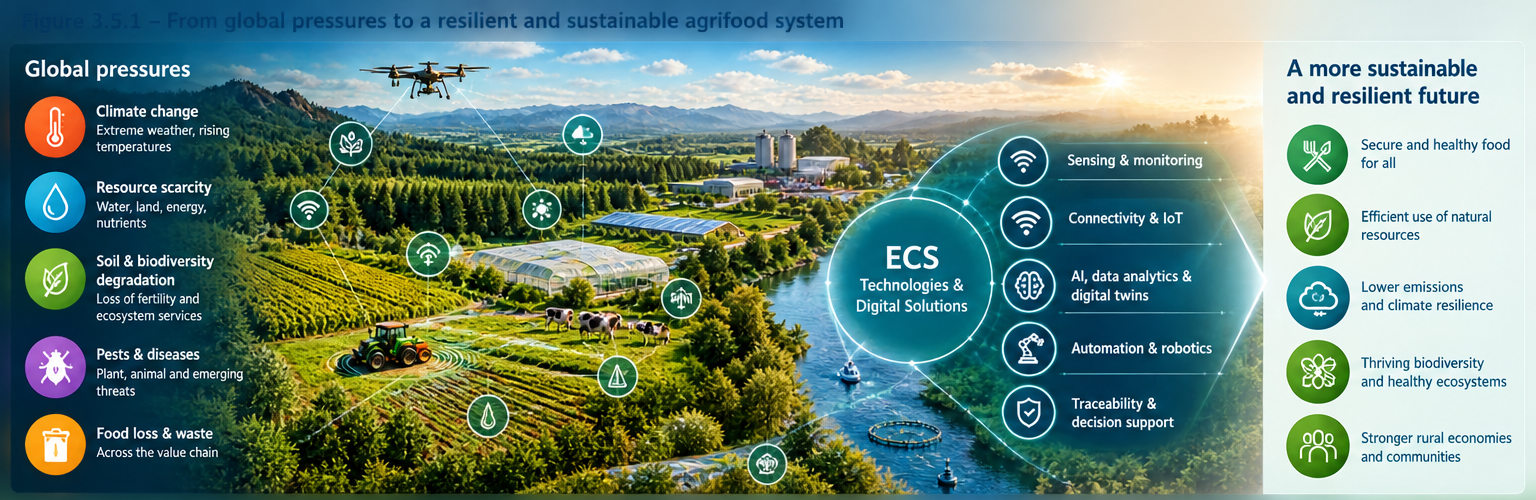
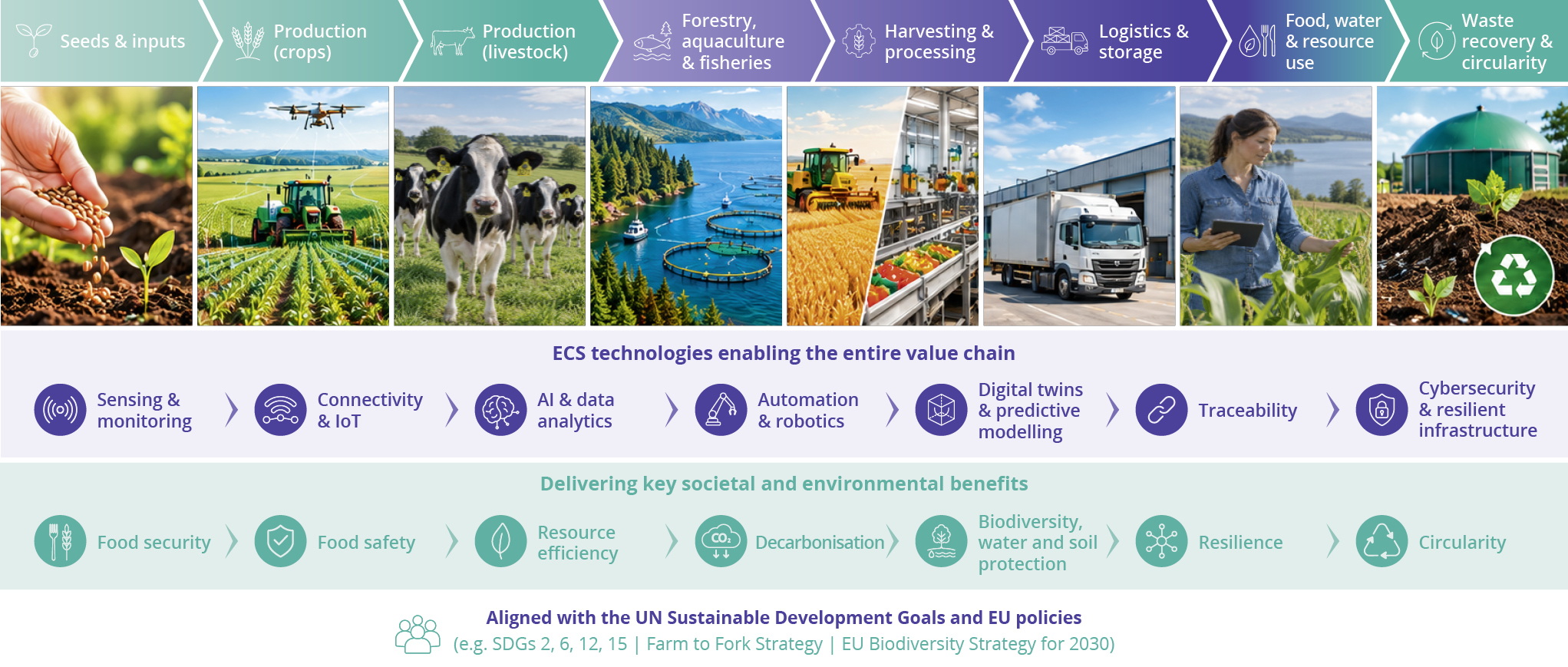
Figure 3.5.2 shows ECS-enabled agrifood and natural resources value-chain: Seeds/inputs → production → forestry/aquaculture/fisheries → harvesting/processing → logistics/storage → food/water/resource use → waste/recovery/circularity with the ECS capability layer cutting across the entire chain.
Societal Benefits
In response to the growing range of challenges facing the world, the UN defined 17 Sustainable Development Goals (SDGs) as a blueprint for achieving a better and more sustainable future for all. The implementation of the SDGs (particularly SDGs 2, 6, 12 and 15) is highly relevant to addressing global challenges related to food security, the protection of biodiversity and natural resources and action on climate change. The SDGs also address socioeconomic challenges, including the elimination of poverty and hunger, the reduction of inequality, and the promotion of responsible consumption and production, sustainable prosperity, peace and justice.
In Europe, national and EU policies including “From Farm to Fork”10 and “Biodiversity Strategy 2030” reflect and reinforce these underlying SDG objectives through a range of measures, from regulatory frameworks to incentives and investments supporting research, development, and deployment. These policies promote holistic and innovative approaches based on circular economy, agroecology, agroforestry, climate-smart and sustainable agriculture, the bioeconomy, and the Blue Economy.
3.5.3 Major Challenges
The agrifood and natural resources sector is undergoing a profound transformation driven by climate change, resource constraints, biodiversity loss, evolving food-safety risks, digitalisation, artificial intelligence, automation and increasing expectations for resilient, sustainable and trusted food systems.
The European research and innovation landscape is also moving towards a more integrated approach linking agriculture, food, water, biodiversity, climate, circularity and health. The European Commission’s 2026 strategic approach through AgRI 204011 and Food 204012 brings together soils and agri-ecosystems, cropping and livestock systems, bioeconomy, multifunctional forests, agri-food value chains, digitalisation, artificial intelligence and robotics, while also addressing food safety, resource efficiency, resilience and aquatic food systems.
The following five Major Challenges of the existing SRIA remain relevant. Their scope and associated technical topics are updated below to reflect current European research and innovation priorities and the increasing need to integrate sensing, artificial intelligence, digital twins, robotics, autonomous systems, cybersecurity, interoperability and Measurement, Reporting and Verification (MRV).
This section discusses the five Major Challenges that need to be addressed in the domain of agriculture (food security, food safety, environmental protection and sustainable production), natural resources and biodiversity, and how smart IoT systems and associated key enabling technologies can help achieve them.
Major Challenge 1: Food Security and Resilient Food Production Systems.
Major Challenge 2: Food Safety, One Health and Trusted Food Chains.
Major Challenge 3: Climate-Smart, Nature-Positive and Circular Production.
Major Challenge 4: Water Resilience, Quality, and Circular Management.
Major Challenge 5: Biodiversity, Ecosystem Restoration and Nature-Positive Agrifood Systems.
3.5.3.1 Major Challenge 1: Food Security and Resilient Food Production Systems
Food security13 and food safety14 are two complementary and mutually reinforcing dimensions of sustainable agrifood systems. Food security refers to the physical, social, and economic access to sufficient, safe, and nutritious food, while food safety concerns the prevention and control of biological, chemical and physical hazards that may compromise food quality and human health.
Figure 3.5.315 illustrates the interrelationship between food security and food safety and highlights their principal constituent elements. From an ECS perspective, ensuring both food security and food safety is essential for achieving resilient, sustainable and trustworthy food systems capable of addressing current and future societal challenges.
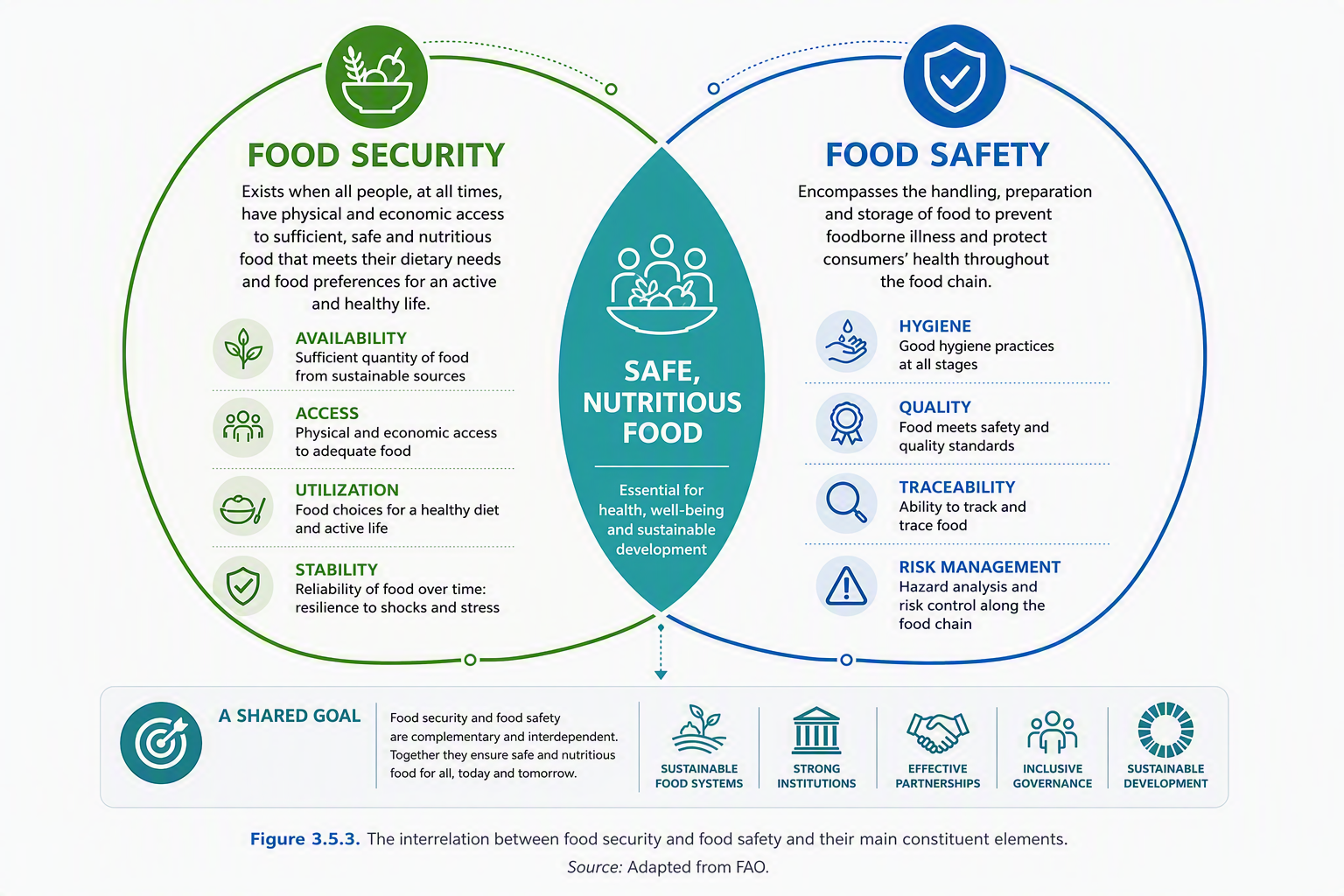
Figure 3.5.3 - interrelationship between food security and food safety
Food security increasingly depends not only on production capacity, but also on resilience, adaptability, and resource efficiency. Climate variability, extreme weather, soil degradation, water scarcity, changing pest and disease pressures, labour constraints and supply-chain volatility require production systems capable of adapting dynamically to changing conditions.
3.5.3.1.1 Status, vision and selected outcome
Consolidated advances in Industrial Internet of Things (IIoT) and Artificial Intelligence (AI) have already begun to shape smart manufacturing in the food and beverage16 industries. Access to relevant and role-based information, in real-time or near real-time, is key to ensuring efficient AI/ML (Machine Learning) data storage and processing and the appropriate use of these data for optimised decision-making at all levels of next-generation automation and robotic systems, such as cyber-physical systems (CPS). Therefore, sustainable production, safety and quality depend not only on the product itself, but also on the respective processes and their control, through the collection and monitoring of key data, smart autonomous sensing, data analysis based on AI/ML models to perform diagnostics and predictive maintenance, and their use in control systems. Ultimately, intelligent food production frameworks can consider consumer needs in specific markets, and such systems can provide intelligent recommendations for adjusting the amount and quality of food accordingly, ensuring food security (i.e. enough food for each market, avoiding food loss) and food safety (i.e., healthy food), while also considering environmental concerns and societal impact, paying attention to the food traceability process as well, because it is a core element of quality assurance in the agrifood sector.
3.5.3.1.2 Key focus areas
In particular, smart sensing has recently benefited from the emergence of low-cost, low-power, self-powered solutions, making it possible not only to remotely monitor crops (satellites, drones, robots using multi-spectral cameras), but also to install sensors, including quantum sensors and advanced photonics, within crops and plants, to receive the data needed directly from the site to understand the health status of plants and soil. A LinkedIn post from World Economic Forum identified Plant Wearable Sensors as one of the five technologies about to change the world17, and as one of the key solutions to increase food production by 70% by 2050 to feed the world population.
Following the trend in manufacturing industries, AI and digital twins18 are the next steps for the food industry and farming systems. In short, AI plays a growing role in the production of food and beverages. For instance, in some key applications19, 20, 21: Optimisation of production processes, Quality control, Demand Forecasting, Food safety, and Product personalisation. These technologies help to make the production chain more sustainable, efficient, and responsive to market needs. Digital twins allow digital/virtual representations (models) of physical objects and processes, coupled with behaviour models that enable simulation and prediction of changes to variables associated with the objects or the surrounding conditions. Digital twins are remotely connected in real time to the objects in the physical world to reflect the dynamics of real systems. Thus, digital twins are expected to take the farming and food industry to the next level in terms of productivity and sustainability. As a use case example in precision farming, a digital twin can be used in the event of a pest infestation to simulate the effects of applying multiple alternatives, taking into account the current condition of the crops, the available biological models, the expected evolution of weather conditions, etc. to determine the optimal treatment (and timely application) against the infestation in order to minimise both the impact on productivity and the environmental footprint of the treatment. Essentially, digital twins will become the ultimate decision-making optimisation tools by integrating production process variables and market and consumer variables thereby avoiding food loss. In any case, development of digital twins in farming is far behind its counterpart in the manufacturing industry for several reasons - because physical objects in farming are “living” objects (crops, trees, animals…), and because variables of interest in farming are highly heterogeneous and are complex to model and measure.
These technologies contribute to sustainability by enhancing resource management, environmental protection, and food security.
3.5.3.1.3 Intelligent, adaptive and autonomous food production
Key technology requirements include:
In-line inspection and automation: Networked packaging, robotics, and smart workflow systems to monitor and optimise all processes
Quality control: AI-driven computer vision and smart sensors to detect defects and enable predictive maintenance, reducing costly downtime.
Food safety: Smart bio-sensing and AI monitoring to reduce water and chemical use and prevent contamination.
Production optimisation: AI/ML and big data models for smarter decision-making, waste reduction, and edge AI deployment for energy efficiency.
Demand forecasting: AI analysis of past sales and market trends to reduce waste.
Product personalisation: IIoT and digital twins tailor products to evolving consumer diets.
Smart expert systems: Integration of IIoT with Large Language Models for next-generation advisory tools.
AI-based monitoring: For prediction and decision support for crops and livestock.
Multimodal sensing combining environmental, biological, imaging, and operational data.
Edge AI and distributed intelligence for real-time agricultural applications.
Predictive modelling of crop growth, yield, pests, diseases, and resource requirements.
Digital twins of farms, production units, and agricultural processes.
Integration of satellite, drone, proximal, and in-situ sensing.
Trustworthy and explainable AI for agricultural decision support.
AI-enabled optimisation of water, nutrients, energy and other inputs.
Continuous MRV of production, environmental performance, and resource use.
3.5.3.1.4 Re-designing Farming Systems
Autonomous and robotic farming systems
Advanced machines, collaborative robots, and edge AI platforms are essential for cost-effective land and livestock management:
Autonomous agricultural vehicles and machinery.
Autonomous navigation, localisation and safe operation in changing outdoor environments.
Energy-efficient autonomous systems and low-power sensing.
Robotic systems: Autonomous or swarm robotics and coordinated fleets for harvesting, weeding, spraying, pest inspection and control, crop monitoring and pruning, replacing declining manual labour with adaptive, multifunctional, edge-AI systems through Physical AI and AI-enabled robotic decision-making. Collaborative robots and human–robot interaction.
Drones: UAVs for large-area monitoring using intelligent computer vision and precision application of phytosanitary products.
Satellites: Field-level data with improved resolution; small satellites can extend IoT connectivity in areas lacking internet coverage.
Wearable technologies: Smartwatches, smart glasses, sensor vests, and GPS devices to improve operator safety, productivity, and communication.
Real-time edge AI platforms: Multi-sensor architectures measuring soil pH, salinity, moisture, and nutrient levels, combined with machine vision and hyperspectral imaging for crop health monitoring and automated interventions.
Augmented Reality (AR): Applications for crop monitoring, farmer training, equipment maintenance, and precision agriculture.
Cybersecurity: Strong encryption, multi-factor authentication, IDS/IPS systems, GDPR compliance, and staff training to protect ECS infrastructure and sensitive agricultural data.
Farming as a Service (FaaS): Digital solutions delivered via cooperatives or specialist providers, enabling small and medium farms (the majority in Europe) to access precision agriculture tools, sensors, drones, and AI advisory services affordably.
Interoperability is critical: standards such as AgMES, ISO 15926, SO 10303 (STEP), DEMETER, AIM model, IEEE 1451 must be adopted to ensure consistent data exchange across devices and systems.
Digital agricultural infrastructure and inclusive adoption
Novel and well-adapted agricultural infrastructures are essential to support the ECS technologies. These infrastructures should consider the following aspects:
Interoperable agricultural data spaces and platforms.
Secure sharing and use of data generated by agricultural machinery, sensors and IoT devices.
Connectivity for rural and remote environments.
Edge/cloud computing architectures.
Standardised data models and semantic interoperability.
Cybersecurity and resilience of connected agricultural systems.
Affordable, modular, and energy-efficient technologies.
Human-centred interfaces and technology adoption.
Combining the technologies cited above with these data sources can enrich knowledge and help address other field issues.
3.5.3.1.5 Climate-resilient and resource-efficient production
Considering climate change and its substantial impact on agriculture, the following considerations should be taken into account to ensure a more climate-resilient agricultural system and more resource-efficient production practices:
Precision management of water, nutrients, energy, and agricultural inputs.
Early warning and adaptation to drought, heat, floods, and extreme weather.
Climate-resilient crops and production systems.
Soil–plant–atmosphere monitoring.
Optimisation of irrigation and fertilisation.
Carbon farming and monitoring of soil carbon.
Integration of agronomic, environmental, and climatic data.
Resilience assessment and predictive modelling of agricultural systems.
3.5.3.1.6 Horticulture/greenhouses, urban and vertical indoor agriculture, and agrovoltaics
Horticulture/greenhouses, urban and vertical indoor agriculture
Urban and vertical indoor farming - often using hydroponics - offer sustainable, resource-efficient food production.
Key development needs include:
Low-cost nutrient sensors,
Precision harvesting robots
Edge AI-based autonomous cultivation systems using digital twin plant models.
Agrovoltaics
Combining solar panels with agriculture can increase yields, reduce water use, generate additional farm revenue, and support energy independence for small-scale farmers.
Key development needs include:
Panel shading.
Integrated environment sensors.
Real-time edge AI irrigation systems improve both crop and livestock productivity.
3.5.3.2 Major Challenge 2: Food Safety, One Health and Trusted Food Chains
3.5.3.2.1 Status, vision and selected outcome
Application of high-tech sensors and real-time edge AI platforms to monitor, quantify and understand individual plants and animals, as well as their variability, is key to ensuring food safety in novel next-generation ecology-based agricultural systems. Smart sensors and edge AI monitoring technology that can adapt to the unpredictability and variation of living systems are required. This Major Challenge will require integrated digital technology solutions such as ecology-based robotic systems that can control the bio-physical processes (including growing conditions) and understand the biological environment (for plants and animals). However, innovative robotic manipulation and operation in ecology-based systems pose a huge challenge in environments that are only partially defined and structured. Furthermore, detection in the supply chain and “at the fork” should also be considered. This implies low-cost and power-autonomous compact sensors, real-time edge AI computing platforms connected to information processing systems used in the food supply chain and by consumers, that enable, for instance, freshness and food-safety assessment for meat and vegetables (which could be integrated into smartphones).
Food safety must increasingly be addressed across the complete food chain and within a One Health framework. Climate change, globalisation, emerging biological and chemical hazards, antimicrobial resistance (AMR), supply-chain complexity, and new production technologies create new requirements for monitoring and prevention.
3.5.3.2.2 Plant health, Crop Quality and Emerging Biological threats
Crop quality and health depend on timely detection of pests, diseases, and environmental stress. Smart sensors, real-time monitoring, and AI decision-support tools can help farmers track soil and plant conditions, improve spraying precision, and support more efficient crop management.
Key development needs include:
Integrated pest management (IPM):
Portable diagnostics, georeferenced disease alerts, and IoT/edge AI traps for rapid detection and risk forecasting.
Plant wearables and in-plant sensing for early detection of plant stress, diseases and pests.
AI-assisted image-based diagnosis.
Hyperspectral and multispectral crop-health monitoring.
Detection of invasive species and emerging biological threats.
Pathogen and pest surveillance.
Precision application of plant-protection measures.
Monitoring of pesticide residues and contaminants.
Predictive models for crop-health risks.
Agroecology and pesticide reduction to move from conventional to organic, regenerative agriculture
Herbicide-free robotic weeding with precise vision and edge AI.
Power-efficient quantum and advanced photonic sensors for soil/plant metrics (e.g., pH, NO3, EC, moisture, CO2, leaf wetness, pathogens), with miniaturised, low-cost, biodegradable designs to prevent e-waste in fields.
Integrated AI decision-support to simplify management, cut inputs, and improve quality.
Precision approaches to concentrate effort on the most productive areas while restoring marginal land.
Service models (deployment, maintenance, training) to scale adoption.
Plant precision breeding and phenotyping:
Tools supporting genomics, gene editing, and DNA-informed breeding.
High-throughput sensing of growth, architecture, and composition under variable biotic/abiotic conditions, including plant–microbiome interactions, to drive the 4R nutrient strategy.
3.5.3.2.3 Animal Health, Welfare and Antimicrobial Resistance
Livestock health is central to food safety because animal diseases can spread quickly and create economic and public health risks. Better sensing, behavioural monitoring, and early-detection systems can reduce antibiotic use, improve animal welfare, and lower the chance of contamination in the environment and food chain.
Continuous animal-health monitoring for early disease detection and welfare: Wearables and ambient sensors use non-invasive sensing to track behaviour, temperature, transport stress and welfare; biosensors and AI-assisted technologies enable rapid diagnostic capabilities and real-time welfare insights, thereby reducing antibiotic usage.
Precision livestock farming.
AMR surveillance and reduction.
Integration of veterinary, environmental, and food-chain data.
Microbiome-based risk mitigation: Beneficial microbes for soil and feed enhance nutrition, block pathogens, and support animal health.
Emissions monitoring:
Methane measurement (breath/rumen) and verification to target rapid climate gains.
Nitrogen emissions tracking (NH3, N2O, NO3) with smart sensors for environmental and public health protection.
Farmer-centric design for One Health integration: Ensure tools fit workflows, improve economic sustainability, and support informed decisions on prevention, treatment, and breeding.
3.5.3.2.4 Food Safety Sensing and Rapid Diagnostics
Food safety also depends on transport and storage conditions, especially for perishable products. Smart logistics systems can monitor temperature, moisture, and other variables in real time, helping reduce losses and maintain product quality from farm to consumer.
Intelligent logistics:
Real-time sensing of temperature, moisture, gases, and atmosphere to preserve quality and cut losses.
Predictive quality models combining sensor data and AI for routing and storage decisions.
Route and warehouse optimisation; AR for training, transparency, and customer experience.
Systems must be reliable, contaminant-free, secure, interoperable, and power-efficient, with options like contactless powering in tanks. They should include the following technological aspects:
Rapid, portable, and in-line food-safety sensors.
Biosensors and advanced analytical technologies.
Detection of biological, chemical, and physical contaminants.
Emerging contaminants, mycotoxins, allergens, and residues.
Pathogen detection and identification.
Genomic and metagenomic approaches.
AI-assisted interpretation of analytical data.
Real-time and near-real-time monitoring.
3.5.3.2.5 End-to-end traceability and trusted food chains
Traceability is essential for consumer confidence, regulatory compliance, and fraud prevention. Digital tools, including smart tags and blockchain-enabled systems, can record product origin, movement, and handling so that food information is more transparent and reliable.
Comprehensive origin and process transparency across fragmented global chains to meet regulation, protect brands, and satisfy consumer expectations.
Distributed Ledger Technologies (DLT)/blockchain for tamper-resistant records of inputs (seeds, feeds, medications) and process steps, expediting recalls and building trust.
Consumer access via smart tags/AR; alignment of production with individualised nutrition and proximity-to-market goals.
Support smallholders via shared ecosystems; address gaps in regulation, standards, and interoperability to enable scalable adoption.
Architectures should include the following aspects:
End-to-end digital traceability.
Interoperable food chain information systems.
Secure data sharing across the value chain.
AI-supported food-fraud detection.
Digital certification.
Smart packaging and intelligent labels.
Product-condition and shelf-life monitoring.
Provenance, authenticity, cybersecurity, and data integrity.
3.5.3.3 Major Challenge 3: Climate-Smart, Nature-Positive and Circular Production
3.5.3.3.1 Status, vision and selected outcome
EU regulations together with consumers’ increased interest in organic food are compelling farmers to drastically decrease the use of pesticides to reduce risks and impacts on human health and the environment, as well as to remain below the maximum residue levels of pesticides. Pesticides are found not only in drinking water22 but also in food and beverages. Lively debates have shown that our society demands alternatives to pesticides to help preserve the environment and improve food quality.
The EU Farm-to-Fork strategy aims to implement an action plan that significantly reduces risks from chemical pesticides, as well as the use of fertilisers and antibiotics, and to increase the amount of organic farming carried out in Europe.
In general, the new EU agriculture AgRI 2040 strategy, confirmed in February 2025, puts a major focus on preservation of landscapes, biodiversity, and environmental protection, in a results-oriented model aligned with the Green Deal23. For instance, the reform of the Common Agriculture Policy (CAP) introduces measures for fostering the adoption of sustainable farming practices (“eco-schemes”), such as agroecology or organic farming. Farmers will need to provide “digital evidence” of compliance with the CAP rules and the implementation of good practices. The CAP evaluations will be largely based on the use of high-quality data collected directly from the field. This will require measurement and monitoring technology (for environmental performance, biodiversity monitoring parameters, etc.) which is accurate, highly scalable, and secure (certified monitoring information).
Agrifood and natural-resource systems must simultaneously reduce environmental pressures, adapt to climate change, and contribute to restoration of natural resources. The challenge extends beyond conventional environmental monitoring towards integrated systems capable of measuring, predicting and reducing emissions, restoring degraded resources, and closing material and nutrient loops. Areas of interest are often remote without sufficient connectivity - new approaches are required to flexibly deploy sensors that harvest their energy and collect data.
3.5.3.3.2 Soil Health and Nutrient Management
Improving soil health depends on accurate in-situ measurement of nutrients, moisture, and herbicide impact. New low-power sensors, smart actuators, and AI-based decision support can help optimise fertiliser use, reduce chemical inputs, and support targeted interventions such as weed detection and crop protection.
In-situ, real-time nutrient and herbicide monitoring:
Miniaturised, ultra–low-power quantum and biosensors for continuous soil-health monitoring: measure soil moisture, temperature, nutrients (N, P), and contaminants at ppm levels, with packaging that reliably interfaces with soil water.
Long-lived buried sensors combined with optical/hyperspectral and proximal sensing for a complete soil-health picture including nutrient availability and nutrient-loss monitoring as well as salinity, contamination and erosion detection.
Precision fertilisation through smart micro-actuators to deliver inputs precisely at the roots, maximising efficacy, and reducing total agrochemicals.
Sustainable “green” ECS: biodegradable substrates, non-toxic materials, and minimal packaging to avoid e-waste and soil contamination.
Decision support:
IoT with edge/cloud AI to translate measurements into fertilisation and weed-control actions, prioritising organic inputs and reducing chemical dependence.
Low-cost vision (RGB/3D/hyperspectral) and on-edge models for weed recognition and selective eradication.
AI-based soil-health assessment: Soil organic carbon and soil biodiversity monitoring, and digital soil mapping; hyperspectral crop monitoring for early disease detection and yield prediction.
Soil digital twins and MRV for soil-health and carbon-farming practices.
3.5.3.3.3 Air Quality, Greenhouse Gases and Emissions Monitoring
Air quality monitoring is needed in indoor, urban, and rural environments because pollution affects health and productivity. Real-time multi-sensor systems, digital twins, and GHG monitoring tools can help measure pollutants, track emissions, and support mitigation actions in agriculture and industry.
Air-quality sensing (indoor, urban, rural):
Distributed sensing of air pollutants, microsensors/mini-stations with embedded calibration and high selectivity; address power, data transmission, storage, and assessment constraints.
Indoor monitoring integrated into building infrastructure, paired with real-time digital twins to predict pollutant diffusion and trigger targeted mitigation.
GHG control and verification:
Digitalisation to improve industrial, mobility, and agricultural efficiency and cut emissions.
Livestock-focused sensing (breath/rumen) and analytics to guide mitigation via feed or management changes.
Distributed sensing of greenhouse gases and verification tools for emissions and sequestration; advanced photonics and quantum sensors for CO2, NOx, methane, ammonia, and PM with rapid response to spikes.
Decision support:
Emissions monitoring from agricultural and livestock systems.
Atmospheric sensing modelling.
AI-based emission-source identification.
Integration of atmospheric, meteorological, and production data.
Emission forecasting and continuous MRV.
3.5.3.3.4 Circular Bioeconomy and Smart Waste Management
Waste management needs smarter collection, sorting, and treatment systems to reduce environmental burden and improve circularity. Connected bins, RFID, automated segregation, and AI-enabled monitoring can improve recycling, routing, and waste treatment efficiency, including in remote or low-power settings.
Integrated waste systems:
Real-time monitoring of waste streams, treatment units, landfill gas, and anaerobic digestion;
AI-supported waste classification and forecasting for autonomous sorting and processing to ensure recyclability.
Smart bins (radio-frequency identification (RFID), compaction, fullness sensors), automated segregation, robotic picking, optimal routing, and vehicle tracking—designed for off-grid operation.
End-to-end integration into product life cycles to enable circularity.
Intelligent sustainable/biodegradable packaging:
Agricultural and food-processing by-product valorisation.
Nutrient recovery and biomass conversion.
Circular use of water and materials.
Eco-friendly materials paired with sensors to track freshness/contaminants while minimising plastic waste.
Hybrid integration of sensors, energy harvesting, and storage on biodegradable substrates to reduce electronics waste.
Decision support:
Digital tracking of material flows.
Life-cycle assessment and circular bioeconomy digital twins.
3.5.3.3.5 Decarbonisation, Carbon Farming and Environmental Remediation
Remediation technologies are important for reducing pollutants in soil, air, and water, but they must be efficient enough for remote and continuous use. AI-supported monitoring, carbon verification tools, and advanced sensing can help identify when and where remediation is needed and support decarbonisation goals.
Targeted, efficient remediation:
Edge/cloud AI platforms to detect when/where water, air, or soil remediation is needed, addressing mobile and intermittent pollution sources with antifouling designs.
Low-carbon agricultural production.
Carbon farming and soil/biomass carbon monitoring.
Carbon-removal measurement and verification.
Greenhouse gas reduction technologies.
Renewable and low-carbon energy for agricultural operations.
On-site CO2 capture/conversion materials and coupled sensor–remediation systems for responsive operation.
Tools to verify carbon emissions and sequestration; enhance soil-based sequestration (e.g., “4 per 1000”) and rigorously evaluate performance.
Energy-harvesting approaches (solar/thermoelectric) for in situ pollutant removal in remote deployments.
Environmental remediation of contaminated soils and water.
AI-supported remediation optimisation.
Digital twins for environmental remediation.
3.5.3.4 Major Challenge 4: Water Resilience, Quality and Circular Management
3.5.3.4.1 Status, vision and selected outcome
The quality of groundwater, surface water bodies (oceans, seas, lakes), waterways (rivers, canals, estuaries) and coastal areas has a great impact on both biodiversity and the quality of water that people consume every day. While natural droughts may lead to increased salinity in freshwater systems and, along with floods, impact or endanger the quality of water bodies, human activities in energy production, data centres, manufacturing and farming industries have a major detrimental effect through thermal pollution, chemical, microbiological and micro-plastic contaminants, and biotic and abiotic farming by-products. These human activities have released pollutants of emerging concern such as PFAS (per- and polyfluoroalkyl substances) and medicinal products into water bodies, with detrimental consequences for human health and biodiversity. Moreover, the outdated and deteriorating water infrastructure is also having a detrimental impact on both water quality and the amount of water lost through leakage.
In the context of climate change, increased water temperatures may cause (apart from extreme evaporation) eutrophication and excess algal growth in surface water bodies. Moreover, heavy storms increase the amount of sediment nutrients and pollutants in water sources, and human activities release pollutants of emerging concern that end up in all types of water bodies and have a direct impact on drinking water quality. Therefore, climate change jeopardises the quality and safety of our water, making the development of new tools to deal with this problem more critical than ever.
Water availability and water quality are becoming critical constraints for agriculture, food production, rural communities, ecosystems, and industry. The future challenge is integrated management of water resources across catchments, agricultural systems, urban areas, and natural ecosystems.
3.5.3.4.2 Water Quality, Availability and Resilient Water Infrastructure
Access to clean water depends on reliable monitoring of water quality, flow, and distribution losses. Low-power sensors, smart metering, leak detection, and automated control systems can help reduce waste, improve safety, and support fairer water allocation between domestic, agricultural, and industrial uses.
Healthy water monitoring and anomaly response:
Monitoring of chemical, biological, and physical parameters.
Detection of emerging pollutants and pathogens.
Nutrient and pesticide monitoring.
Groundwater and aquifer monitoring.
Drought and water-availability prediction.
Leakage and loss detection.
Remote and autonomous water monitoring.
Self-powered, low-power multi-parameter quantum/optical sensors for temperature, conductivity, pH, turbidity, nitrates, heavy metals, and biofilm growth in distribution and treatment plants.
AI-assisted water-quality monitoring for rapid leak/contamination detection, reduced backhaul, and real-time pollutant-diffusion prediction via compact digital twins.
Demand reduction and conservation:
Smart metering with time-of-use pricing and gamification to shift behaviour.
Low-cost flow/leak sensors with auto shut off and remote valve control; AI optimisation of household, farm, and industrial water use.
Automated leak localisation using in-pipe inspection plus dense, fine-grained sensing networks.
Efficient, intelligent distribution:
Use-based quality management and pricing, balancing safety with application needs (drinking, industry, cooling).
Miniaturised electrochemical and optical sensors with high stability and anti-fouling for continuous control.
Robust IoT and AI manage large data volumes; storage strategies (e.g., intentional flooding) guided by forecasting and early warning.
3.5.3.4.3 Water Efficiency, Reuse, and Circular Water Systems
To ensure water efficiency and circular water systems, it is crucial to consider the following elements during the implementation phase:
Precision irrigation.
Water-use optimisation.
Intelligent irrigation systems.
Wastewater treatment monitoring.
Safe water reuse.
Industrial and agricultural water recycling.
Nutrient recovery from wastewater.
Distributed water treatment systems.
AI-based treatment optimisation.
Digital twins for water infrastructure.
3.5.3.4.4 Water Ecosystems and Catchment-scale Intelligence
Water Ecosystems and Catchment-scale Intelligence also include better storage, flood prediction, irrigation optimisation, and circular use of wastewater and rainwater. AI-assisted monitoring and digital twins can support real-time decisions, improve resilience to climate extremes, and increase recovery of water, energy, and useful by-products from treatment systems. Smart treatment systems are needed to remove pollutants efficiently and support reuse in a circular water economy. Advanced sensors, automated monitoring, and energy-harvesting remediation technologies can make treatment more continuous, cost-effective, and suitable for remote deployment.
Smart irrigation management:
Self-powered, low-cost sensors and edge-ready models to monitor soil moisture and plant stress; UAV/satellite narrow-band spectral data coverage.
Low-cost actuators to deliver the right dose at the right place; integrated leak detection in irrigation networks.
Integrated catchment monitoring.
Flood management:
River, lake, groundwater, and coastal water monitoring.
Flood and drought prediction.
Integration of meteorological, hydrological, and environmental data.
Networked water-level sensors plus predictive models/digital twins combining hydrology, terrain, and weather for early warnings.
Interoperable IoT to inform responders, communities, and operators in real time.
Circular water treatments (wastewater, rainwater, stormwater):
Ecosystem health indicators.
Biodiversity and habitat monitoring.
Cross-sector water demand modelling.
Multi-sensor monitoring of levels, flows, temperature, pressure, chemical/biological residues with decision support for real-time actions and forecasting.
IoT-enabled plant reliability (failure prediction, remote operations), groundwater mapping, and sustainable abstraction monitoring.
Expanded recycling and reuse in cities and water-intensive industries (e.g., closed-loop processes, district heating from data centres), cutting the total water footprint.
AI-supported resource allocation.
3.5.3.5 Major Challenge 5: Biodiversity, Ecosystem Restoration and Nature-Positive Systems
3.5.3.5.1 Status, vision and selected outcome
It has been stated that: “Biodiversity boosts ecosystem productivity where each species, no matter how small, all have an important role to play”24. For example, increasing the number of plant species means greater biodiversity, supporting natural sustainability for all life 25. Healthy ecosystems can better withstand and recover from a variety of disasters, anthropogenic or not. Healthy biodiversity offers many natural services for everyone.
It should be noted that there are many such services that we already get for free! However, the cost of replacing these, even if possible, would be extremely expensive. More than ever, the new EU agriculture strategy AgRI 2040 promotes sustainable farming practices that help to protect the environment and preserve landscapes and biodiversity. This is a consequence of the well-recognised correlation between the health of ecosystems and the health of farming production. It therefore makes economic and development sense to move towards sustainability. From this perspective, ECS can provide continuous, scalable monitoring and targeted interventions that lower environmental impact while sustaining livelihoods for the four ecosystems described below.
Biodiversity is an essential component of resilient agricultural, aquaculture, fisheries, and forestry systems. The challenge is evolving from biodiversity monitoring and conservation towards active ecosystem restoration and measurable Nature-positive outcomes.
3.5.3.5.2 Nature-Positive Agriculture
Among the key focus areas, Agriculture is one of the economic activities that has the highest dependence on nature and biodiversity26. On average, global mean crop yields of rice, maize and wheat are projected to decrease between 3% and 10% per degree Celsius of warming above historical levels. All crops depend directly on soil health and fertility, and more than 75% of global food crop types rely on animal pollination. However, the impact of agricultural activity on the environment must be as low as possible to preserve biodiversity. Efforts to conserve existing land resources (e.g. forests) and expand nature-based solutions (e.g. peatland restoration) are required to reduce GHG emissions, or to improve resistance by microbial biofertilisers 27 28. In this regard, the EU Biodiversity Strategy 2030 establishes several objectives29, for instance, to protect ecosystems while maintaining productivity. To address these objectives, there is a need to develop:
Precision farming systems to minimise fertilisers/pesticides and optimise inputs using in situ soil sensing and connected traps.
Landscape-scale monitoring to track pollinators, soil biodiversity, and habitat quality and landscape connectivity assessment; Precision management supporting biodiversity including remote sensing of biodiversity indicators; Monitoring of agroecological practices.
Integration of microbial biofertilisers and peatland/forest conservation to reduce GHGs and build resilience.
AI-based species identification.
Ecological digital twins.
3.5.3.5.3 Aquaculture Ecosystem Resilience
Aquaculture impacts biodiversity negatively in several ways30: (i) where antibiotics and hormones are used to reduce farm stock mortality and improve growth rates, their use has side effects for the flora and fauna of water bodies receiving farm effluents; (ii) through eutrophication and changes in flora and fauna in waters receiving effluents from aquaculture facilities; (iii) through the risk of excessive exploitation of wild fish stocks for use in farm fish feeds; and (iv) by transfer of disease and parasites from farm animals to wild animals.
To address these side effects, there is a need to develop cleaner, more efficient aquaculture through:
Continuous water quality monitoring.
Animal health and welfare sensing.
Disease and pathogen detection.
Environmental DNA and biodiversity monitoring.
AI-based aquaculture management.
Autonomous feeding and production optimisation.
Ecosystem-impact monitoring.
Nutrient and waste monitoring.
Digital twins of aquaculture production and surrounding ecosystems.
Precision feeding and water-use optimisation to cut waste and eutrophication.
Multi-sensor water-quality monitoring of facilities and effluents; reduce antibiotics/hormones via targeted controls.
IoT/satellite/UAV data fused with AI/ML for predictive health, early warnings, and automation.
3.5.3.5.4 Fisheries and Marine Ecosystem Monitoring
The EU’s Biodiversity Strategy has set an objective of protecting a minimum of 30% of its sea area. Like agriculture, fishing is an economic activity with a strong dependence on biodiversity. Keeping fish stocks healthy is critical to guaranteeing ocean biodiversity and thus the economic sustainability of fisheries. According to this strategy, the preservation of marine stocks could increase the annual profits of the European seafood industry. Recent reports31 show that the European seafood market will reach US $69.19 billion in 2025 and is expected to rise to US $71.72 billion by 2030.
Fishing activities impact biodiversity negatively in several ways, particularly by: (i) increasing fish mortality, so measures must be taken to keep this under maximum sustainable yield levels; and (ii) damaging the ocean ecosystem due to the use of certain fishing techniques, currently the most damaging activity to the seabed. In addition, bycatch from non-selective industrial fishing methods endangers many species of marine animals not being fished for. It is therefore necessary to evolve towards more selective and less damaging fishing techniques, as well as the more effective control of illegal fishing practices.
To reduce these negative impacts and support sustainable fishing while protecting marine biodiversity, there is a need to develop:
Autonomous marine and oceanographic observation, sensing and monitoring solutions (including unmanned vessels, UXVs) to estimate biodiversity indices, fish stocks and species distribution, and to build fishery management systems consistent with conservation objectives and rules, also related to the tropicalisation process that is becoming increasingly evident in recent times.
Species identification and abundance estimation for selective, low-impact gear and technologies to reduce bycatch and seabed damage.
Service models to deploy, maintain, and exploit information from monitoring systems at scale.
AI-based ecosystem modelling.
3.5.3.5.5 Smart and Resilient Forestry
The EU Biodiversity Strategy has set the objective of protecting a minimum of 30% of the EU’s land area. At least one-third of protected areas – representing 10% of EU land – should be strictly protected. In particular, the strategy identifies the crucial need to strictly protect all the EU’s primary and old-growth forests, which are the richest forest ecosystems removing carbon from the atmosphere, while storing significant carbon stocks. The strategy also calls for preserving good health and increasing the resilience of all EU forests, especially against wildfires, droughts, pests, and diseases. It is envisaged that the European Commission will develop a forest information system for Europe that integrates data from multiple sources and providers. To prevent more wildfires, we need to grow rural economies in a sustainable way and manage climate change, with a much better understanding and continuous assessment of EU forests. To this end, there is a need to develop:
A precision forestry system with remote self-powered sensing and satellite-based AI/ML monitoring capabilities to map and assess the condition of EU forests, as well as to enable early detection and prevention of threats to forests (wildfires, pests, diseases, etc.).
Autonomous forest management systems for continuous forest-health and CO2 footprint monitoring, remote monitoring of wildlife behaviour and habitat changes, and timely warnings of illegal poaching activity.
Climate-resilience modelling.
Digital twins of forests. Service models to deploy, maintain, and exploit information from monitoring systems at scale.
AI-assisted restoration planning.
3.5.3.5.6 Cross-ecosystem biodiversity intelligence
Given the interdependence between agricultural, forestry, freshwater, and marine ecosystems, new tools and methods are necessary to ensure effective cross-ecosystem biodiversity interactions. Consequently, developments are required in the following elements:
Integrated biodiversity data infrastructures.
Interoperability between agriculture, forestry, freshwater, and marine datasets.
AI-based biodiversity assessment.
Automated species identification.
Environmental DNA and advanced biological sensing.
Satellite, drone, acoustic and in-situ observations.
Ecosystem digital twins.
Biodiversity indicators and ecological forecasting.
MRV for restoration.
3.5.4 TIMELINE
MAJOR CHALLENGE |
TOPIC |
SHORT -TERM 2027 - 2031 |
|---|---|---|
Major Challenge 1: Food security and resilient food production systems |
Topic 1.1: Intelligent, adaptive and autonomous food production |
|
Topic 1.2: Autonomous and robotic farming systems |
|
|
Topic 1.3: Climate-resilient and resource-efficient production |
|
|
Topic 1.4: Digital agricultural infrastructure and inclusive adoption |
|
|
Major Challenge 2: Food safety, One Health and trusted food chains |
Topic 2.1: Plant health, crop quality and emerging biological threats |
|
Topic 2.2: Animal health, welfare and antimicrobial resistance |
|
|
Topic 2.3: Food safety sensing and rapid diagnostics |
|
|
Topic 2.4: End-to-end traceability and trusted food chains |
|
|
Major Challenge 3: Climate-smart, Nature-positive and circular production |
Topic 3.1: Soil health and nutrient management |
|
Topic 3.2: Air quality, greenhouse gases and emissions monitoring |
|
|
Topic 3.3: Circular bioeconomy and smart waste management |
|
|
Topic 3.4: Decarbonisation, carbon farming and environmental remediation |
|
|
Major Challenge 4: Water resilience, quality and circular management |
Topic 4.1: Water quality, availability and resilient water infrastructure |
|
Topic 4.2: Water efficiency, reuse and circular water systems |
|
|
Topic 4.3: Water ecosystems and catchment-scale intelligence |
|
|
Major Challenge 5: Biodiversity, Ecosystem Restoration and Nature-Positive Agrifood Systems |
Topic 5.1: Nature-positive agriculture |
|
Topic 5.2: Aquaculture ecosystem resilience |
|
|
Topic 5.3: Fisheries and marine ecosystem monitoring |
|
|
Topic 5.4: Smart and resilient forestry |
|
|
Topic 5.5: Cross-ecosystem biodiversity intelligence |
|
MAJOR CHALLENGE |
TOPIC |
MEDIUM -TERM 2032 - 2036 |
|---|---|---|
Major Challenge 1: Food security and resilient food production systems |
Topic 1.1: Intelligent, adaptive and autonomous food production |
|
Topic 1.2: Autonomous and robotic farming systems |
|
|
Topic 1.3: Climate-resilient and resource-efficient production |
|
|
Topic 1.4: Digital agricultural infrastructure and inclusive adoption |
|
|
Major Challenge 2: Food safety, One Health and trusted food chains |
Topic 2.1: Plant health, crop quality and emerging biological threats |
|
Topic 2.2: Animal health, welfare and antimicrobial resistance |
|
|
Topic 2.3: Food safety sensing and rapid diagnostics |
|
|
Topic 2.4: End-to-end traceability and trusted food chains |
|
|
Major Challenge 3: Climate-smart, Nature-positive and circular production |
Topic 3.1: Soil health and nutrient management |
|
Topic 3.2: Air quality, greenhouse gases and emissions monitoring |
|
|
Topic 3.3: Circular bioeconomy and smart waste management |
|
|
Topic 3.4: Decarbonisation, carbon farming and environmental remediation |
|
|
Major Challenge 4: Water resilience, quality and circular management |
Topic 4.1: Water quality, availability and resilient water infrastructure |
|
Topic 4.2: Water efficiency, reuse and circular water systems |
|
|
Topic 4.3: Water ecosystems and catchment-scale intelligence |
|
|
Major Challenge 5: Biodiversity, Ecosystem Restoration and Nature-Positive Agrifood Systems |
Topic 5.1: Nature-positive agriculture |
|
Topic 5.2: Aquaculture ecosystem resilience |
|
|
Topic 5.3: Fisheries and marine ecosystem monitoring |
|
|
Topic 5.4: Smart and resilient forestry |
|
|
Topic 5.5: Cross-ecosystem biodiversity intelligence |
|
MAJOR CHALLENGE |
TOPIC |
LONG -TERM 2037 AND BEYOND |
|---|---|---|
Major Challenge 1: Food security and resilient food production systems |
Topic 1.1: Intelligent, adaptive and autonomous food production |
|
Topic 1.2: Autonomous and robotic farming systems |
|
|
Topic 1.3: Climate–resilient and resource-efficient production |
|
|
Topic 1.4: Digital agricultural infrastructure and inclusive adoption |
|
|
Major Challenge 2: Food safety, One Health and trusted food chains |
Topic 2.1: Plant health, crop quality and emerging biological threats |
|
Topic 2.2: Animal health, welfare and antimicrobial resistance |
|
|
Topic 2.3: Food safety sensing and rapid diagnostics |
|
|
Topic 2.4: End-to-end traceability and trusted food chains |
|
|
Major Challenge 3: Climate-smart, Nature-positive and circular production |
Topic 3.1: Soil health and nutrient management |
|
Topic 3.2: Air quality, greenhouse gases and emissions monitoring |
|
|
Topic 3.3: Circular bioeconomy and smart waste management |
|
|
Topic 3.4: Decarbonisation, carbon farming and environmental remediation |
|
|
Major Challenge 4: Water resilience, quality and circular management |
Topic 4.1: Water quality, availability and resilient water infrastructure |
|
Topic 4.2: Water efficiency, reuse and circular water systems |
|
|
Topic 4.3: Water ecosystems and catchment-scale intelligence |
|
|
Major Challenge 5: Biodiversity, Ecosystem Restoration and Nature-Positive Agrifood Systems |
Topic 5.1: Nature-positive agriculture |
|
Topic 5.2: Aquaculture ecosystem resilience |
|
|
Topic 5.3: Fisheries and marine ecosystem monitoring |
|
|
Topic 5.4: Smart and resilient forestry |
|
|
Topic 5.5: Cross-ecosystem biodiversity intelligence |
|
Microsoft Word - Key Findings WPP 2017_Final EMBARGOED (un.org), https://population.un.org/wpp/↩︎
FAO GLOBEFISH 2025
Claude E. Boyd, What is biodiversity and its relevance to aquaculture certification? https://www.aquaculturealliance.org/advocate/biodiversity-relevance-aquaculture-certification/↩︎
2017 FAO. 2017. The future of food and agriculture – Trends and challenges. Rome↩︎
All about water, https://www.iaea.org/sites/default/files/publications/magazines/bulletin/bull53-1/53105911720.pdf↩︎
UN 2019 The Sustainable Development Goals Report 2019: Goal 6: Clean water and sanitation / https://unstats.un.org/sdgs/report/2019/The-Sustainable-Development-Goals-Report-2019.pdf↩︎
ibid: Goal 15↩︎
https://www.eea.europa.eu/themes/air/health-impacts-of-air-pollution↩︎
The persistent threat of emerging plant disease pandemics to global food security at https://doi.org/10.1073/pnas.2022239118↩︎
https://ec.europa.eu/food/sites/food/files/safety/docs/f2f_action-plan_2020_strategy-info_en.pdf↩︎
https://eur-lex.europa.eu/legal-content/EN/TXT/HTML/?uri=CELEX:52020DC0380&from=EN↩︎
AgRI 2040 – Strategic approach - Agriculture and rural development at https://agriculture.ec.europe.eu↩︎
Food 2040 – Research and innovation -European Commission at https://research-and-innovation.ec.europe.eu↩︎
Food security has been defined by the FAO as “Food security exists when all people, at all times, have physical and economic access to sufficient, safe and nutritious food that meets their dietary needs and food preferences for an active and healthy life”↩︎
Food safety is an umbrella term that encompasses many facets of handling, preparation, and storage of food to prevent illness and injury. Included under the umbrella are chemical, microphysical, and microbiological aspects of food safety↩︎
Adapted from FAO definitions of food security and food safety.↩︎
Beverage will be considered as food in the rest of the document.↩︎
https://www.linkedin.com/posts/world-economic-forum_wef24-ugcPost-7149142642344296448-lxGR/?utm_source=share&utm_medium=member_ios↩︎
https://www.sciencedirect.com/science/article/pii/S0308521X20309070↩︎
McKinsey & Company: « Artificial Intelligence: The next Frontier for Food and Beverage Industry ». (2021)↩︎
Trends in Food Science & Technology: « Applications of Artificial Intelligence in Food Processing and Quality Control ». (2020)↩︎
Journal of Food Engineering: Machine Learning Approches for Food Quality Assessment ». (2022)↩︎
https://www.notre-environnement.gouv.fr/themes/sante/la-pollution-de-l-eau-douce-ressources/article/les-pesticides-dans-les-eaux-souterraines?lien-ressource=5193&ancreretour=lireplus↩︎
https://aioti.eu/wp-content/uploads/2022/02/AIOTI-Role-of-IoT-in-addressing-agroecological-focus-of-Green-Deal-Final.pdf↩︎
https://www.sciencedirect.com/science/article/abs/pii/S0012825214002086↩︎
Anup Shah « Why is biodiversity important? Who cares?
https://www.globalissues.org/article/170/why-is-biodiversity-important-who-cares↩︎
https://www.pnas.org/doi/10.1073/pnas.2203385119↩︎
European Commission. The business case for biodiversity. May 2020. https://ec.europa.eu/commission/presscorner/detail/en/fs_20_907↩︎
https://www.fao.org/3/nd651en/nd651en.pdf↩︎
Prisa, D, Fresco, R, Spagnuolo, D. 2023. Microbial Biofertilisers in plant production and resistance: a review.
Agriculture 13(9), 1666 - MDPI↩︎
European Commission. EU Biodiversity Strategy for 2030: bringing nature back into our lives. May 2020. https://eur-lex.europa.eu/legal-content/EN/TXT/?qid=1590574123338&uri=CELEX%3A52020DC0380↩︎