
ECS SRIA 2027
2.2 Connectivity
On this page
- 2.2.1 SCOPE
- 2.2.1.1 Scope for OSI layers 1, 5 and 6
- 2.2.1.2 Scope for OSI layers 5 and 6
- 2.2.2 Application breakthroughs
- 2.2.3 MAJOR CHALLENGES
- 2.2.3.1 Major Challenge 1: Strengthening the EU connectivity technology portfolio to maintain leadership, secure sovereignty and offer an independent supply chain
- 2.2.3.2 Major Challenge 2: Investigate innovative wireless connectivity technology (new spectrum or medium) and new approaches to improving existing connectivity technology to maintain the EU’s long-term leadership
- 2.2.3.3 Major Challenge 3: Autonomous interoperability translation for communication protocols, data encoding, compression, security and information semantics
- 2.2.3.4 Major Challenge 4: Architectures and reference implementations of interoperable, secure, scalable, smart and evolvable IoT and SoS connectivity
- 2.2.3.5 Major Challenge 5: Network virtualisation enabling run-time engineering, deployment and management of edge-to-cloud network architectures.
- 2.2.4 TIMELINE
2.2.1 SCOPE
Connectivity and interoperability technologies in ECS enabling business and social benefits are tied to layers 1, 5 and 6 of the OSI model. The focus on these layers is motivated by the Major Challenges that characterize them (see Figure 2.2.1).
2.2.1.1 Scope for OSI layers 1, 5 and 6
The scope covers the following types of physical-layer connectivity:
Cellular:
Beyond 5G
6G
Direct-to-cell (Supplemental Connectivity from Space scenario)
Satellite communication
Low Earth orbit and geostationary orbits
Non-Terrestrial Networks
Low-power wide-area:
Cellular: narrowband IoT, RedCap, LTE, 6G, etc.
Non-cellular: Sigfox, LoRa, M-Bus, etc.
Low-power short-range:
Wireless: existing (Bluetooth, Wi-Fi, etc.) or innovative technologies (mmW, etc.).
Wired: covering both high-speed optical glass and plastic fibers, mmW plastic fibers, and copper interconnect (USB, DOCSIS, PCIe, UCIe, AIB, etc.).
High-speed:
Wireless: point-to-point mmWave.
Wired: high-speed optical (800 Gb+, etc.) and copper interconnect (Ethernet, etc.).
Very high-speed
On chiplets and SoCs, e.g. die-to-die connections
The main challenge will be to ensure European leadership in terms of connectivity technologies (for example, standards) as well as associated software and hardware technologies supporting the development of connectivity solutions (e.g. chipsets, modules, protocols, etc.). For genuine digital sovereignty, it would also be important to have user devices (phones, wearables, Physical AI devices) with secure connectivity based on EU or strategic partners’ chips.
2.2.1.2 Scope for OSI layers 5 and 6
The scope addressed in this context is application-to-application interoperability relying on technologies at OSI layers 5 and 6. This interoperability covers the following underlying aspects:
Protocols at all technology levels: Internet, operational and legacy.
Security: such as protocol security, payload encryption, authentication, authorization, certificates, tokens and key distribution.
Data semantics: supporting application-to-application understanding of transferred data/information.
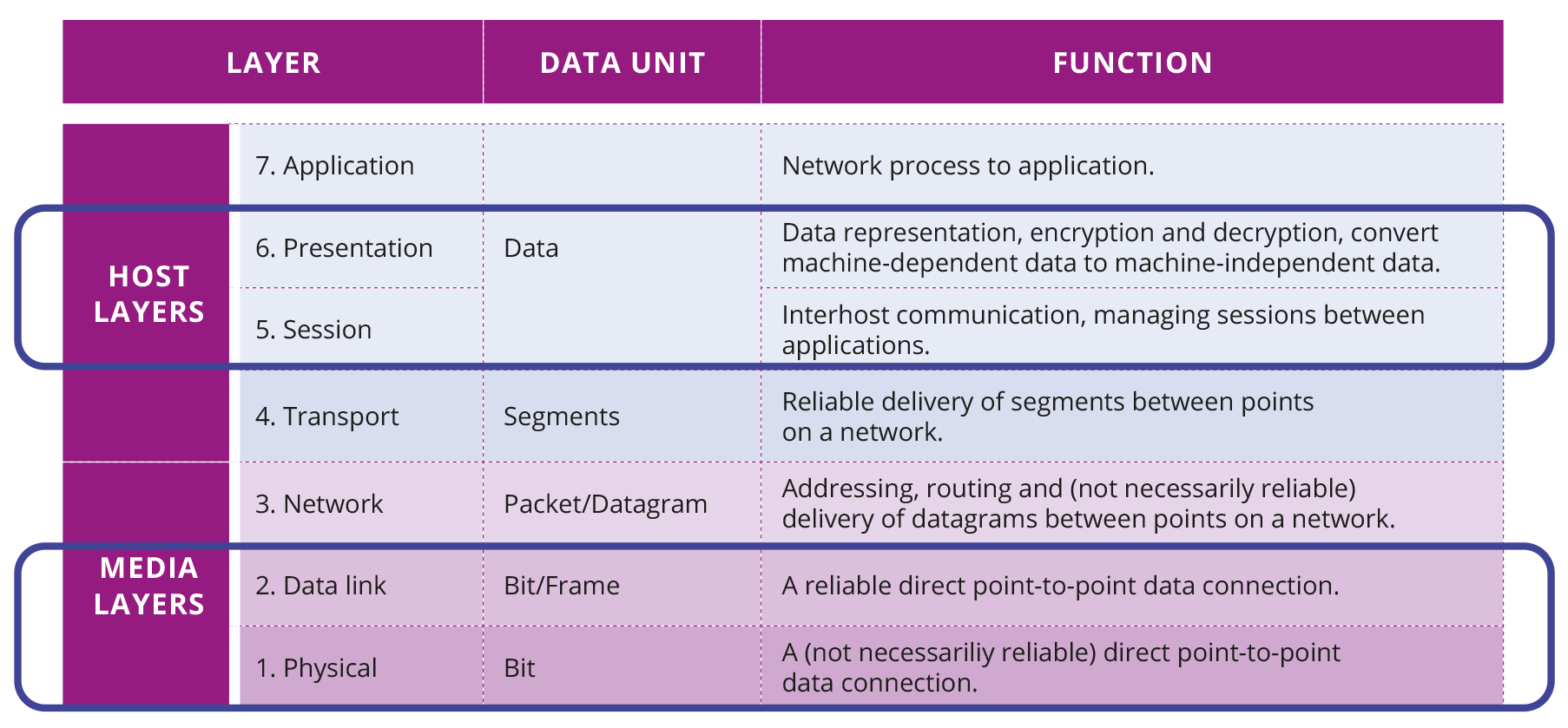
Figure 2.2.1 - Major Challenges: OSI Model
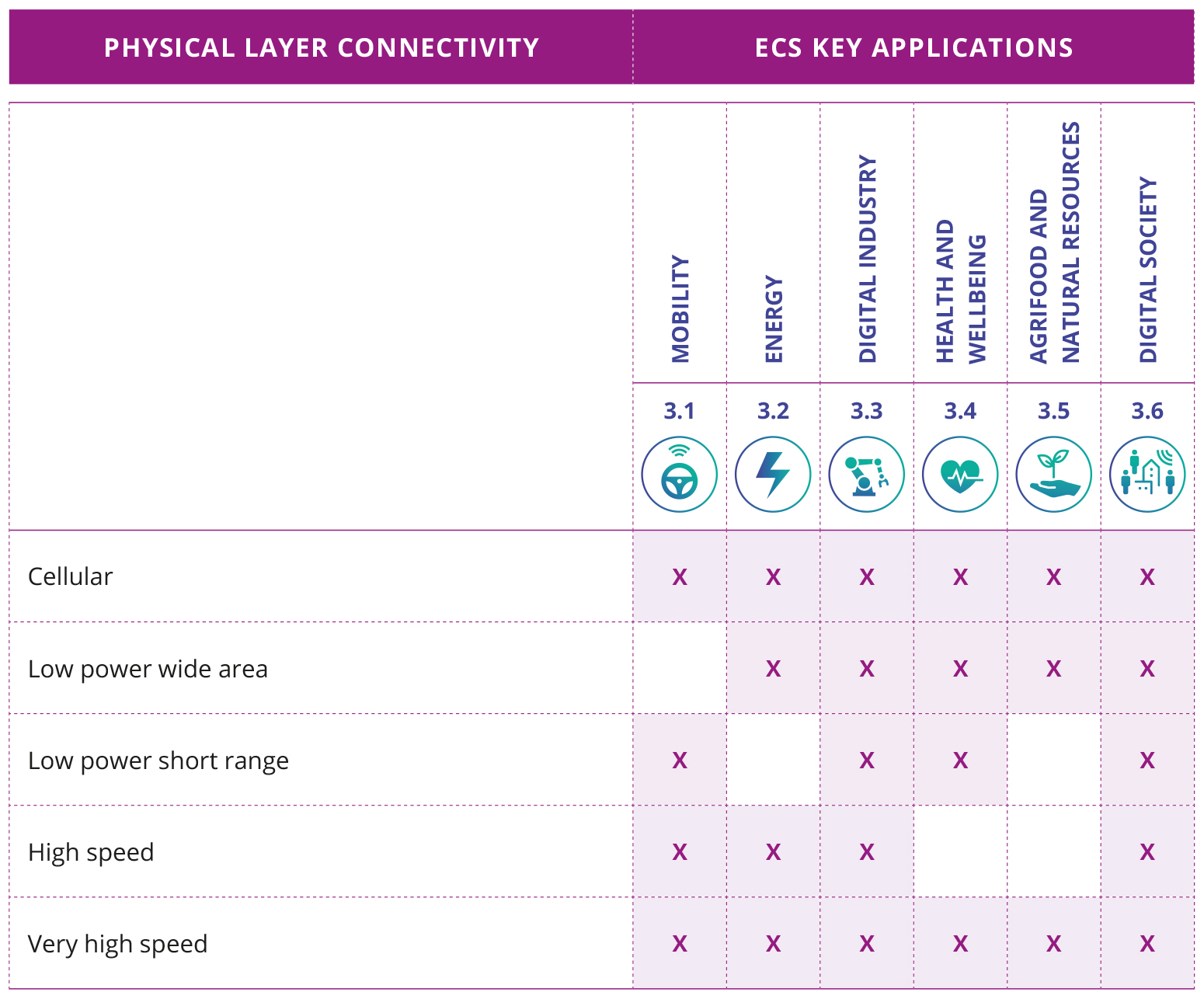
2.2.2 Application breakthroughs
Improvements in connectivity technology will have an impact on all ECS application areas. For health and well-being, connectivity and interoperability can enable faster translation of ideas into economically viable solutions, which can then be scaled up in everyday healthcare practice. Examples of health and well-being application breakthroughs supported here are:
A shift in focus from acute, hospital-based care to early prevention.
Strengthening where and how healthcare is delivered, supporting home-based care.
Stronger participation of citizens in their own care processes, enhancing patient engagement.
Supporting the clinical workforce and healthcare consumers in adopting technology-enabled care.
Data communication technologies enabling interoperable wireless data infrastructure.
E2CCC contributes to faster deployment and business uptake.
Connectivity for heterogeneous and chiplet integration enables European research, prototyping and large-scale production addressing market needs in key application domains such as automotive (SDV/RISC-V), HPC and industry.
Improved, secure and interoperable connectivity will further support healthcare and well-being application breakthroughs regarding, for example:
Healthcare deployment through digital health platforms.
A healthcare paradigm shift from treatment to prevention, enabling the shift to value-based healthcare.
Building a more integrated care delivery system, supporting the development of the home as the central location for the patient.
Enhancing access to personalized and participative treatments for chronic and lifestyle-related diseases.
Enabling more years of healthy life for an ageing population.
Reducing digitalisation risks through highly secure solutions, including secure connectivity for digital healthcare solutions.
In the AI mobility application area, the provision of improved, robust, secure and interoperable connectivity will support breakthroughs regarding:
Achieving the Green Deal for mobility, with the 2Zero goals of –37.5% CO2 by 2030.
Increasing road safety through the CCAM program.
Strengthening the competitiveness of the European industrial mobility digitization value chain.
E2CCC contributes to faster deployment and business uptake.
Enabling Physical AI use cases, e.g. for connected robots, drones, IoT devices and AI agents.
In the energy application domain, the provision of improved, robust, secure and interoperable connectivity will support breakthroughs regarding:
Significant reduction of connectivity energy demand.
Enabling the connectivity required for integrating future heterogeneous energy grids.
“Plug-and-play integration” of ECS into self-organized grids and multi-modal systems.
Solving safety and security issues of self-organized grids and multi-modal systems.
E2CCC contributes to faster deployment and business uptake.
Reliable, low-latency communications for Physical AI devices and systems. Their connectivity must also be secure, e.g. through quantum-safe communications.
In the industry application domain, the provision of improved, robust, secure and interoperable connectivity will support closing gaps such as:
Preparing for the 5G-Advanced and 6G era in communications technology, especially its manufacturing and engineering dimensions, and securing high-quality connectivity for Physical AI devices needed in Industry 5.0-type digital automation solutions
Long-range communication technologies, optimized for machine-to-machine (M2M) communication, asynchronous event-based data exchange, a large numbers of devices, and ultra-low-bit-rate operation, are key elements for energy-autonomous and intermittently powered sensing systems, including distributed neuromorphic IoT infrastructures such as in smart farming.
Addressing IoT cybersecurity and safety problems through attestation and security by design, as only safe, secure and trusted platforms will remain viable in industry.
Interoperability-by-design at the component, semantic and application levels.
IoT using cellular-network ISAC functionality, configuration and orchestration management to allow for the (semi)autonomous deployment and operation of large numbers of devices.
E2CCC contributes to faster deployment and business uptake.
Enabling efficient use of AI in Physical AI applications and placing AI inference at the network edge.
In the digital society application domain, the provision of improved, robust, secure and interoperable connectivity will support the overall strategy regarding:
Enabling workforce efficiency regardless of location.
Stimulating social resilience in the various Member States, providing citizens with a better work/life balance and giving them freedom to also have leisure time at different locations.
Ubiquitous connectivity, improving people’s employability and better protection against social or economic exclusion.
Enabling European governments, companies and citizens to cooperate more closely and develop reliable societal emergency infrastructures.
E2CCC contributes to faster deployment and business uptake.
Boosting EU productivity and quality of life via scaled AI use and augmenting people’s actions with Agentic AI and connected Physical AI
In the agrifood application domain, the provision of improved, robust, secure and interoperable connectivity will support innovations addressing EU competitiveness, productivity and Green Deal objectives through:
Improving European competitiveness and productivity for European sovereignty.
Reducing the environmental impact related to transport, storage, packaging and food waste.
Reducing water pollution and greenhouse gas emissions, including methane and nitrous oxide.
Reducing the Europe’s cumulative carbon and cropland footprint by 20% over the next 20 years, while improving climatic resilience of European agriculture and halting biodiversity loss.
2.2.3 MAJOR CHALLENGES
Five Major Challenges have been identified in the connectivity domain:
Major Challenge 1: strengthening the EU connectivity technology portfolio (chips, products, systems, networks, AI cloud integrations, ISAC) to maintain leadership, secure sovereignty and offer an independent supply chain.
Major Challenge 2: investigate innovative connectivity technology (new spectrum or improved spectral efficiency) and new approaches to improving existing connectivity technology to maintain the EU’s long-term leadership.
Major Challenge 3: autonomous interoperability translation for communication protocols, data encoding, compression, security and information semantics.
Major Challenge 4: architectures and reference implementations of interoperable, secure, scalable, smart and evolvable IoT and SoS connectivity from edge to cloud
Major Challenge 5: network virtualisation enabling efficient and low-cost run-time and evolvable integration, deployment and management of edge-to-cloud network architectures.
2.2.3.1 Major Challenge 1: Strengthening the EU connectivity technology portfolio to maintain leadership, secure sovereignty and offer an independent supply chain
2.2.3.1.1 State of the art
Today’s connectivity solutions require an highly complex electronic systems comprising various functions integrated into a wide range of technologies. This universe is currently being expanded by the advances in chiplet technology.
Note that advanced digital functions such as the application processor and the baseband modem are developed by a limited number of US and Asian players (MediaTek, Qualcomm and Samsung), and implemented in advanced complementary metal–oxide–semiconductor (CMOS) technology available by only two Asian companies (Taiwan Semiconductor Manufacturing Company, TSMC, and Samsung). On this last point, it is worth noting that through the US CHIPS Act, Intel, Samsung and TSMC will build new advanced logic (3 nm and below) 300 mm fabs in the US to further strengthen US sovereignty and supply chain.
The European Chips Act supports similar development but at a slower pace. Development of advanced nodes in Europe is still concentrated mainly in RTOs such as CEA-Leti and imec. Consequently, for the foreseeable future, Europe’s most advanced semiconductor manufacturing capability will be limited to the 18/16 nm CMOS node, reflecting the products currently designed by European semiconductor players and required by key vertical sectors (automotive, industrial, ...). Europe would need to expand the market for connected end-user devices, which could also generate demand for advanced 2 nm fabs in Europe.
Cellular networks are one of the few European digital technologies with leading market positions (except China). For connectivity, European chip manufacturers (Infineon, NXP, ST, etc.) are strong on the analogue and RF front-end module markets, mainly due to the availability of differentiated technologies developed and manufactured in Europe. The cellular networks are provided by Nokia and Ericsson which have large, highly advanced system-on-chip design teams in Europe.
Differentiated technologies are a key strength of the European ECS industry, especially when considering the connectivity market. Consequently, to maintain Europe’s leadership and competitiveness it is vital to ensure that European differentiated semiconductor technologies remain as advanced as possible. This is key to ensure that Europe secures the market share in the connectivity market and also strengthens its technology leadership by playing a major role in the development and standardization of future connectivity technologies. This point is crucial for securing European sovereignty in connectivity.
Moreover, over the past year, rising economic tensions between the US and China has underlined the value of Europe's ECS supply chain. Once again, this is especially true for differentiated technologies. For example, advanced BiCMOS technologies are currently mastered by a limited number of US (GlobalFoundries and Tower Semiconductor) and European (Infineon, ST and NXP) players. With Chinese companies being forced to move away from US providers, this creates a significant opportunity for Europe as a potential alternative. Consequently, strengthening Europe’s connectivity technology portfolio and associated manufacturing capacity to offer an independent and reliable supply chain is now a key challenge for all European ECS actors.
In addition to being able to provide the differentiated semiconductor technologies supporting the development of innovative connectivity solutions, it is important to note that some European players offer connectivity chipset solutions (for example, Sequans Communications and Nordic Semiconductor in narrowband IoT) or full connectivity solutions. Supporting the growth of these existing actors and helping emerging industry leaders is also a key challenge for Europe to capture a bigger proportion of the value chain, as well as to ensure its sovereignty on the connectivity topic in the long run.
The use of chiplet technology to advance high-performance computing is well established. Here again, the US has a leading position supported by TSMC and Korean memory makers. In the connectivity market, European players such as Ericsson and Nokia are leading designers of very complex digital computational hardware for connectivity. This points to the potential value of supporting and engineering advanced chiplet technology in Europe.
2.2.3.1.2 Vision and expected outcome
To address identified connectivity technology challenges, we propose the vision described below, which can be summarized by the following three key points (with associated expected outcomes).
Strengthening Europe’s differentiated technologies portfolio
As discussed above, Europe’s differentiated semiconductor technologies are key assets that should be both preserved and improved upon to secure European leadership in connectivity. Consequently, dedicated research should be encouraged, such as the technologies below (which are also promoted in Chapters 1.1 and 1.2):
2 nm and more advanced system-on-chip design for 5GA and secure dual-use 6G networks including ISAC functionality (several advanced semiconductor technologies need to be developed in the EU for this purpose).
Advanced BiCMOS: targeting RF and sub-THz (i.e., 100–300 GHz) and THz front-end modules.
RF SOI: targeting <7 GHz and mmW front-end modules.
GaN and GaN on Si: targeting the high-power infrastructure and high-efficiency/wide-bandwidth 6G handset markets (5.925 GHz – 7.125 GHz and 10 GHz – 13.25 GHz bands).
FD SOI: targeting power-efficient connectivity solutions (for example NB-IoT and NTN).
GaAs: targeting mmW space and defense applications (W and K bands).
InP & InP on Si: targeting high-speed optical links (>800 Gb/s), mmW applications (6G sub-THz communication >100 GHz) and ultra-low-noise front-end modules in K band.
Silicon Photonics: targeting next-generation silicon photonics technologies (SiN waveguide, thin film LNO, magnetic optical isolator, etc.) to address both pluggable optics for data centre and AI-driven co-packaged optics solutions
RF filters: supporting the development of innovative European-based technologies (for example POI based TF SAW technologies below 5 GHz and spin-waves technologies above 5 GHz).
Advanced logic in multiple-node technology chiplets for secure connectivity chips: RISC-V, AI inference, compute-in-memory and analogue computing.
Advanced packaging: enabling prototyping and medium-volume production capabilities in Europe to enable heterogeneous integration of differentiated technologies manufactured in Europe, helping European companies move higher in the value chain and capture more value.
Advanced high-speed chiplet technology for cost-efficient, medium-volume production in Europe.
Chiplet connectivity exploring standardised bus structures such as UCIe and AIB.
The main challenge will be to improve achievable performance while using less energy. To illustrate this, we refer to the historical 2025/2030 solid-state technology roadmap proposed by H2020 CSA project NEREID to serve as a connectivity roadmap (see Figure 2.2.3). The roadmap indicates that, whatever the type of application (device-to-device, D2D, indoor, outdoor), the requirements in analogue RF will mainly consist of achieving Fmax and FT ~500 GHz in 2025 and 1 THz in 2030, while NFmin will be well below 1 dB in the medium term, to reach 0.5 dB in the long term. The only parameter that differentiates the types of applications is the output power, which, for outdoor applications, should reach between 36 and 40 dBm per PA by the end of the decade. The biggest challenge for silicon or hybrid-on-silicon substrate technologies is expected to be achieving the required frequencies. Technologies such as GaN/Si and RF SOI will deliver power but for applications operating at less than 100 GHz.
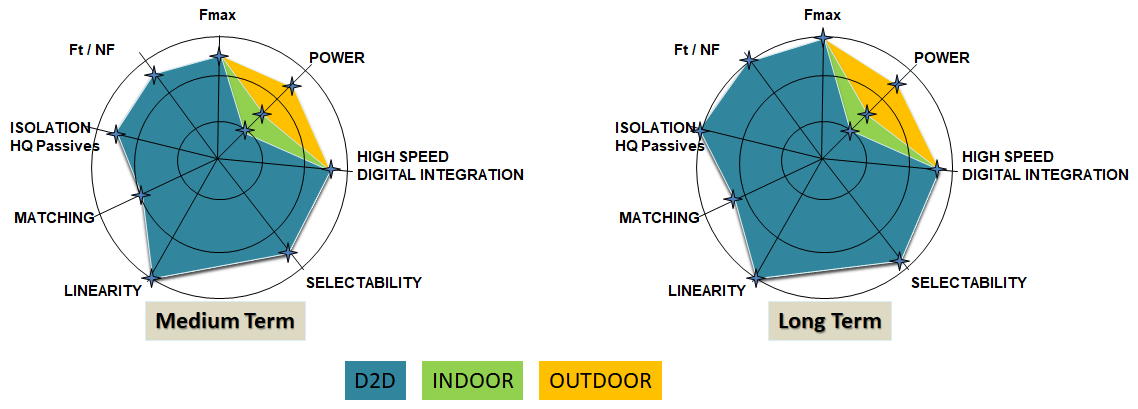
Figure 2.2.3 - Historical 2025/2030 solid-state technology roadmap proposed by H2020 CSA project NEREID1
Note that the vision presented in Figure 2.2.3 also applies to packaging, chiplet and printed circuit board (PCB) technologies. It is also worth noting that while Europe is playing a key role in innovative differentiated semiconductor and packaging technologies, R&D activity in heterogeneous packaging (chiplets) and PCBs needs further strengthening. This is a challenge that should be addressed to strengthen Europe’s connectivity technology portfolio.
Securing Europe’s differentiated hardware and heterogeneous packaging technology manufacturing
Beyond the development and enablement in Europe of innovative semiconductor, chiplet and packaging technologies targeting the connectivity market, it will be key to safeguard and promote European manufacturing capability to both secure Europe’s economic interests (in terms of market share) and also address sovereignty concerns (since trade disputes can jeopardize the viability of Europe’s industrial actors). To do so, in coordination with Chapters 1.1 and 1.2, the following topics should be supported:
The enablement of pilot lines: the objective here is to support the deployment of additional manufacturing capabilities for technologies already available in Europe and to address chiplet and packaging technologies to better exploit the technology portfolio available in Europe.
The rise of new semiconductor and packaging equipment champions: to secure manufacturing capabilities in the long term, it will also be necessary to ensure that the required equipment is provided by European players also for advanced sub-3 nm semiconductors.
Nurture a pan-European design ecosystem to tackle the new challenges involving More-than-Moore transistors, circuits and chiplet architectures with increased security and trustworthiness and new AI/ML chips arising in the digitalisation era (RISC-V, CiM, Analog).
Strengthening Europe’s connectivity technology portfolio (hardware, packaging, protocols and software)
Leveraging the previously discussed portfolio of differentiated semiconductor and packaging technologies, innovative connectivity solutions should be encouraged to enable Europe to take full advantage of its technology and manufacturing assets. This action is crucial to secure Europe's position beyond 5G and 6G standardization and preliminary deployment activities. It also enables the development and manufacturing in Europe of highly integrated connectivity modules and systems.
Since most of the value of a complex connectivity system will be captured at the module level, it is highly desirable to enable European players to rise in the value chain, in coordination with Chapter 1.2 Components, Modules and Systems Integration.
In targeting systems and applications, it is important to consider the interconnection between subsystems, and focus should be on the development of individual component technologies according to needs identified at the system or application level. To support this system vision, the promotion of innovative technology enabling heterogeneous and chiplet integration is key.
Heterogeneous and chiplet integration refers to the integration of separately manufactured components into a higher-level assembly that cumulatively provides enhanced functionality and improved operating characteristics. In this definition, components should be taken to mean any unit – whether individual die, device, component, assembly or subsystem – that is integrated into a single system. The operating characteristics should also be taken in their broadest meaning, including characteristics such as system-level cost of ownership.
This is especially true for the hardware side in the context of the slowing of traditional Moore’s-law scaling. It is in the interconnection of the transistors and other components in the integrated circuit, chiplet, package or PCB, and at the system and global network levels that future limitations in terms of performance, power, latency and cost reside. Overcoming these limitations will require heterogeneous chiplet integration of different materials (silicon, III-V, SiC, magnetics, etc.), devices (logic, AI, DSP, accelerators, memory, sensors, RF, analogue, etc) and technologies (electronics, photonics, MEMS, spin-waves and sensors).
2.2.3.1.3 Key focus areas
To support the vision presented in the previous paragraph, we propose to focus effort on the following key focus areas:
Chiplet design, engineering and manufacturing for very-high-speed applications using polymer materials.
Materials (GaN, InP, etc.) and large-diameter wafer technologies (POI, InP on Si, GaN on Si, garnets on Si, InP etc.) supporting the development of innovative connectivity technology solutions.
Differentiated semiconductor technology development targeting connectivity applications.
Pilot line enablement to support the strengthening of European manufacturing capability.
Connectivity solutions engineering through virtualization of the different connectivity layers.
Ensure EU leadership in 5G-Advanced and 6G secure critical infrastructure.
Connectivity for very-high-speed, low-energy heterogeneous and chiplet integration.
Ultra-low-power transceivers with low eco‐footprint.
Power- and cost-efficient transceivers including data conversion (ADC-DAC), up & down frequency conversion (LO & mixers), and RF transmission and reception (PA-LNA).
Advanced system-on-chip design for CMOS and new technologies such as GaN, InP, InP on Si, GaN on Si.
Innovative EDA solutions leveraging AI capability.
Enabling an EU fabless ecosystem which could leverage advanced semiconductor manufacturing in Europe and strengthen the EU position in the value chain starting from a significant boost in secure-connectivity chip design activities.
2.2.3.2 Major Challenge 2: Investigate innovative wireless connectivity technology (new spectrum or medium) and new approaches to improving existing connectivity technology to maintain the EU’s long-term leadership
2.2.3.2.1 State of the art
Targeting connectivity solutions beyond 5G, R&D activity is today mainly focused on the three key challenges listed below.
Evaluating the advantages of using new spectrum (especially the 6–15 GHz band and mmW frequencies >100 GHz)
With the ongoing deployment of 5G below 6 GHz, the R&D currently focuses on on the spectrum considered for 6G development targeting the 2030 time horizon with early launches in 2028. Three main frequency bands are today discussed in the telecommunication industry (following the recent decision of WRC-23 in December 2023):
Low band (6.425 GHz – 7.125 GHz):
One of the significant outcomes of WRC-23 was the identification of the 6.425 GHz – 7.125 GHz band for potential licensed mobile use while the lower 6 GHz spectrum (5.925 GHz – 6.425 GHz) will remain available for unlicensed usage (namely Wi-Fi). WRC-23 thus gave a balanced decision which supported both services. We can note that while this new spectrum will be the main 6G one identified by most regions to start deployment around 2030, the USA has adopted a different position. While China is considering allocating even the lower 6 GHz spectrum for IMT services, the US did the opposite and the FCC allocated the full 5.925 GHz – 7.125 GHz band for Wi-Fi (raising the question of which low frequency spectrum may be used to deploy 6G in the USA). Development of wireless systems in the 6.425 GHz – 7.125 GHz will likely be incremental to previous one <6 GHz, however we can mention that PA efficiency (including potential GaN opportunities in handsets) and filtering technology (due to coexistence issues with Wi-Fi) seem to be the main challenges today.
Mid band (7.125 GHz – 8.4 GHz):
WRC-23 also set the agenda for the next World Radiocommunication Conference in 2027 (WRC-27) with a clear roadmap for future IMT spectrum allocations. One of the key identified new spectrum bands to be evaluated is the 7.125 GHz - 8.4 GHz one since it seems to be the most likely solution to add new spectrum for 6G deployment in the US (a federal spectrum study working group started in March 2024 with the goal of releasing a final report on potential commercial access to the band by October 2026).
Since it may prove difficult to clear this entire spectrum from existing usage, we can note that the 7.75 GHz – 8.4 GHz band is attracting a lot of attention since such scenario poses less technical difficulty and has the advantage to be considered by regions other than the USA.
NTN in Ku & Ka bands:
In addition to new spectrum requirements previously mentioned, 6G envisages seamlessly integrating existing satellite communication in cellular connectivity networks. This trend can be seen under the topic Non Terrestrial Networks currently discussed inside 3GPP.
Targeted frequency spectrum is not new (traditional Ku and Ka bands). The main objective is here to leverage Low Earth orbit satellite constellations being deployed to complement the cellular network coverage while offering performance (latency and data rate) suitable for real-time applications.
Two main challenges will have to be addressed: seamless integration and handover of satellite connectivity with cellular connectivity (network type should be transparent for the user) and the development of cost-effective chipset solutions to enable user terminals in line with mass market constraints (which creates key opportunities for Si-based technology such as SiGe BiCMOS).
We should also note that, in the NTN context, Supplemental Connectivity from Space is a new trend to be kept in mind. The idea consists in reusing frequency bands used by cellular operators on the ground to complement their existing cellular network with a LEO satellite connectivity. The main ongoing development concerns what SpaceX and T-Mobile are doing in the US. The advantage here is to leverage an installed base of user equipment (4G smartphones) since the only new hardware is from the infrastructure side (the LEO satellite constellation). This development is today limited to what regulators authorise in their markets (for example the FCC in the US), but if successful this approach could disrupt the current 3GPP view on NTN.
While R&D developments currently focus on frequencies below 15 GHz, there is some interest in assessing achievable performances with a higher frequency (even if now standardisation activities are currently ongoing either from 3GPP or WRC side). D band (~140 GHz) remains a strong topic of interest. For regulatory reasons, the 275 GHz – 325 GHz range holds promise as it enables the widest available bandwidth. As an illustration, the US has facilitated research on the 95 GHz – 3 THz spectrum over the coming decade. After a unanimous vote, the Federal Communications Commission (FCC) has opened up the “terahertz wave” spectrum for experimental purposes, creating legal ways for companies to test and sell post-5G wireless equipment. However, we can note that the telecommunication industry is cautious on the use of this spectrum. Magnus Frodigh, Ericsson's chief researcher, for example wrote2: "We have thus identified new potential spectrum ranges for 6G, notably in the centimetric range from 7-15 GHz, which we believe will be an essential range, and in the sub-THz range from 92-300 GHz, which will have a complementary role serving niche scenarios". He continued: "Our learnings from 5G are that the mmWave range is a powerful spectrum range which allows operators to provide value to industry and enterprise through high data rates. However, due to limited coverage, it serves as a complement to other ranges that can be used in wider areas but with limited data rates (i.e. mid bands)." Frodigh concluded: "We believe that in order to benefit society, the majority of 6G use cases should be enabled for wide-area coverage, both indoors and outdoors, and not limited to confined areas. This means that – whilst we ought to explore the sub-THz region for entirely novel 6G capabilities – the main value will be in the centimetric 7-15 GHz". At such high frequencies, new hardware technology may be required and InP is currently an important research topic to enable low-noise receivers and power-efficient power amplifiers > 100 GHz.
Exploring the benefits that AI could bring to connectivity technologies
While 5G is being deployed around the world, efforts by both industry and academia have started to investigate beyond 5G to conceptualize AI-enabled 6G. 6G is expected to undergo an unprecedented transformation that will make it substantially different from the previous generations of wireless cellular systems. 6G may go beyond mobile internet and will be required to support ubiquitous AI services from the core to the end devices of the network. Meanwhile, AI will play a critical role in designing and optimizing 6G architectures, protocols and operations and as basic technology used in 6G products and systems to enable secure, optimized communications.
For example, two key 5G technologies are software-defined networking (SDN) and network functions virtualization (NFV), which have moved modern communications networks towards software-based virtual networks. As 6G networks are expected to be more complex and heterogeneous, advanced softwarisation solutions are needed for beyond-5G and 6G networks. Selecting the most suitable computational and network resources and the appropriate dynamic placement of network functions, taking network and application performance as well as power consumption and security requirements into account, will be an important topic. By enabling fast learning and adaptation, AI-based methods will render networks much more versatile in 6G systems. The design of the 6G architecture should follow an “AI-native” approach that will allow the network to be smart, agile, and able to learn and adapt to changing network dynamics. Some applications may use COTS semiconductors but for ultimate optimization also custom-made connectivity system chips will be needed.
Given the integration of wireless, wired and legacy industrial edge connectivity, heterogeneous network virtualisation is of increasing importance to the System-of-Systems (SoS) integration in all application domains. Manageable virtual heterogeneous networks from edge to cloud will become a strong competitive advancement in the near future. Given the expected network complexity, AI-assisted and partly autonomous management is clearly important.
2.2.3.2.2 Vision and expected outcome
To address identified connectivity technology challenges, we propose the vision described below, which can be summarized in the following three points (with associated expected outcomes).
Assess achievable connectivity performances using new spectrum
To maintain European leadership on connectivity technology and ensure sovereignty, the development of new electronics systems targeting connectivity applications in not yet standardised (or in the process of being standardized) spectrum should be supported. A special focus should be dedicated to the frequency bands listed below:
6G connectivity enablement in the 6.425 GHz – 7.125 GHz band: This band having been identified as the main one to be deployed in the short term for 6G, it is of strategic importance to ensure both sovereign European hardware development and a timely spectrum allocation to operators to secure the position of the EU in the 6G race.
Investigation of additional 6G spectrum in the 7.75 GHz – 8.4 GHz band: This band being the most likely one in the medium term to support 6G deployment in the US, and also being a serious option to offer additional 6G spectrum worldwide, the EU must ensure a pragmatic evaluation of this spectrum to both be able to play a role in WRC standardisation activities and secure the market share of EU wireless infrastructure players on the US wireless market.
Investigation of Supplemental Connectivity from Space in existing 4G and 5G bands: While NTN in Ku and Ka band is today a hot topic inside 3GPP, it cannot be excluded that the SCS approach, pushed by SpaceX and T-Mobile, may disrupt the current NTN approach (in a very pragmatic way). Consequently, Evaluation of SCS scenarios in the EU leveraging existing cellular 4G and 5G spectrum should be encouraged and dedicated R&D activities supported to secure this technical option in EU and ensure both an EU-sovereign connectivity solution and possible business opportunities for EU actors.
Investigate possible deployment of Wi-Fi 8 at 60 GHz: In the context of Wi-Fi 8 standard definition, Intel and other players have been pushing the support of the 60 GHz band to enable mmWave-based Wi-Fi connectivity (and achieve higher data rates than Wi-Fi-7 in a power-efficient manner). The IEEE 802.11 Integrated Millimeter Wave Study Group (IMMW SG) has been specifically created in 2023 to investigate this scenario and decide on the addition of the 60 GHz band to the Wi-Fi standard. R&D activity on this topic in EU should be encouraged to ensure that if selected this licence-free frequency band could be leveraged in EU to enable affordable high-speed connectivity to the market.
Sub-THz connectivity application in D band (~140 GHz) and > 200 GHz: With THz communication being a hot topic in the international academic community (especially in the US and China), European activity in the spectrum > 200 GHz should be encouraged (with a special focus on high speed point-to-point wireless links). These investigations should help Europe play a role in the development of the new technology and assess its relevance for future standardization activities.
Integrate AI features to make connectivity technology faster, smarter and more power-efficient
The use of new spectrum or propagation media is not the only way to boost innovative connectivity technology. As mentioned, 5G has underlined the role of software to promote virtualization and reconfigurability, but those concepts may not be sufficient to address the challenges related to the more complex connectivity technology that may be developed (for example, 6G, where first chips are already in RDI phase).
To address this challenge, artificial intelligence is now perceived as a strong enabler. Consequently, in coordination with the “Edge Computing and Embedded Artificial Intelligence” chapter, the topics below should be supported:
Investigate AI features at the edge: to improve the power efficiency of mobile devices by reducing the amount of data to be transmitted via the wireless network, the concept of AI at the edge (or edge AI) has been proposed. The idea is to locally process the data provided by the sensor using the mobile device’s computing capabilities. Moreover, processing data locally reduces the need to stream and store large amounts of data to the cloud, which could create some vulnerabilities from a data privacy perspective.
Use AI to make the connectivity network more agile and efficient: the aim is to move towards an AI-empowered connectivity network to go beyond the concept of virtualization and achieve improvements in efficiency and adaptability. For example, AI could play a critical role in designing and optimizing 6G architectures, protocols and operations (e.g. resource management, power consumption and improved network performance).
2.2.3.2.3 Key focus areas
To support the vision presented in the previous paragraph, we propose that efforts should be focused on the following key focus areas:
Innovative connectivity system design using new spectrum.
Investigation and standardization activity targeting 6G cellular application in the frequency band < 15 GHz with an early pre-2032 focus on 3-8 GHz bands
Development of innovative connectivity technology using unlicensed frequencies in the 6–15 GHz band.
Development of connectivity systems leveraging the concept of edge AI and AI-native chips and algorithms in 6G products and systems
Evaluation of the AI concept to handle the complexity of future connectivity networks (for example, 6G), and to improve efficiency and adaptability.
2.2.3.3 Major Challenge 3: Autonomous interoperability translation for communication protocols, data encoding, compression, security and information semantics
2.2.3.3.1 State of the art
Europe has a very clear technology lead in automation and digitalisation technology for industrial use. The next generation of automation technology is now being advanced by Industry 4.0/5.0 initiatives backed by the EC and most EU countries. In the automotive sector, the software-defined vehicle initiative is a driver of the autonomous and green car vision. Here, Europe again has a strong competitive position. In healthcare, the ageing population is the driver. Europe’s position in this area is respectable but fragmented. Robust, dependable, secure and interoperable application-to-application connectivity, prepared for interaction in System-of-Systems (SoS) solutions and benefiting from Physical AI, is fundamental to market success in these and other areas.
Interoperability is a growing concern among numerous industrial players. An example is the formation of industrial alliances and associated interoperability project efforts. One approach is to converge on a few widely adopted standards. An example of this is showcased in Figure 2.2.4.
To maintain and strengthen the European lead, advances in autonomous interoperability and associated efficient engineering capability are necessary. The game changers are:
Autonomous interoperability for SoS integration for efficient machine-supported engineering at design-time and run-time.
Open interoperability infrastructure, and AI-enabled engineering support.
Novel, flexible and manageable security solutions.
Standardization of the above technologies.
Interoperability within chiplets and heterogeneous packaging.
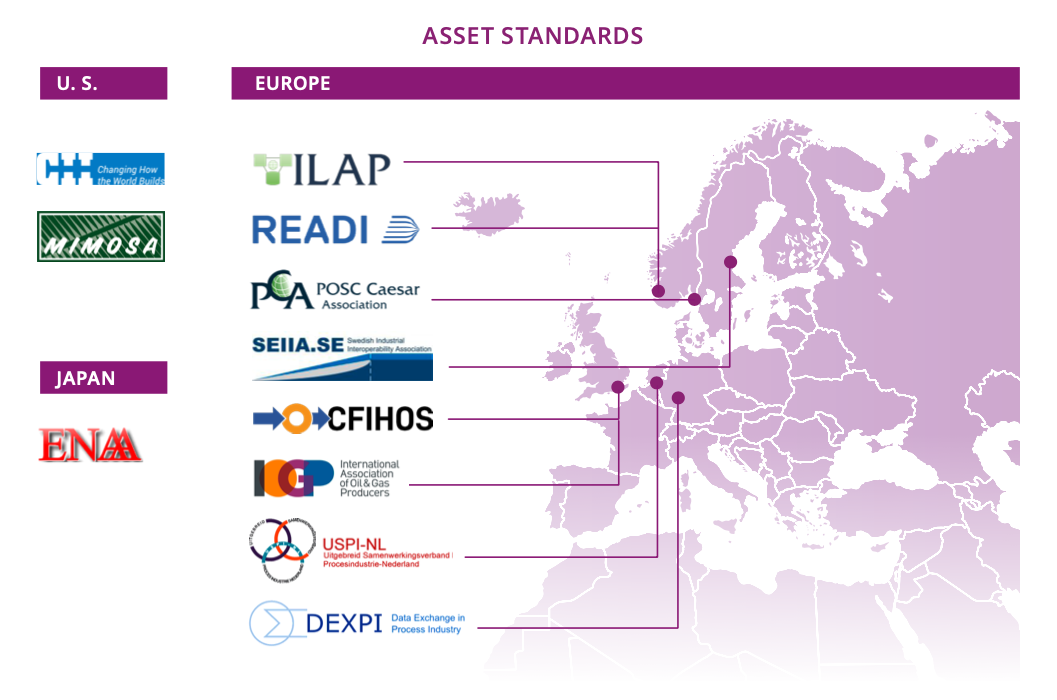
Figure 2.2.4 - ISO 15926 – Asset Standards worldwide (Source: Erik Molin, SEIIA)
2.2.3.3.2 Vision and expected outcome
To fully leverage heterogeneous integration at the hardware level, software interoperability is a parallel challenge to provide application-to-application connectivity that allows for autonomous SoS connectivity, from edge to cloud, enabling the use of available data for all areas of application. To do so, dedicated software tools, reference architecture infrastructure and standardisation are key to supporting autonomous interoperability, thus enabling the provision of a widely interoperable, secure, scalable, smart and evolvable SoS connectivity.
This challenge involves the interoperability of service or agent protocols, including encoding, security and data semantics. Here, payload semantics interoperability is a primary focus, leading to architectures, ontologies, technologies and engineering tools that support application-to-application integration of SoS for all areas of applications at design time, at run time and throughout the lifecycle. This will include e.g. the integration of and translation between different standards used in domains where SoS interaction is necessary to reach business and societal objectives.
The objective here is a technology that enables nearly lossless interoperability across protocols, encodings and semantics, while providing technology and engineering support foundations for the low-cost integration of very large, complex and evolvable SoS.
Expected achievements are:
Open-source SoS architecture infrastructure with reference implementation supporting interoperability, security, scalability, smartness and evolvability from system-on-chip through chiplets to multiple technology platforms, such as Wi-Fi, 5G & 6G.
Open-source engineering and implementation infrastructure for the de facto standard SoS connectivity architecture.
SoC, chiplet and SOA architecture reference implementations with performance that meets critical performance requirements in focused application areas.
Use of AI workflow automation, AI agents and Physical AI in the above concepts.
2.2.3.3.3 Key focus areas
The high-priority technical and scientific challenges in both design-time and run-time are:
Semantic interoperability from application to application.
Autonomous translation of connectivity protocols, encodings, security and semantics.
Evolvable SoS connectivity architecture infrastructure and technologies over time and technology generations.
2.2.3.4 Major Challenge 4: Architectures and reference implementations of interoperable, secure, scalable, smart and evolvable IoT and SoS connectivity
2.2.3.4.1 State of the art
It is clear that the US is the leader when it comes to wired IP-connectivity while Europe is the leader in cellular IP-connectivity. The big potential game changer here is 5G and upcoming 6G. To advance the European position, the establishment of connectivity architecture, reference implementation and associated engineering frameworks supporting 5G/6G and other wireless technologies is required. The integration of IP-connectivity with the vast industrial legacy edge connectivity needs a special focus. Such focus will foster a faster industrial and societal digitalization enabling the integration of efficient and optimizable flexible production value networks. Given the longevity of such IP and legacy connectivity, the lifecycle perspective across technology lifetimes and generations will need special considerations. In certain domains such as automotive and industrial automation, Europe is the major player. Market studies3 indicate very substantial growth in the SoS market over the next five to ten years. This will provide a very strong market pull for all technologies and products upstream. Here, connectivity interoperability is an important component, enabling tailored SoS solutions and efficient engineering. The vision is to provide interoperable connectivity architecture, reference implementation and associated engineering support and frameworks spanning technologies from legacy to 5G and 6G and other wireless and wired technologies.
2.2.3.4.2 Vision and expected outcome
The enabling of SoS interoperable connectivity is fundamental for capturing the emerging SoS market and its very high growth rate. Efficient engineering and the deployment of interoperable, secure, scalable, smart and evolvable SoS connectivity will be key to this. This will help Europe lead in establishing interoperable connectivity architectures, reference implementation and associated engineering frameworks.
The identified game changers are:
Establishment of connectivity architecture infrastructure with associated reference implementation and related engineering frameworks and associated standardisation
SoS application-to-application connectivity being interoperable, secure, scalable, smart and evolvable over technology generations.
Expected achievements
Open-source implementation of reference architecture infrastructure supporting interoperability, security, scalability, smartness and evolvability across multiple technology platforms, from SoC and chiplets to Wi-Fi, 5G/6G, wired and optical connectivity.
Open-source engineering and implementation frameworks for the de facto standard SoS connectivity architecture infrastructure.
Architecture infrastructure reference implementations which meet critical performance requirements in focused application areas.
2.2.3.4.3 Key focus areas
The high-priority technical and scientific challenges are:
SoS interoperable connectivity architecture infrastructure as a de-facto standard.
Reference implementation of de facto SoS connectivity architectures.
Engineering frameworks for de-facto standard SoS connectivity architecture.
2.2.3.5 Major Challenge 5: Network virtualisation enabling run-time engineering, deployment and management of edge-to-cloud network architectures.
2.2.3.5.1 State of the art
Virtualisation of networks is a main trend for cellular networks. This has to be expanded to other wireless and wired connectivity technology including the vast industrial legacy edge connectivity. Current state of the art has a large technological differences between legacy and IP-based connectivity. This also includes technological and operational competences in the industry and society. Thus, wide and flexible digitalisation of industrial and societal value networks is rather limited.
2.2.3.5.2 Vision and expected outcome
The enabling of virtualised networks is fundamental for capturing the emerging SoS market and its very high growth rate. Efficient engineering, deployment and management of connectivity is a key enabler for interoperable, secure, scalable, smart and evolvable SoS. This will help Europe lead in the establishment of connectivity architecture, network orchestration, reference implementation and associated engineering frameworks.
European leadership in certain domains, mentioned above, will provide a very strong market pull for all technologies and products upstream. Here, virtualised connectivity is a very important component, enabling dynamic updates and rearrangements of SoS solutions. The vision is to provide virtualised connectivity across physical and MAC layers spanning technologies from SoC and chiplets to Wi-Fi, 5G and 6G while also supporting legacy connectivity.
The identified game changers are:
Technologies for access, control and data network virtualisation across multiple hardware and software layers using heterogeneous devices based on SoC, chiplets and PCB systems.
Engineering, integration and management tools and methodologies for engineering and operation of virtualized legacy, IoT and SoS networks and service components of technology and system lifecycles.
Intelligent network orchestration supporting heterogeneous technology and multistakeholder integration from edge to cloud.
Intelligent and run-time re-organisation of hardware platforms.
Expected achievements:
Open-source implementation of reference architectures supporting virtualised connectivity across multiple technology platforms from industrial legacy to IP-based 5G, 6G, wired and optical.
Open-source engineering and management frameworks for virtualised connectivity across multiple technology platforms from industrial legacy to IP-based 5G, 6G, wired and optical.
Reference implementations with performance that meets critical performance requirements in focused application areas taking into consideration energy efficiency.
Run-time re-organization of hardware and software platforms.
2.2.3.5.3 Key focus areas
The high-priority technical and scientific challenges are:
Virtual connectivity architecture supporting multiple technology platforms.
Reference implementation of virtual connectivity architecture supporting dynamic network orchestration enabling highly efficient application-level use.
Engineering, integration and management frameworks with tools for virtual connectivity architectures.
2.2.4 TIMELINE
The timeline for addressing the Major Challenges in this section is provided in the following table.
MAJOR CHALLENGE |
TOPIC |
SHORT TERM (2027–2031) |
MEDIUM TERM (2032–2036) |
LONG TERM (2037 and beyond) |
|---|---|---|---|---|
Major Challenge 1: Strengthening the EU connectivity technology portfolio to maintain leadership, secure sovereignty and offer an independent supply chain |
Topic 1.1: Materials (GaN, InP, etc.) and large-diameter wafer technologies (POI, InP on Si, GaN on Si, InP etc.) supporting the development of innovative connectivity technology solutions. |
Qualified GaN, InP and POI RF process demonstrators with repeatable wafer-level performance and reliability data. |
Selected RF processes transferred to production with validated yield, packaging and supply-chain capability. |
Successive RF material and wafer generations qualified with transferable process, yield and lifecycle reliability evidence. |
Topic 1.2: Differentiated semiconductor technology development targeting connectivity applications. |
Next-generation RF SOI and BiCMOS transceiver prototypes validated for target-band efficiency, linearity and integration. |
Production-qualified RF platforms supporting evolving cellular and satellite connectivity requirements. |
Reconfigurable RF platforms qualified across successive connectivity generations. |
|
Topic 1.3: Chiplet, packaging and PCB technology targeting connectivity applications. |
Interoperable RF/digital chiplet and heterogeneous-package demonstrators with verified thermal, signal-integrity and test performance. |
Manufacturable reference platforms with qualified die-to-die interfaces and multi-supplier integration. |
Reconfigurable heterogeneous RF platforms qualified across successive die generations with maintained interoperability and thermal reliability. |
|
Topic 1.4: Connectivity solution engineering through virtualization of the different connectivity layers |
Virtualised connectivity prototypes validated on COTS hardware against latency, energy and security requirements. |
Cross-vendor virtualisation validated across hardware accelerators, radio and industrial-edge platforms. |
Runtime reconfiguration qualified across independently operated connectivity domains. |
|
Topic 1.5: Connectivity for very high speed low energy heterogeneous and chiplet integration |
Integrated low-energy transceiver and interconnect demonstrators using European differentiated technologies. |
Full-transceiver and chiplet-link platforms qualified against application-level energy and bandwidth targets. |
Scalable heterogeneous connectivity platforms qualified for sustained operation under changing workloads. |
|
Topic 1.6: Ultra‐low power transceivers with low eco‐footprint |
Ultra-low-power transceivers demonstrated in energy-constrained sensing systems, with measured link reliability and lifecycle energy use. |
Manufacturing-qualified transceivers supporting secure, intermittently powered deployments at scale. |
Long-lived sensing networks qualified for secure autonomous operation under intermittent energy, ageing and component replacement. |
|
Major Challenge 2: Investigate innovative connectivity technology (new spectrum or medium) and new approaches to improving existing connectivity technology to maintain the EU’s long-term leadership |
Topic 2.1: innovative connectivity system design using new spectrum |
New-band RF demonstrators for centimetric spectrum and selected sub-THz point-to-point use cases, subject to spectrum availability. |
Qualified transceivers for commercially viable new-band applications with validated range, efficiency and coexistence. |
Selected sub-THz systems qualified for specialist deployments; no assumption of universal wide-area adoption. |
Topic 2.2: investigation and standardisation activities targeting 6G cellular application in frequency bands below 10 GHz |
Standards-aligned first-generation 6G chipset and radio prototypes, including candidate mid-bands, subject to WRC-27 decisions and allocations. |
Interoperable 6G products with improved RF efficiency, coexistence and integrated terrestrial/non-terrestrial operation. |
Later-generation 6G platforms qualified for evolving bands and application requirements. |
|
Topic 2.3: development of innovative connectivity technology using unlicensed frequencies in the 6–7 GHz and 60 GHz bands |
Wi-Fi 8 prototypes and early products focused on reliability, multi-AP coordination and coexistence; separate assessment of 60 GHz integration. |
Interoperable low-energy Wi-Fi platforms validated in industrial and dense deployments. Wi-Fi 7 is an existing baseline. |
Successive unlicensed-radio platforms qualified for dependable coexistence and coordinated operation in evolving industrial deployments. |
|
Topic 2.4: development of connectivity systems leveraging the concept of edge AI |
Edge-AI connectivity systems demonstrated with local inference, reduced transmitted data and measured energy/privacy benefits. |
Cross-vendor inference placement validated across devices and edge networks under latency, energy and security constraints. |
Federated radio-edge optimisation qualified across operators with bounded autonomy, auditable policies and verified recovery. |
|
Topic 2.5: evaluation of the AI concept to be able to handle the complexity of future connectivity networks (for example, 6G), and to improve efficiency and adaptability |
AI-assisted network control validated in operational trials with monitored decisions, bounded actions and safe fallback. |
Closed-loop optimisation qualified across vendors and network domains, with auditable policies and stability checks. |
Bounded autonomous network coordination validated across independently managed domains. |
|
Major Challenge 3: Autonomous interoperability translation for communication protocols, data encoding, compression, security and information semantics |
Topic 3.1: semantic interoperability from application to application. |
AI-assisted semantic mappings validated for selected ontologies, with provenance, confidence checks and human approval for ambiguity. |
Cross-standard semantic integration qualified in selected application domains with explicit loss and consistency checks. |
Cross-domain semantic mediation validated under controlled vocabulary evolution and auditable governance. |
Topic 3.2: autonomous translation of protocols, encodings, security and semantics |
Dynamic protocol and encoding gateways validated with explicit trust boundaries and preserved authentication and authorisation. |
Runtime translation of selected ECS data models qualified with versioning, access-control and semantic validation. |
Bounded translation across heterogeneous legacy models validated with explicit handling of unsupported semantics. |
|
Topic 3.3: evolvable SoS connectivity architecture infrastructure and technologies over time and technology generations |
AI-assisted infrastructure migration validated against compatibility and security requirements. |
Formal and AI-assisted tools qualified for controlled evolution across connectivity generations. |
Continuous verification qualified for evolving, multi-operator connectivity infrastructures. |
|
Major Challenge 4: architectures and reference implementations of interoperable, secure, scalable, smart and evolvable IoT and SoS connectivity |
Topic 4.1: SoS interoperable connectivity architecture infrastructure as a de-facto standard |
Service-oriented connectivity architectures validated within selected ECS domains, using open interfaces and conformance tests. |
Cross-domain reference architectures qualified through multi-vendor deployments and measurable interoperability. |
Federated connectivity architectures validated across industrial and societal services with independent governance. |
Topic 4.2: reference implementation of de facto SoS connectivity architectures |
Open reference implementations demonstrated with secure discovery, configuration and legacy integration. |
Reference implementations qualified for cross-domain deployment, operation and lifecycle updates. |
Semantic-interoperability extensions validated across evolving reference implementations and data models. |
|
Topic 4.3: engineering frameworks for de facto standard SoS connectivity architecture |
Engineering frameworks validated for automated configuration and conformance checking of selected connectivity platforms. |
Reusable toolchains qualified across vendors, including regression tests for interface and security changes. |
Engineering frameworks qualified for controlled semantic-model migration across domains. |
|
Major Challenge 5: network virtualisation enabling run-time engineering, integration, deployment and management of edge-to-cloud network architectures |
Topic 5.1 Virtual connectivity architecture supporting multiple technology platforms, |
Distributed virtual connectivity management demonstrated from devices to edge and cloud on selected platforms. |
Legacy and IP-based platforms integrated with verified performance isolation and policy enforcement. |
Federated management validated across independently administered legacy and IP networks. |
Topic 5.2 Reference implementation of virtual connectivity architecture enabling very efficient application-level usage. |
Programmable multi-platform connectivity demonstrated with measured application latency, energy and integration effort. |
Accelerated edge-to-cloud reference systems qualified against realistic cost and workload baselines. |
Cross-domain reference systems validated for legacy/IP coexistence and safe runtime reconfiguration. |
|
Topic 5.3 Engineering, integration and management frameworks |
Engineering toolchains demonstrated for deployment and lifecycle management across selected connectivity technologies. |
Toolchains qualified for repeatable multi-vendor deployment, monitoring and recovery in edge-to-cloud systems. |
Runtime migration toolchains qualified across legacy and IP generations with verified continuity. |